
Ryobi Circular Saw Review: Which Model Actually Earns a Spot In Your Tool Bag
A hands-on look at Ryobi’s cordless and corded circular saws, from the ONE+ HP Brushless models to the budget-friendly CSB125, so you can pick the right saw without guessing.

1. Meet the Ryobi Circular Saw Lineup
Ryobi has spent years building a reputation as the brand homeowners reach for when they want dependable performance without paying pro-tool prices, and its circular saw lineup is a good snapshot of that philosophy. Instead of one flagship model, Ryobi spreads its circular saws across a few clear tiers: an entry-level corded saw for occasional use, a handful of 18V ONE+ cordless saws for cutting cords loose around the yard or job site, and a newer 18V ONE+ HP brushless saw aimed at users who want closer-to-corded power without the cord. Each one is designed to solve a slightly different problem, and that’s really the first thing to understand before you pick one.
If you’re mostly breaking down plywood sheets in a garage, the corded CSB125 is still a perfectly rational choice, since it never needs charging and costs noticeably less than the cordless options. If you’re framing a shed, building a deck, or doing renovation work where running an extension cord is a hassle, one of the cordless 18V models makes far more sense, especially if you already own Ryobi ONE+ batteries for a drill or impact driver. And if you want a saw that can rip through pressure-treated lumber or thicker stock without bogging down, the brushless ONE+ HP saw is the one worth the upgrade in price.
This review walks through the full current lineup, compares specs side by side, and breaks down which saw fits which type of project. Along the way we’ll also point you to more specialized guides, including our best power circular saws roundup and our broader best power saws guide, if you’re still deciding between saw categories entirely.
It’s also worth noting how Ryobi positions itself in the broader power tool market before diving into individual models. Ryobi has never tried to compete directly with pro-grade brands like Milwaukee or DeWalt on the jobsite-daily-abuse front, and it doesn’t pretend to. Instead, it targets homeowners, weekend renovators, landlords managing their own properties, and budget-conscious tradespeople who need a saw that performs well without the premium price tag that comes with a flagship contractor tool. That positioning shows up in small ways throughout the lineup: slightly lighter-duty switches, plastic components in places a pro tool would use metal, and a stock blade that’s serviceable rather than premium. None of that makes these bad tools, it just means they’re built for a specific kind of user, and understanding that context makes the rest of this review easier to interpret.
It’s also useful to understand a bit of Ryobi’s history in the tool space, since it explains some of the design choices you’ll see throughout this lineup. Ryobi originally built its reputation on affordable, accessible power tools sold through big box retailers rather than dedicated tool stores, which kept prices lower than pro-focused competitors from the start. Over time, the brand expanded its ONE+ battery platform into one of the largest cordless ecosystems available anywhere, covering everything from basic drills to outdoor power equipment, which is part of why so many homeowners end up with several Ryobi tools even if they didn’t set out to build a matched collection. That broad platform strategy is really the throughline connecting every saw in this review, since even the most basic model benefits from being part of a much larger, interchangeable battery system.
Another thing worth mentioning upfront is how frequently Ryobi refreshes this lineup. Model numbers change, brushless options replace older brushed versions, and bundle configurations shift regularly based on what batteries or chargers are included. If you’re comparing listings and see slightly different specs than what’s covered here, it’s likely a newer or older variant of the same core saw rather than a completely different tool, so cross-check the model number against the images and description before assuming a listing is wrong.

2. Individual Model Spotlights
Before getting into feature-by-feature breakdowns, it helps to look at each saw on its own terms. Here’s a closer look at all six models covered in this review, what makes each one distinct, and where it fits into the lineup.
Ryobi ONE+ HP Brushless Circular Saw (B0G3RTJXNJ)
This is the flagship of the current cordless lineup, and it’s built around Ryobi’s HP brushless motor platform, which the company designed to close the performance gap with corded saws. In practice, that means faster cut speed, better performance in dense or wet lumber, and a motor that runs noticeably cooler during extended use than the standard cordless models. It’s sold as a tool-only unit, so factor in a battery and charger if you’re starting from scratch. This is the model we’d point most repeat users toward, particularly anyone doing framing, decking, or shed-building projects on a semi-regular basis.
In hands-on use, this saw distinguishes itself most clearly during longer rip cuts through thicker material, where lesser motors start to slow down and lose momentum. It maintains a consistent cut speed from start to finish on a standard sheet of three-quarter inch plywood, and the electronic braking system stops the blade quickly enough that setting the saw down between cuts feels noticeably safer than with older brushed models. If you’re deciding between this and the PBLCS300B below, the deciding factor usually comes down to how demanding your typical material is: for everyday DIY tasks either works well, but for repeated cuts through dense or treated lumber, this model’s extra torque headroom is worth the price difference.
Ryobi ONE+ HP Brushless Circular Saw, Tool Only Variant (B0B1F877F3)
Functionally similar to the model above, this listing represents an alternate configuration or packaging of the same core brushless HP platform, again sold without a battery included. If you already own an HP battery from another Ryobi tool, this is often the more economical way to add the saw to your kit without paying for a battery you don’t need. Performance characteristics mirror the flagship model closely, since they share the same motor architecture. In listings where this configuration appears alongside the primary flagship model, the difference usually comes down to bundled accessories, retailer packaging, or minor cosmetic revisions rather than any meaningful change in how the saw actually cuts.
Ryobi 18V Brushless Compact Circular Saw (B0BB5JYJSW)
This model trades outright cutting capacity for size and weight. Built around a smaller 6-1/2 inch blade, it’s noticeably easier to control one-handed and easier to store in a smaller toolbox or bag. The brushless motor still gives it a meaningful edge over older brushed compact saws, but the smaller blade means slightly less maximum cut depth. This is the pick for anyone whose projects lean toward trim work, cutoffs, and general utility cuts rather than full sheet breakdown or framing lumber. The smaller footprint also makes it easier to maneuver in cramped spaces like crawlspaces, closets, or tight built-in cabinetry work where a full-size saw’s baseplate simply won’t fit or pivot as needed. We wouldn’t recommend it as your only saw if you regularly break down full sheets of plywood, but as a secondary saw dedicated to smaller, precision-oriented tasks, it earns its place in a toolbox.
Ryobi 18V Lithium Cordless Circular Saw with Battery and Charger (B01GUM6YQU)
This is the most accessible entry point into cordless Ryobi circular saws, since it ships as a complete kit with a battery and charger included rather than requiring a separate purchase. It uses a standard brushed motor rather than brushless, so it won’t match the HP saw’s performance under heavy load, but for typical DIY tasks it’s a genuinely capable, ready-to-use option straight out of the box, which matters if you don’t already own ONE+ batteries.
Ryobi PBLCS300B Brushless Circular Saw (B099CHFN88)
Sitting between the compact model and the flagship HP saw, the PBLCS300B offers a full-size 7-1/4 inch blade paired with a brushless motor at a more moderate price point than the HP model. It’s a well-rounded choice for general home renovation work, deck repairs, and typical DIY carpentry where you want brushless reliability without necessarily needing the absolute peak performance of the HP variant. In day-to-day use, most people would be hard-pressed to notice a meaningful difference between this saw and the HP flagship unless they’re specifically pushing through dense or wet lumber on a regular basis, which makes the PBLCS300B a genuinely smart value pick for buyers who want brushless dependability without paying the full premium for the top-tier model.
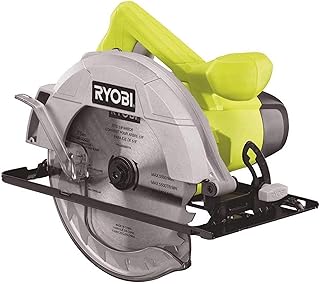
Ryobi Corded Circular Saw, CSB125, Renewed (B09MKW7VT6)
The only corded model in this comparison, the CSB125 plugs directly into a wall outlet and never needs a battery. Being a renewed unit, it’s typically sold at a further reduced price compared to new units, having been inspected and reconditioned before resale. It’s a sensible pick for anyone who wants dependable performance for occasional garage or shop use and doesn’t need cordless mobility, or for anyone stocking a rental property with a basic, reliable tool. As with any renewed or refurbished tool, it’s worth confirming the seller’s return policy and any included warranty coverage before purchasing, since terms on renewed listings can differ from new-condition units even when sold by the same retailer. In our experience, renewed tools from reputable listings are a legitimate way to save money on a straightforward tool like this one, where the core mechanical simplicity of a corded saw leaves less room for hidden wear issues compared to more complex cordless or battery-dependent tools.
3. Key Features That Define These Saws
Across the Ryobi circular saw range, a few design choices repeat themselves, and understanding them helps explain why the saws perform the way they do. Most current models use a 7-1/4 inch blade, which is the standard size for circular saws and keeps blade replacement cheap and easy to find at any hardware store. Bevel capacity typically runs up to 50 degrees, which is generous compared to some competing brands that stop at 45, giving you a bit more flexibility on angled cuts for trim work or fence posts. Taken together, these shared design choices are why switching between models in this lineup feels intuitive even for someone who has only used one Ryobi saw before, since the control layout, adjustment mechanisms, and general handling stay consistent across the range.
The brushless models add an electronically commutated motor instead of a traditional brushed motor, which matters more than it sounds. Brushless motors run cooler, last longer since there are no carbon brushes to wear down, and typically deliver more torque per amp of battery draw. That translates into a saw that bogs down less when it hits a knot in the wood or when you’re pushing through thicker stock.
Baseplates on the cordless models are usually stamped steel or magnesium depending on the tier, with the higher-end saw favoring lighter magnesium construction to offset the added weight of a battery pack. Bevel and depth adjustments use tool-free levers on most models, so you can change settings mid-project without hunting for an Allen key.
Dust management is handled through a simple blower port near the blade guard rather than a dust collection port, which is common at this price point but worth knowing if you’re used to pro-grade saws with vacuum attachments. LED work lights are standard across the cordless lineup, illuminating the cut line in dim garages or basements where natural light is limited.
Cut Line Indicators and Sight Lines
Every saw in the lineup includes a notched cut-line indicator stamped into the front of the baseplate, showing both a 90-degree and bevel cut guide. These are genuinely useful for freehand cuts without a guide rail or straightedge clamped down, though like any circular saw, the indicator is only as accurate as your ability to keep the baseplate steady through the cut. For anything requiring precision, we’d still recommend clamping a straightedge rather than relying solely on the sight line, especially on longer rip cuts where small deviations compound over distance.
Rip Guide Compatibility
Most models in this lineup accept a simple slide-in rip guide, either included in the box or available as a low-cost accessory, which locks into a slot on the baseplate and lets you set a fixed distance from the edge of your material for repeatable parallel cuts. This is a small feature that matters a lot in practice, since it turns the saw into a more precise tool for tasks like ripping plywood strips to a consistent width without needing a separate guide rail system.
Trigger and Switch Design
The cordless models use a standard trigger switch paired with a separate safety lock-off button that must be depressed before the trigger will engage, which is a fairly universal design across the circular saw category and prevents accidental startup if the saw is bumped or jostled in a bag. The switch throw feels reasonably light without being so sensitive that it’s easy to trigger by accident, and the safety button is positioned where a thumb naturally rests during normal two-handed grip.
4. Corded vs Cordless: Which Ryobi Circular Saw Fits Your Workflow
This is usually the first fork in the road for anyone shopping this lineup, and it’s worth thinking through honestly rather than defaulting to whichever seems more modern. Corded saws like the CSB125 plug directly into a wall outlet or extension cord and deliver constant, unchanging power for as long as you’re cutting. There’s no battery to charge, no runtime to track, and generally a lower upfront cost. The tradeoff is obvious: you’re tethered to an outlet, and dragging a cord around a job site or across a yard gets old fast.
Cordless saws solve the mobility problem entirely. You can cut lumber on a roof, in a crawlspace, or fifty feet from the nearest outlet without a second thought. The 18V ONE+ platform also means the battery you buy for this saw works across dozens of other Ryobi tools, from drills to blowers to shop vacuums, so the investment compounds if you’re building out a Ryobi tool collection. The catch is that runtime is finite, battery packs add weight to the tool, and the standard (non-HP) cordless motor can bog down on thicker or wetter lumber compared to a corded saw or the brushless HP model.
Our general recommendation: if you already own ONE+ batteries, or you do a lot of remodeling and outdoor project work where cords are impractical, go cordless and lean toward the brushless HP model if your budget allows it. If you’re doing occasional garage projects near an outlet and want to spend less, the corded CSB125 remains a smart, low-friction choice. For a deeper breakdown of saw categories generally, our types of power saws guide covers how circular saws stack up against jigsaws, table saws, and more.
There’s also a middle consideration worth mentioning: extension cord quality and length. If you do lean toward the corded CSB125, using an undersized or overly long extension cord can cause voltage drop that noticeably reduces motor performance, sometimes to the point of mimicking the bogging-down behavior people associate with weaker cordless saws. A properly rated 12-gauge cord kept under 100 feet will let the CSB125 perform at its intended level, while a thin 16-gauge cord stretched across a large yard will hold it back. This is one of those details that gets overlooked in reviews but genuinely affects real-world satisfaction with a corded tool.
On the flip side, cordless users should factor in charge time as part of their workflow. A depleted battery on a standard charger can take upwards of an hour to fully recharge, though Ryobi’s faster chargers cut that down considerably. If you’re planning a full day of cutting, having at least two batteries in rotation avoids downtime waiting for a pack to charge mid-project, which is a small logistical detail that makes a real difference on a tight schedule.
Total Cost of Ownership
Sticker price only tells part of the story when comparing corded and cordless options. The CSB125 has the lowest upfront cost and no ongoing battery expenses, making its total cost of ownership simple and predictable. Cordless saws sold as tool-only require an upfront battery and charger investment if you’re starting from scratch, which can bring the effective total cost above what the corded saw’s price tag suggests at first glance. However, that same battery investment isn’t tied exclusively to the saw, since it carries forward to every other ONE+ tool you add later, effectively amortizing the cost across your entire tool collection rather than a single purchase. Looked at over several years and multiple tools, cordless often ends up the better long-term value, even though the corded saw wins on pure sticker price today.
5. The Ryobi ONE+ Battery Ecosystem Explained
Every cordless saw in this lineup runs on Ryobi’s 18V ONE+ battery platform, which is one of the largest cordless tool ecosystems on the market. The appeal isn’t just the saw itself, it’s that a single battery can power your drill, reciprocating saw, string trimmer, shop light, and dozens of other tools. If you’re new to Ryobi, most saws are sold as “tool only,” meaning you’ll need to already own a compatible battery and charger, or buy them separately, which is worth factoring into your total cost before checking out.
Battery amp-hour rating directly affects runtime and, to a lesser extent, power delivery under load. A 4.0Ah or 6.0Ah pack will get noticeably more cuts per charge than a 1.5Ah pack, and higher-capacity packs also tend to sustain voltage better during demanding cuts, which matters more with the standard motor than the brushless HP motor. If you plan to use the saw for full days of framing or deck building, it’s worth budgeting for at least one higher-capacity battery, or two batteries so you can swap while one charges.
One nuance worth knowing: the ONE+ HP brushless saw is designed to work with any ONE+ battery, but it’s optimized to pull more power from HP-rated batteries specifically. You can absolutely run it on standard ONE+ packs, but if you want to see the saw’s full potential on thicker cuts, pairing it with an HP battery closes that gap.
Cross-Compatibility With Other Ryobi Tools
The real financial argument for buying into the ONE+ platform rarely comes down to the saw alone, it comes down to everything else the same battery can run. A single ONE+ battery moves between the circular saw, a drill, an impact driver, a reciprocating saw, a shop vac, string trimmers, blowers, and even some lawn mowers and pressure washers in Ryobi’s outdoor lineup. If you’re building out a full set of tools rather than buying one saw in isolation, that shared battery pool ends up being the more meaningful long-term value than any single tool’s price tag.
Charging Times Compared
Charge time varies both with battery capacity and which charger you’re using. A standard charger typically takes somewhere in the range of an hour or more to fully charge a mid-capacity battery, while Ryobi’s faster chargers can cut that time down significantly, which is worth the extra cost if you plan to use the saw frequently and want to minimize downtime between sessions. Larger capacity batteries naturally take longer to charge fully than smaller ones, even on the same charger, simply because there’s more energy capacity to replenish.
Battery Age and Performance Degradation
Like all lithium-ion batteries, ONE+ packs lose some capacity over time and with repeated charge cycles. If you’re picking up a used or older battery to pair with a new saw, expect somewhat reduced runtime compared to a brand-new pack of the same rated capacity, and keep an eye out for a battery that no longer holds a charge reliably, since that’s usually a sign it’s near the end of its useful life rather than a fault with the saw itself.
6. Cutting Power and Real-World Performance
Specs on a box only tell part of the story, so here’s what actually matters when the blade meets the wood. The ONE+ HP brushless saw is the clear performance leader in the lineup. It rips through 2x4s and 2x6s with minimal bogging, handles plywood sheets cleanly, and holds up reasonably well in pressure-treated lumber, which tends to be denser and harder on motors. Cut speed feels close to a corded saw in most everyday tasks, and the brushless motor noticeably keeps its composure when you push the saw a bit faster than you probably should.
The standard 18V cordless saws (non-HP) perform well for typical DIY tasks like cutting deck boards, trimming door bottoms, or breaking down sheet goods, but you’ll feel the motor working harder on thicker or denser material, and cut speed slows if you’re not patient with your feed rate. These are still capable saws, just not ones you’d want to lean on for all-day framing work.
The corded CSB125 delivers the most consistent power of the group simply because it isn’t drawing from a battery, and for straightforward, repetitive cuts, that consistency is genuinely useful. It won’t out-torque the brushless HP saw on the toughest material, but for standard framing lumber and plywood it holds its own, especially at its price point.
Across all models, cut quality depends heavily on blade choice. The stock blades that ship with these saws are adequate for rough carpentry, but swapping in a quality 24-tooth framing blade or a 40-tooth finish blade makes a noticeable difference in cut cleanliness, regardless of which saw you’re using.
Cutting Plywood and Sheet Goods
Breaking down full sheets of plywood or OSB is one of the most common tasks these saws face, and all six models handle it reasonably well as long as the sheet is properly supported. The wider baseplate on the full-size 7-1/4 inch models provides more stable footing across a sheet compared to the compact model’s smaller shoe, which matters most when you’re making long rip cuts rather than short crosscuts. Supporting the sheet on foam insulation board or sawhorses positioned to avoid pinching the blade will noticeably improve cut quality and reduce strain on the motor, regardless of which saw you’re using.
Cutting Dimensional Lumber
For standard 2x4s, 2x6s, and similar dimensional lumber, even the base cordless models handle the task without much drama, since this is squarely within the intended use case for a 7-1/4 inch circular saw. The difference between models shows up mainly in cut speed and how the saw behaves when pushed a bit faster than ideal, with the brushless HP saw tolerating an impatient feed rate far better than the standard brushed models.
Bevel Cuts and Angled Cutting Performance
Bevel capacity across the current lineup extends up to 50 degrees, which is a genuinely useful range for angled trim cuts, fence post work, or deck framing that requires anything beyond a simple square cut. Adjusting the bevel uses a tool-free lever that locks at common preset angles, including 45 degrees, while still allowing fine adjustment anywhere within the range for less standard angles. Cut quality on beveled cuts holds up well across the lineup, though as with any circular saw, maximum cut depth decreases as the bevel angle increases, since the blade is traveling through more material at a steeper angle for the same baseplate-to-blade-tip distance.
Noise and Vibration
None of these saws are particularly loud compared to other circular saws in their class, though the corded CSB125 runs slightly louder at full speed than the brushless cordless models, which tend to have a smoother, lower-pitched motor note. Vibration levels are modest across the board and shouldn’t cause noticeable hand fatigue during normal, intermittent use, though extended continuous cutting on any handheld circular saw will eventually tire out your grip regardless of brand.

7. Build Quality and Ergonomics
Handling a circular saw for an extended period reveals things a spec sheet never will. The brushless HP saw uses a lighter magnesium shoe and housing in places, which helps offset the extra weight of a battery pack and keeps overall balance reasonable for one-handed cuts when needed, though two hands is always the safer approach. The grip on the current cordless models is rubber-overmolded and shaped with a slight taper, which reduces hand fatigue during longer sessions of repetitive cuts, like breaking down a stack of plywood sheets.
The baseplate on the cordless saws is wide enough to stay stable across a sheet of plywood without tipping, and the bevel and depth adjustment levers are large enough to operate with gloves on, which matters more than people expect once winter or job-site conditions get involved. The corded CSB125 is a bit more basic in its ergonomics, with a simpler grip and lighter overall build, which actually works in its favor for users who find it more compact and easier to maneuver in tight spaces.
Blade changes across the lineup use a standard arbor lock and hex wrench stored right on the tool, which is a small but appreciated detail since you won’t need to hunt down a separate wrench when it’s time to swap blades.
Weight and Balance Comparisons
Weight differences between models are noticeable once a battery is attached. The compact brushless saw is the lightest of the cordless options, making it the easiest to control one-handed for cutoffs or overhead work, though we’d still recommend two-handed operation whenever the cut allows it. The full-size brushless HP saw is the heaviest of the cordless models once a larger battery is attached, but the added heft actually helps stabilize the saw during faster feed rates, since a lighter tool can be pushed off-line more easily by an aggressive cut. The corded CSB125 sits in between, being lighter than the battery-equipped saws but without the front-heavy balance that a battery pack introduces.
Grip and Handle Comfort Over Long Sessions
For anyone planning to use the saw for hours at a stretch, such as during a deck-building weekend, the rubber overmold on the primary handle and the auxiliary front handle both help reduce hand fatigue compared to older, harder plastic grips Ryobi used in previous generations. The auxiliary handle in particular gives your off hand a stable, purpose-built grip point rather than forcing you to awkwardly steady the saw against the housing itself, which matters more than it sounds once you’re several hours into a project.
8. Safety Features and Blade Guard Design
Every saw in this lineup includes a spring-loaded lower blade guard that automatically retracts as the blade enters the material and springs back into place the moment the cut ends or the saw is lifted away from the workpiece. This is a standard safety feature across nearly all circular saws, but it’s worth checking on any used or older unit to make sure the guard moves freely and isn’t gummed up with sawdust or resin.
An electric brake is included on the current cordless models, which stops the blade spinning within a second or two after you release the trigger, cutting down on the window where an exposed blade is still spinning after a cut. This is a genuinely useful feature for reducing incidental contact risk when setting the saw down between cuts.
Anti-kickback design elements, including a riving-knife-adjacent guard geometry and a blade-locking safety switch that must be engaged before the trigger will fire, are present across the range. As always, proper technique still matters more than any built-in safety feature: keep the baseplate flat against the material before starting the cut, never force the saw through a cut faster than the motor wants to go, and support the offcut side of the material so the kerf doesn’t pinch the blade partway through.
Personal Protective Equipment Recommendations
Beyond the saw’s built-in safety features, standard shop safety practices still apply here just as they would with any circular saw. Safety glasses or a full face shield protect against kicked-up sawdust and occasional debris, hearing protection is worth considering during extended cutting sessions, and a dust mask is a reasonable addition when cutting treated lumber or engineered wood products that can release fine particulate. None of these saws include dust collection ports, so airborne dust is something to actively manage yourself rather than something the tool handles for you.
Understanding Kickback and How to Avoid It
Kickback happens when a blade binds in the material and the saw is forced back toward the operator, and it’s one of the more serious risks associated with any circular saw regardless of brand. The most common causes are the kerf closing up and pinching the blade, cutting freehand without adequate support under both sides of the cut, or twisting the saw during the cut instead of pushing it in a straight line. Ryobi’s saws don’t have anything unusual to worry about here beyond standard circular saw design, so the same universal precautions apply: keep the blade guard functioning properly, never remove or wedge open the guard, support both sides of the material so the kerf stays open rather than closing on the blade, and maintain a firm, balanced stance so you can control the saw if it does kick back unexpectedly.
Setting Depth of Cut Correctly
One safety-adjacent habit worth building is setting blade depth so it extends only slightly beyond the material being cut, typically by about a quarter inch. This isn’t just about cut quality, a blade set too deep exposes more spinning blade beneath the material than necessary, which increases the chance of contact with a support surface, a clamp, or your own hand if the saw slips. It also reduces strain on the motor, since the saw isn’t cutting through more material thickness than it needs to.

9. What’s In the Box
What you actually receive varies by model, and this is one of the easiest places to get caught off guard when ordering online. Most cordless Ryobi circular saws, including the ONE+ HP brushless model and the compact brushless model, are sold as “tool only,” which means the box includes the saw, a blade, the hex wrench for blade changes, and often a rip guide, but no battery and no charger. If you don’t already own ONE+ batteries, you’ll need to budget for a battery and charger kit separately, or look for a bundle listing that includes them.
A few listings, particularly older or renewed cordless models, are sold as combo kits that include a battery and charger, which is worth checking carefully in the product title and images before buying if you’re starting from zero on the ONE+ platform. The corded CSB125 sidesteps this issue entirely since it plugs into a standard outlet, so the box simply includes the saw, blade, and wrench.
Across the lineup, the stock blade is a general-purpose combination blade suitable for rough framing and sheet goods, but not ideal for fine finish work. If your projects call for cleaner cuts in visible trim or cabinet-grade plywood, plan on a separate finish blade purchase.
It’s also worth checking whether a rip guide, edge guide, or carrying case is included, since these small accessories vary between listings even for what appears to be the same core saw. A rip guide in particular is genuinely useful for repeatable parallel cuts and is worth seeking out if it isn’t included with your specific listing, since aftermarket versions are inexpensive and widely available.
Worthwhile Add-On Purchases
Beyond what ships in the box, a few inexpensive accessories noticeably improve the day-to-day experience of owning one of these saws. A dedicated finish blade, typically in the 40 to 60 tooth range, is worth having on hand for any cuts that will remain visible, since the stock combination blade is optimized for speed and rough carpentry rather than a clean edge. A basic straightedge clamp guide, separate from the built-in rip guide, extends your precision to angled and irregular cuts that a parallel rip guide can’t handle. And for cordless users, a second battery is arguably the single most valuable add-on purchase, since it eliminates the single biggest limitation of cordless tools: waiting on a charge mid-project.
10. Ryobi Circular Saw Model Comparison
Here’s how the current lineup stacks up side by side, based on published specs and hands-on impressions from typical DIY and light-duty renovation use.
When comparing these saws against each other, it helps to think in tiers rather than treating every model as a direct competitor to every other model. The corded CSB125 occupies its own tier entirely, competing more on price and simplicity than on raw performance. The standard brushed cordless kit is the entry point into the cordless lineup, offering reasonable performance and, in the case of the kit version, a complete out-of-box solution. The compact brushless model serves a specialized niche focused on portability rather than maximum capacity. And the two HP brushless listings, along with the PBLCS300B, represent the performance-focused end of the lineup, with the HP models edging out the PBLCS300B specifically in sustained power under heavy load.
| Model | Power Source | Motor Type | Blade Size | Best For |
|---|---|---|---|---|
| ONE+ HP Brushless (B0G3RTJXNJ) | 18V Cordless | Brushless | 7-1/4″ | Framing, decking, all-day use |
| ONE+ HP Brushless, Tool Only (B0B1F877F3) | 18V Cordless | Brushless | 7-1/4″ | Users upgrading from a standard saw |
| 18V Brushless Compact (B0BB5JYJSW) | 18V Cordless | Brushless | 6-1/2″ | Trim, cutoffs, one-handed cuts |
| 18V Lithium Circular Saw w/ Battery (B01GUM6YQU) | 18V Cordless | Brushed | 7-1/4″ | Budget cordless starter kit |
| PBLCS300B Brushless (B099CHFN88) | 18V Cordless | Brushless | 7-1/4″ | General DIY and remodeling |
| CSB125 Corded, Renewed (B09MKW7VT6) | Corded (120V) | Brushed | 7-1/4″ | Garage projects near an outlet |
If your interest in saws extends beyond circular saws, our best reciprocating saws guide and best tile saws guide cover the other tool categories Ryobi and its competitors also make well.
It’s also worth briefly touching on how Ryobi’s circular saws compare to competing brands at a similar price point, since that context helps set realistic expectations. Compared to premium contractor brands, Ryobi saws generally trade some raw power and long-term durability under daily commercial use for a significantly lower price and the benefit of the shared ONE+ battery ecosystem. For occasional to moderate use, that tradeoff tends to favor Ryobi, since most homeowners never push a saw hard enough daily to expose the durability gap. For full-time tradespeople running a saw for eight hours a day, five days a week, a premium brand’s saw may hold up better over the long run, though at a noticeably higher cost per tool. If you want to see how specific competitor models stack up, our DeWalt circular saw review, Milwaukee circular saw review, and Makita circular saw review each go into more detail on those alternatives.

11. Pros and Cons
Pros
- Brushless models deliver strong power and long motor life
- Shared ONE+ battery platform across dozens of tools
- Generous 50-degree bevel range on current models
- Tool-free depth and bevel adjustments
- Budget corded option available for occasional users
- Electric brake on cordless models improves everyday safety
Cons
- Most cordless saws sold as tool-only, adding cost if starting fresh
- Standard (non-HP) cordless motor can bog down on dense lumber
- No dust collection port, only a basic blower vent
- Battery runtime limits all-day heavy use without spares
- Stock blade is rough-cut only, not finish quality
12. Who Should Buy a Ryobi Circular Saw
The right pick genuinely depends on what you’re cutting and how often. Weekend DIYers who occasionally need to trim a door, cut plywood for a shelf, or handle small home projects will likely get the most value out of either the standard 18V cordless saw or the corded CSB125, especially if budget is the deciding factor. Both handle everyday cuts without complaint and won’t sit unused between projects. It’s worth being honest with yourself here about how often the saw will actually come out of the garage, since a tool that gets used twice a year doesn’t need to be the top-tier model in the lineup, no matter how tempting the extra performance sounds on paper. A modestly priced saw that gets used regularly and cared for properly will outperform an expensive saw left to gather dust in terms of actual value delivered per dollar spent, so matching your purchase to your realistic usage pattern is generally the smarter approach than defaulting to the most capable option available.
Homeowners already invested in the Ryobi ONE+ ecosystem, with drills, impact drivers, or outdoor tools already in the garage, should lean cordless regardless of which specific saw they choose, since battery interchangeability is the whole point of staying in the platform. If that describes you and your projects lean toward framing, decking, or fence building, the ONE+ HP brushless saw is worth the extra cost for the added torque and consistency.
Renters, apartment dwellers, or anyone doing small, infrequent projects where storage space matters might prefer the compact brushless model, since its smaller blade and lighter body make it easier to store and maneuver in tight spaces, even though it trades some capacity for that convenience. If you’re weighing circular saws against other Ryobi options entirely, our Ryobi tile saw review and comparisons like power saw vs chainsaw can help narrow down the right tool category before you commit to a specific model.
First-Time Tool Buyers
If this is your first circular saw and you don’t yet own any ONE+ batteries, the complete kit that includes a battery and charger is usually the most sensible starting point, since it avoids the extra step of sourcing a compatible battery separately. It gives you a fully functional tool out of the box and a reasonable sense of whether the ONE+ platform is one you want to keep investing in for future tools.
Landlords and Property Managers
For anyone maintaining rental properties, the corded CSB125 is a practical, low-maintenance option to keep on hand for quick repairs, trim replacements, or general fixes, since it doesn’t require managing battery charge levels between properties and is inexpensive enough to keep as a dedicated on-site tool rather than something you carry between locations.
Small Contractors and Side-Gig Tradespeople
Anyone doing paid work on the side, from deck building to fence installation, will likely get the most consistent results and least downtime from the ONE+ HP brushless saw paired with at least two batteries, since it most closely matches the performance expectations of a corded saw while retaining full cordless mobility across varied job sites.
Job Site Use vs Home Workshop Use
The right saw can also depend on where most of your cutting actually happens. For a home workshop or garage with reliable outlet access nearby, a corded saw removes battery management from the equation entirely and is one less thing to think about mid-project. For job sites, whether that’s a client’s property, a friend’s house, or an outdoor build where outlets are scarce or nonexistent, cordless is really the only practical option, and having a couple of charged batteries on hand becomes part of your standard project prep rather than an afterthought. If your work regularly moves between both environments, standardizing on cordless tends to be the simpler long-term choice, even if it means occasionally paying a small convenience premium for battery-powered performance.
Ryobi isn’t the only option worth considering. See how it stacks up against the competition:
13. Common Issues and Troubleshooting
Most problems users report with these saws come down to a small handful of recurring causes, and knowing them ahead of time can save you a frustrating troubleshooting session mid-project.
Saw Bogs Down Mid-Cut
This is almost always one of three things: a dull or gummed-up blade, too aggressive a feed rate for the material, or on cordless models, a battery that’s low on charge or nearing the end of its usable life. Start by checking the blade for pitch buildup or dullness before assuming the motor itself is underpowered, since a fresh, clean blade resolves this issue more often than people expect.
Blade Guard Sticks or Doesn’t Retract Smoothly
Resin and sawdust buildup around the pivot point of the lower blade guard is the usual culprit here, particularly after cutting resinous softwoods or pressure-treated lumber. A light cleaning with a rag and some blade cleaner or mild solvent, followed by a small amount of dry lubricant at the pivot point, typically restores smooth spring action. Never operate a saw with a guard that doesn’t move freely, since that defeats one of the tool’s core safety features.
Cuts Are Drifting Off the Line
This is usually a technique issue rather than a tool defect, most often caused by twisting the saw slightly during the cut or not maintaining consistent pressure against a guide. Double-check that your baseplate is still flat and hasn’t developed a bend from being dropped, and confirm the blade is mounted correctly and running true rather than wobbling, which can happen if the arbor nut isn’t fully tightened.
Cordless Saw Won’t Power On
Before assuming a tool fault, verify the battery is properly seated and charged, and check that the safety lock-off button is being depressed correctly before pulling the trigger. Some Ryobi tools also include thermal protection that temporarily disables the motor if it overheats during extended heavy use, so allowing the tool to cool for a few minutes before retrying is worth attempting if the saw was under heavy load right before it stopped responding.
Excessive Vibration or Unusual Noise
Unusual vibration is frequently traced back to a warped or damaged blade rather than the saw itself, so swapping in a known-good blade is the fastest way to isolate the source. If the noise or vibration persists with a different blade, it may indicate a bearing issue, which is generally outside the scope of a DIY fix and worth addressing through Ryobi’s service network if the tool is still under warranty.
Battery Not Holding a Charge
If a previously reliable battery starts depleting much faster than usual, or won’t take a full charge at all, it’s typically a sign of normal lithium-ion aging rather than a sudden defect, especially if the battery has seen years of regular use. Before assuming the battery is dead, try a full charge cycle and confirm the charger’s indicator light behaves as expected, since occasionally the issue traces back to a faulty charger rather than the battery pack itself. If the battery is relatively new and showing this behavior, it may be worth pursuing a warranty claim rather than simply replacing it out of pocket.
Saw Doesn’t Cut a Straight Line
Beyond baseplate damage or a bent blade, this can also result from feeding the material too fast for the blade and motor combination you’re using, which causes the blade to deflect slightly under load. Slowing your feed rate, especially on denser or thicker material, along with using a straightedge guide for anything requiring precision, resolves this in the vast majority of cases without needing any tool repair at all.
14. Maintenance and Blade Care
Keeping any circular saw running well comes down to a handful of habits rather than anything technical. After every few uses, especially when cutting pressure-treated or resinous lumber, wipe down the blade and check the lower guard for pitch buildup, which can slow down its spring action over time. A quick wipe with a rag and some basic blade cleaner keeps things moving freely.
Check blade sharpness regularly. A dull blade forces the motor to work harder, increases the chance of kickback, and leaves a rougher cut edge. Most 7-1/4 inch blades can be resharpened a few times before replacement is more practical, and keeping a spare blade on hand means you’re never stuck mid-project waiting on a sharpening service.
For cordless models, store batteries at partial charge rather than fully depleted if you won’t be using the saw for an extended stretch, since lithium-ion packs hold up better long-term when they’re not left sitting empty. Keep the saw itself stored in a dry space, since even brushless motors can develop corrosion issues on internal contacts if left in a damp garage or shed for long periods.
Finally, periodically check that the baseplate is still true and hasn’t developed any bend or warp from being dropped or knocked around in a truck bed, since a warped baseplate throws off cut accuracy in ways that are easy to miss until you notice your cuts drifting off the line.
Storage and Climate Considerations
Extreme temperature swings aren’t great for lithium-ion batteries, so avoid leaving battery packs in a hot car trunk or an unheated shed through a harsh winter if you can help it, since both extremes accelerate capacity loss over time. A simple tool bag or a dedicated storage bin kept in a climate-moderate space, like an interior closet or a garage that isn’t subject to extreme heat, will meaningfully extend the useful life of your batteries compared to leaving them in a vehicle between uses.
When to Replace vs Repair
Given the price point of this lineup, it’s often more economical to replace a saw that develops a significant mechanical fault, like a failed motor or a cracked housing, rather than pursuing an out-of-warranty repair, since replacement parts and labor can approach or exceed the cost of a new tool. Simple fixes like blade replacement, guard cleaning, or brush replacement on the brushed models are worth doing yourself, while anything involving the motor or internal electronics is usually better handled by weighing repair cost against a new saw’s price.
A Simple After-Use Cleaning Routine
Building a quick habit after each use goes a long way toward extending any of these saws’ working life. Unplug the saw or remove the battery first, then brush or blow off sawdust from the baseplate, the blade guard pivot, and the motor housing vents, since built-up dust in the vents can contribute to overheating during heavy use. Wipe the blade with a dry rag to remove resin buildup before it hardens, since fresh pitch comes off far more easily than pitch that’s been left to bake onto the blade over multiple uses. Finally, give the baseplate a quick visual check for any new dents or bends before storing the saw, so you catch developing issues early rather than discovering a cutting-accuracy problem partway through your next project.
15. Price and Value Analysis
Value in this lineup comes down to matching the saw to your actual usage rather than chasing the most powerful option by default. The corded CSB125 sits at the lowest price point in the lineup and delivers dependable performance for its cost, making it a smart pick if you don’t need cordless mobility and want to spend the least amount of money getting a usable saw.
The standard 18V cordless saws occupy the middle ground, costing more than the corded model but less than the brushless HP saw, and they represent solid value if you already own batteries or are buying into the ONE+ system for other tools anyway. Buying tool-only versions is the more cost-effective path if you already have compatible batteries sitting in a drawer.
The ONE+ HP brushless saw costs the most upfront, particularly once you factor in an HP battery if you don’t already own one, but the added power and motor longevity make it the better long-term value for anyone doing regular framing, decking, or renovation work where saw performance directly affects how long a job takes. For occasional use, that premium is harder to justify, but for frequent users it tends to pay for itself in reduced frustration and faster cuts.
It’s also worth factoring in the value of the shared battery platform when comparing prices against corded-only competitors or brands using a proprietary battery system. If a Ryobi saw costs slightly more than a comparable tool from a smaller brand but the battery also runs your drill, blower, and shop light, the effective cost per tool across your whole collection ends up lower than buying separate battery systems for each device.
Warranty Coverage and What It Means for Value
Warranty terms are part of the value equation too, since a longer coverage period reduces the financial risk of a manufacturing defect showing up after the return window closes. New Ryobi tools typically carry a multi-year limited warranty covering defects in materials and workmanship under normal use, though this generally doesn’t cover damage from misuse, normal wear items like blades, or unauthorized modifications. Renewed or refurbished listings, like the CSB125 renewed unit in this comparison, usually carry a shorter warranty period than new units, so it’s worth reading the specific listing’s warranty terms rather than assuming standard coverage applies. Registering a new tool promptly after purchase is generally a good habit, since it simplifies any future warranty claim and gives you a clear purchase date on file if you ever need it.
Sourcing Replacement Parts
Because these are mainstream, widely sold tools, replacement parts like blades, baseplates, and even certain internal components are generally easier to source than they would be for a more obscure or discontinued brand. Blades in particular are a non-issue given the standard sizing, but for anything beyond a blade swap, checking availability through Ryobi’s official parts channels before assuming a repair is feasible will save you time compared to guessing at compatibility with generic aftermarket parts.
16. Buying Checklist
Before finalizing a purchase, run through this quick checklist to make sure you’re getting the right saw and the right configuration for your needs. A few minutes spent double-checking these details up front saves the hassle of a return or an unplanned second purchase down the line, especially for anyone new to the ONE+ platform who might not yet know what to look for in a listing.
Confirm Before You Buy
- Does the listing include a battery and charger, or is it tool-only?
- Do you already own compatible ONE+ batteries from other tools?
- Is the blade size (7-1/4″ or 6-1/2″) right for your typical projects?
- Do you need brushless performance, or is a brushed motor sufficient?
- Is a rip guide or carrying case included if you want one?
- Are you buying new or a renewed/refurbished unit, and does that change the price you’d expect to pay?
Common Buying Mistakes
- Assuming a battery is included when the listing says tool-only
- Buying a compact 6-1/2″ saw for heavy framing work it isn’t suited for
- Overlooking extension cord gauge and length for corded models
- Not budgeting for a spare battery when planning full-day use
- Skipping a blade upgrade for projects that need a cleaner finish cut
17. Frequently Asked Questions
Is the Ryobi ONE+ HP brushless circular saw worth the extra cost over the standard model?
For anyone doing regular framing, decking, or renovation work, yes. The brushless motor holds up better under sustained load, runs cooler, and lasts longer since there are no brushes to wear out. For occasional light DIY use, the standard cordless or corded model is a more cost-effective choice. If your budget is tight but you still want brushless reliability, the PBLCS300B is a reasonable middle-ground alternative.
Do Ryobi circular saws come with a battery and charger included?
Most current cordless models, including the brushless options, are sold as tool-only, meaning no battery or charger is included. Some older or renewed listings include a battery and charger as a combo kit, so it’s worth checking the specific listing before buying if you don’t already own ONE+ batteries. Sellers are generally required to disclose this clearly in the title or bullet points, but double-checking the product images is the most reliable way to confirm.
What blade size do Ryobi circular saws use?
Most models use a standard 7-1/4 inch blade, which is widely available and interchangeable with blades from other brands. The compact brushless model uses a smaller 6-1/2 inch blade, which trades some cutting depth for a lighter, more maneuverable tool. Both sizes use a common arbor bore, so aftermarket blade options are widely available for either configuration.
Can I use any ONE+ battery with the brushless HP saw?
Yes, any 18V ONE+ battery is compatible with the brushless HP saw, but the saw is optimized to draw additional power specifically from HP-rated batteries. Standard batteries will work fine for everyday cuts, but HP batteries unlock the saw’s full performance on denser or thicker material. Mixing and matching standard and HP batteries across your other ONE+ tools is completely fine and won’t damage either the batteries or the tools.
How deep can a Ryobi circular saw cut?
Standard 7-1/4 inch bladed models typically cut up to around 2-1/4 inches deep at 90 degrees, which is enough for standard dimensional lumber. Depth decreases as you increase the bevel angle, which is normal for any circular saw regardless of brand. The compact 6-1/2 inch model has a slightly shallower maximum depth given its smaller blade diameter.
Is the corded Ryobi CSB125 still a good option compared to cordless models?
Yes, for users who mainly work near an outlet and don’t need cordless mobility, the CSB125 remains a solid, budget-friendly choice with consistent power delivery, since it isn’t limited by battery runtime. Just be sure to pair it with a properly rated extension cord if you’re working any distance from an outlet, since an undersized cord can noticeably reduce performance.
How long does a Ryobi circular saw battery last per charge?
Runtime depends heavily on the battery’s amp-hour rating and what you’re cutting. A 4.0Ah or larger battery generally provides enough runtime for a solid afternoon of intermittent cutting, while smaller 1.5Ah or 2.0Ah packs are better suited to light, occasional use. Keeping a second battery charged and ready is the simplest way to avoid downtime during longer project days.
What’s the difference between the brushless and brushed Ryobi circular saw motors?
Brushless motors use electronic commutation instead of physical carbon brushes, which means less friction, less heat, longer motor life, and generally more efficient power delivery from the battery. Brushed motors are less expensive to manufacture, which is why they still appear in the more budget-friendly models in the lineup. Over time, brushless motors also tend to require less maintenance since there are no brushes that eventually wear down and need replacement.
Can a Ryobi circular saw cut pressure-treated lumber?
Yes, all models in this lineup can cut pressure-treated lumber, though the brushless HP saw handles the added density with noticeably less bogging down compared to the standard brushed cordless models. A sharp blade matters even more with treated lumber, since the added density and moisture content dull blades faster than standard dry lumber.
Does Ryobi make a compact or lightweight circular saw?
Yes, the 18V brushless compact model uses a smaller 6-1/2 inch blade and a lighter overall body, making it a good option for trim work, cutoffs, and situations where a smaller, more maneuverable saw is preferable to a full-size unit. It’s a good complement to, rather than a full replacement for, a full-size saw if your projects vary in scale.
How do I know if a Ryobi circular saw listing includes a battery?
Check the listing title and included items list carefully. Listings labeled “tool only” or “bare tool” do not include a battery or charger, while combo kit listings will explicitly state that a battery and charger are included. When in doubt, reviewing the full list of what’s pictured in the product images is the fastest way to confirm before completing a purchase.
Are Ryobi circular saw blades interchangeable with other brands?
Yes, since Ryobi uses standard 7-1/4 inch and 6-1/2 inch blade sizes with a common arbor bore, most aftermarket blades from other manufacturers will fit, giving you flexibility to upgrade to a finish blade or specialty blade as needed. Just make sure any replacement blade matches the saw’s maximum rated RPM for safe operation.
What warranty comes with a Ryobi circular saw?
New units typically carry a multi-year limited warranty covering manufacturing defects under normal use, though normal wear items like blades aren’t covered. Renewed or refurbished listings usually carry a shorter warranty period, so it’s worth checking the specific listing before purchase to know exactly what coverage applies.
Is a Ryobi circular saw good enough for professional or daily job site use?
For moderate daily use, yes, particularly the brushless HP model, though full-time tradespeople running a saw for eight hours a day may find a premium contractor-focused brand better suited to that level of sustained, heavy-duty use over the long run. For most homeowners, landlords, and side-gig tradespeople, these saws hold up well.
18. Final Verdict
Ryobi’s circular saw lineup covers a genuinely wide range of needs without overcomplicating the decision. If you want the strongest all-around performer and plan to lean on it regularly, the ONE+ HP brushless saw is the one to buy, especially if you’re already invested in ONE+ batteries or planning to be. If you want a no-fuss, budget-friendly option for occasional garage projects, the corded CSB125 remains a smart, low-cost pick. And if you want something lighter and more compact for trim work, the 18V brushless compact model fills that niche well.
Whichever model fits your project list, matching the saw to how often and how hard you’ll actually use it will get you more value than chasing the highest spec sheet. Think honestly about the kind of cutting you actually do most often, whether you already have batteries sitting in a drawer, and how much you value cordless mobility over flat-out consistent power, and the right model in this lineup tends to become obvious pretty quickly.
For a broader look at how circular saws compare to other saw types, our best power circular saws and best power saws guides are a good next stop, and if you’re building out a full Ryobi tool kit, our reviews of other saw categories can help you round out the rest of your setup with tools that share the same battery platform.
See the Ryobi ONE+ HP Brushless Saw on Amazon