Types of Power Saws: A Complete Guide to Every Blade, Motor, and Cut
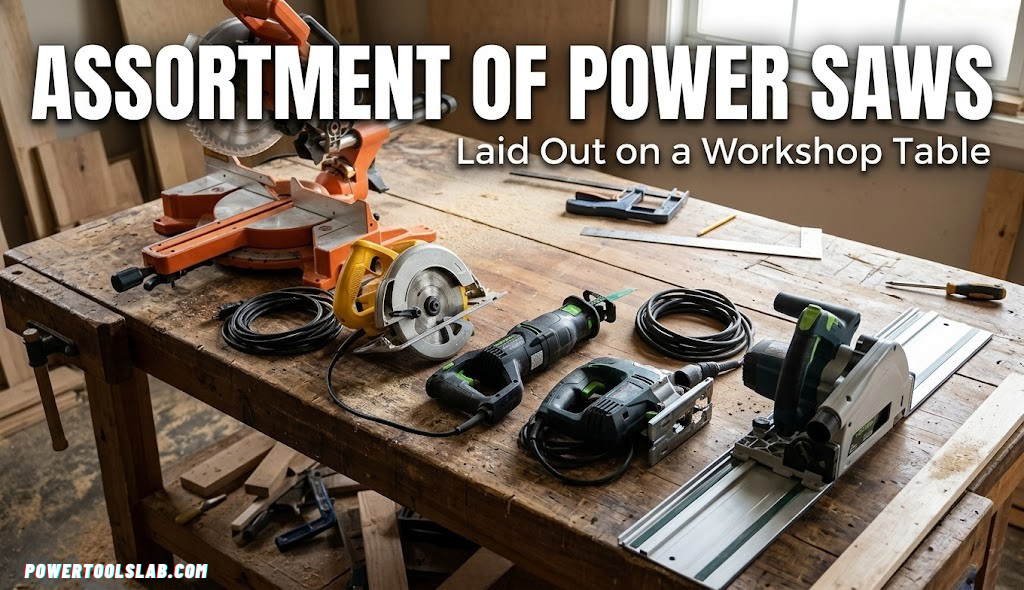
Walk into any hardware store’s tool aisle and you’ll find an entire wall dedicated to saws that all promise to be the one you need. The trouble is, no single saw does everything well, and buying the wrong one usually means a project that takes twice as long and looks half as good. This guide breaks down every major type of power saw in plain language: what it’s actually built for, where it falls short, and how it stacks up against the alternatives, so you can match the tool to the job instead of the other way around.
If you want curated picks instead of category breakdowns, our best power saws roundup tests and ranks current models across every category covered here.
What Actually Counts as a “Power Saw”?
A power saw is any cutting tool that uses a motor, rather than an arm swinging a handsaw, to drive a blade, chain, or abrasive disc through material. That definition is broad on purpose, because the category spans wildly different tools: a cordless circular saw framing a deck, a tile saw wet-cutting porcelain, and a chainsaw dropping a tree all technically qualify, even though they share almost nothing in common mechanically.
What separates one type of power saw from another usually comes down to three things: the shape and motion of the cutting edge (straight blade, round blade, chain, or band), the way the tool is guided (handheld, benchtop, or stationary), and the material it was engineered to cut (wood, metal, masonry, tile, or a mix). Understanding those three variables makes it much easier to predict how a saw will behave before you ever plug it in.
Most homeowners and tradespeople end up owning a small stack of these tools rather than one do-everything machine, because a jigsaw that can cut a curve can’t rip a straight line as cleanly as a circular saw, and a miter saw that nails a picture-frame corner has no business cutting a 4×8 sheet of plywood. The sections below walk through each major category, in roughly the order most people acquire them.
A Brief Note on How We Got Here
Power saws didn’t arrive all at once. Early motorized saws in the first half of the twentieth century were bulky, often stationary, and largely confined to sawmills and industrial shops, since portable electric motors weren’t yet compact or powerful enough for handheld use. The handheld circular saw became commercially practical mid-century as motor design improved, and the reciprocating saw followed shortly after as a demolition-focused counterpart. Cordless technology, largely irrelevant until nickel-cadmium and later lithium-ion batteries matured, is the more recent shift, and it’s arguably done more to reshape which saws people actually buy than any change in blade or motor design over the same period. Understanding that history isn’t just trivia, it explains why certain categories, like table saws and band saws, remain predominantly corded and stationary: they were designed in an era before battery power was a serious option, and their core mechanics never needed to change once cordless tools became viable elsewhere.

Building a starter tool kit? Compare current-generation models side by side before you buy.
Check Prices on AmazonCorded vs. Cordless: Which Power Source Actually Matters More?
Before you even land on a saw type, it’s worth settling the corded-versus-cordless question, because it shapes almost every purchase decision that follows. A decade ago this was an easy call: corded tools had the power and runtime, and cordless tools were reserved for light-duty trim work. That gap has closed dramatically, and for most homeowners and even a lot of professional trades, cordless is now the default rather than the compromise.
Corded saws still have real advantages. They never run out of charge mid-cut, they’re usually a bit lighter since there’s no battery pack hanging off the tool, and they tend to be less expensive up front because you’re not paying for a battery and charger bundled in. For a stationary tool that lives in one spot, like a table saw or a shop band saw, being tied to an outlet is a non-issue, which is part of why those categories are still dominated by corded and even hardwired options.
Cordless saws win on flexibility. There’s no cord to drag through a job site, trip over, or accidentally cut through, and modern brushless motors combined with higher-voltage battery packs have closed most of the power gap that used to exist. The real cost of going cordless isn’t the tool itself, it’s the battery ecosystem: once you buy into a brand’s battery platform, every additional cordless tool you buy in that same lineup gets cheaper, because you’re not paying for a new battery and charger each time.
When Corded Still Makes Sense
- Stationary shop tools that never leave a fixed location (table saws, band saws, some miter saws)
- All-day, continuous-use scenarios where battery swaps would slow you down
- Budget-conscious buyers who don’t already own batteries in a given brand’s ecosystem
When Cordless Makes Sense
- Job-site and outdoor work without easy access to an outlet or generator
- Anyone already invested in a specific brand’s battery platform
- Overhead, awkward, or elevated cuts where a cord becomes a hazard
Neither option is universally “better.” A homeowner doing occasional projects around the house will usually get more mileage out of a cordless circular saw and jigsaw, while a dedicated woodworking shop will often keep a corded table saw and band saw as the stationary backbone, adding cordless tools for the portable work around them.
Circular Saws: The Workhorse of Every Job Site
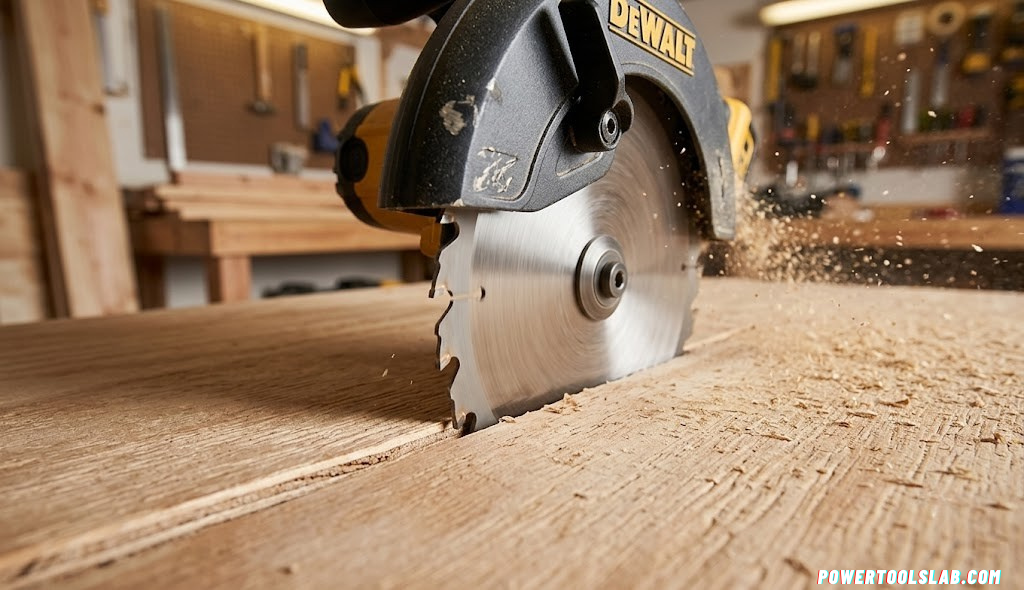
The circular saw is the closest thing to a default power saw. It uses a round, toothed blade that spins at high speed, guided by hand along a straight (or bevel-adjustable) line. Corded models still show up on job sites for their unlimited runtime, but cordless circular saws running on 18V, 20V, or 60V-max batteries have become good enough that most contractors now reach for them first, especially for framing, sheet goods, and general cutting.
There are two main body styles worth knowing. Sidewinder saws have the motor mounted beside the blade, making them lighter and more common in North America. Worm-drive saws mount the motor behind the blade with a gear reduction, giving more torque for ripping thick or wet lumber, at the cost of extra weight. Neither is objectively better; the right pick depends on whether you value maneuverability or raw cutting power.
Where Circular Saws Excel
Circular saws are unbeatable for cutting sheet goods down to size, framing walls, trimming deck boards, and any straight cut in dimensional lumber. Pair one with a simple straightedge guide and you can rip plywood almost as cleanly as a table saw, without needing a dedicated workshop.
Pros
- Portable and works on-site, not just in a shop
- Handles thick lumber and sheet goods with ease
- Wide range of blades for wood, metal, and masonry
- Affordable entry point for beginners
Cons
- Freehand cuts are only as straight as your hand
- Not practical for tight curves
- Kickback risk if the blade binds
If you’re shopping specifically in this category, our dedicated best power circular saws guide compares current models on power, weight, and cut capacity. For brand-specific detail, we’ve reviewed the DeWalt circular saw, the Milwaukee circular saw, the Makita circular saw, and the budget-friendly Ryobi circular saw in depth.
Blade Size, Depth of Cut, and Bevel Range
Circular saw blade diameter directly determines maximum cutting depth, which is why the 7-1/4 inch blade has become the de facto standard for framing and general construction: it cuts through standard 2x lumber at a bevel angle without needing a second pass. Smaller 6-1/2 inch saws trade some depth of cut for lighter weight and a smaller footprint, which matters for trim carpenters and anyone doing repetitive cuts where every ounce adds up over a workday. Larger blades in the 8-1/4 inch range show up on some worm-drive models, adding capacity for cutting thicker beams or doing deep bevel cuts in a single pass.
Bevel range is worth checking against your actual project needs rather than assuming more is always better. A saw that bevels to 45 degrees covers the overwhelming majority of framing and general carpentry, while saws that extend to 50 or 56 degrees are aimed at specific niche cuts, like certain roofing angles, that most users will rarely if ever need. Look instead at how easy the bevel adjustment is to read and lock accurately, since a saw with a wider range but a mushy, imprecise adjustment mechanism is less useful in practice than one with a tighter range and crisp, repeatable settings.

Ready to buy? See today’s price on a top-rated cordless circular saw.
View on AmazonReciprocating Saws: Built for Demolition and Rough Cuts
Often called by the genericized brand name “Sawzall,” the reciprocating saw drives a blade back and forth in a straight, piston-like motion instead of spinning it. That motion is far less precise than a circular saw’s, but it’s exactly what you want when precision isn’t the point: cutting through nail-embedded studs during a remodel, trimming pipe, cutting through a rusted bolt, or removing a section of drywall without worrying about hidden fasteners.
Reciprocating saws accept interchangeable blades rated for wood, metal, or a combination of both, and many pros keep a demolition-specific blade loaded at all times because it can plow through mixed materials, nails included, that would destroy a finish blade instantly.
Common Use Cases
- Tearing out framing, subfloor, or old decking
- Cutting plumbing pipe (PVC, copper, or cast iron with the right blade)
- Pruning thick branches when a chainsaw is overkill
- Trimming metal studs, conduit, or rebar
Pros
- Cuts through mixed materials, nails and all
- Excellent for demolition and remodeling
- Compact enough to work in tight spaces
Cons
- Cuts are rough, not finish-quality
- Vibration can fatigue your hands over long sessions
- Not designed for straight, clean lines
See our full best reciprocating saws comparison for current top picks, and check out our hands-on DeWalt reciprocating saw review if that brand is on your shortlist.
Stroke Length and Stroke Speed
Two specs beyond blade choice affect how a reciprocating saw performs in practice: stroke length and strokes per minute. A longer stroke length, typically somewhere between 1 and 1-1/4 inches on most consumer and professional models, removes more material per pass, which speeds up demolition work in thick lumber. Variable-speed triggers let you slow down for control on delicate or awkward cuts and speed up for raw cutting power on straightforward demolition, and it’s worth prioritizing a saw with genuine variable speed control rather than a single fixed speed if you plan to use it across a range of materials.
An orbital action setting, similar in concept to a jigsaw’s, is available on many higher-end reciprocating saws and adds a slight elliptical motion to the blade’s stroke. This increases cutting speed in wood significantly but should be turned off for metal cutting, where a straight in-and-out stroke keeps the blade from wandering off the cut line.

A good reciprocating saw earns its keep on the very first demo day.
Shop Reciprocating SawsJigsaws: The Curve-Cutting Specialist
A jigsaw drives a thin blade up and down through the workpiece, and because the blade is narrow, it can turn corners and follow curves that a circular saw simply cannot. This makes it the go-to tool for cutting sink cutouts in a countertop, shaping curved furniture parts, scrolling decorative patterns into wood, or notching around obstacles in a piece of trim.
Most jigsaws include an orbital action setting, which moves the blade slightly forward as well as up and down. Higher orbital settings cut faster in wood but leave a rougher edge, while a straight up-and-down stroke (orbital set to zero) is the better choice for metal, plastic, or any cut where a clean edge matters more than speed.
Where a Jigsaw Beats a Circular Saw or Band Saw
Jigsaws are unmatched for portability combined with curve-cutting. A band saw can cut tighter curves with more control, but it’s stationary; a jigsaw goes wherever the workpiece is, which matters when you’re cutting a hole in an installed countertop or an already-hung door.
Blade shank style matters more than most buyers realize. T-shank blades are the current standard, snapping into a tool-free clamp for fast changes, while the older U-shank design requires a screw or lever to secure the blade and is mostly found on older or budget models. If you’re buying blades separately from the saw, always check which shank type your specific jigsaw accepts before ordering, since the two are not interchangeable.
Bevel Cutting and Pendulum Action
Most jigsaws include a tilting base plate that lets the blade cut at an angle rather than strictly perpendicular to the surface, useful for beveled edges on countertops or decorative trim. Combined with the orbital, or pendulum, action setting mentioned above, a jigsaw can be tuned quite specifically to the material and finish quality a given cut requires: zero pendulum and no bevel for the cleanest possible cut in laminate or plastic, higher pendulum settings for fast, rough cuts in framing lumber where a bit of splintering doesn’t matter.
One often-overlooked jigsaw feature is a scrolling or rotating blade mechanism, found on some models, which lets the blade pivot independently of the saw body for tight, continuous curves without having to reposition the whole tool constantly. It’s a niche feature mainly useful for detailed scrollwork, but worth knowing about if your projects lean toward decorative or artistic cuts rather than strictly functional ones.
Pros
- Cuts curves, circles, and intricate shapes
- Lightweight and beginner-friendly
- Interchangeable blades for wood, metal, laminate
Cons
- Slower than a circular saw on straight cuts
- Blade can wander or flex in thick material
- Not suited for framing or heavy stock removal
Miter Saws: Built for Perfect Angles, Every Time
A miter saw mounts a circular blade on a pivoting arm above a fixed table, letting you drop the spinning blade straight down through a board that’s clamped in place. Because the angle and bevel are set on a calibrated scale rather than eyeballed, miter saws deliver repeatable, accurate crosscuts that are hard to match freehand.
Basic miter saws pivot left and right for angled cuts. Compound miter saws add a tilting head for bevel cuts, and sliding compound miter saws add a rail system that lets the blade travel forward and back, dramatically increasing the width of board they can cut in one pass. Trim carpenters, framers cutting rafters, and anyone building furniture with mitered corners rely on this saw daily.
| Miter Saw Type | Best For | Typical Limitation |
|---|---|---|
| Standard miter saw | Basic angled crosscuts | No bevel adjustment |
| Compound miter saw | Crown molding, angled + beveled cuts | Limited cut width |
| Sliding compound miter saw | Wide boards, decking, base trim | Larger footprint, higher cost |
Single Bevel vs. Dual Bevel
A single-bevel miter saw tilts the blade in only one direction, which means cutting a bevel angle on the opposite side requires flipping the workpiece over, an extra step that can be inconvenient or impossible with certain molding profiles. A dual-bevel saw tilts in both directions, letting you cut both bevel angles without repositioning the material, which saves real time on crown molding and other trim work that alternates angles along a run. The tradeoff is cost and, on some models, a bit more weight from the additional pivot mechanism.

Trim work goes faster with a saw that locks in the exact angle every time.
Browse Miter SawsTable Saws: The Backbone of a Serious Workshop
A table saw flips the circular saw’s arrangement: instead of moving the blade over the workpiece, you push the workpiece across a stationary blade that protrudes through a flat table. A rip fence keeps the cut perfectly parallel to the board’s edge, which makes table saws the most accurate tool available for ripping sheet goods and dimensional lumber to exact widths.
Job-site table saws are compact and mounted on folding stands for portability, while cabinet and contractor table saws are heavier, more powerful, and bolted in place in a permanent shop. Anyone building cabinetry, furniture, or doing repeat rip cuts will get more consistent results from a table saw than from any handheld alternative.
Job-Site, Contractor, and Cabinet Saws Compared
Job-site table saws are built around portability first, with folding rolling stands, smaller table surfaces, and universal motors that run on standard household circuits. They’re the right choice for anyone moving the saw between locations or storing it in a garage between projects, though the smaller table means less support for large sheet goods without an outfeed table or extra roller stands.
Contractor saws split the difference, offering a larger cast-iron or aluminum table, a more powerful induction motor, and enough weight to stay put during a cut, while still being movable with effort. Cabinet saws sit at the top of the range, with fully enclosed bases, the heaviest tables, and induction motors powerful enough to rip hardwood all day without bogging down; they’re built to be installed once and never moved, which is exactly the role they play in a dedicated woodworking shop.
Safety Note
Table saws cause more serious kickback injuries than almost any other stationary tool, which is why modern models include riving knives, blade guards, and anti-kickback pawls. Never remove these guards to “make cuts easier,” and consider a saw with flesh-detection technology if you’re cutting frequently.
Pros
- Most accurate tool for repeat rip cuts
- Handles sheet goods with a fence and outfeed support
- Accepts dado stacks for grooves and joinery
Cons
- Stationary, not job-site friendly (except compact models)
- Steeper learning curve and higher injury risk if misused
- Requires more shop space
Track Saws: A Table Saw’s Portable Rival
A track saw is essentially a plunge-style circular saw that rides along a straight guide rail, which eliminates the wobble of freehand cutting while remaining fully portable. Because the blade plunges down into the material rather than starting at the edge, track saws also excel at clean interior cuts, like cutting out a section of countertop or flooring without a starting notch.
Cabinet makers and finish carpenters increasingly favor track saws for breaking down full sheets of plywood or MDF with table-saw-level accuracy, tear-out-free edges, and none of the bulk of a stationary saw. The tradeoff is cost: a quality track saw and rail system typically costs more than an equivalent circular saw.
Band Saws: Continuous-Loop Cutting for Curves and Thickness
A band saw uses a continuous loop of toothed metal band stretched between two or three wheels, feeding downward through the workpiece on a table. Because the blade is a thin, continuous loop rather than a rigid disc, band saws can cut much tighter curves than a jigsaw while also handling thick stock that would bog down other saws.
Woodworkers use band saws for resawing (slicing a thick board into thinner sheets), cutting curved furniture parts, and ripping irregular shapes out of solid stock. Metalworking versions run at slower speeds with different blade tooth counts to cut steel, aluminum, and pipe cleanly.
Choosing a Band Saw Blade
Blade width is the main factor governing how tight a curve a band saw can cut: narrow blades (around 1/8 to 1/4 inch) turn tight radiuses well but tend to wander on long straight cuts, while wider blades (1/2 inch and up) hold a straighter line and resaw more accurately, at the cost of curve-cutting ability. Tooth count follows the same logic as other saws, fewer teeth per inch for fast, rough cuts in thick stock, and more teeth per inch for smoother finish cuts in thinner material. Most hobbyist woodworkers keep two or three blades on hand and swap based on the cut rather than trying to make one all-purpose blade do everything.
Pros
- Cuts tight curves with excellent control
- Can resaw thick stock into thinner boards
- Quieter and safer than most stationary saws
Cons
- Stationary and takes up permanent shop space
- Blade changes and tensioning take practice
- Not suited for perfectly straight rip cuts at scale
Tile Saws: The Only Real Option for Ceramic and Stone
Tile saws use a diamond-coated blade that doesn’t so much “cut” tile as grind through it, while a continuous water feed keeps the blade cool and knocks down the dust that plain dry-cutting would kick up. Trying to cut porcelain or natural stone tile with any other saw type usually ends in a cracked tile and a ruined blade, which is why this remains a category of its own.
Benchtop wet tile saws are the standard for flooring and wall tile installs, offering a sliding tray and rip fence for straight cuts plus an adjustable angle guide for miters around corners and fixtures. Smaller handheld wet saws exist for touch-up cuts, but they sacrifice the stability that makes clean tile cuts possible.
| Tile Type | Recommended Blade | Notes |
|---|---|---|
| Ceramic | Standard diamond blade | Cuts easily, low chipping risk |
| Porcelain | Continuous-rim diamond blade | Harder; slower feed rate needed |
| Natural stone | High-grade continuous diamond blade | Prone to chipping without water cooling |
For a deeper dive, our best tile saws guide compares wet saw models by cut capacity and blade quality. We’ve also reviewed the Ryobi tile saw and the Porter-Cable tile saw for anyone comparing budget-friendly options.
Rail Length and Miter Capacity
The sliding tray’s rail length determines the largest tile you can cut in a single pass, which matters more than most first-time buyers expect once large-format porcelain tile enters the picture; tiles measuring 24 inches or more on a side are increasingly common in modern flooring, and a saw with a short rail simply can’t accommodate them without an awkward, imprecise workaround. Check the rated maximum tile size against the actual tile you’re installing before buying, rather than assuming a standard benchtop model will handle oversized format tile.
Miter capacity, meanwhile, determines how easily you can cut the 45-degree corners needed around outside edges, window sills, and certain trim details. Saws with a built-in adjustable miter guide save considerable setup time compared to models that require improvised angle jigs, which is worth factoring in if your project involves more than straightforward field tile with no corners to finesse.

A dedicated wet saw is the difference between a clean tile edge and a pile of cracked tile.
Shop Tile SawsChainsaws: Different Category, Same Question We Get Asked Constantly
A chainsaw drives a rotating chain lined with cutting teeth around a guide bar, and it’s built almost exclusively for wood: felling trees, bucking logs, and heavy limbing that would destroy any of the tools covered above. Gas-powered chainsaws still dominate for all-day professional use, while battery chainsaws have gotten strong enough to handle most homeowner tasks without the noise, fumes, or maintenance of a two-stroke engine.
People frequently lump chainsaws in with “power saws” in general conversation, but the two aren’t interchangeable in practice; a chainsaw isn’t a substitute for a circular saw on a framing job, and a circular saw is a poor (and dangerous) substitute for a chainsaw on a felled tree. We cover exactly where the line falls, including bar length, kickback risk, and maintenance differences, in our dedicated power saw vs chainsaw comparison.
Gas vs. Battery Chainsaws
Gas chainsaws remain the standard for anyone felling large trees or running the saw continuously through a long workday, since a spare fuel canister lets you keep cutting indefinitely without waiting on a charger. They’re also generally more powerful per pound than a battery equivalent, which matters when you’re pushing through a thick trunk rather than limbing smaller branches.
Battery chainsaws have become genuinely capable for homeowner-scale work: clearing storm damage, cutting firewood rounds, and pruning. They start instantly with no pull cord, run quieter, and skip the two-stroke mix-ratio fuel and carburetor maintenance that gas models demand. The tradeoff is runtime, which is usually measured in cuts per charge rather than hours, so anyone doing heavy daily cutting still tends to reach for gas.
Blade Types Explained: Why the Blade Matters as Much as the Saw
Two people can own the exact same circular saw and get completely different results, simply because one is using the correct blade for the material and the other isn’t. The saw provides the motion; the blade determines the quality, speed, and safety of the cut. Understanding a few basics about tooth count, material, and blade geometry will improve your results more than upgrading the tool itself in most cases.
Tooth Count
Blades with fewer, larger teeth (think 24 teeth on a circular saw blade) remove material quickly and are suited to rough, fast cuts like framing lumber, where a slightly rougher edge doesn’t matter. Blades with more, smaller teeth (60 to 80 teeth) cut slower but leave a much cleaner edge, which is what you want for plywood, trim, or any cut that will be visible in the finished piece.
Blade Material
| Blade Material | Best For | Durability |
|---|---|---|
| High-carbon steel | Softwood, general cutting | Dulls fastest, cheapest to replace |
| Carbide-tipped | Hardwood, plywood, general use | Holds an edge much longer than steel |
| Diamond-coated | Tile, stone, masonry | Extremely durable; wears by grinding, not cutting |
| Bi-metal (recip/jigsaw blades) | Mixed wood and metal, demolition | Flexes without snapping; resists nails |
Using a wood blade on metal, or a dry-cut blade on tile without water, isn’t just inefficient, it’s genuinely dangerous. Blades can shatter, overheat, or bind when pushed outside their rated use, which is one of the more common causes of kickback injuries across every saw category on this page.
Battery Platforms and Cross-Compatibility
If you’re building out a cordless tool collection rather than buying a single saw, the battery platform you choose matters more than any individual tool’s spec sheet. Major brands sell batteries and chargers that work across their entire cordless lineup, meaning a circular saw, reciprocating saw, and jigsaw from the same platform can all share the same set of batteries, so you’re not buying redundant chargers and packs for every tool.
This is why brand loyalty in power tools isn’t just marketing, it’s genuine cost logic. Once you own two or three batteries and a charger in a given platform, every additional “tool only” purchase in that lineup is significantly cheaper than buying a standalone cordless tool from a different, incompatible brand. It’s also why switching platforms later can be an expensive decision, since it usually means starting the battery investment over from scratch.
Questions Worth Asking Before You Commit to a Platform
- Does this brand make every saw type you’re likely to need down the road (circular, reciprocating, miter, etc.)?
- Do higher-voltage batteries in this platform work across both compact tools and heavier-duty ones?
- Are replacement batteries and chargers reasonably priced and widely available?
If you’re comparing specific circular saw models across brands as a starting point for a platform decision, our best power circular saws guide and the individual DeWalt, Milwaukee, Makita, and Ryobi reviews all note which battery platform each saw draws from.
Oscillating Multi-Tools: The Saw for Places No Other Saw Fits
An oscillating multi-tool moves its attached blade in a rapid, tiny side-to-side arc rather than a full spin or stroke, which lets it cut flush against walls, plunge into the middle of a surface without a starting hole, and work in corners that would be physically impossible to reach with a jigsaw or reciprocating saw. It’s less a dedicated saw and more a cutting attachment, but it earns its spot on this list because so many trim and remodeling jobs depend on it.
Typical uses include trimming door casing to slide new flooring underneath, cutting out a section of drywall for an electrical box, and flush-cutting a protruding dowel or screw. It won’t replace any of the saws above for volume cutting, but it solves problems none of them can.
Beyond Cutting: Why It’s Called a “Multi-Tool”
Unlike every other saw on this page, the oscillating tool’s cutting blade is one attachment among many that share the same oscillating drive mechanism. Sanding pads, scraper blades, and grout removal heads all attach to the same base tool, which is part of why it’s earned a permanent spot in remodeling kits even though its cutting performance alone wouldn’t justify the purchase. Attachment compatibility varies by brand and mounting system, so if you’re buying blades or accessories separately from the tool, confirm they match your specific model’s mount rather than assuming universal fit.
Scroll Saws and Other Specialty Power Saws
A handful of power saws serve narrow, specific purposes rather than general construction or remodeling work. A scroll saw uses a very fine, thin blade moving up and down at high speed to cut intricate, detailed patterns in thin wood, ideal for fretwork, marquetry, and decorative crafts where a jigsaw’s blade would be too thick to turn tight enough corners.
Cut-off saws (sometimes called chop saws) look similar to a miter saw but are built specifically for cutting metal stock, pipe, or rebar with an abrasive or metal-cutting blade rather than adjusting for angled woodworking cuts. Concrete saws, whether handheld or walk-behind, use diamond or abrasive blades to cut through cured concrete, asphalt, and masonry for demolition and utility work.
Handheld vs. Walk-Behind Concrete Saws
Handheld concrete saws, sometimes called cut-off saws or demo saws depending on the brand, are gas or battery powered and suited to shallow cuts, utility trenching, and smaller demolition tasks where maneuverability matters more than cutting depth. Walk-behind concrete saws are larger, wheeled machines that cut deep, straight control joints in slabs and pavement, guided along a marked line rather than freehand, and they’re standard equipment for anyone doing driveway, sidewalk, or road work rather than occasional repair cuts. Both categories generate significant airborne silica dust, and both require either continuous water suppression or a properly rated dust shroud connected to an approved vacuum system to meet current workplace safety standards.
None of these specialty saws are essential for a general home tool kit, but if your work regularly touches metal fabrication, fine woodworking crafts, or concrete, the dedicated tool will outperform any general-purpose saw pressed into service.
Ergonomics, Weight, and Vibration: The Specs Nobody Reads First
Spec sheets tend to lead with motor power and battery voltage, but the numbers that actually determine whether you enjoy using a saw for more than twenty minutes are weight, balance, and vibration. A saw that feels fine picked up in a store aisle can feel very different after an hour of overhead cutting or repeated plunge cuts, so it’s worth thinking through how and where you’ll actually use the tool before choosing based on power alone.
Weight and Balance
Heavier saws generally cut more aggressively through dense material without bogging down, but that same weight becomes a liability on overhead cuts, ladder work, or long sessions of repetitive cutting. Worm-drive circular saws are a good example: their added weight and torque make them excellent for ripping thick, wet lumber, but that same weight can tire out an arm faster during all-day trim work compared to a lighter sidewinder saw. Reciprocating saws and jigsaws are usually judged more on front-to-back balance than raw weight, since an unbalanced tool forces your wrist to compensate constantly during a cut.
Vibration and Hand-Arm Exposure
Reciprocating saws and jigsaws, by nature of their back-and-forth blade motion, transmit more vibration into your hands than a smoothly spinning circular saw blade. Extended daily exposure to that vibration is a recognized occupational concern, which is part of why higher-end tools in these categories increasingly include vibration-dampening handles and counterweighted mechanisms. If you’re using these tools for hours at a stretch rather than occasional bursts, it’s worth testing vibration levels in person or reading user reviews that specifically mention hand fatigue, rather than relying on the spec sheet alone.
Grip and Trigger Placement
Trigger placement and grip diameter affect control more than most buyers expect, particularly on jigsaws and reciprocating saws where the tool is guided almost entirely by hand rather than resting against a fence or table. A grip that’s too large for your hand size makes fine control harder on curved cuts, while a poorly placed trigger can force an awkward wrist angle during extended use. These details rarely show up in a spec comparison, which is another reason hands-on testing, or at minimum close reading of user reviews, pays off before committing to a specific model.
Which Power Saws Different Trades Actually Rely On
The “right” saw collection looks different depending on the work, and looking at what tradespeople in different fields actually carry day to day can clarify which tools matter most for your own projects, even if you’re not working professionally in any of these areas.
Framers and General Carpenters
Framing crews live on circular saws almost exclusively, favoring worm-drive or high-torque sidewinder models for ripping and crosscutting dimensional lumber all day. A reciprocating saw rides along for trimming protruding nails, notching, and quick modifications, while a miter saw usually stays back at a cut station for repetitive stud and header cuts.
Trim Carpenters and Finish Installers
Finish work shifts the priority toward precision and clean edges. A sliding compound miter saw handles crown molding, casing, and baseboard corners, a track saw or table saw breaks down sheet goods for cabinetry, and a jigsaw handles cutouts for outlets, vents, and irregular shapes that a miter saw can’t touch.
Remodelers and Demolition Crews
Remodeling work leans heavily on the reciprocating saw, since tear-out involves unpredictable nails, mixed materials, and awkward angles that punish more delicate tools. An oscillating multi-tool rounds out the kit for flush cuts and tight corners, while a circular saw handles any new framing or sheathing that goes back in afterward.
Tile and Flooring Installers
Unsurprisingly, this trade centers on the wet tile saw, often a larger, rail-equipped model built for daily use rather than a compact benchtop unit meant for occasional homeowner projects. A jigsaw or oscillating tool handles undercuts around door casing and transitions where a rigid tile saw can’t reach.
Landscapers and Outdoor Crews
Outdoor and land-clearing work naturally centers on chainsaws, in both gas and battery form depending on daily duty cycle, supplemented by a reciprocating saw for pruning tasks a chainsaw is too large or aggressive to handle safely.
DIY Homeowners
Homeowners tackling occasional projects rather than daily trade work tend to build a more general-purpose kit than any single trade above, since a weekend’s projects might span a fence repair, a shelf install, and a bathroom refresh with little warning about which tool will be needed next. A circular saw, a jigsaw, and a reciprocating saw cover the overwhelming majority of that unpredictable range, with a miter saw and a compact tile saw as the next additions once trim work or a flooring project comes up. It’s rarely worth a homeowner buying trade-specific tools, like a full-size walk-behind concrete saw or a cabinet-grade table saw, unless a specific recurring hobby or project type genuinely justifies the investment and storage space.
Noise, Emissions, and Environmental Considerations
Noise ordinances and shared-space courtesy matter more than most buying guides acknowledge, particularly for anyone working in residential neighborhoods, apartment complexes, or shared job sites with tight scheduling windows. Circular saws, miter saws, and table saws all produce sustained high-decibel noise during a cut, loud enough that hearing protection is genuinely warranted for repeated daily use, not just a nice-to-have precaution.
Gas-powered chainsaws add both noise and exhaust emissions to the equation, which is one of the reasons battery chainsaws have gained ground quickly in suburban and urban settings where running a two-stroke engine for an hour draws complaints fast. Battery-powered alternatives across every saw category tend to run quieter than their gas or even corded electric counterparts, an underrated advantage for early-morning or evening work when noise ordinances are strictest.
Dust and debris also carry an environmental dimension beyond personal health: cutting treated lumber, composite decking, or certain masonry products can leave chemical residue in surrounding soil or waterways if not contained and disposed of properly. Sweeping and bagging debris rather than hosing it into a storm drain is a simple habit that avoids both environmental harm and, in many municipalities, an actual code violation.
Common Mistakes When Choosing or Using a Power Saw
Most disappointing saw purchases trace back to one of a small handful of avoidable mistakes, rather than a genuinely bad tool. Recognizing these patterns ahead of time will save both money and frustration.
Buying for the Project You Have Instead of the Projects You’ll Actually Do
It’s tempting to buy the cheapest tool that technically completes a single upcoming project, but if you already know you’ll be doing similar work again within a year, a slightly better mid-range tool almost always pays for itself in reduced frustration and better results, rather than replacing a bargain-bin tool twice.
Ignoring the Battery Platform Question
Buying cordless tools one at a time across different brands, without considering battery compatibility, is one of the most expensive mistakes a DIYer or tradesperson can make. Settling on a platform early, even if the first tool costs slightly more, saves considerably once a second and third cordless tool enter the picture.
Using the Wrong Blade for the Material
This mistake shows up constantly across every saw category on this page: a wood blade forced through metal, a dry blade run on tile without water, or a fine-tooth blade used for rough framing work it wasn’t designed for. The result is almost always a worse cut, a ruined blade, or in some cases a genuine safety hazard from a blade binding or shattering under stress it wasn’t built to handle.
Skipping the Manual on a New Tool
Every saw category has model-specific quirks, from blade-change mechanisms to depth-of-cut adjustments, that aren’t always intuitive from prior experience with a different brand or model. A few minutes with the manual before first use consistently prevents both damaged tools and avoidable injuries.
Amp Rating, Brushed vs. Brushless: What the Motor Spec Sheet Actually Tells You
Motor specifications tend to get buried in fine print, but they explain a lot about why two saws that look nearly identical can perform very differently in practice. For corded tools, amperage is the main number to compare within a saw category, since a higher amp rating generally means more sustained cutting power under load, though it also means more current draw, which matters if you’re running the saw off an extension cord or a shared circuit with other tools.
For cordless tools, motor type matters more than any single number on the spec sheet. Brushed motors, the older and simpler design, use physical carbon brushes that contact a spinning commutator to generate motion; they’re inexpensive to manufacture and repair, but the brushes wear down over time and create friction that wastes energy as heat. Brushless motors replace that mechanical contact with electronically controlled magnets, which run cooler, waste less energy, and require essentially no maintenance over the tool’s life. The tradeoff is cost: brushless tools carry a price premium, though that gap has narrowed considerably as the technology has become standard even in mid-range tool lines.
Why Brushless Matters More for Some Saws Than Others
The efficiency gain from a brushless motor shows up most clearly in tools that run for extended periods under heavy load, like a circular saw ripping through thick lumber all day or a reciprocating saw grinding through demolition debris. For lighter-duty, intermittent use, like an occasional jigsaw cut or a rarely used oscillating tool, the practical difference between brushed and brushless is smaller, and paying a premium for brushless in that case may not be worth it if budget is a real constraint.
Runtime per battery charge also improves meaningfully with brushless motors, since less energy is lost to friction and heat compared to a brushed equivalent pulling from the same battery pack. If you’re already choosing between two saws with similar power ratings, and one is brushless while the other is brushed, the brushless option will typically deliver more cuts per charge and a longer working life before the motor itself needs replacing.
Kickback: What Causes It and How Each Saw Type Handles the Risk
Kickback is the sudden, forceful reaction of a saw when its blade binds, catches, or is pinched in the material being cut, and it’s responsible for a disproportionate share of serious power saw injuries across nearly every category on this page. Understanding what causes it, and how it manifests differently by saw type, is worth more than any single safety tip in isolation.
Circular Saws and Table Saws
On a circular saw, kickback typically happens when the wood pinches the blade from behind, either because the cut is closing up under the workpiece’s own weight or because the saw isn’t being guided in a straight line, and the reaction throws the saw backward toward the user with real force. Table saws see a related but distinct version, where the workpiece itself is thrown back at high speed if it contacts the back of the spinning blade at an angle, which is exactly why riving knives and splitters are considered essential safety equipment rather than optional accessories.
Reciprocating Saws and Jigsaws
These tools are generally lower-kickback-risk by design, since their blade motion doesn’t spin continuously in a way that can grab and fling material, but they’re not risk-free: a reciprocating saw blade can bind in a tight cut and cause the tool to jump, and a jigsaw blade can deflect or snap if forced through material too quickly, sending a hot, sharp blade fragment flying.
Chainsaws
Chainsaw kickback is arguably the most dangerous version across all saw types, occurring when the upper tip of the guide bar contacts material and the chain’s rotation drives the bar violently upward and back toward the operator. Modern chainsaws include chain brakes and low-kickback chain designs specifically to address this, but proper cutting technique, keeping the tip clear of contact whenever possible, remains the single most effective safeguard.
Across every category, the common thread is the same: sharp, correctly rated blades bind less than dull or mismatched ones, a firm and correct grip lets you control a kickback event rather than be thrown by it, and safety features like riving knives, chain brakes, and blade guards exist because engineers have already seen exactly how these accidents happen.
Power Saw Comparison Table: Side by Side
If you’re deciding between two or three saw types for an upcoming project, this table condenses the key differences into a single reference.
| Saw Type | Best For | Cut Style | Portability |
|---|---|---|---|
| Circular saw | Framing, sheet goods, general cuts | Straight, freehand or guided | High |
| Reciprocating saw | Demolition, rough cuts | Straight, rough | High |
| Jigsaw | Curves, cutouts, detail work | Curved or straight | High |
| Miter saw | Angled crosscuts, trim | Precision straight/angled | Low (benchtop) |
| Table saw | Ripping, repeat cuts | Precision straight | Low to medium |
| Track saw | Sheet goods, plunge cuts | Precision straight | High |
| Band saw | Curves, resawing thick stock | Curved, continuous | Low (stationary) |
| Tile saw | Ceramic, porcelain, stone tile | Straight, wet-cut | Medium |
| Chainsaw | Trees, logs, branches | Straight, chain-driven | High |
| Oscillating tool | Flush cuts, tight spaces | Small oscillating arc | High |

Most people end up needing at least three of these tools. A combo kit often costs less than buying separately.
Compare Combo KitsHow to Choose the Right Power Saw for Your Project
Start with the material, not the tool. Wood framing and sheet goods point toward a circular saw or track saw. Angled trim and crown molding point toward a miter saw. Tile and stone point toward a wet tile saw, full stop, since substitutes tend to crack the material and damage the blade. Demolition and remodeling work, where you can’t predict what’s hiding behind a wall, points toward a reciprocating saw.
Next, consider whether the cut needs to be straight or curved. Straight, accurate cuts favor circular saws, miter saws, table saws, and track saws. Curved or irregular cuts favor jigsaws and band saws. Trying to force a straight-line tool into curve-cutting duty, or vice versa, is the most common reason people end up disappointed with a saw that’s actually a perfectly good tool for its intended job.
Finally, weigh portability against precision. Stationary tools like table saws, band saws, and miter saws trade portability for repeatable accuracy. Handheld tools like circular saws, jigsaws, and reciprocating saws trade some precision for the ability to bring the saw to the workpiece instead of the other way around. Most well-equipped garages end up with one or two tools from each side of that tradeoff, since job-site work and shop work call for different strengths.
Our full best power saws guide walks through specific model recommendations across every category above, if you’d rather skip the research and go straight to a shortlist.
Quick Project-to-Saw Lookup
If you’d rather match a specific project to a saw directly rather than reasoning through material, cut shape, and portability separately, this quick lookup covers the most common home and job-site tasks.
| Project | Recommended Saw |
|---|---|
| Building a deck or framing a wall | Circular saw |
| Installing crown molding or baseboard | Miter saw (dual bevel preferred) |
| Cutting a sink hole in a countertop | Jigsaw |
| Tearing out old subfloor or drywall | Reciprocating saw |
| Ripping plywood to width repeatedly | Table saw or track saw |
| Installing floor or wall tile | Wet tile saw |
| Cutting curved furniture parts | Band saw |
| Felling a tree or cutting firewood | Chainsaw |
| Trimming door casing for new flooring | Oscillating multi-tool |
| Fine detail or fretwork in thin wood | Scroll saw |
Power Saw Buying Guide by Budget
Price ranges vary enormously across saw categories, and spending more doesn’t always buy you a better tool for your specific use case, it usually buys you more power, longer runtime, or features that matter only at a certain frequency of use. Here’s roughly how to think about spending at three different tiers.
Entry-Level (Occasional Homeowner Use)
At this tier, a basic corded or single-battery circular saw, a lightweight jigsaw, and a compact reciprocating saw will cover the vast majority of household projects: hanging shelves, cutting deck boards, minor demolition, and simple repairs. Bare-bones miter saws and benchtop tile saws also fall in this range for anyone tackling a one-time trim or flooring project. Don’t over-invest here if you’re not sure you’ll use the tool again within the year; a rental or a basic model is the more sensible call.
Mid-Range (Regular DIY or Light Trade Use)
This is where brushless motors, higher-voltage battery platforms, and better ergonomics start to pay for themselves. If you’re doing multiple projects a year, cutting a variety of materials, or working outdoors regularly, mid-range tools in a consistent battery platform will save money over time compared to constantly buying one-off entry-level tools. This tier is also where sliding compound miter saws and contractor-grade table saws become worth considering.
Professional-Grade (Daily, All-Day Use)
Tradespeople cutting for eight hours a day need tools built for that duty cycle: metal housings instead of plastic, higher amp-hour batteries, and warranties that reflect heavier use. The price premium here buys durability and uptime more than raw cutting ability, since a mid-range saw and a professional saw will often make an identical cut, the professional one will just survive years of daily abuse doing it.
A Note on Used and Refurbished Tools
Certified refurbished tools, sold directly through a manufacturer or major retailer’s refurbished program, are often a genuinely smart way to get a professional-grade tool at a mid-range price, since they’ve typically been inspected and repaired to factory standards rather than simply resold as-is. Buying a used saw from an unverified private listing is riskier, particularly for anything with a spinning blade at high speed, since worn bearings, damaged guards, or frayed cords aren’t always obvious on casual inspection. If you go the used route outside a certified program, budget saws with simple mechanisms, like a basic circular saw or jigsaw, are a safer bet than complex stationary tools like table saws, where hidden wear is both harder to spot and more dangerous if it fails during use.

Not sure which tier fits your project list? Compare current models across all three budget levels.
Browse Power Saws by PriceMaintenance and Blade Care: Getting Years Out of Every Saw
Power saws are durable tools, but neglecting a few basic maintenance habits will shorten their working life dramatically, and dull or damaged blades are responsible for a surprising share of both poor cuts and safety incidents. A little routine care costs almost nothing and pays for itself many times over.
After Every Use
- Brush or blow off sawdust and debris, especially around the motor housing vents
- Wipe down the blade to prevent pitch and resin buildup, which causes burning and binding
- Store batteries at partial charge if the tool won’t be used for an extended period
Periodically
- Check the blade guard and riving knife (on circular and table saws) for smooth, unobstructed movement
- Inspect the power cord or battery contacts for fraying, cracking, or corrosion
- Lubricate moving parts per the manufacturer’s manual, particularly on band saws and miter saw slides
- Replace worn brushes on brushed-motor tools before they damage the motor
Blade sharpening is worthwhile for high-quality carbide-tipped blades, but for most homeowner-grade blades, replacement is cheaper and more reliable than sharpening once the edge dulls noticeably. Diamond tile blades don’t sharpen in the traditional sense at all; they simply wear down over their service life and need replacing once cutting speed drops off.
Renting vs. Buying a Power Saw
Not every saw on this list belongs in a permanent home tool collection. If you’re cutting tile for one bathroom remodel and don’t plan to tile again anytime soon, renting a quality wet tile saw for a day or a weekend is often cheaper and less of a storage headache than buying one outright. The same logic applies to specialty tools like concrete saws or larger stationary band saws that see occasional use.
Tools worth buying even for occasional use tend to be the ones you’ll reach for unpredictably: a circular saw, a jigsaw, and a reciprocating saw all come up often enough in general home maintenance that renting them repeatedly would cost more than owning a basic model outright. As a rough rule of thumb, if you can predict you’ll need the tool again within a year or two, buying usually wins; if it’s genuinely a one-off project, renting keeps both cost and clutter down.
Power Saw Safety Basics Worth Repeating
Every power saw category above shares a handful of safety fundamentals that are easy to skip after the hundredth cut but matter every single time. Always wear eye protection and, for anything producing fine dust like tile or MDF, a proper dust mask or respirator. Keep hands and cords clear of the cut line, and never remove a blade guard to “see the cut better,” since that guard exists specifically because visibility isn’t worth the exposed blade.
A Fuller PPE Checklist
Safety glasses or a full face shield protect against flying debris and chips, which every saw category on this page produces to some degree, even seemingly low-risk tools like jigsaws and oscillating multi-tools. Hearing protection matters more than most people realize for anyone cutting for extended periods, since sustained exposure to the decibel levels produced by circular saws, miter saws, and chainsaws contributes to gradual hearing loss well before it becomes noticeable day to day. Cut-resistant gloves are worth using for handling rough-cut lumber or metal stock, though gloves should generally come off while the saw is actually running, since loose fabric near a spinning blade or chain introduces its own entanglement risk. Steel-toe or composite-toe boots reduce injury risk from dropped tools or material, a real concern given how heavy some stationary saws and their workpieces can be.
Unplug or remove the battery before changing blades, check that the blade is rated for the material you’re cutting (a wood blade in metal, or vice versa, can shatter), and let the tool reach full speed before contacting the material rather than starting the cut from a dead stop. None of this replaces reading your specific saw’s manual, but it covers the mistakes that cause the most emergency room visits every year.
Dust Collection and Job-Site Cleanup
Sawdust and cutting debris aren’t just a cleanup nuisance, they’re a genuine health and visibility concern, especially with materials like MDF, treated lumber, and tile, where the dust itself can be harmful to breathe over repeated exposure. A few habits go a long way toward keeping both your lungs and your workspace in better shape.
Many circular saws, jigsaws, and track saws include a dust port that connects to a shop vacuum, which meaningfully cuts down airborne dust and keeps the cut line visible while you work. Table saws and miter saws benefit from a dedicated dust collection system or, at minimum, a shop vacuum attachment, since both tools generate a steady stream of fine dust directly at working height. Tile saws handle dust differently, relying on water rather than extraction, but that water needs to be filtered or replaced regularly to keep the slurry from clogging the pump.
For any cut producing fine dust, a properly rated respirator matters more than a basic paper dust mask, particularly with silica-containing materials like concrete, tile, and stone, where long-term exposure carries real respiratory risk. It’s a small piece of gear that’s easy to skip and genuinely worth not skipping.
Accessories Worth Buying Alongside Your Saw
The saw itself is only part of the equation; a handful of relatively inexpensive accessories often do more to improve cut quality and safety than upgrading to a pricier tool would. Here are the ones worth prioritizing by category.
Guide Rails and Straightedges
A simple aluminum straightedge clamp turns a freehand circular saw cut into something close to track-saw precision, and it costs a fraction of what a dedicated track saw system does. For anyone doing occasional sheet good breakdowns rather than daily cabinetry work, this is usually a smarter first purchase than an actual track saw.
Clamps and Workholding
A cut is only as accurate as the workpiece is stable, and a shifting board is one of the most common causes of a ruined cut across every handheld saw category. A couple of quality bar clamps or a folding sawhorse pair with a built-in clamping surface will improve results more than most people expect for the price.
Blade Storage and Cases
Spare blades left loose in a toolbox dull and chip faster than blades stored properly, and a dedicated blade case or wall-mounted rack keeps teeth protected between uses. This matters most for premium carbide and diamond blades, where a single chipped tooth can meaningfully shorten the blade’s working life.
Extension Cords and Battery Chargers
For corded tools, an undersized extension cord causes voltage drop that reduces cutting power and can damage the motor over time, so matching cord gauge to the tool’s amp draw and the cord’s length is worth checking rather than grabbing whatever cord is closest. For cordless tools, a dual-port or multi-bay charger cuts downtime significantly compared to charging batteries one at a time, especially useful once you own three or more batteries in a given platform.
Warranties, Parts Availability, and Long-Term Ownership
A saw’s warranty and parts availability rarely factor into a first purchase decision, but they matter enormously three, five, or ten years down the line, especially for tools that see regular use. Most consumer-grade power saws carry a standard limited warranty in the range of two to five years, while professional-grade lines from major brands often extend coverage further, sometimes with free service programs that cover normal wear items during the warranty period.
Beyond the warranty period itself, consider how easy it is to source replacement parts and consumables for a given brand and model line. Brushes, blade guards, and battery packs are the components most likely to need replacement over a tool’s working life, and mainstream brands with wide retail distribution generally make these parts easier to find, whether through authorized service centers or third-party suppliers, than smaller or discontinued brands.
Registering Your Tool
Registering a new saw with the manufacturer, something many buyers skip, often extends warranty coverage slightly and simplifies any future claims by having your purchase date and serial number already on file. It takes a few minutes and is worth doing immediately after buying rather than waiting until something actually breaks.
When Repair Beats Replacement
For mid-range and professional tools, a straightforward repair, like replacing worn motor brushes or a damaged blade guard, is often far cheaper than buying a new saw outright, particularly once the tool is out of warranty but otherwise in good working condition. Budget-tier tools tend to flip this calculation, since the cost of professional repair can approach or exceed the price of a comparable new tool, making replacement the more practical choice once something significant fails.
Certifications and Safety Standards Worth Recognizing
Power saws carry a handful of certification marks and safety standard references that are easy to overlook on a spec sheet but do reflect real, independently verified testing rather than marketing language. Knowing what a few of the common ones actually mean helps separate genuine safety assurances from packaging that merely implies them.
UL and ETL Listings
A UL (Underwriters Laboratories) or ETL listing indicates the tool has been independently tested against recognized safety standards for electrical construction, covering things like insulation, grounding, and fire risk. This mark matters most for corded tools and chargers, where electrical safety is the primary risk category being tested, and its absence on an unfamiliar or off-brand tool is a legitimate reason for caution rather than an oversight to shrug off.
ANSI Standards for Blades and Guards
Blade and guard designs for stationary tools like table saws are frequently referenced against ANSI (American National Standards Institute) woodworking machinery standards, which specify things like minimum guard coverage and kickback mitigation requirements. These standards evolve over time, and older tools built before certain safety features became standard, like riving knives, may not meet current guidance even if they were compliant when originally manufactured.
OSHA Requirements in Professional Settings
For anyone using power saws on a commercial job site rather than at home, OSHA (Occupational Safety and Health Administration) sets specific requirements around guarding, PPE, and dust exposure limits that go beyond what a manufacturer’s manual alone might emphasize. These aren’t optional suggestions in a professional context, and job-site supervisors are generally responsible for ensuring both the tools and the practices around them meet the applicable standard, which is worth knowing if you’re new to professional trade work rather than casual home use.
Frequently Asked Questions About Types of Power Saws
What is the most versatile type of power saw?
For most homeowners and general contractors, the circular saw is the most versatile option, since it handles framing lumber, sheet goods, and general straight cuts in a single portable tool. It won’t cut tight curves or tile, but for the range of everyday cuts most projects require, it covers more ground than any other single saw.
What’s the difference between a circular saw and a table saw?
A circular saw is handheld and moves across the workpiece, making it portable but somewhat less precise for repeat cuts. A table saw is stationary, and you feed the workpiece across a fixed blade guided by a fence, which produces far more accurate and repeatable rip cuts at the cost of portability and shop space.
Can a jigsaw replace a circular saw?
Not really. A jigsaw is better suited to curves, cutouts, and detail work, while a circular saw is faster and more accurate for long, straight cuts in lumber or sheet goods. Most people keep both, since they solve different problems rather than competing for the same job.
Do I need a wet saw to cut tile, or can I use a regular saw?
You need a dedicated wet tile saw, or at minimum a diamond blade with water cooling, to cut ceramic, porcelain, or stone tile cleanly. Standard wood or metal-cutting blades will chip, crack, or shatter tile almost immediately, and generate harmful silica dust without water suppression.
What type of saw is best for cutting metal?
For thin metal stock and pipe, a reciprocating saw or jigsaw with a metal-cutting blade works well. For heavier metal fabrication, a dedicated cut-off saw (chop saw) with an abrasive or carbide blade designed for metal delivers cleaner, faster results.
Is a reciprocating saw the same as a Sawzall?
“Sawzall” is a trademarked brand name (originally Milwaukee’s) that became so associated with the tool category that people use it generically, similar to how “Kleenex” is used for tissues. Any brand’s reciprocating saw performs the same basic function.
What’s the difference between a power saw and a chainsaw?
Chainsaws are built specifically for cutting wood outdoors, especially standing trees, logs, and thick branches, using a rotating chain around a guide bar. Other power saws are generally built for construction, remodeling, and shop work rather than felling or bucking timber. See our full breakdown for more detail.
Which power saw is safest for a beginner to start with?
A jigsaw is often the most beginner-friendly, since its blade speed and exposure are lower risk than a circular saw or table saw, and mistakes are easier to correct. That said, every power saw requires basic safety practices like eye protection and proper blade selection regardless of experience level.
Do I need both a miter saw and a table saw?
If you do regular woodworking or trim work, yes, since they serve different purposes: a miter saw excels at accurate crosscuts and angles, while a table saw excels at ripping boards and sheet goods to width. Many woodworking shops treat the two as a matched pair rather than substitutes.
What is a track saw used for?
A track saw is a plunge-style circular saw that rides along a straight guide rail, delivering table-saw-level accuracy on straight cuts while remaining fully portable. It’s especially popular for breaking down large sheets of plywood or MDF cleanly, without the tear-out common to freehand circular saw cuts.
Can one power saw do everything I need around the house?
Not realistically. Every saw type on this page trades off portability, precision, curve-cutting ability, or material compatibility for something else. Most well-equipped garages own a circular saw, a jigsaw, and a reciprocating saw at minimum, adding a miter saw or table saw as woodworking projects get more ambitious.
How often should I replace a saw blade?
Replace a blade as soon as you notice burning, excessive splintering, slower cutting, or visibly dulled or chipped teeth, rather than waiting for it to fail completely. A dull blade forces the motor to work harder and increases kickback risk, so it’s a safety issue as much as a performance one.
Is cordless powerful enough to replace corded saws now?
For most homeowner and even many professional applications, yes. High-voltage battery platforms and brushless motors have closed most of the performance gap, though corded tools still make sense for stationary shop equipment and all-day continuous-use scenarios where battery swaps would slow you down.
Should I buy tools across multiple brands or stick to one battery platform?
Sticking to one battery platform generally saves money over time, since batteries and chargers are shared across that brand’s cordless lineup. Mixing brands means duplicating batteries and chargers, which adds up quickly once you own more than two or three cordless tools.
Is it worth renting a power saw instead of buying one?
For a one-time project, like tiling a single bathroom or cutting concrete for a small job, renting a specialty saw is often cheaper and avoids long-term storage. Tools you’re likely to need again, like a circular saw or jigsaw, are usually worth owning even at a basic price point.
Do I need a dust mask or respirator when using a power saw?
Yes, particularly with materials like MDF, treated lumber, concrete, or tile, where fine dust can be harmful to breathe with repeated exposure. A properly rated respirator offers meaningfully better protection than a basic paper dust mask for silica-containing materials.
What blade size do most circular saws use?
A 7-1/4 inch blade is the standard for most circular saws, since it’s large enough to cut through standard 2x dimensional lumber at a bevel angle in a single pass. Smaller 6-1/2 inch saws trade some cutting depth for reduced weight, which suits trim work and repetitive cutting.
Are gas or battery chainsaws better for a homeowner?
For occasional homeowner tasks like storm cleanup, pruning, and cutting firewood, battery chainsaws now offer enough power with less noise and no fuel mixing. Gas chainsaws remain the better choice for felling large trees or cutting continuously for long stretches, where runtime and raw power still matter most.
What’s the most common mistake people make when buying a power saw?
Two mistakes come up most often: buying the cheapest tool for a single project without considering future use, and ignoring battery platform compatibility when building out a cordless tool collection, which ends up costing more in duplicated batteries and chargers over time.
What’s the difference between a brushed and brushless motor?
A brushed motor uses physical carbon brushes that wear down over time, while a brushless motor uses electronically controlled magnets with no physical contact, running cooler, lasting longer, and delivering more runtime per battery charge. Brushless tools typically cost more but need less maintenance.
What causes kickback on a power saw?
Kickback happens when a blade binds, catches, or is pinched by the material being cut, causing a sudden, forceful reaction toward the operator. The specific mechanism varies by saw type, but sharp, correctly rated blades and proper cutting technique reduce the risk across every category.
Do I need a guide rail or track for accurate circular saw cuts?
A guide rail or simple clamped straightedge isn’t strictly required, but it dramatically improves cut accuracy on long, straight cuts compared to freehand guidance, and it costs much less than a dedicated track saw system while solving a similar problem for occasional use.
Choosing the Right Saw Comes Down to the Cut, Not the Hype
There’s no single “best” power saw, only the right saw for the material and cut in front of you. A circular saw and a reciprocating saw will cover most general home projects, a miter saw and table saw round things out for serious woodworking, and a dedicated wet saw is non-negotiable the moment tile enters the picture. Start with the project, work backward to the tool, and you’ll spend a lot less time fighting equipment that was never meant for the job.
If you’re just starting to build out a tool collection, resist the urge to buy everything at once. Pick up a circular saw and a jigsaw first, since between the two of them they’ll carry you through the majority of early home projects, then add a reciprocating saw once demolition or remodeling work comes up, and specialty tools like a miter saw, table saw, or tile saw only once a specific project genuinely calls for one. Buying in that order, rather than all at once, keeps costs manageable and makes it far easier to settle on a single battery platform before you’re locked into a mix of incompatible tools.
For hands-on picks across every category in this guide, visit our full best power saws resource, updated with current top-rated models.
Shop Power Saws on Amazon