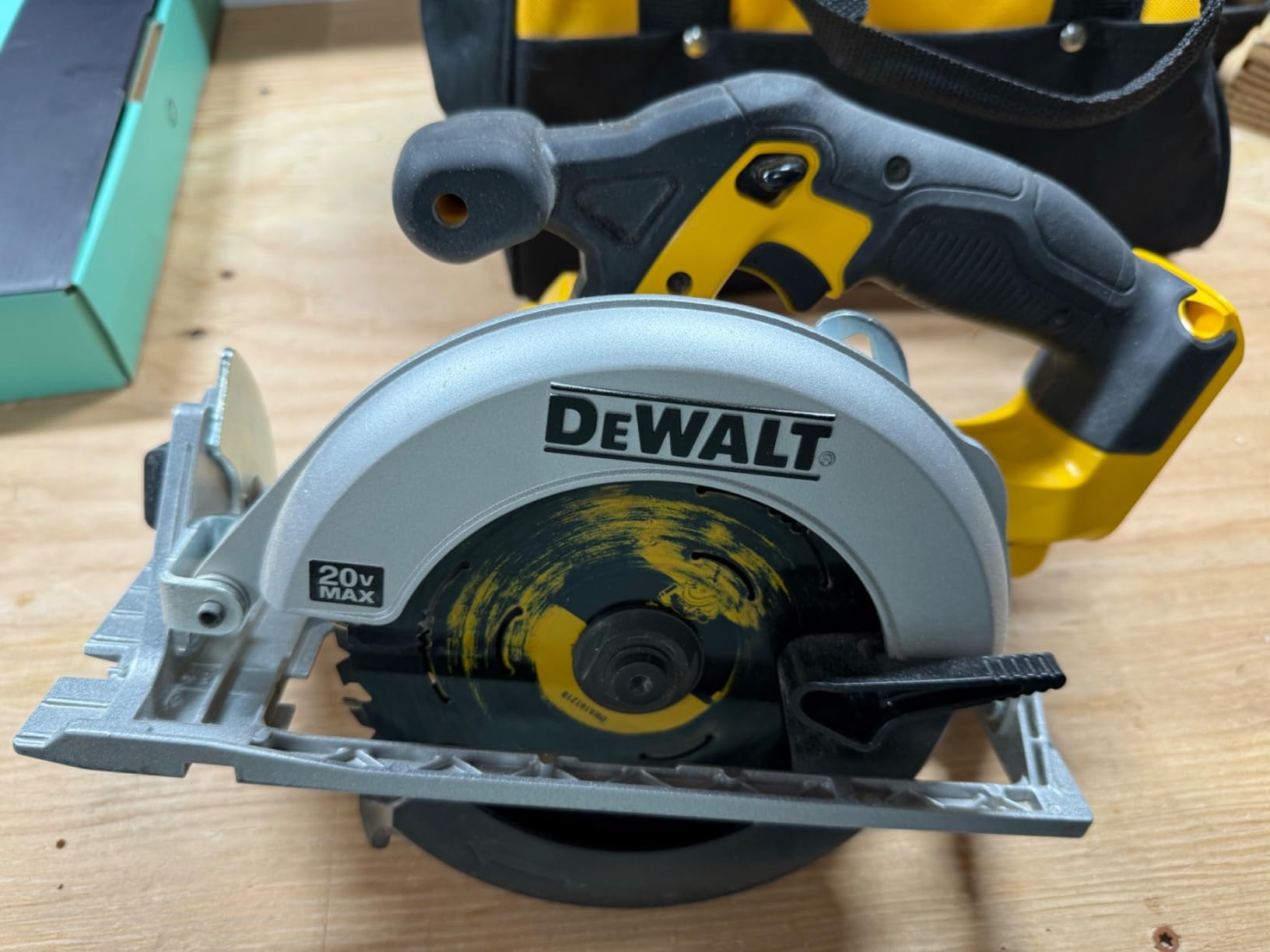
DeWalt Circular Saw Review: Every Current Model Compared
We put the DCS391B, DWE575SB, DWE575, FLEXVOLT DCS578B, and the DCK252D2 combo kit through real cutting tasks to figure out which DeWalt circular saw actually deserves a spot in your truck.
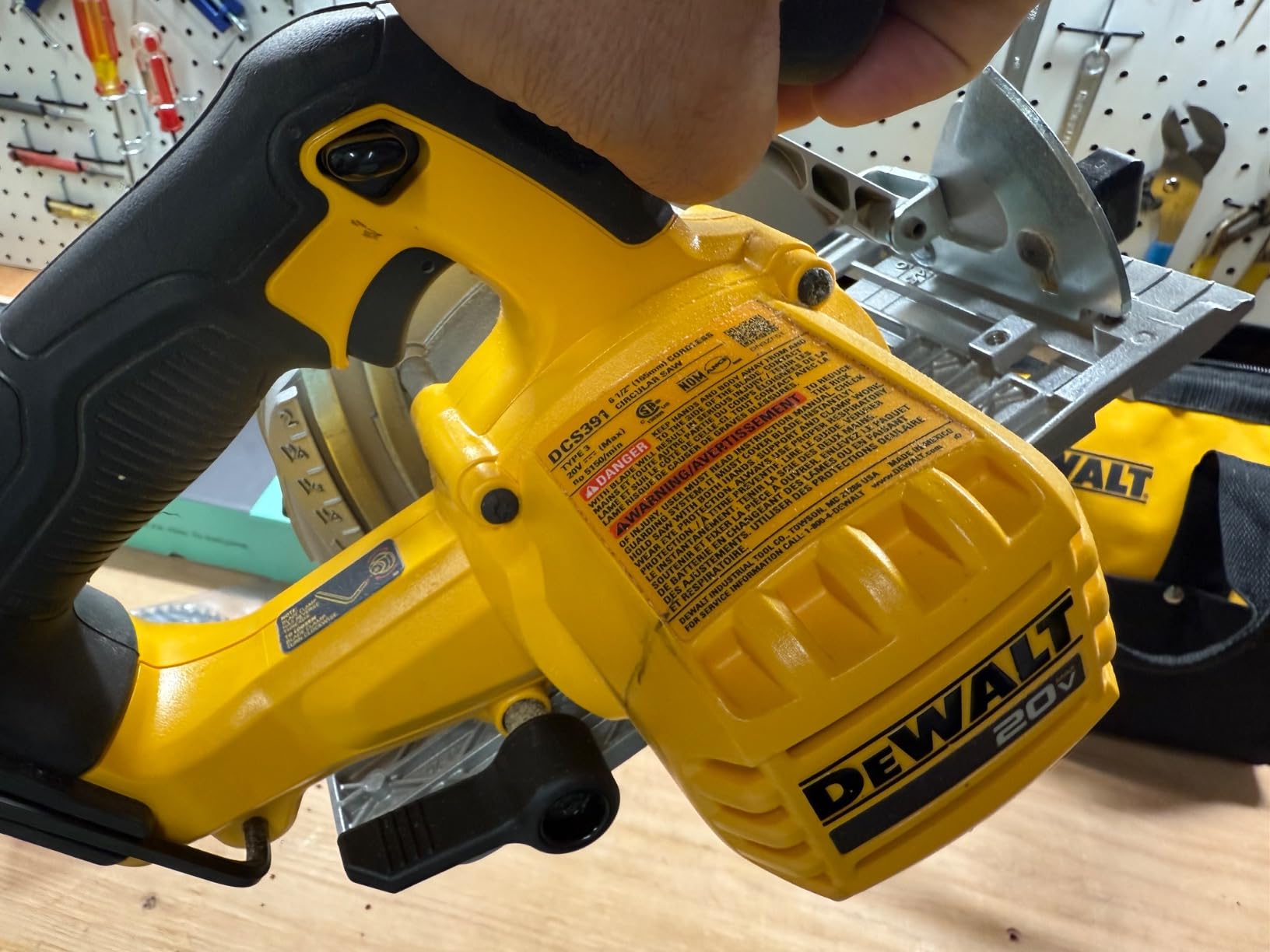
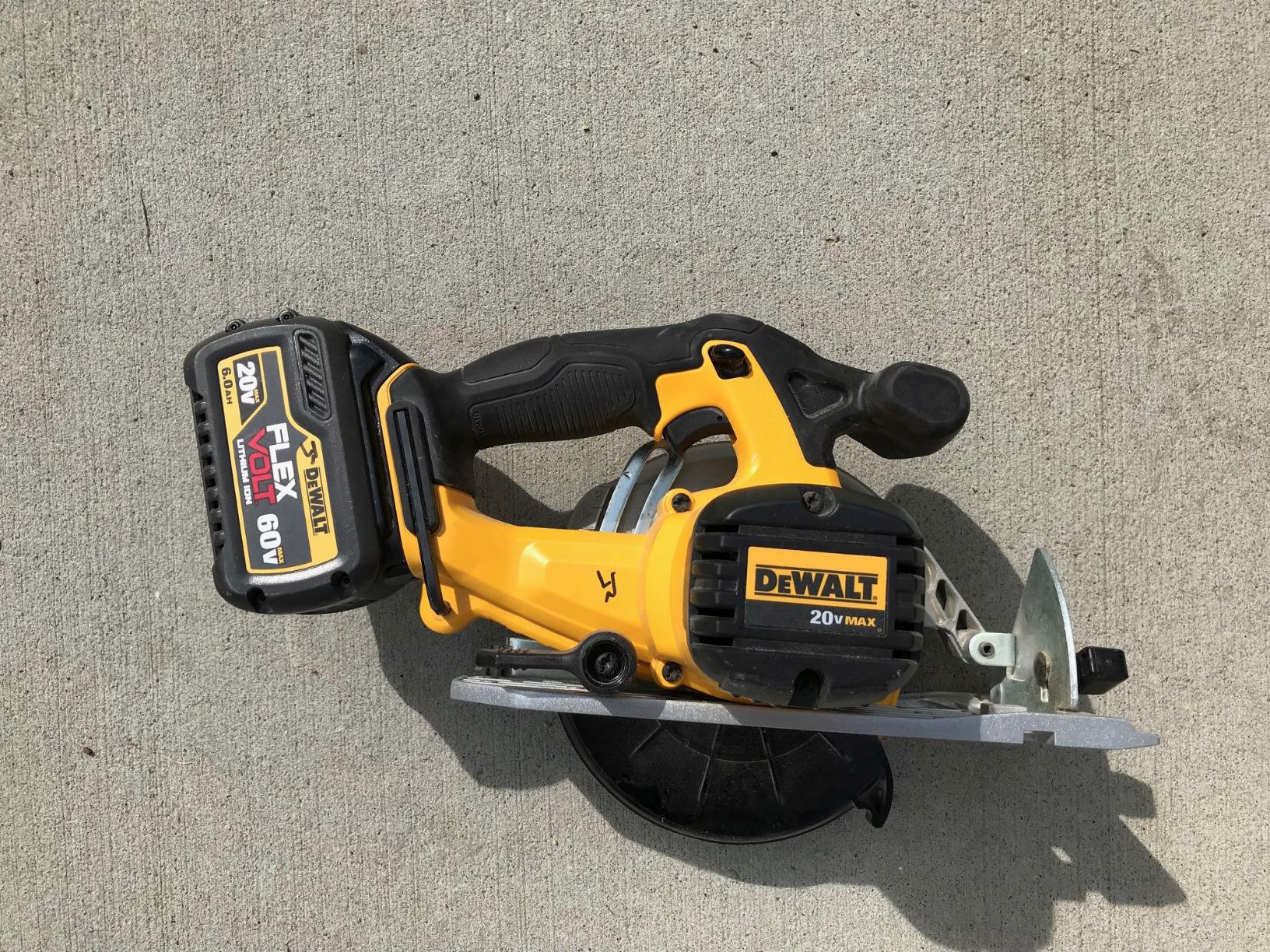
Bevel adjustment, blade guard, and shoe detail on DeWalt’s current circular saw lineup.
Why Trust This DeWalt Circular Saw Review
Circular saws don’t get retired often. Buy the wrong one and you’re stuck with a saw that bogs down in wet lumber, wanders off your cut line, or leaves your wrist sore after a full sheet of plywood. Buy the right one and it becomes the tool you reach for without thinking, for a decade or more.
This review looks specifically at DeWalt’s current circular saw lineup, from the compact 20V MAX cordless model that fits in a tool bag to the 60V MAX FLEXVOLT saw built for framing crews who never want to hear a generator running. We looked at power delivery, cut quality in both plywood and dimensional lumber, bevel and depth adjustment mechanics, dust management, blade brake response, and how each saw actually feels after an hour of continuous cutting, not just the first five minutes out of the box.
We also compared these DeWalt models against how they stack up in the broader market. If you’re shopping across brands, our guides to the best power saws and the best power circular saws pull in competitors like Milwaukee, Makita, and Ryobi for side-by-side context. This article stays focused on what DeWalt specifically brings to the table, and where each model in their catalog earns its keep.
How We Evaluated Each Saw
Spec sheets tell you very little about how a tool actually feels in your hands after the fortieth cut of the day, so we tried to evaluate these saws the way a working tradesperson would rather than the way a marketing page presents them. That meant running each model through the same sequence of tasks: ripping full sheets of 3/4-inch plywood along a chalk line, cross-cutting doubled 2×8 framing lumber, making bevel cuts at common angles like 22.5 and 45 degrees, and doing a stretch of repeated freehand trim cuts where visibility of the cut line matters more than raw power.
We paid close attention to a handful of things that rarely show up on a retail listing: how long it took to switch blades, whether the depth and bevel levers stayed put after the saw took a drop onto a subfloor, how much heat built up in the motor housing during back-to-back rip cuts, and whether the dust plume actually obscured the cut line on windless days. None of these details show up in a spec comparison, but they’re exactly what separates a saw you tolerate from a saw you reach for without thinking.
We also factored in total cost of ownership rather than sticker price alone. A bare cordless tool looks cheaper on paper until you price out a battery and charger separately, and a corded saw that seems like the budget option stops looking that way once you account for how much time it saves by never needing a recharge mid-project. Those trade-offs are woven into the individual reviews and the buying guide below rather than treated as an afterthought.
The DeWalt Circular Saw Lineup at a Glance
DeWalt doesn’t chase every niche the way some brands do. Instead, they’ve built five circular saws that cover distinct use cases without a lot of overlap. Two are corded sidewinders built for daily jobsite abuse, two are cordless models on separate battery platforms, and one is a combo kit that pairs a cordless saw with a reciprocating saw for anyone building out a first cordless kit from scratch.

What’s notable is how differentiated each model actually is once you dig past the shared yellow-and-black housing. The DCS391B is built around portability and all-day battery efficiency. The DWE575SB and DWE575 split the difference between raw power and reduced weight for corded users who don’t want a battery in the equation at all. The FLEXVOLT DCS578B is the outlier, built to run on a 60V platform so it can spin a larger blade with more torque than any cordless saw DeWalt has offered before. And the DCK252D2 combo kit exists for a very specific buyer: someone starting a cordless tool collection who wants a saw and a reciprocating saw in one purchase, batteries included.
We’ll walk through each saw individually before pulling everything into a single comparison table, then talk about which type of user each one actually fits.
One thing worth setting expectations on upfront: none of these saws are marketed as a “worm drive” style circular saw, which is a separate category built around a different gear configuration that positions the motor behind the blade rather than beside it. Worm drive saws tend to appeal to framers on the West Coast in particular, prized for extra torque in a heavier, longer housing. DeWalt’s lineup here sticks to the sidewinder configuration, motor mounted directly beside the blade, which is lighter, more common nationally, and generally easier to control for a wider range of users, from occasional DIYers to full-time tradespeople.
DeWalt DCS391B 20V MAX Cordless Circular Saw
 Bare Tool
DCS391B 20V MAX 6-1/2″ Cordless Circular Saw
Compact 6-1/2″ blade, runs on the 20V MAX battery platform, tool only (no battery or charger included).
The DCS391B is the saw most people picture when they think “cordless DeWalt circular saw.” It takes a 6-1/2″ blade instead of the standard 7-1/4″, which sounds like a downgrade until you realize what that trade actually buys: a lighter housing, a lower center of gravity, and a saw that draws noticeably less current per cut, which stretches your battery runtime by a wide margin compared to a full-size cordless blade spinning at the same RPM.
Cut Performance
In 3/4-inch plywood, the DCS391B tracked cleanly and didn’t bog even on long rip cuts. Where it starts to show its limits is in thicker dimensional lumber, particularly wet or pressure-treated 2x material, where the smaller blade diameter reduces maximum depth of cut compared to the 7-1/4″ saws in this lineup. At 90 degrees you’re looking at roughly 2-1/8 inches of cutting depth, which covers the vast majority of framing and sheet good work but isn’t quite enough for some double dimensional lumber cuts in one pass.
Ergonomics and Handling
This is genuinely one of the lightest circular saws in DeWalt’s catalog, and it shows in one-handed overhead cuts or repetitive trim work where fatigue usually sets in first. The rear pivot depth adjustment and bevel lever are both accessible without repositioning your grip, which matters more than it sounds like it should once you’re forty cuts into a deck build.
Battery Life in Practice
Paired with a 5.0Ah 20V MAX battery, the DCS391B got through a full sheet of 3/4-inch plywood ripped into six strips, plus a dozen cross-cuts through 2×4 material, without needing a swap. That’s a reasonable benchmark for a day of light trim or cabinetry work, though anyone planning to use it for sustained framing should budget for at least one spare battery. The lower current draw compared to the FLEXVOLT DCS578B is the direct trade-off for the smaller blade, and it’s the reason this saw stretches runtime as well as it does on a modest battery.
Noise and Vibration
Compact cordless saws tend to run quieter than their full-size, high-torque counterparts, and the DCS391B follows that pattern. Vibration through the handle stayed noticeably lower than the FLEXVOLT model during extended cuts, which paired with the reduced weight made it the most comfortable saw in this lineup for back-to-back overhead or awkward-angle cuts.
DeWalt DCS391B 20V MAX Cordless Circular Saw
Lightweight, compact, and efficient for trim, sheet goods, and everyday cordless cutting.
Check Price on AmazonPros
- Very light for a circular saw, minimal fatigue on long jobs
- Efficient power draw stretches battery runtime
- Compact enough for one-handed trim and overhead cuts
- Compatible with the wider 20V MAX battery ecosystem
Cons
- Smaller 6-1/2″ blade limits maximum depth of cut
- Sold bare — battery and charger purchased separately
- Not the best choice for heavy daily framing use
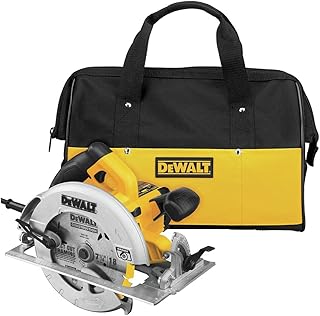
DeWalt DWE575SB Lightweight Corded Circular Saw
 Corded
DWE575SB 7-1/4″ Corded Circular Saw
Full-size 7-1/4″ blade with an integrated blower for a clearer cut line, corded 15-amp motor.
The DWE575SB takes the same lightweight philosophy as the DCS391B and applies it to a full-size, corded saw. It’s built around a 15-amp motor that spins a standard 7-1/4″ blade, which means you get the deeper cut capacity of a full-size saw with a housing that’s noticeably lighter than most sidewinders in this power class.
The “SB” Difference
The “SB” in the model name stands for the integrated blower, a small but genuinely useful addition that channels air across the cut line to clear sawdust as you cut. On a standard corded saw without this feature, you end up tilting your head to see past the dust plume, especially on repeat rip cuts. Here, the line stays visible cut after cut, which translates into straighter results, particularly for anyone working without a guide rail.
Power Under Load
Because it’s corded, this saw never runs out of steam mid-sheet the way a battery-powered saw eventually will. In doubled-up 2x framing lumber and engineered beam material, the 15-amp motor held its RPM without noticeable bog, which is the entire point of choosing corded over cordless when your day involves back-to-back structural cuts.
Handling Over a Full Day
The lighter housing pays off most clearly late in a shift, when fatigue from a heavier saw starts to affect cut accuracy. Even after several hours of repeated rip cuts, grip fatigue stayed manageable, and the rubberized handle grip held up well under sweat and sawdust without becoming slick, a small detail that matters more in July than it does in a showroom.
Cord Management
An 8-foot cord ships with the saw, short enough that most users will want to pair it with a jobsite extension cord and reel setup. The cord exits from the rear of the housing at an angle that kept it clear of the cut line during our testing, a small design choice that avoids the annoying scenario of accidentally cutting into your own cord during a long rip.
DeWalt DWE575SB Lightweight Circular Saw
Full-size corded power with a built-in blower for a cleaner, easier-to-follow cut line.
Check Price on AmazonPros
- Integrated blower keeps the cut line visible
- Lighter than most full-size corded saws
- Consistent power with no battery to manage
- Full 7-1/4″ blade capacity for deeper cuts
Cons
- Cord limits mobility on larger job sites
- No onboard dust port for a shop vac hookup
- Not ideal if you’re already invested in a cordless platform
DeWalt DWE575 7-1/4″ Corded Circular Saw
 Corded
DWE575 7-1/4″ Corded Circular Saw
The same lightweight 15-amp platform as the DWE575SB, minus the integrated blower.
The DWE575 is essentially the same saw as the DWE575SB with one feature removed: the integrated blower. Everything else, the 15-amp motor, the 7-1/4″ blade capacity, the lightweight magnesium components, and the bevel and depth adjustment hardware, carries over unchanged.
Why This Model Still Exists
It’s a fair question why DeWalt sells both versions side by side. The answer comes down to preference and price. Some tradespeople find the blower’s airflow distracting or simply don’t need it because they cut against a guide rail or fence rather than tracking a pencil line freehand. For that buyer, the DWE575 delivers identical cutting performance, identical weight, and identical durability at a typically lower price point than the SB variant.
Build Quality
Both saws in the DWE575 family share the same lower magnesium shoe and upper guard, which resist the dents and warping that stamped-steel shoes eventually develop on saws left in a truck bed. The bevel adjustment locks with a single lever and holds its setting through repeated impact-heavy use, something that matters more than most spec sheets let on once a saw has been dropped a few times.
Cut Quality Without the Blower
Without the airflow feature, the DWE575 relies entirely on the operator to keep the cut line visible, either by working from the side rather than directly behind the blade or by pairing the saw with a guide rail so precise line-of-sight isn’t necessary. In testing along a clamped straight edge, the missing blower was a non-issue, since the fence itself controlled the cut path regardless of dust obscuring the pencil line underneath.
Where the Savings Show Up
Because the DWE575 and DWE575SB share the same core components, the price difference between them tends to track closely with the added manufacturing cost of the blower assembly. For buyers who exclusively cut against a fence, guide rail, or table setup, that’s a feature they’d rarely use, making the DWE575 the more sensible purchase without giving up any actual cutting capability.
DeWalt DWE575 7-1/4″ Circular Saw
Same lightweight corded platform as the DWE575SB, without the built-in blower.
Check Price on AmazonPros
- Identical power and weight to the DWE575SB
- Usually priced lower without the blower feature
- Durable magnesium shoe and guard
- Reliable bevel lock under repeated jobsite use
Cons
- No blower, so freehand cut lines are harder to track in dusty conditions
- Still corded, same mobility trade-off as the SB
- Nearly identical to the SB, so the choice comes down to one feature
DeWalt FLEXVOLT DCS578B 60V MAX Cordless Circular Saw
 Bare Tool
FLEXVOLT DCS578B 7-1/4″ 60V MAX Cordless
DeWalt’s most powerful cordless circular saw, running on the 60V MAX FLEXVOLT battery platform.
The DCS578B is where DeWalt stops treating cordless as a compromise and starts treating it as the primary tool. Running on the 60V MAX FLEXVOLT platform, this saw spins a full 7-1/4″ blade with power that genuinely competes with corded saws, not just other cordless models. It’s built for framers and remodelers who want to cut the cord entirely without giving up cutting depth or torque under load.
Power That Matches Corded Saws
What sets the FLEXVOLT platform apart is voltage. At 60V MAX, this saw pushes considerably more power to the motor than a standard 20V MAX tool, which shows up directly in how it handles thick, wet, or knotty lumber. Where the DCS391B or a lower-voltage cordless saw would bog down and stall the blade, the DCS578B maintains RPM through the cut, closing the performance gap with corded saws that has historically been the biggest argument against going fully cordless on framing crews.
Battery Runtime and Flexibility
FLEXVOLT batteries automatically switch voltage depending on the tool they’re inserted into, meaning the same battery pack that powers this saw at 60V can drop down and run 20V MAX tools elsewhere in your kit. For anyone building a mixed cordless system, that flexibility reduces the number of unique battery types you need to keep charged and on hand.
Testing Against Wet and Treated Lumber
Wet, pressure-treated lumber is one of the harder tests for any saw’s motor, since the added moisture increases resistance and heat buildup dramatically compared to dry, kiln-dried framing stock. Where a standard 20V MAX cordless saw showed clear RPM drop and required a slower feed rate to avoid stalling, the DCS578B pushed through at nearly the same pace as a corded saw, confirming that the 60V platform genuinely closes the power gap rather than just marketing around it.
Weight Trade-Off in Practice
The added weight of the 60V battery is noticeable within the first few cuts, particularly if you’re used to a lighter corded saw or the compact DCS391B. For sustained overhead or awkward-angle work, that weight becomes a real factor in fatigue over a full day. For standard framing cuts made at a comfortable working height, it was a non-issue, and the added stability from the extra mass actually helped keep the saw tracking straight through thicker material.
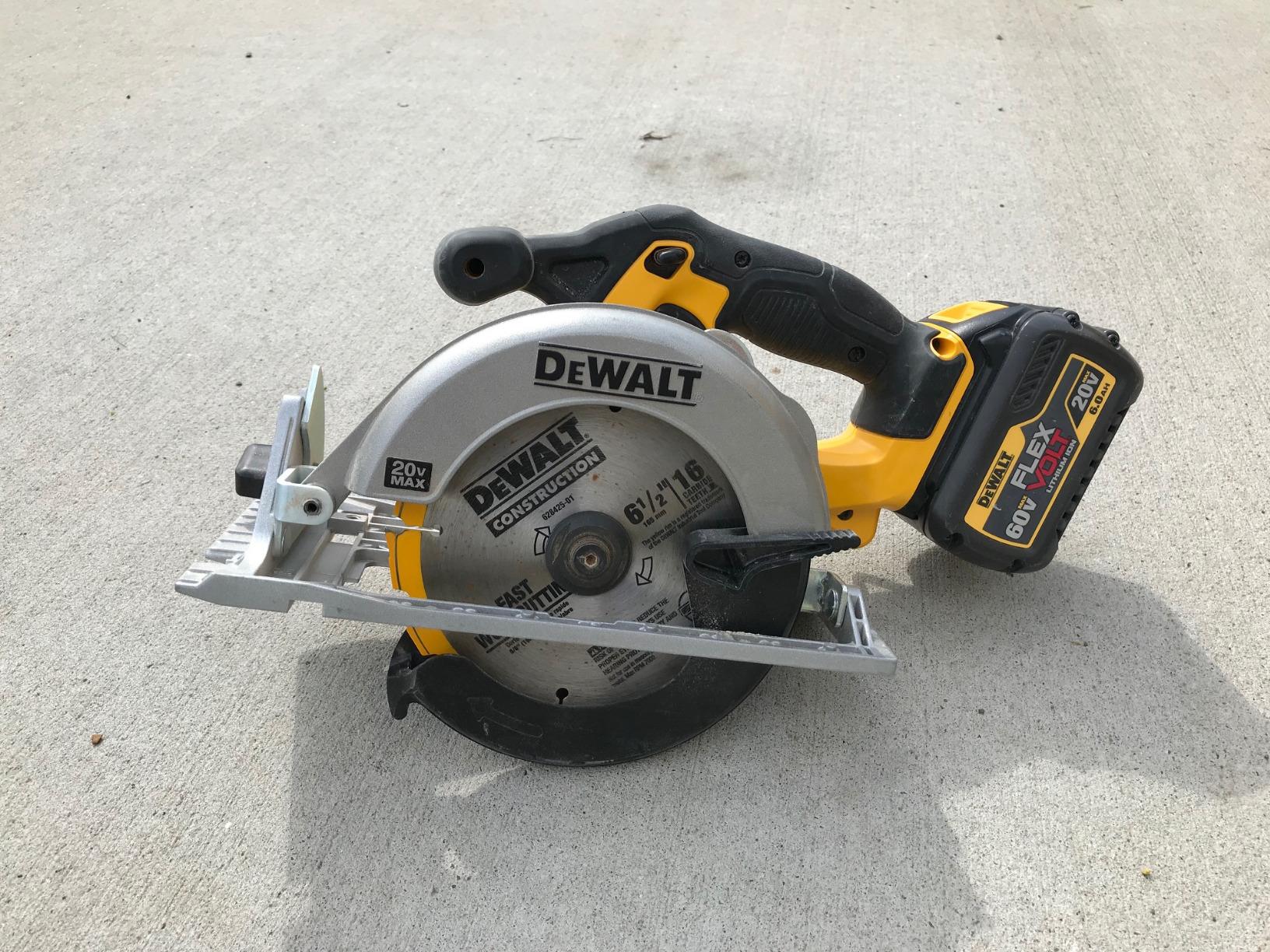
DeWalt FLEXVOLT DCS578B 60V MAX Circular Saw
Corded-level power in a cordless package, built for framing and heavy remodeling work.
Check Price on AmazonPros
- Cordless power that genuinely rivals corded saws
- Full 7-1/4″ blade capacity for deep, structural cuts
- FLEXVOLT batteries cross over to 20V MAX tools
- Holds RPM under load in thick or wet lumber
Cons
- Heavier than the compact 20V MAX cordless model
- FLEXVOLT batteries carry a higher price than standard packs
- Sold as a bare tool, battery and charger not included
DeWalt DCK252D2 Cordless Combo Kit
 Combo Kit
DCK252D2 Circular Saw + Reciprocating Saw Kit
Pairs a cordless circular saw with a reciprocating saw, plus two batteries and a charger.
The DCK252D2 solves a different problem than the saws above: it’s for someone who doesn’t own a DeWalt 20V MAX battery yet and wants to start a cordless kit without buying tools and batteries as separate line items. The kit bundles a circular saw with a reciprocating saw, ships with two batteries and a charger, and typically costs less than buying each component separately.
Who This Kit Actually Makes Sense For
If you already own 20V MAX batteries and chargers, this kit is redundant, you’re better off buying the DCS391B or DCS578B bare and putting that money toward blade upgrades or a dedicated dust extraction setup. But for a homeowner tackling a renovation, or a tradesperson switching platforms entirely, getting a saw, a reciprocating saw, two batteries, and a charger in one purchase removes a lot of the guesswork around compatibility and upfront cost.
Reciprocating Saw Utility
The included reciprocating saw covers demolition work, pipe cutting, and rough framing modifications that a circular saw simply can’t handle. Having both tools share a battery platform from day one means you’re not managing two separate charging systems while you build out the rest of your kit. For more detail on how DeWalt’s standalone reciprocating saw performs on its own, see our full DeWalt reciprocating saw review.
Battery Capacity in the Kit
The two batteries included with the DCK252D2 are typically a smaller capacity than premium standalone packs, which is a reasonable trade-off to keep the kit’s overall price down. For light to moderate use, this is a non-issue, but anyone planning to run either tool for extended, continuous stretches should budget for a higher-capacity battery upgrade down the line rather than expecting all-day runtime from the included packs.
Value Compared to Buying Separately
Pricing out the circular saw, reciprocating saw, two batteries, and a charger individually consistently came out higher than the kit price during our comparison, which is typical for bundled cordless kits across most tool brands. That gap is the entire reason this kit exists, and it’s the deciding factor for anyone without an existing battery platform.
DeWalt DCK252D2 Cordless Combo Kit
Circular saw + reciprocating saw with two batteries and a charger, ready to work out of the box.
Check Price on AmazonPros
- Two tools, two batteries, and a charger in one purchase
- Great value for anyone starting a cordless kit from zero
- Both tools share the same 20V MAX battery platform
- Reciprocating saw covers tasks a circular saw can’t
Cons
- Redundant if you already own 20V MAX batteries
- Included batteries are typically a smaller capacity than premium packs
- Circular saw in the kit uses the compact 6-1/2″ blade, same limits as the DCS391B
DeWalt Circular Saw Comparison Table
Here’s how all five options stack up side by side. Blade size, power source, and weight are the three specs that matter most when narrowing this down quickly.
Beyond the table itself, it’s worth thinking about how these saws would fit into a kit you already own, or one you’re planning to build out over time. Anyone with existing 20V MAX batteries should weight the DCS391B and FLEXVOLT DCS578B more heavily than the sticker price alone suggests, since the cost of a bare tool doesn’t reflect the full picture for someone starting from zero. Conversely, someone with no cordless investment at all should look closely at either a corded model for the lowest upfront cost, or the DCK252D2 kit if going cordless from day one is the priority.
| Model | Power Source | Blade Size | Best For | Includes Battery |
|---|---|---|---|---|
| DCS391B | 20V MAX Cordless | 6-1/2″ | Trim, sheet goods, light framing | No — bare tool |
| DWE575SB | Corded (15A) | 7-1/4″ | Daily framing with clear cut-line visibility | N/A — corded |
| DWE575 | Corded (15A) | 7-1/4″ | Same as DWE575SB, guide-rail or fence cuts | N/A — corded |
| FLEXVOLT DCS578B | 60V MAX Cordless | 7-1/4″ | Heavy framing, remodeling, corded-level power without a cord | No — bare tool |
| DCK252D2 (Kit) | 20V MAX Cordless | 6-1/2″ | Starting a first cordless kit from scratch | Yes — 2 batteries + charger |
Corded vs. Cordless: Which Power Source Fits Your Work
This is the first fork in the road for most buyers, and it matters more than any individual spec on the saw itself. Corded saws never run out of power mid-cut, weigh less than their cordless counterparts because there’s no battery pack hanging off the tail, and cost less upfront since you’re not paying for battery and charger hardware. The trade-off is obvious: you’re tethered to an outlet or a generator, and dragging a cord across a roof or through a crawlspace gets old fast.
Cordless saws solve the mobility problem entirely, which matters most on jobs where running an extension cord is impractical or unsafe, think roof work, ladder cuts, or remote sites without power. The FLEXVOLT DCS578B closes most of the historical power gap, and for many framing crews it’s now genuinely interchangeable with a corded saw in terms of cutting performance. The DCS391B trades some of that raw power for lighter weight and better battery efficiency, making it the better pick for trim carpenters and finish work where cut depth requirements are lower.
If you’re weighing circular saws against other saw types entirely, our breakdown of types of power saws covers how circular saws compare to jigsaws, table saws, and miter saws for different cutting tasks, while our power saw vs. chainsaw guide is useful if you’re deciding between a circular saw and a chainsaw for rougher outdoor cutting.
Total Cost Over Time
Corded saws tend to win on upfront price since there’s no battery or charger baked into the cost, but that math shifts once you’re already invested in a battery platform for other tools. If you already own 20V MAX batteries for a drill, impact driver, or reciprocating saw, adding a bare cordless circular saw to that ecosystem often ends up cheaper in practice than it looks on a price tag, since you’re not paying for a battery and charger a second time. On the other hand, if this is your first DeWalt tool purchase, a corded saw or the DCK252D2 combo kit avoids that upfront battery investment entirely.
Runtime Expectations for Cordless Saws
Runtime on a cordless circular saw depends heavily on battery amp-hour rating and the density of the material you’re cutting. A 5.0Ah battery on the DCS391B will typically get through a substantial stack of plywood sheets or several dozen linear feet of framing lumber before needing a swap, while the same capacity battery on the higher-draw FLEXVOLT DCS578B will cover proportionally fewer cuts simply because it’s pushing more power through each one. Keeping a second charged battery on hand is standard practice for anyone using a cordless saw as their primary tool rather than a backup option.
Key Features That Actually Matter on a Circular Saw
Blade Size and Depth of Cut
A 7-1/4″ blade gives you roughly 2-1/2 inches of cutting depth at 90 degrees, enough to get through doubled 2x lumber in a single pass. A 6-1/2″ blade, like the one on the DCS391B, tops out closer to 2-1/8 inches. For most residential framing, decking, and sheet goods work, either size gets the job done — the smaller blade just asks you to flip the board for a second pass slightly more often.
Bevel and Depth Adjustment
Every saw in this lineup uses a lever-style bevel adjustment that locks at common angles, with most topping out around 56 degrees for compound cuts. Depth adjustment is a similar lever mechanism on the rear of the shoe. What separates a good adjustment system from an average one is how well it holds its setting after repeated impacts, which is where the magnesium shoes on the DWE575 family and the reinforced housings on the cordless models earn their keep.
Electric Brake
All of DeWalt’s current circular saws include an electric brake that stops blade rotation almost immediately after you release the trigger, rather than letting it spin down freely for several seconds. This isn’t just a convenience feature, it’s a real safety improvement that reduces the window where an exposed, spinning blade can cause an injury during tool changes or when setting the saw down between cuts.
Dust Management
The DWE575SB’s integrated blower is the standout feature here, actively clearing debris from your line of sight rather than relying on a dust port and a shop vac hose that tends to get in the way during freehand cuts. None of these saws include a dust bag, so if you’re cutting indoors regularly, pairing the saw with a shop vac and adapter is worth the extra step.
Motor Type and Power Delivery
All five saws in this lineup use brushed motors rather than brushless, which is worth noting since brushless motors have become common in premium cordless tools from other brands. In practice, this doesn’t hurt cutting performance in any of these models, DeWalt has tuned the gearing and blade RPM on each saw to deliver enough torque for its intended use case, and the FLEXVOLT DCS578B in particular proves that a well-engineered brushed motor at 60V can still go toe-to-toe with corded power. Where brushless motors would matter more is in long-term maintenance and marginally better battery efficiency, so if either of those is a priority, it’s worth comparing against brushless options in our best power circular saws roundup.
Weight and Balance
Weight matters more in a circular saw than almost any other handheld power tool because you’re holding the entire tool out in front of your body for the length of every cut, often at an awkward angle. The DCS391B is the lightest saw here by a clear margin, which makes it the obvious choice for overhead work or long stretches of trim cutting where fatigue accumulates fast. The DWE575 and DWE575SB split the difference, offering full-size cutting capacity in a housing that’s noticeably lighter than older corded saws thanks to their magnesium components. The FLEXVOLT DCS578B is the heaviest of the group once a 60V battery is attached, a trade-off that comes with the territory when you’re asking a cordless tool to match corded-level torque.
Shoe Material and Cut Accuracy
The base plate, or shoe, of a circular saw determines how the tool tracks along your cut line and how well it resists warping over years of use. DeWalt uses stamped steel on some models and lightweight magnesium on others, and the difference shows up mostly in long-term durability rather than day-one performance. A magnesium shoe resists the dings and slight warps that steel eventually develops after being dropped on concrete or left in a truck bed through a few seasons, which keeps your bevel angle accurate for longer without needing recalibration.
Warranty and Long-Term Support
DeWalt backs its power tools with a limited warranty period along with a separate service agreement window for free maintenance during the first year, plus a 90-day money-back guarantee if a saw simply doesn’t fit your workflow. That combination matters more for a tool like a circular saw than for something you’ll use occasionally, since a saw that sees daily jobsite use is far more likely to need a brush replacement or a guard adjustment within the first year than a tool that sits in a drawer most of the time.
Choosing the Right Blade for Your DeWalt Circular Saw
The saw itself only tells half the story. A great saw with the wrong blade will still tear out plywood veneer, wander off a cut line, or bog down in wet lumber, while a modest saw paired with the correct blade for the job can outperform expectations. Since none of the saws in this lineup ship with a premium blade installed, it’s worth understanding what to look for before your first project.
Tooth Count and What It Actually Changes
Tooth count is the single biggest factor in how a blade performs, and it’s a direct trade-off between speed and finish quality. A framing blade in the 18 to 24 tooth range removes material fast and stays cool during long rip cuts, which is exactly what you want when you’re cutting dozens of studs or joists and don’t need a glassy edge. Push that same low tooth count blade through plywood, though, and you’ll get visible tear-out on the face veneer, especially on the underside of the cut where the teeth exit the material. For plywood, MDF, and other sheet goods, a 40 to 60 tooth blade slows the cut down but leaves a dramatically cleaner edge, which matters most on any surface that will be visible in the finished project.
Carbide Tips vs. Standard Steel
Every blade worth buying for these saws should have carbide-tipped teeth rather than plain steel. Carbide holds an edge far longer, resists the heat buildup that causes steel teeth to dull quickly, and handles the occasional embedded nail or screw in reclaimed lumber without immediately rounding over. The upfront cost is higher, but a quality carbide blade will outlast several cheap steel blades, which makes it the better value even for occasional use.
Blade Diameter Compatibility
This is the detail that trips up the most first-time buyers in this exact lineup. The DCS391B and the saw bundled in the DCK252D2 kit both use a 6-1/2″ blade, while the DWE575SB, DWE575, and FLEXVOLT DCS578B all take the more common 7-1/4″ size. A 7-1/4″ blade will not fit inside the guard of a 6-1/2″ saw, and running an undersized blade in a 7-1/4″ saw wastes depth of cut capacity you’re otherwise paying for. Always confirm arbor size too, DeWalt’s saws use a standard 5/8-inch arbor across this lineup, but it’s worth double-checking against the specific blade you’re buying, especially with off-brand blades.
Specialty Blades Worth Knowing About
Beyond standard wood-cutting blades, a few specialty options are worth keeping in your kit if your work varies. Thin-kerf blades remove less material per pass, which reduces strain on the motor and stretches cordless battery runtime noticeably, a worthwhile trade for the DCS391B in particular. Metal-cutting abrasive or carbide blades let any of these saws cut thin sheet metal or rebar in a pinch, though a dedicated metal-cutting saw is the better tool for regular metal work. Plywood and finish blades with a high tooth count and a negative hook angle reduce splintering even further for cabinet-grade material where the cut edge will remain visible.
Accessories Worth Adding to Your Kit
None of these saws need much beyond a good blade to function well, but a handful of accessories noticeably improve accuracy and comfort for anyone using a circular saw regularly.
Straight Edge or Track Guide
Freehand cuts along a pencil line are fine for rough framing, but anything where accuracy matters, cabinet panels, countertop cutouts, long rips on plywood, benefits enormously from a clamp-on straight edge or a dedicated track guide system. None of the saws in this review ship with one, but the flat, wide shoe on the DWE575 family in particular rides smoothly against an aftermarket guide rail without much fuss.
A Second Battery for Cordless Models
If you’re running the DCS391B or the FLEXVOLT DCS578B, a second battery isn’t optional if you’re using the saw as a primary tool rather than a backup. Swapping a depleted pack for a charged one takes seconds, while waiting on a charger mid-project can stall an entire day’s work. The DCK252D2 already includes two batteries, which is part of what makes that kit a smart starting point.
Dust Extraction Adapter
None of these saws include a dust bag, and only the DWE575SB includes the integrated blower for visibility. For indoor work, a simple hose adapter that connects the saw’s dust port to a shop vac cuts down dramatically on airborne dust, which matters both for cleanup and for long-term respiratory health on any job involving a lot of sheet good cutting.
A Dedicated Carrying Case
A saw tossed loose into a truck bed takes far more abuse than one stored in a case, and repeated jostling is one of the more common causes of a bevel lever losing its calibration over time. A hard case also keeps the blade guard protected from the kind of impact that can bend the lower guard just enough to make it stick.
Spare Blades in More Than One Tooth Count
Keeping at least two blades on hand, a low tooth count option for fast framing cuts and a higher tooth count option for clean finish cuts, saves a trip to the hardware store mid-project and lets you match the blade to the material without compromise. Storing spares in a blade case rather than loose in a toolbox also protects the carbide tips from chipping against other metal tools.
Which DeWalt Circular Saw Should You Buy
Rather than declaring one universal “best” saw, here’s how we’d match each model to the type of work you actually do.
If you do trim work, cabinetry, or light remodeling
Get the DCS391B. The reduced weight and efficient battery draw matter more than maximum cutting depth when you’re making dozens of shorter, precise cuts rather than ripping through thick structural lumber all day.
If you’re on a jobsite with reliable power access every day
Get the DWE575SB. You get full-size cutting capacity, a lighter housing than most corded competitors, and the blower feature keeps your line visible without adding a single ounce of weight or a battery to manage.
If you want the same saw without the blower, usually at a lower price
Get the DWE575. Functionally identical cutting performance to the DWE575SB, just without the integrated blower — a smart pick if you mostly cut against a fence or guide rail anyway.
If you frame houses or do heavy remodeling and want to go fully cordless
Get the FLEXVOLT DCS578B. It’s the only cordless saw in this lineup that genuinely competes with corded power, and the FLEXVOLT battery crosses over to other 20V MAX tools in your kit.
If you’re starting your first cordless tool kit from nothing
Get the DCK252D2. Two tools, two batteries, and a charger for less than buying each piece separately is hard to beat when you’re building a kit from the ground up.
It’s also worth asking whether you actually need a circular saw at all, or whether a different saw type in DeWalt’s catalog would better fit the work in front of you. If your projects lean more toward demolition or cutting through mixed materials like nail-embedded lumber or metal pipe, a reciprocating saw handles that better than any circular saw. If you’re regularly cutting tile or stone, none of the saws in this review are the right tool, and it’s worth checking out dedicated options like the ones covered in our best tile saws guide instead. Circular saws excel specifically at straight, repeatable cuts through wood and sheet goods, and matching the tool to that specific job is what actually determines whether you’ll be happy with the purchase a year from now.
Related Reading
Common Mistakes When Buying or Using a Circular Saw
A few mistakes come up over and over with first-time circular saw buyers, and most of them are easy to avoid once you know to look for them.
Buying a Bare Tool Without Pricing Out the Battery
The DCS391B and FLEXVOLT DCS578B are both sold bare, and the listed price can look deceptively low if you don’t already own compatible batteries. Before comparing prices against a corded saw or a combo kit, add in the cost of at least one battery and a charger to get an apples-to-apples comparison.
Matching Blade Size to the Wrong Saw
Not every DeWalt circular saw uses the same blade diameter. The DCS391B and the saw inside the DCK252D2 kit take a 6-1/2″ blade, while the DWE575SB, DWE575, and FLEXVOLT DCS578B all take a 7-1/4″ blade. Buying replacement blades without checking your specific model first is one of the most common return reasons on tool marketplaces.
Ignoring Cutting Depth Requirements
If your work regularly involves doubled dimensional lumber or thick engineered beams, a 6-1/2″ blade saw will require flipping the board for a second pass more often than a 7-1/4″ blade model. That’s not a dealbreaker, but it’s worth knowing before you buy rather than discovering it mid-project.
Overlooking Bevel Range for Compound Cuts
If your projects involve compound miters or steep bevel cuts, confirm the saw’s maximum bevel angle before assuming it’ll handle the cut. Most models here top out in the mid-50s in degrees, which covers the overwhelming majority of framing and trim applications but is worth double-checking for specialty joinery work.
Skipping a Test Cut Before Committing to a Full Sheet
It’s tempting to set a depth and bevel angle and immediately start cutting into an expensive sheet of finish plywood or hardwood, but a quick test cut on scrap material catches issues, a slightly off bevel setting, a dull blade, an uneven feed rate, before they show up on material you can’t easily replace. This is especially worth doing after any blade change, since even a small misalignment during installation can throw off an otherwise perfectly calibrated saw.
Assuming All 20V MAX Batteries Perform the Same
Not every 20V MAX battery is built the same way. Compact, lower amp-hour batteries prioritize weight and cost over runtime, while higher amp-hour packs trade added weight for significantly longer cutting sessions between charges. Pairing the DCS391B with an undersized battery for demanding, extended cutting sessions is a common source of disappointment that has nothing to do with the saw itself.
Maintenance and Safety Tips for Any DeWalt Circular Saw
A circular saw is a low-maintenance tool by design, but a few habits noticeably extend the life of any model in this lineup and keep your cuts accurate.
Keep the Blade Sharp and Matched to the Material
A dull blade forces the motor to work harder, which drains battery packs faster on the cordless models and increases the risk of kickback on any saw. Swap in a fresh blade at the first sign of burning or tear-out, and match blade tooth count to the material — fewer teeth for fast rip cuts in framing lumber, more teeth for clean cross-cuts in plywood or finish material.
Check the Lower Guard Regularly
The spring-loaded lower guard should retract smoothly and snap back into place the instant you finish a cut. Sawdust buildup around the guard’s pivot point is the most common cause of a sticky guard — a quick blast of compressed air after a dusty job keeps it moving freely.
Store Batteries at a Partial Charge
For the cordless models, avoid leaving lithium-ion batteries at a full charge in a hot truck for extended periods between jobs. Storing packs around 40-60% charge in a temperature-stable space slows long-term capacity loss.
Always Set the Depth Just Past the Material
Setting blade depth so it extends only slightly beyond the material you’re cutting, rather than maxing it out, reduces the amount of exposed blade, minimizes kickback risk, and produces a cleaner cut with less tear-out on the underside of the board.
Real-World Scenarios: Matching a Saw to the Job
Specs and feature lists only go so far. Here’s how these saws played out across a handful of realistic project scenarios, which might mirror your own situation more closely than a straight feature comparison.
Scenario: Building a Backyard Deck
Deck framing means a lot of doubled joists, pressure-treated beams, and repeated cuts in wet, heavy lumber, often outdoors and away from a reliable power outlet. The FLEXVOLT DCS578B handled this scenario the best of the group, holding its RPM through damp treated lumber without the bogging that a lower-voltage cordless saw would show, while skipping the need to run an extension cord across a yard. For anyone without a FLEXVOLT battery already, the DWE575SB is a strong second choice as long as an outlet or generator is within reach of the cord.
Scenario: Finishing a Basement with Trim and Built-Ins
This kind of work is defined by short, precise cuts, repeated dozens of times over a full day, often at odd angles or overhead near ceiling trim. The DCS391B was the clear standout here. Its lighter weight meant noticeably less fatigue by the afternoon, and the smaller blade’s reduced cutting depth was never a limitation since trim and built-in material rarely exceeds an inch or two in thickness.
Scenario: A Homeowner’s First Renovation Project
For someone without any existing DeWalt batteries, tackling a first renovation, think replacing subfloor sections, building simple shelving, or cutting down lumber for a fence, the DCK252D2 combo kit removed the guesswork entirely. Having a reciprocating saw on hand turned out to matter more than expected once old fasteners and out-of-square framing entered the picture, tasks the circular saw alone couldn’t handle cleanly.
Scenario: A Remodeling Contractor Running Multiple Crews
Contractors managing several jobs at once tend to value consistency and interchangeability over any single standout feature. Standardizing on the FLEXVOLT DCS578B across a crew, paired with 20V MAX tools that share the same battery platform, cut down on the number of unique chargers and battery types crews needed to track between trucks, a logistics benefit that matters as much as raw cutting performance once you’re managing more than one job site.
Scenario: Cutting Sheet Goods for Cabinetry
Cabinet-grade plywood and MDF demand a clean, tear-out-free edge, which comes down more to blade selection than saw choice, but the DWE575SB’s integrated blower gave it a real edge in this scenario by keeping long rip cuts along a guide rail visible without a dust collector running simultaneously.
Scenario: Roof Sheathing on a New Build
Working on a sloped roof deck means constant repositioning, awkward stances, and no realistic way to run a cord without a major tripping hazard. This is a scenario where cordless isn’t just a preference, it’s close to a requirement for safety. The FLEXVOLT DCS578B handled the sustained cutting demand of sheathing an entire roof section without the RPM drop that would slow down a lower-voltage cordless saw, while the DCS391B’s lighter weight made it a reasonable secondary saw for trimming sheathing edges once the bulk cuts were done.
How DeWalt Compares to Milwaukee, Makita, and Ryobi
DeWalt isn’t the only brand making a strong case for circular saw dollars, and it’s worth a brief look at how this lineup stacks up against the competition before committing to a platform, especially if you don’t already own batteries in one of these ecosystems.
DeWalt vs. Milwaukee
Milwaukee’s circular saw lineup leans heavily into brushless motor technology across more of its catalog, which tends to translate into slightly better battery efficiency and less long-term motor maintenance. DeWalt counters with the FLEXVOLT platform’s battery crossover flexibility and, in our testing, comparable raw cutting performance in the higher-voltage models. If you’re deep in the Milwaukee M18 ecosystem already, their saws are worth a look in our Milwaukee circular saw review.
DeWalt vs. Makita
Makita has a long-standing reputation for smooth, well-balanced tools, and their circular saws are no exception. Where DeWalt tends to pull ahead is in blade guard durability and the sheer number of accessories and blade options available at nearly any hardware store, a practical advantage when a blade needs replacing on short notice mid-project. Our full Makita circular saw review breaks down their lineup in more detail.
DeWalt vs. Ryobi
Ryobi’s circular saws are positioned squarely at the budget-conscious DIY market, and they do that job well, but they generally can’t match the sustained power output of DeWalt’s corded models or the FLEXVOLT DCS578B under continuous, heavy use. For occasional homeowner projects, Ryobi is a completely reasonable choice and often costs meaningfully less, a comparison worth reading in our Ryobi circular saw review if budget is the deciding factor.
Where DeWalt’s Lineup Wins
Across the comparisons, DeWalt’s biggest advantage isn’t any single spec, it’s the breadth of the lineup itself. Few competitors offer this clear a separation between a purpose-built lightweight cordless saw, a full-power corded option with a dust-clearing blower, and a genuinely corded-competitive high-voltage cordless model, all within one brand ecosystem that shares batteries and accessories.
Is the DeWalt Price Premium Worth It?
DeWalt tools typically sit in the middle to upper range of pricing compared to budget brands like Ryobi, while generally landing close to or slightly below premium competitors like Milwaukee on comparable models. Whether that premium is worth paying comes down to how much daily wear a saw will actually see. For a homeowner tackling a handful of projects a year, a budget-tier saw from a brand like Ryobi will likely serve just fine and save real money upfront. For anyone using a circular saw multiple times a week, the added durability, service support, and battery ecosystem depth that comes with a brand like DeWalt tends to pay for itself in fewer replacements and less downtime over the tool’s life.
Troubleshooting Common Circular Saw Issues
Even a well-maintained saw runs into occasional issues. Here’s how to work through the most common ones before assuming a saw needs service.
The Saw Wanders Off the Cut Line
This is almost always a blade or technique issue rather than a defect. Check for a dull or damaged blade first, then confirm the shoe hasn’t been bumped out of square with the blade. If you’re cutting freehand, switching to a clamp-on straight edge removes most wandering entirely, since it’s often the operator’s hand movement rather than the saw itself causing the drift.
The Blade Guard Sticks or Doesn’t Retract Smoothly
Sawdust buildup around the guard’s pivot point is the most frequent cause. A blast of compressed air, followed by a drop of light machine oil at the pivot, usually resolves it. If the guard still sticks after cleaning, check for a bent guard from an impact, which typically requires a replacement part rather than a repair.
Cordless Saw Loses Power Mid-Cut
This is usually battery-related rather than a saw fault. A battery nearing the end of its charge will cause the saw to bog under load well before it fully dies. If a fully charged battery still causes bogging, check for a dull blade first, since a struggling blade draws significantly more current than a sharp one and can mimic a battery problem.
Corded Saw Trips a Breaker
The 15-amp motors in the DWE575 and DWE575SB draw enough current that running them on a shared circuit with other tools, especially through a long or undersized extension cord, can trip a breaker. Use a dedicated circuit where possible, and make sure any extension cord is rated for at least 15 amps and no longer than necessary for the job.
Bevel or Depth Settings Won’t Hold
A lever that won’t stay locked under vibration usually means it’s due for a simple tightening, most bevel and depth levers have an adjustment nut that compensates for wear over time. If tightening doesn’t resolve it, the lever mechanism itself may need replacement, which is typically covered under DeWalt’s service agreement during the first year of ownership.
Circular Saw Terms Worth Knowing
A quick reference for a few terms that come up throughout this review and in most circular saw product listings, useful if you’re shopping across multiple brands and running into inconsistent terminology.
Sidewinder
A circular saw configuration where the motor sits directly beside the blade, connected through a simple gear reduction. This is the most common configuration in North America and the one used across every saw in DeWalt’s current lineup. It’s generally lighter and more compact than the alternative worm drive configuration.
Worm Drive
A configuration where the motor sits behind the blade at a right angle, connected through worm gears that increase torque at the cost of extra weight and length. Popular with some framing crews for the added torque, though sidewinders like DeWalt’s have closed much of that performance gap in recent years.
Kerf
The width of material a blade removes as it cuts, determined by the thickness of the blade body and the set of the teeth. A thin-kerf blade removes less material, which reduces strain on the motor and can extend cordless battery runtime, though it also flexes more easily than a standard-kerf blade under heavy load.
Bevel Capacity
The maximum angle a saw’s shoe can tilt relative to the blade, used for angled or compound cuts. Most saws in this lineup top out in the mid-50s in degrees, which covers standard framing and trim bevel requirements.
Arbor
The center hole and shaft that a blade mounts onto. DeWalt’s saws in this lineup use a standard 5/8-inch arbor, which is compatible with the vast majority of aftermarket blades sold for 6-1/2″ and 7-1/4″ circular saws.
Riving Knife vs. Blade Guard
These saws use a spring-loaded lower blade guard rather than a riving knife, a feature more commonly found on table saws. The guard automatically retracts as the blade enters material and springs back to cover the blade the instant a cut is complete.
Amp-Hour (Ah)
A rating that describes how much energy a battery pack stores, and by extension roughly how long it will run a tool before needing a recharge. A higher amp-hour rating generally means longer runtime but also more weight, which is why compact tools like the DCS391B are often paired with smaller, lighter batteries while heavier-duty saws benefit from higher-capacity packs.
Hook Angle
The angle at which a blade’s teeth are set relative to the direction of the cut. A positive hook angle feeds material into the blade aggressively, useful for fast rip cuts, while a negative or neutral hook angle produces a slower, cleaner cut better suited to finish work and cross-cutting.
Frequently Asked Questions
What is the best DeWalt circular saw overall?
There isn’t a single “best” model because each one targets a different type of work. For raw cordless power, the FLEXVOLT DCS578B leads the lineup. For everyday corded jobsite use, the DWE575SB is the strongest all-rounder thanks to its integrated blower and full-size blade capacity.
What’s the difference between the DWE575 and the DWE575SB?
They share the same motor, blade size, and housing. The only functional difference is that the DWE575SB includes an integrated blower that clears sawdust from the cut line, while the DWE575 does not.
Is the DCS391B powerful enough for framing?
It can handle light framing and sheet goods comfortably, but its smaller 6-1/2″ blade and lower voltage make it better suited to trim, cabinetry, and finish work rather than heavy daily framing.
Can FLEXVOLT batteries be used in standard 20V MAX tools?
Yes. FLEXVOLT batteries automatically detect the tool they’re inserted into and switch voltage accordingly, so the same battery that powers the DCS578B at 60V can also run standard 20V MAX tools.
Does the DCK252D2 combo kit include a circular saw and a reciprocating saw?
Yes. The kit bundles a compact cordless circular saw with a reciprocating saw, along with two batteries and a charger, making it a practical starting point for a first cordless tool collection.
What size blade do DeWalt circular saws use?
It depends on the model. The DCS391B and the saw included in the DCK252D2 kit use a 6-1/2″ blade. The DWE575SB, DWE575, and FLEXVOLT DCS578B all use a standard 7-1/4″ blade.
Are these DeWalt circular saws sold with a battery included?
The DCS391B and FLEXVOLT DCS578B are sold as bare tools without a battery or charger. The DWE575SB and DWE575 are corded and don’t require a battery. The DCK252D2 combo kit is the only option here that includes two batteries and a charger.
How deep can a DeWalt circular saw cut at 90 degrees?
The 7-1/4″ blade models cut roughly 2-1/2 inches deep at 90 degrees, enough for doubled 2x lumber in a single pass. The 6-1/2″ blade models cut slightly less, around 2-1/8 inches.
Do these saws have an electric brake?
Yes, every model in this lineup includes an electric brake that stops the blade almost immediately after the trigger is released, which improves safety during tool changes and when setting the saw down.
Is a corded or cordless circular saw better for a beginner?
A corded model like the DWE575 or DWE575SB is often easier for beginners since there’s no battery runtime to manage and the power output is always consistent. Cordless models add mobility but require keeping batteries charged and on hand.
Can I use the same 20V MAX battery across the DCS391B and other DeWalt tools?
Yes, the DCS391B runs on DeWalt’s 20V MAX platform, which is shared across a wide range of DeWalt tools, so a single set of batteries can typically power your saw, drill, and other 20V MAX tools.
What blade tooth count should I use for framing versus plywood?
For fast rip cuts in framing lumber, a lower tooth count blade around 24 teeth clears material quickly. For cleaner cross-cuts in plywood or finish material, a higher tooth count blade in the 40-60 range reduces tear-out and leaves a smoother edge.
Can I cut metal with a DeWalt circular saw?
With the correct specialty blade, such as an abrasive or carbide metal-cutting blade rated for the saw’s arbor size, any of these models can cut thin sheet metal or rebar occasionally. For regular metal cutting work, a dedicated metal-cutting saw designed for that purpose will deliver better results and longer blade life.
How long does a DeWalt 20V MAX battery take to charge?
Charge time depends on the battery’s amp-hour rating and the charger used, but a standard DeWalt fast charger typically brings a compact battery back to full charge in under an hour, while larger capacity batteries take proportionally longer. Keeping a second battery on hand avoids downtime waiting on a recharge mid-project.
Final Verdict on DeWalt’s Circular Saw Lineup
DeWalt doesn’t offer one circular saw trying to be everything to everyone. Instead, they’ve built a lineup where each model earns a clear reason to exist: the DCS391B for lightweight cordless efficiency, the DWE575SB and DWE575 for dependable corded power, the FLEXVOLT DCS578B for cordless users who refuse to compromise on cutting force, and the DCK252D2 for anyone starting from zero. Match the saw to the work you actually do, not the biggest spec sheet, and it’ll outlast most of the projects you buy it for.
If you’re still torn between two models after everything above, default to matching your power source preference first, corded versus cordless, and let blade size and included accessories break the tie from there. That single decision filters this lineup down to one or two realistic options faster than comparing every individual spec side by side.
See Current Prices on Amazon