Best Power Saws: The Complete Guide to Circular, Reciprocating & Tile Saws
Every cut starts with the right saw. Whether you’re framing a wall, demoing a bathroom, or setting porcelain tile, this guide breaks down the three saws that matter most in a serious toolbox — what separates a great one from a mediocre one, and exactly which models are worth your money.
Why This Guide Matters
Walk into any hardware store and you’ll find a wall of saws that all promise to be the “best” at something. Most of that noise is marketing. The truth is simpler: there are really only a handful of power saw categories that cover the vast majority of home and jobsite work, and within each category, a small number of models consistently outperform the rest on build quality, cutting power, and long-term reliability.
This guide focuses on three of the most useful power saws you can own — the circular saw, the reciprocating saw, and the tile saw — and walks through the specific models worth buying in each category. We’ll also cover how to decide which type you actually need, how corded and cordless options compare, and the maintenance habits that keep any saw cutting cleanly for years instead of months.
If you’re building a first tool kit, replacing a saw that’s finally given out, or trying to figure out whether you need one saw or three, you’re in the right place. For a deeper breakdown of every saw category on the market, our complete guide to types of power saws is a useful companion to this page.
It’s worth saying up front that “best” is doing a lot of work in a title like this one. The best circular saw for a weekend deck builder is rarely the best circular saw for someone framing five houses a year, and the best tile saw for a single bathroom remodel looks nothing like the one a full-time flooring contractor would choose. Rather than crown one universal winner, this guide tries to match specific saws to specific situations, so you can skip past the models that don’t fit your workload and go straight to the ones that do.
We also lean on a fairly simple test throughout: would we recommend this saw to a friend who asked, knowing exactly what they were planning to cut? That framing keeps the recommendations grounded in actual use cases rather than spec-sheet bragging rights. A saw with a slightly lower amp rating but a better balance point, for instance, can easily out-perform a “more powerful” saw once you’re a few hours into a real project and fatigue starts to show up in your cuts.
One more thing worth setting expectations on: price and quality don’t move in lockstep here the way they do in some other tool categories. A few of the most useful saws on this list are also among the least expensive, because circular saws, reciprocating saws, and tile saws are mature enough product categories that even budget-tier manufacturers have figured out the fundamentals. Where price differences matter most is in motor longevity, battery efficiency, and small ergonomic details that only show up after months of regular use.
How We Evaluated These Saws
Rather than ranking saws purely on spec sheets, we weighed each model against a handful of practical questions: how does the motor perform under sustained load rather than a quick test cut, how comfortable is the grip and balance point over an extended session, how easy is it to source replacement blades and parts down the line, and how does the price compare to similarly equipped alternatives in the same category.
We also gave weight to battery ecosystem compatibility, since a saw’s real-world value depends heavily on whether it slots into tools you already own. A saw that’s slightly less powerful but shares a battery platform with your existing drill and impact driver is often the better purchase than a marginally stronger saw that requires starting a new battery collection from scratch.
Finally, we looked at how each saw handled the specific failure modes common to its category — kickback resistance and shoe stability for circular saws, blade clamp reliability and vibration control for reciprocating saws, and cut consistency and water containment for tile saws. Saws that handled these edge cases gracefully ranked higher than saws that only performed well under ideal, textbook conditions.
Understanding Power Saw Types
Before comparing individual models, it helps to understand what each saw is actually built to do. These tools are not interchangeable — using the wrong one for a job usually means a rougher cut, wasted material, or a genuinely unsafe situation.
Power Circular Saws
The circular saw is the workhorse of framing, sheet goods, and general carpentry. A spinning circular blade rides along a flat shoe, letting you make long, straight rip cuts and crosscuts through plywood, dimensional lumber, and OSB. Corded models deliver consistent power for all-day cutting, while cordless versions have closed the gap enough that many contractors now run battery-only jobsites.
Reciprocating Saws
Sometimes called by the popular brand name “Sawzall,” the reciprocating saw uses a push-pull blade stroke instead of a spinning disc. That motion makes it the go-to tool for demolition, remodeling, and any cut where you can’t guarantee a clean, flat surface to reference — cutting through nail-embedded studs, plumbing pipe, or an old deck board full of screws. It trades precision for versatility and brute-force cutting ability.
Tile Saws and Wet Saws
Tile and masonry require a completely different approach. A tile saw (often called a wet saw because it floods the diamond blade with water to control dust and heat) makes clean, chip-free cuts through porcelain, ceramic, and natural stone. Trying to cut tile with a circular saw or angle grinder instead almost always ends in cracked material and a dust cloud you’ll be breathing in for days.
Each of these three categories has its own dedicated deep-dive on our site — start with our full circular saw roundup, our reciprocating saw picks, or our tile saw comparison if you already know which category you need.
It also helps to understand where these categories overlap and where they don’t. A circular saw and a reciprocating saw can both technically cut through a 2×4, but they’ll produce very different results. The circular saw gives you a clean, square edge suitable for a structural connection or a visible finish surface. The reciprocating saw gives you a rougher, angled cut that’s perfectly fine for demo work but not something you’d want on a piece of trim. Neither saw is “better” in an absolute sense — they’re built around different priorities, and reaching for the wrong one just means redoing the cut later with the right tool.
Tile saws occupy their own lane entirely, and it’s worth understanding why a wet blade matters so much. Porcelain and ceramic tile are brittle and heat-sensitive. A dry-cutting blade generates enough friction to crack the glaze or shatter the tile outright, especially near an edge. Flooding the blade with water does two things at once: it keeps the diamond segments cool enough to maintain their cutting edge, and it turns what would otherwise be a cloud of fine silica dust into a controllable slurry that rinses away instead of hanging in the air of your work space. That’s not a minor convenience — repeated exposure to airborne silica dust is a well-documented respiratory hazard, which is one more reason a dedicated wet saw beats improvising with a grinder or dry-cut blade.
There’s also a fourth category worth a quick mention even though it isn’t the focus of this guide: miter saws and table saws, which handle repetitive, high-precision cuts in a shop setting rather than on a jobsite. If your work is mostly stationary — building furniture, running trim, or batch-cutting identical pieces — those stationary saws often complement rather than replace the portable saws covered here.
Best Power Circular Saws
Circular saws live and die on two things: how much power actually reaches the blade, and how comfortable the saw feels after the fiftieth cut of the day. The five saws below span budget corded options to premium cordless platforms, and every one of them earns its spot for a specific kind of user.
SKIL 5080-01 13-Amp 7-1/4″ Circular Saw
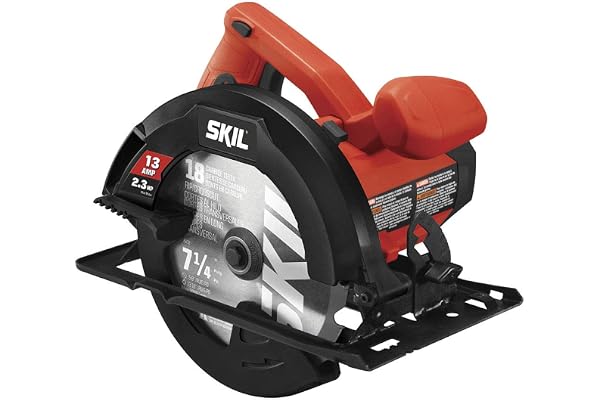
A corded 13-amp motor means this saw never runs out of charge mid-project, which makes it a favorite for framing crews who cut all day long. The built-in laser guide helps keep long rip cuts straight without needing to squint down the shoe, and the single-beam bevel system locks in angles quickly.
The spindle lock also simplifies blade changes, which matters more than it sounds like once you’re switching between a framing blade and a finer-tooth blade for plywood on the same job. At this price point, it’s hard to find another corded saw that pairs a genuinely useful laser guide with a motor that doesn’t bog down in dense lumber.
- Power
- 13 Amp, corded
- Blade Size
- 7-1/4 in
- Bevel Range
- 0–56°
- Best For
- Everyday framing
Pros
- Never needs a battery swap
- Laser guide keeps cuts straight
- Budget-friendly price point
Cons
- Cord limits mobility outdoors
- Heavier than most cordless models
DEWALT DCS391B 20V MAX Cordless Circular Saw
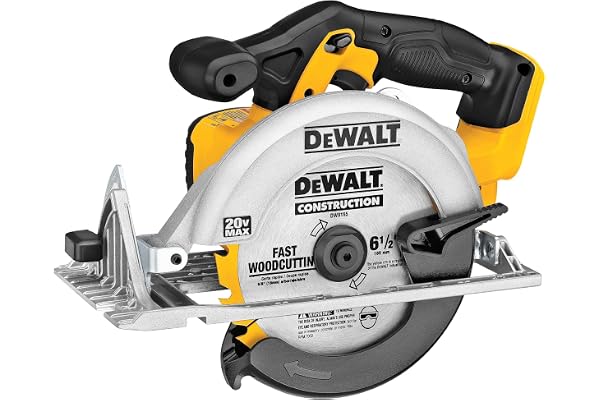
This is the saw most cordless-first tradespeople reach for first. It runs on DEWALT’s shared 20V MAX battery platform, so if you already own DEWALT drills or drivers, this saw slots right into your existing batteries. The magnesium shoe keeps it light without feeling flimsy, and the tool-free bevel adjustment speeds up angled cuts.
The 6-1/2 inch blade trims a little off the maximum cutting depth compared to full-size 7-1/4 inch corded saws, but in exchange you get a noticeably lighter tool that’s easier to control one-handed on a ladder or up in rafters. For remodeling work that’s mostly plywood, decking, and dimensional lumber, that trade-off is usually worth it.
- Power
- 20V MAX, cordless
- Blade Size
- 6-1/2 in
- Bevel Range
- 0–50°
- Best For
- Cordless jobsites
Pros
- Shares batteries across the DEWALT lineup
- Lightweight magnesium shoe
- Tool-free bevel adjustments
Cons
- Sold as bare tool — battery required
- Smaller blade than full-size corded saws
Seesii Compact Circular Saw
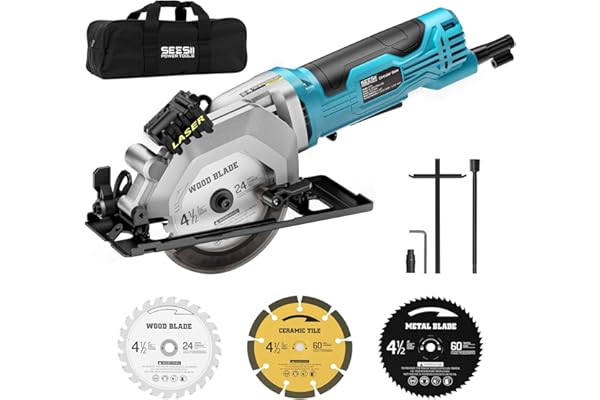
A genuinely small saw for genuinely small jobs — shelving, trim, thin plywood, and quick DIY cuts around the house. The compact plastic housing keeps weight down, which makes this an easy recommendation for anyone who doesn’t want to swing a full-size saw one-handed above their head.
It’s not going to replace a contractor’s daily driver, but for a homeowner who pulls a saw out a handful of times a year, the smaller footprint is genuinely easier to store, transport, and control. The lighter weight also reduces fatigue on cuts that require holding the saw at an awkward angle.
- Power
- Compact motor
- Housing
- Lightweight plastic
- Best For
- Light DIY cutting
- Price Tier
- Budget
Pros
- Very affordable entry point
- Easy to control one-handed
Cons
- Not built for daily heavy-duty use
- Plastic housing feels less durable
ONEAND Cordless Circular Saw (Tool Only)
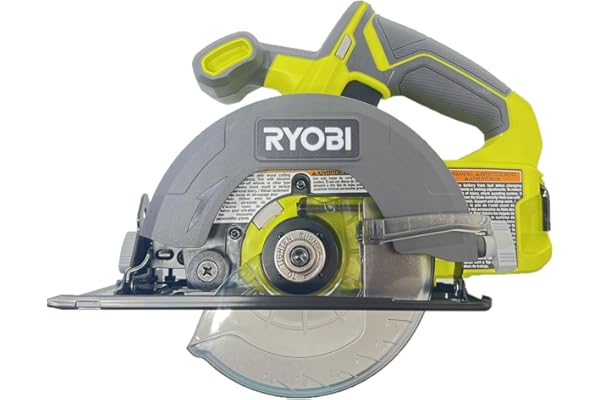
Sold bare-tool, this one is aimed squarely at people already invested in the ONEAND battery ecosystem. It’s a solid secondary saw to keep charged and ready for quick cuts without dragging out your main saw and its cord.
Think of it less as a primary tool and more as the saw you leave charged in a truck or garage for the cuts that come up unexpectedly — trimming a board that’s slightly too long, cutting down a shelf, or handling a quick repair without setting up a full cutting station.
- Power
- Cordless, bare tool
- Best For
- Existing ONEAND users
- Weight Class
- Lightweight
- Price Tier
- Budget-mid
Pros
- Compact and easy to store
- Good secondary saw for quick tasks
Cons
- Battery and charger sold separately
- Best suited to light-duty cutting
GALAX PRO Circular Saw
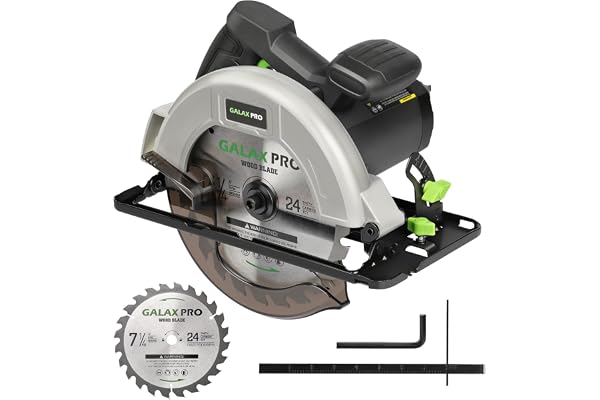
The GALAX PRO earns its spot on this list with an easy-to-adjust depth and bevel system that’s friendly to first-time saw owners. It’s a practical choice for general carpentry work where you’re switching between material thicknesses often.
The clearly marked depth scale takes the guesswork out of setting cutting depth to match material thickness, which is a small detail that saves real time across a project with a lot of varying stock — switching between 3/4 inch plywood and 2×4 framing lumber, for example, without needing to eyeball the adjustment each time.
- Adjustability
- Adjustable depth & bevel
- Best For
- General carpentry
- Skill Level
- Beginner-friendly
- Price Tier
- Budget-mid
Pros
- Simple, intuitive depth adjustment
- Comfortable for beginners
Cons
- Not the most powerful in this lineup
Circular Saw Comparison Table
| Model | Power Source | Blade Size | Best For |
|---|---|---|---|
| SKIL 5080-01 | Corded, 13A | 7-1/4 in | All-day framing |
| DEWALT DCS391B | Cordless, 20V | 6-1/2 in | Cordless jobsites |
| Seesii Compact | Compact motor | Compact | Light DIY |
| ONEAND Cordless | Cordless, bare tool | Compact | Secondary/quick cuts |
| GALAX PRO | Adjustable | Standard | General carpentry |
Want the full breakdown with more testing notes? Read our dedicated best power circular saws review for a deeper look at each model’s cutting performance.
Best Reciprocating Saws
If demolition, plumbing rough-ins, or unpredictable cutting is part of your workflow, a reciprocating saw earns its place fast. These five models cover everything from compact cordless options to a heavy-duty brushless flagship.
DEWALT DCS387B 20V MAX Compact Reciprocating Saw

Compact without feeling underpowered, the DCS387B fits into tight stud bays and cabinet cavities where a full-size saw simply won’t reach. The tool-free blade clamp makes swapping between wood and metal blades painless mid-job.
The four-position blade clamp is a small but genuinely useful feature — it lets you rotate the blade to reach awkward cutting angles without repositioning the whole saw, which comes up constantly in tight demo spaces like behind a toilet or under a cabinet.
- Power
- 20V MAX, cordless
- Blade Clamp
- Tool-free
- Best For
- Tight-space demo
Pros
- Compact size fits tight spaces
- Tool-free blade changes
- Shares batteries with DEWALT platform
Cons
- Bare tool, battery sold separately
RYOBI PCL515B Cordless Reciprocating Saw

Ryobi’s ONE+ platform makes this an easy add for anyone already running Ryobi’s lineup of yard and shop tools. It handles everyday cutting tasks — trimming branches, cutting through old fencing, and general remodeling — without the premium price tag.
Because it shares batteries with dozens of other Ryobi tools, from string trimmers to shop vacs, this saw often ends up being close to free in practice for anyone who’s already bought into the ecosystem for yard equipment.
- Power
- ONE+ cordless
- Best For
- DIY & light remodeling
- Price Tier
- Budget
Pros
- Shares batteries with the ONE+ ecosystem
- Affordable for occasional use
Cons
- Not built for constant daily demo work
CRAFTSMAN CMCS300B Cordless Reciprocating Saw

Craftsman keeps this one simple: a straightforward, no-frills reciprocating saw that’s comfortable to grip and easy to control for occasional homeowner projects like cutting old pipe or trimming lumber on a renovation.
The front pivoting shoe helps stabilize the saw against your workpiece during longer cuts, reducing the wobble that can otherwise throw off your cut line on thicker material. For a saw aimed at occasional use, that stability makes a noticeable difference in cut quality.
- Power
- Cordless
- Best For
- Homeowner projects
- Grip
- Ergonomic handle
Pros
- Comfortable ergonomic grip
- Simple, dependable operation
Cons
- Sold as bare tool
GALAX PRO Reciprocating Saw

Variable speed control gives you more precision when a job needs a slower, more controlled stroke — think delicate trim removal versus tearing through a stud wall. It’s a flexible pick for mixed-use projects.
Being able to dial back the stroke speed also extends blade life on tougher materials like metal pipe, where running at full speed constantly can wear down teeth faster than a controlled, slower pass through the cut.
- Speed Control
- Variable trigger
- Best For
- Mixed-material cutting
- Price Tier
- Budget-mid
Pros
- Variable speed trigger for control
- Handles multiple material types
Cons
- Battery life varies by usage
BOSCH GSA18V-110N PROFACTOR Reciprocating Saw

Bosch’s PROFACTOR line is built for tradespeople who need corded-level power without a cord. The stroke length and brushless motor combination push through thick lumber and metal stock with noticeably less bogging down than lighter-duty saws.
The longer stroke length in particular translates to faster cuts through thick material, since each pass removes more material than a shorter-stroke saw covering the same distance. For anyone cutting through 4×4 posts or thick engineered lumber regularly, that difference adds up fast over a full day of demo work.
- Motor
- Brushless, 18V
- Best For
- Heavy-duty pro use
- Price Tier
- Premium
Pros
- Brushless motor for more power and runtime
- Handles thick material without bogging down
Cons
- Higher price point
- Sold as bare tool
Reciprocating Saw Comparison Table
| Model | Power Source | Standout Feature | Best For |
|---|---|---|---|
| DEWALT DCS387B | Cordless, 20V | Tool-free blade clamp | Tight-space demo |
| RYOBI PCL515B | Cordless, ONE+ | Budget ecosystem fit | Light DIY |
| CRAFTSMAN CMCS300B | Cordless | Ergonomic grip | Homeowner projects |
| GALAX PRO | Cordless | Variable speed trigger | Mixed-material cutting |
| BOSCH PROFACTOR | Cordless, brushless | Corded-level power | Heavy-duty pro use |
For a closer look at how each of these performed in real demolition scenarios, check our full reciprocating saw guide, or read our dedicated DEWALT reciprocating saw review if that’s the brand you’re leaning toward.
Best Tile & Wet Saws
Tile work rewards patience and the right equipment. A good wet saw keeps your cuts straight, your edges chip-free, and the air in the room breathable. Here are four models worth considering, from compact benchtop units to angle-grinder-style handheld saws.
SKIL 3540-02 7-Inch Wet Tile Saw

A benchtop wet saw with a 7-inch blade, built-in water reservoir, and a rip fence that keeps repeat cuts consistent. It’s the right choice for a full bathroom or kitchen backsplash job where you’re making dozens of cuts back to back.
The sliding table design gives you consistent control on longer cuts through full-size floor tile, and the reservoir is large enough that you won’t be stopping constantly to refill it partway through a project — a real time-saver on a job with a lot of repetitive cutting.
- Blade Size
- 7 in
- Water System
- Built-in reservoir
- Best For
- Full tile installs
Pros
- Rip fence keeps cuts consistent
- Built-in water reservoir controls dust
Cons
- Bulkier than handheld tile saws
DEWALT DWC860W 4-3/8″ Masonry Saw

This handheld wet saw handles smaller, on-the-fly cuts — notching tile around outlets, trimming brick, or cutting stone veneer where a benchtop saw would be overkill. The water-feed system attaches directly to a hose or bottle for portable cutting.
Being handheld rather than benchtop also means you can bring the saw to the material instead of the other way around, which matters a lot when you’re cutting a notch in tile that’s already installed on a wall or floor.
- Blade Size
- 4-3/8 in
- Format
- Handheld
- Best For
- Masonry & notch cuts
Pros
- Portable for on-site notch cuts
- Handles masonry and stone veneer
Cons
- Not ideal for long straight rip cuts
Ryobi 4-in Tile Saw

A compact benchtop saw sized right for smaller DIY tile projects — a single bathroom floor, a small backsplash, or a weekend patio project. It won’t replace a contractor-grade saw on a big job, but for occasional use it punches above its price.
Its smaller footprint also means it stores easily between projects, which matters for homeowners without dedicated shop space. You won’t be feeding large format floor tile through it comfortably, but for standard-size wall and floor tile it handles the job well.
- Blade Size
- 4 in
- Format
- Compact benchtop
- Best For
- Small DIY projects
Pros
- Affordable for occasional use
- Compact footprint for storage
Cons
- Smaller cutting capacity than full benchtop saws
PORTER-CABLE PCE980 Wet Tile Saw

The PCE980 leans into precision with a sliding tray and adjustable miter guide, making it a good fit for tile layouts with a lot of angled cuts — herringbone patterns, diagonal layouts, and stair-step borders.
If your project involves a pattern more complex than a straightforward grid layout, the extra setup time this saw’s miter guide requires pays for itself many times over in cleaner, more consistent angled cuts across dozens of repeated pieces.
- Adjustability
- Sliding tray + miter guide
- Best For
- Angled & pattern cuts
- Price Tier
- Mid-range
Pros
- Sliding tray simplifies angled cuts
- Good for pattern-heavy layouts
Cons
- Takes up more bench space
Tile Saw Comparison Table
| Model | Blade Size | Format | Best For |
|---|---|---|---|
| SKIL 3540-02 | 7 in | Benchtop | Full tile installs |
| DEWALT DWC860W | 4-3/8 in | Handheld | Masonry & notch cuts |
| Ryobi 4-in | 4 in | Compact benchtop | Small DIY projects |
| PORTER-CABLE PCE980 | Standard | Benchtop, sliding tray | Angled & pattern cuts |
See our complete tile saw buying guide for more testing detail, plus our standalone Ryobi tile saw review and Porter-Cable tile saw review if you want a closer look at a specific model.
Circular vs Reciprocating vs Tile Saw: Which Do You Actually Need?
Most people don’t need all three saws on day one. Here’s how to think about which one to buy first based on the work in front of you.
| Saw Type | Cutting Style | Typical Jobs | Skip It If… |
|---|---|---|---|
| Circular Saw | Spinning blade, straight cuts | Framing, plywood, decking | You never cut lumber or sheet goods |
| Reciprocating Saw | Push-pull stroke | Demolition, remodeling, pipe cutting | You only do finish carpentry |
| Tile Saw | Wet diamond blade | Tile, stone, masonry | You never install tile or stone |
If you’re weighing a reciprocating saw against a completely different category of cutting tool — like when a job calls for cutting down a tree limb instead of demoing a wall — it’s worth reading our power saw vs chainsaw comparison before you buy the wrong tool for outdoor work.
A useful way to prioritize a first purchase is to think back over your last several projects rather than your next hypothetical one. If most of what you’ve built or repaired in the past year involved cutting lumber to length or ripping sheet goods down to size, a circular saw is the obvious starting point. If you’ve spent more time tearing things out than building them — old decking, damaged framing, plumbing runs — a reciprocating saw will see more use. And if tile keeps showing up on your project list even occasionally, it’s worth owning a dedicated tile saw rather than repeatedly renting one, since rental costs add up faster than most people expect over a handful of projects.
It’s also worth noting that these three saws rarely compete for the same job. Unlike, say, choosing between two different circular saw models, deciding between a circular saw and a reciprocating saw is really a decision about what kind of work you do, not which tool performs better in the abstract. Most serious DIYers and tradespeople eventually own all three; the question this section is really answering is simply which one to buy first.
How to Choose a Power Saw
Once you know which category you need, a handful of specs actually separate a good purchase from a regrettable one.
Motor Power: Amps and Voltage
For corded saws, amperage is the number that matters — more amps generally means more sustained cutting power under load, which matters when you’re pushing through dense lumber or thick stock all day. For cordless tools, voltage (18V, 20V MAX, and so on) is a rough proxy for power, but the battery’s amp-hour rating actually determines how long that power lasts between charges.
It’s worth understanding that manufacturers sometimes market voltage figures differently — a “20V MAX” battery, for instance, typically settles closer to 18V under normal load once you account for how voltage is measured. This isn’t a red flag so much as an industry-wide labeling convention, but it does mean voltage numbers aren’t always perfectly comparable across brands, and amp-hour rating on the battery itself is often a better indicator of real-world runtime than the headline voltage figure alone.
Blade Size and Compatibility
Circular saw blades typically run 6-1/2 to 7-1/4 inches for consumer and pro-grade models, which determines maximum cutting depth. Reciprocating saw blades are interchangeable and swapped based on material — wood, metal, or demolition blades all cut differently. Tile saw blade size determines both your maximum cut depth and the size of tile you can comfortably feed through the saw.
Tooth count also matters more than most buyers initially assume. A circular saw blade with fewer, larger teeth cuts faster but leaves a rougher edge, which is fine for framing but not for a visible finish cut. A blade with more, smaller teeth cuts more slowly but leaves a noticeably cleaner edge, which matters for trim work or anything that will be seen once installed.
Weight and Ergonomics
A saw that feels fine in a five-minute store demo can feel very different after two hours of overhead cutting. If you can, handle a saw in person before buying, paying attention to balance point and grip angle, not just raw weight.
Brand Ecosystem
If you already own cordless tools, buying into that same battery platform saves real money over time. A bare-tool circular saw or reciprocating saw is often $30–50 cheaper than the kit version specifically because you’re expected to already own compatible batteries.
Vibration and Trigger Feel
This one rarely shows up on a spec sheet, but it matters more than most buyers expect. A saw with poor vibration dampening can leave your hands fatigued or tingling after long sessions, a condition sometimes called hand-arm vibration syndrome when it becomes chronic. Trigger feel matters too — a mushy or overly sensitive trigger makes it harder to start a cut smoothly, which shows up as a rougher entry point on your workpiece. If a retailer lets you dry-fire a floor model, it’s worth a few seconds to see how the trigger and vibration actually feel in your hand before you commit.
Dust and Debris Management
Circular saws throw sawdust in a fairly predictable path, but some models include a dust port or blower that directs debris away from your cut line so you can actually see what you’re doing. This sounds minor until you’re making a long rip cut and losing your line every few seconds under a cloud of shavings. Tile saws handle this differently through their water systems, but even there, tray design affects how much slurry ends up on your shoes versus staying contained.
Warranty and Parts Availability
A saw is only as useful as the manufacturer’s ability to support it once something wears out. Established brands with wide retail distribution typically make replacement brushes, blade guards, and other wear parts easy to find years after purchase, while smaller or newer brands can leave you stuck if a part fails outside the warranty window. This is less of a concern for consumable parts like blades, which are largely standardized across brands, and more of a concern for saw-specific components like shoes, guards, and battery packs.
Return Policy for Cordless Tools
Because so many cordless saws are sold as bare tools, it’s easy to end up with a saw that doesn’t actually fit your existing battery’s connector — voltage platforms aren’t universal even within some manufacturers’ own lineups over time. Double-check the exact battery series compatibility before buying, and favor retailers with a reasonable return window in case of a mismatch.
Corded vs Cordless Power Saws
This debate isn’t as one-sided as cordless marketing suggests. Both formats have real advantages depending on how and where you work.
| Factor | Corded | Cordless |
|---|---|---|
| Runtime | Unlimited | Limited by battery charge |
| Power Consistency | Constant | Can taper as battery drains |
| Mobility | Limited by cord/outlet access | Fully portable |
| Upfront Cost | Usually lower | Higher, plus batteries/charger |
| Best Setting | Shop, jobsite with power access | Remote sites, roofs, outdoor work |
Many contractors end up owning both — a corded saw parked at a miter station or table for repetitive cuts, and a cordless saw for anything on a ladder, roof, or job site without easy outlet access.
Battery technology has closed much of the historical power gap between corded and cordless saws, particularly with the rise of brushless motors and higher-voltage battery packs. That said, a cordless saw’s performance is still tied to how charged its battery is — a saw running on a nearly depleted pack will noticeably slow down compared to the same saw running on a fresh charge, something a corded saw never has to contend with. If consistent, predictable power output matters more to your work than portability, that’s a point in favor of staying corded for at least your primary saw.
Renting vs. Buying a Power Saw
Not every project justifies owning a saw outright, and it’s worth being honest about how often you’ll actually reach for one before buying.
When Renting Makes Sense
If you need a saw for a single, well-defined project — say, a one-time tile installation or a single weekend of demolition — renting from a local tool rental shop or home improvement store can be more economical than buying, especially for larger stationary tile saws that take up significant storage space. Rental also gives you access to higher-capacity equipment than you might otherwise buy for a one-off job.
When Buying Makes Sense
If there’s any reasonable chance you’ll need the saw again within the next year or two, buying almost always wins out financially. Rental costs add up quickly across even a few uses, and owning a saw means it’s available the moment a project comes up rather than requiring a trip to a rental counter and a return deadline.
A Middle Ground: Buying Budget-Tier First
For someone genuinely unsure how often they’ll use a saw going forward, buying an entry-level model rather than renting a professional one is often the more practical middle ground. You get the convenience of ownership without the up-front cost of a premium tool you may not end up using regularly.
Power Saw Safety Best Practices
Power saws are some of the more injury-prone tools in a typical shop, mostly because people get comfortable with them and start skipping steps. A few habits go a long way.
Wear the Right Protection
Safety glasses are non-negotiable with any saw — sawdust and debris kick back toward your face constantly. Add hearing protection for extended cutting sessions, and a proper dust mask or respirator when cutting tile, stone, or treated lumber.
Respect the Blade Guard
It’s tempting to wedge back a circular saw’s retractable guard for repetitive cuts. Don’t. The guard exists specifically to prevent contact injuries during kickback, which happens fast enough that reaction time alone won’t save you.
Secure Your Material
Free-floating material vibrates, binds blades, and causes kickback. Clamp your workpiece, use sawhorses for long boards, and never try to hand-hold a board you’re cutting with a reciprocating saw or circular saw.
Unplug or Remove the Battery Before Blade Changes
This sounds obvious until you’re in a hurry. Accidental trigger pulls during blade changes are a leading cause of hand injuries with both circular and reciprocating saws.
Keep Blades Sharp
A dull blade forces you to push harder, which increases the odds of the saw binding, kicking back, or slipping off your cut line entirely. Sharp blades are a safety feature, not just a performance one.
Mind Your Footing and Body Position
Stable footing matters more than most people think about until they’re mid-cut on a ladder or an uneven surface. Whenever possible, plant both feet on solid, level ground before starting a cut, and avoid positions where you’d have to twist or overreach to finish the pass. With a circular saw in particular, keep your body to the side of the blade’s cutting line rather than directly behind it, so an unexpected kickback travels past you instead of toward you.
Never Reach Past a Running Blade
It sounds obvious, but the instinct to clear a small offcut or brush away sawdust while the blade is still spinning down causes a meaningful share of preventable injuries. Wait for the blade to come to a full stop before adjusting your material or clearing debris, even if that costs you a few extra seconds per cut.
Know Your Cut Before You Start It
Take a moment before every cut to confirm there’s nothing hidden in your cutting path — no embedded hardware in old lumber, no wiring or plumbing behind a wall you’re about to demo, and no obstruction below a workbench that would stop your blade mid-stroke. This is especially important with reciprocating saws used in demolition, where the whole point is cutting into material you can’t fully see.
Maintenance & Blade Care
Good saws last for years with basic upkeep. Neglected ones bind, overheat, and burn out motors well before their time.
Clean After Every Use
Sawdust builds up in vents, around the motor housing, and inside the blade guard mechanism. A quick blow-out with compressed air after each project keeps airflow clear and prevents the retractable guard from sticking.
Replace Blades Before They’re Fully Dull
Waiting until a blade is completely shot means you’ve already been cutting inefficiently — and dangerously — for a while. Swap blades at the first sign of burning, splintering, or excessive resistance.
Store Batteries Properly
Cordless tool batteries degrade faster when left fully depleted or stored in extreme heat. Keep them partially charged in a temperature-controlled space when not in use for extended periods.
Check Alignment Periodically
Circular saw shoes can shift out of true square over time, especially if the saw gets dropped. A quick square check against the blade keeps your bevel cuts accurate.
Flush Tile Saw Water Systems
Standing water in a tile saw’s reservoir breeds grime and can clog the pump. Empty and rinse the reservoir after each project, especially if you won’t be using the saw again soon.
Lubricate Moving Parts
Reciprocating saw shoes and circular saw bevel mechanisms both benefit from an occasional drop of light machine oil at pivot points. This keeps adjustments smooth and prevents corrosion from building up on exposed metal, particularly if the saw is stored in a garage or shed with humidity swings.
Inspect Cords and Battery Contacts
On corded saws, check the cord jacket periodically for nicks or exposed wire near the strain relief, which is the most common failure point. On cordless saws, keep the battery contacts free of dust and corrosion by wiping them down occasionally with a dry cloth — a poor connection there can cause a saw to cut out mid-stroke, which is its own safety concern.
Store Saws Properly Between Uses
A dedicated case or wall-mounted storage keeps a saw’s shoe and blade guard from getting knocked out of alignment by other tools stacked on top of it. It also keeps blades protected from moisture, which is the fastest way to introduce rust onto an otherwise good blade.
None of this maintenance takes more than a few minutes per project, but skipping it consistently is the single biggest reason saws that should last a decade instead get replaced after a year or two.
Best Power Saw by Project Type
If you’re still not sure which saw to prioritize, match your next few projects against the list below.
- Building a deck or framing a wall: A corded circular saw like the SKIL 5080-01 keeps up with repetitive rip and crosscuts all day long.
- Renovating a bathroom or kitchen: You’ll likely want both a reciprocating saw for demo and a tile saw like the SKIL 3540-02 for the finish work.
- Cutting through an old deck full of embedded screws: A reciprocating saw with a demolition blade, such as the DEWALT DCS387B, handles unpredictable material far better than a circular saw ever could.
- Setting a small tile backsplash: A compact benchtop saw like the Ryobi 4-in Tile Saw is sized right without overspending on capacity you won’t use.
- Notching tile or brick around outlets and pipes: A handheld wet saw like the DEWALT DWC860W gives you control a benchtop saw can’t match in tight spots.
- Running a cordless-only jobsite: Standardize on one battery platform — DEWALT’s 20V MAX or a similar ecosystem — across your circular and reciprocating saws to cut down on charger clutter.
- Building outdoor furniture or a pergola: A corded circular saw handles repeated straight cuts through pressure-treated lumber without draining a battery mid-project.
- Removing an old fence or shed: A reciprocating saw with a demolition blade cuts through weathered wood, embedded fasteners, and even old metal hardware in one pass.
- Installing a stone or brick patio border: A handheld masonry saw like the DEWALT DWC860W gives you the portability to make cuts directly at the installation site.
- Retiling a large kitchen floor: A benchtop wet saw with a larger blade and sliding tray, like the SKIL 3540-02, keeps pace with the volume of repeat cuts a bigger floor requires.
Budget Tiers: What to Expect at Each Price Point
Power saw pricing tends to cluster into a few recognizable tiers, and knowing what each tier typically includes helps set realistic expectations before you start comparing individual models.
Entry-Level
At the lowest price point, expect functional but basic tools — plastic housings, simpler bevel and depth adjustment mechanisms, and motors sized for occasional rather than constant use. These saws are a perfectly reasonable choice for a homeowner who needs a saw a few times a year and doesn’t want to overspend on capability that will mostly go unused.
Mid-Range
This tier is where most of the saws on this list live, and it’s arguably the sweet spot for anyone doing regular DIY or light professional work. Expect metal or reinforced composite housings, tool-free adjustments, better vibration dampening, and motors that hold up to sustained use across a full weekend project without overheating.
Professional-Grade
At the top end, you’re paying for brushless motors that run cooler and more efficiently, reinforced housings built to survive job-site drops, faster charging batteries, and often a company-wide warranty and service network built around daily professional use. Unless you’re using a saw multiple times a week, this tier usually represents more capability than most buyers actually need.
Power Saw Accessories Worth Buying
The saw itself is only part of the equation. A handful of accessories make a real difference in cut quality, safety, and how long your tools last.
Extra Blades for Different Materials
Keeping a small selection of blades on hand — a general-purpose framing blade, a fine-tooth finish blade, and a demolition blade for a reciprocating saw — means you’re never stuck making the wrong cut with the wrong blade because it’s the only one you own.
A Quality Carrying Case
A hard case protects a saw’s shoe, guard, and bevel mechanism from the kind of drops and knocks that happen naturally when tools get tossed in a truck bed or stacked in a garage. It also keeps blades from rattling loose and dulling against other tools in transit.
Clamps and Sawhorses
Stable material support isn’t optional for clean, safe cuts. A pair of sawhorses and a few bar clamps cost little relative to the saw itself but directly affect both cut accuracy and kickback risk.
Dust Extraction Attachments
For anyone doing extended cutting indoors, a shop vac attachment or dust port adapter keeps airborne sawdust down significantly, which matters both for visibility on your cut line and for long-term respiratory health.
Extra Batteries
For cordless saws, a second battery pack means you’re never stuck waiting on a charge mid-project. Many manufacturers sell two-battery kits at a modest premium over the single-battery version, which is usually worth the extra cost if you plan to use the saw regularly.
Popular Power Saw Brands Worth Knowing
Brand loyalty in power tools usually comes down to battery ecosystem more than any single tool’s quality. Here’s a quick primer on the major players referenced throughout this guide.
DEWALT
DEWALT’s 20V MAX platform is one of the most widely adopted cordless ecosystems among both DIYers and professionals, spanning circular saws, reciprocating saws, drills, and dozens of other tools that all share the same batteries. Read our full DEWALT circular saw review for a closer look at how their saws perform.
Milwaukee
Milwaukee has built a strong reputation among tradespeople for its M18 battery platform and brushless motor technology, generally trading a higher price point for noticeably more torque and runtime. See our Milwaukee circular saw review for the details.
Makita
Makita saws are known for balanced ergonomics and smooth-running motors, making them a favorite among finish carpenters who value control as much as raw power. Our Makita circular saw review covers what sets their lineup apart.
Ryobi
Ryobi’s ONE+ platform is the budget-friendly entry point into cordless tools, with an enormous range of compatible tools spanning yard equipment to shop tools. Check our Ryobi circular saw review if you’re building out a budget-conscious tool kit.
Bosch
Bosch’s PROFACTOR line targets professionals who need corded-level output from a cordless platform, and it shows in the brushless motors and reinforced housings found across their reciprocating and circular saws. It’s a premium tier, but one that’s earned a following among tradespeople who run saws all day, every day.
Craftsman
Craftsman has repositioned itself over the years as a straightforward, homeowner-focused brand — tools that do their job without a lot of extra features or a premium price tag attached. Their reciprocating and circular saws are a sensible pick for anyone whose projects are occasional rather than constant.
None of these brands make a genuinely bad saw at this point in the market’s maturity. What differentiates them in practice is battery ecosystem, motor longevity under heavy use, and small ergonomic choices that only really surface after a few months of regular cutting. If you’re starting from scratch with no existing batteries, it’s worth thinking one or two tool purchases ahead — the saw you buy today will likely determine which drill, impact driver, or grinder makes the most financial sense to buy next.
Common Power Saw Buying Mistakes
A little research upfront avoids most of the regret that comes with a rushed tool purchase. These are the mistakes we see most often.
Buying Based on Price Alone
The cheapest saw in a category is rarely the best value once you factor in how long it lasts and how well it holds up under regular use. A slightly higher upfront cost on a saw with a better motor and sturdier housing often works out cheaper per year of use than replacing a budget saw every season.
Ignoring Battery Ecosystem Until After Purchase
It’s easy to fall in love with a specific saw’s features and forget to check whether it fits into your existing battery platform. Buying a bare tool that doesn’t match your current batteries means paying for a battery and charger you didn’t plan on, which can erase any savings from skipping the kit version.
Underestimating Blade Costs Over Time
Blades are consumable, and the ongoing cost of replacement blades — especially specialty ones like diamond tile blades or fine-tooth metal-cutting blades for a reciprocating saw — adds up over a project’s lifespan. Factor this into your budget rather than treating the saw’s purchase price as the whole cost of ownership.
Skipping the In-Hand Test
Weight and balance affect comfort more than most spec sheets let on. If you can test a saw in person before buying, even for a few seconds at a store display, it’s worth doing — a saw that feels fine in a quick grip can still feel wrong once you’re holding it overhead or at an awkward angle mid-project.
Overbuying Capacity You Won’t Use
A heavy-duty, premium reciprocating saw built for daily demolition work is overkill for someone who cuts through a few boards twice a year. Matching the tool to your actual workload, not your aspirational workload, usually leads to a better long-term purchase.
Frequently Asked Questions
What’s the difference between a circular saw and a reciprocating saw?
A circular saw uses a spinning blade for clean, straight cuts through lumber and sheet goods, while a reciprocating saw uses a push-pull blade motion best suited for demolition and cutting through unpredictable or embedded material like old framing full of nails.
Do I need a wet saw to cut tile, or can I use a regular saw?
A dedicated wet saw is strongly recommended for tile and stone. The water feed keeps the diamond blade cool and controls dust, resulting in clean, chip-free edges that a standard circular saw or angle grinder can’t reliably produce.
Is a corded or cordless power saw better?
Neither is universally better — corded saws offer unlimited runtime and consistent power, while cordless saws offer full portability. Many people end up owning both, using corded tools for shop work and cordless tools for jobsites without easy power access.
What blade size do I need for a circular saw?
Most consumer and professional circular saws use 6-1/2 or 7-1/4 inch blades. A 7-1/4 inch blade offers a deeper maximum cutting depth, which matters for thicker stock like dimensional lumber.
Can a reciprocating saw cut metal?
Yes, with the correct blade. Reciprocating saws are commonly used to cut metal pipe, conduit, and even nails embedded in wood, provided you swap to a metal-cutting blade with a finer tooth count.
How often should I replace a saw blade?
Replace a blade as soon as you notice burning marks, splintering, excessive resistance, or visibly dull or chipped teeth. Continuing to cut with a dull blade increases strain on the motor and raises the risk of kickback.
What size tile saw do I need for a bathroom remodel?
For a full bathroom floor or backsplash, a benchtop wet saw with at least a 7-inch blade gives you enough cutting capacity and a rip fence for consistent repeat cuts. Smaller 4-inch saws work fine for limited DIY projects.
Are bare-tool power saws worth buying?
If you already own batteries and a charger from the same brand’s platform, bare-tool saws are usually the better deal since you’re not paying for hardware you already have.
What safety gear should I wear when using a power saw?
At minimum, wear safety glasses for every cut. Add hearing protection for extended sessions and a dust mask or respirator when cutting tile, stone, or treated lumber.
Can I use a circular saw for demolition work?
It’s not recommended. Circular saws are designed for clean cuts through known material and can bind, kick back, or damage the blade if they hit embedded nails or screws — situations a reciprocating saw is built to handle.
How do I know if I need a tile saw versus a masonry saw?
A tile saw is optimized for porcelain, ceramic, and thinner stone with clean, precise cuts. A masonry saw or handheld wet saw is better suited for brick, block, and thicker stone where portability and cutting through denser material matter more than a perfectly polished edge.
What’s the biggest mistake beginners make with power saws?
Not securing the workpiece properly. Free-floating or unclamped material is one of the leading causes of kickback and inaccurate cuts, regardless of which type of power saw you’re using.
How much should I expect to spend on a good power saw?
Budget-tier saws in each category cover basic occasional use, mid-range models add better durability and comfort for regular DIY or light professional work, and professional-grade saws add brushless motors and reinforced housings for daily use. Matching the tier to how often you’ll actually use the saw is more important than chasing the highest spec sheet.
Can I use the same battery across different tool brands?
No. Battery platforms are brand-specific and generally not interchangeable, even between similar voltage ratings from different manufacturers. Once you commit to a brand’s battery ecosystem, it’s usually worth staying within it for future cordless tool purchases.
Is it worth buying a corded saw if I already own cordless tools?
Yes, especially for stationary or high-volume cutting. A corded saw removes battery management from the equation entirely, which is valuable for long framing sessions or shop work where you’re making dozens of consecutive cuts.
How long do power saw batteries typically last before needing replacement?
With proper storage and charging habits, cordless tool batteries typically hold a useful charge for a few years of regular use before capacity noticeably degrades. Storing batteries partially charged rather than fully depleted or fully charged, and avoiding extreme temperatures, extends this lifespan.
Do I need different blades for wood, metal, and tile?
Yes. Each material requires a blade engineered for it — wood blades use larger, more aggressive teeth, metal-cutting blades use finer teeth designed to resist heat buildup, and tile blades use diamond segments rather than teeth at all. Using the wrong blade for a material produces poor cut quality and wears out the blade far faster.
Final Verdict
There’s no single “best” power saw — there’s the best saw for the cutting you actually do. If you’re framing and building, start with a reliable circular saw like the SKIL 5080-01 or DEWALT DCS391B. If demolition and remodeling are your world, a reciprocating saw such as the DEWALT DCS387B earns its keep fast. And if tile or stone is on your project list, don’t try to shortcut it — a dedicated wet saw like the SKIL 3540-02 will save you cracked tile and a ruined afternoon.
Whichever category you’re shopping for, buy into a battery platform you’ll actually reuse across future tools, keep your blades sharp, and never skip the safety basics. That combination will get more life out of any saw on this list than upgrading to a pricier model ever will.
Shop Top-Rated Power Saws on Amazon
Pingback: How Many Amps Does a Power Tool Use? Full Guide
Pingback: Power Tool Safety: What Is Never to Be Engaged