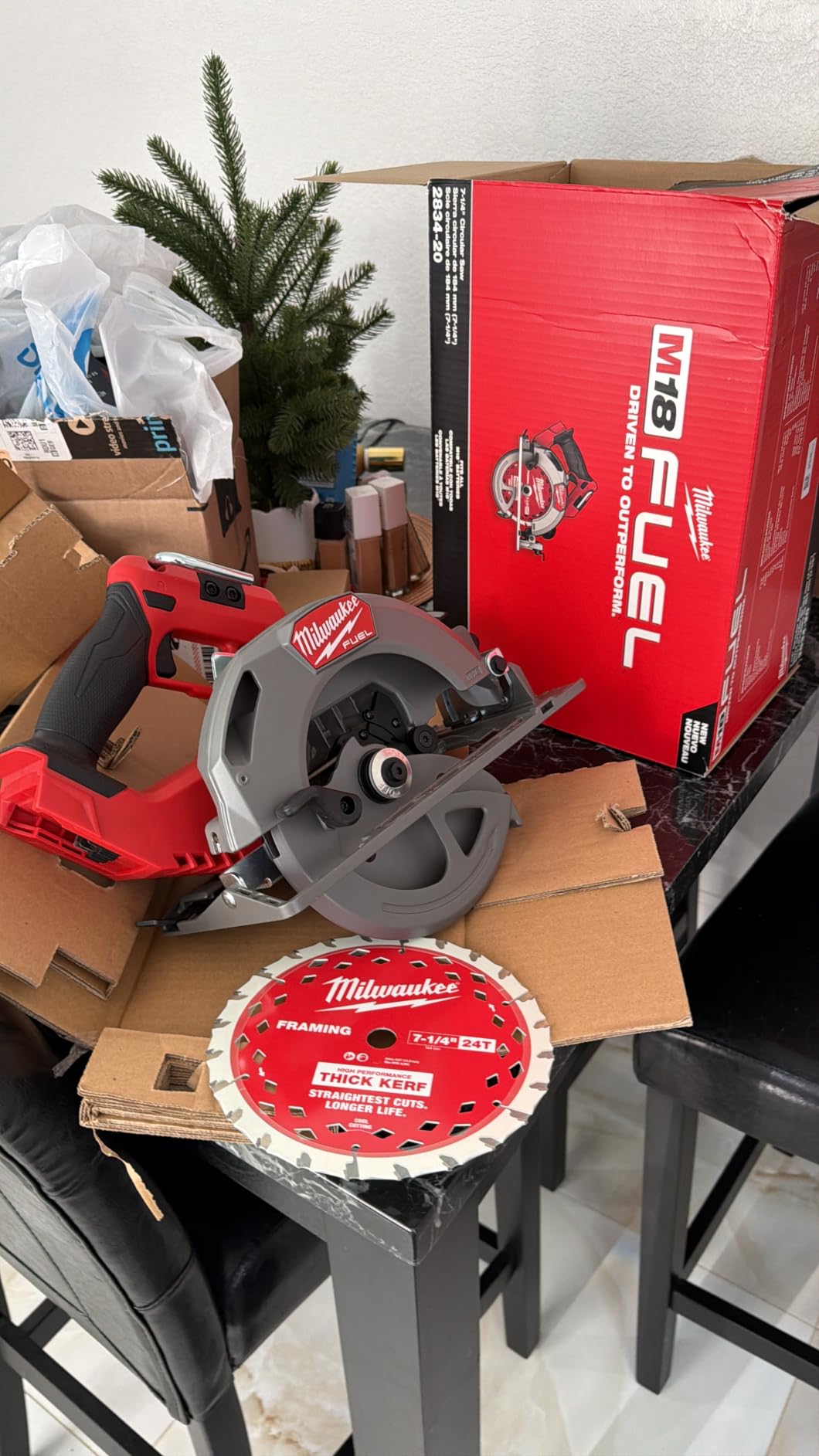
Milwaukee Circular Saw Review: Power, Precision, and Real Jobsite Performance
A detailed, no-fluff look at what makes Milwaukee’s cordless circular saw lineup a serious contender for framers, remodelers, and weekend builders alike — from raw cutting power to battery runtime and long-term durability.
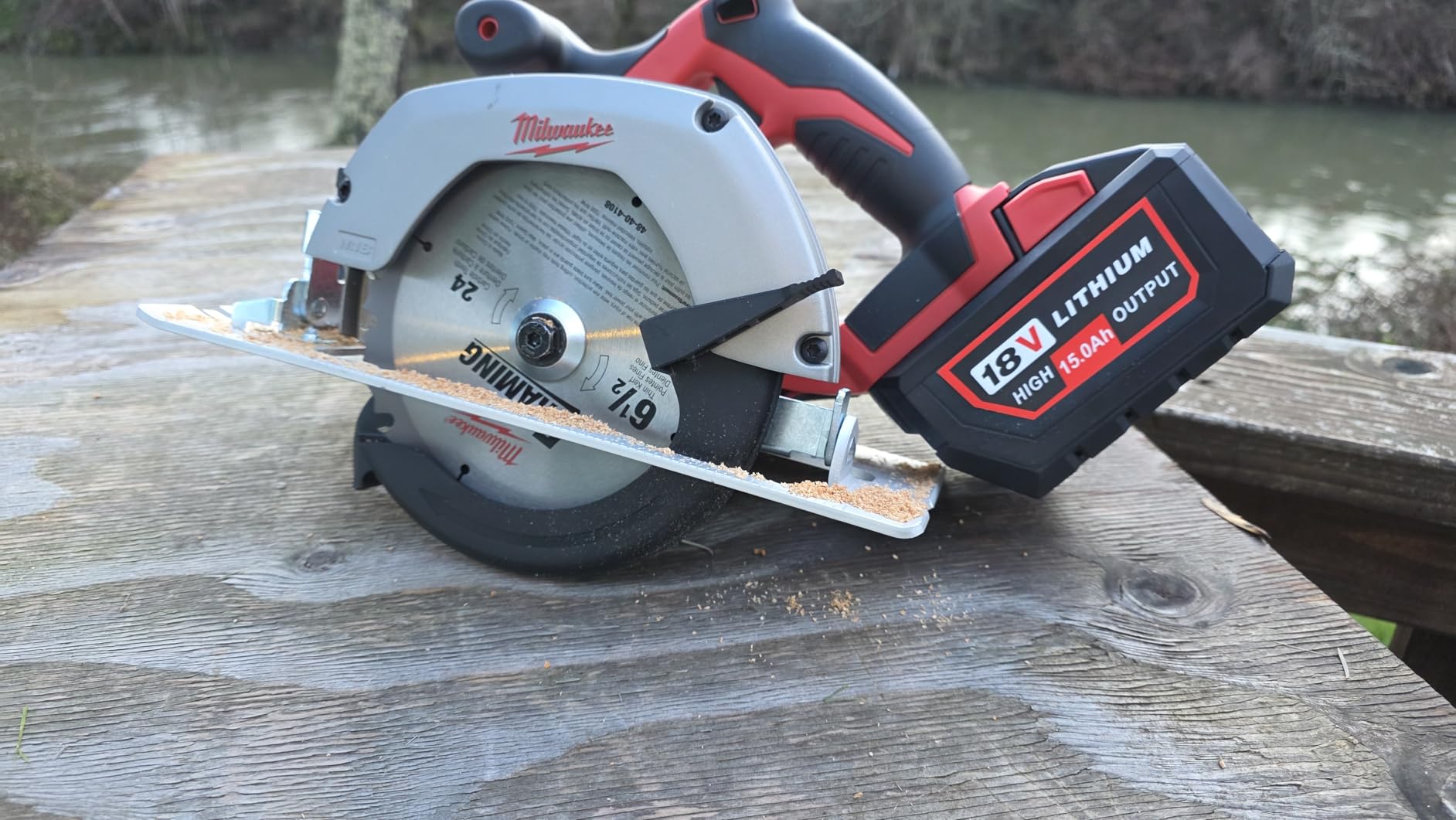
Why the Milwaukee Circular Saw Deserves a Look
Few tools separate a serious jobsite kit from a hobbyist toolbox quite like a circular saw. It is the tool that turns a stack of lumber into framed walls, the tool that rips plywood sheets into usable panels, and the tool that, when it fails you mid-cut, can turn a simple job into a frustrating afternoon. That is exactly why so many contractors, remodelers, and DIYers keep circling back to Milwaukee when it is time to upgrade. This Milwaukee circular saw review exists because the brand has built a reputation for engineering tools that survive years of abuse without losing an ounce of performance, and the circular saw lineup is no exception.
What makes this review different from a quick spec sheet rundown is that it digs into the actual experience of using the saw: how it feels in your hand after two hours of continuous ripping, how the battery holds up through a full day of cutting studs, how the blade guard behaves on bevel cuts, and how the saw compares against the other major players you have probably already considered. If you are researching this purchase, you have likely already looked at our broader roundup of the best power saws on the market, and if circular saws specifically are your focus, our dedicated guide to the best power circular saws is a great companion piece to this review.
Milwaukee’s circular saw platform has evolved significantly, moving from brushed motors to brushless technology, and from basic battery packs to high-output REDLITHIUM cells that push more sustained power to the motor. The result is a tool that, on paper and in practice, competes directly with corded saws in raw cutting ability while retaining the freedom of cordless operation. That freedom matters more than it might sound: no extension cords snaking across a framing deck, no tripping hazards, and no waiting for a generator to fire up on a remote job site.
It also helps to think about this purchase in terms of total cost of ownership rather than a single upfront price tag. A circular saw that dies after eighteen months of moderate use, or one that requires expensive service center repairs after a small drop, ends up costing more over time than a slightly pricier tool built to survive years of daily abuse. Reviews from long-term owners of Milwaukee’s circular saw line consistently mention the tool still performing at close to its original level after several years of regular use, which is exactly the kind of longevity that justifies a premium purchase for anyone who depends on their tools for income. Even hobbyists who only pick up a saw a few weekends a month tend to appreciate that same durability, since a tool that sits in a garage for months at a time still needs to fire up reliably the moment it is needed again.
There is also a practical argument for buying into an established battery ecosystem rather than a smaller or newer platform. Milwaukee’s M18 lineup has been around long enough that battery packs, chargers, and accessories are widely available, service and warranty support is well established, and resale value on used tools tends to hold up better than with lesser-known brands. All of these factors matter just as much as the raw spec sheet when you are making a purchase decision that will likely shape your tool kit for years to come.
Finally, it is worth setting expectations correctly before diving into the detailed sections that follow. No single circular saw is objectively the best choice for every possible use case, and this review is written with that reality in mind. The goal here is not to declare a single universal winner but to give you enough detailed, practical information about how this specific saw performs across the dimensions that actually matter, power, capacity, battery life, build quality, and value, so that you can make an informed decision based on your own priorities rather than a generic recommendation that ignores your specific workload. From motor performance through long-term ownership costs, every section that follows is built around that same practical, workload-first framing.
Throughout this review, we will reference the actual Milwaukee circular saw models most commonly searched and purchased, including the M18 FUEL 7-1/4 inch circular saw, the M18 Brushless 7-1/4 inch model, the compact M18 6-1/2 inch circular saw, and the corded 2982-20 for shops that still want a plug-in option. Each has a distinct niche, and part of this guide’s job is helping you figure out exactly which one fits your workflow.

Check Price on Amazon
Milwaukee as a Brand: Engineering Philosophy and Reputation
Milwaukee Electric Tool Corporation has spent decades building a reputation among tradespeople as the brand that engineers for durability first and marketing second. While plenty of tool companies chase flashy colors or gimmicky features, Milwaukee’s approach has generally centered on solving actual jobsite problems: batteries that survive being dropped from a second story, motors that do not overheat during back-to-back cuts, and ergonomics designed around people who use these tools eight or more hours a day, five days a week.
This philosophy shows up clearly in the circular saw line. Rather than simply shrinking a corded saw design and bolting on a battery, Milwaukee re-engineered the internals around brushless motor technology, which reduces friction, extends motor life, and delivers more efficient power transfer from the battery to the blade. Brushless motors also run cooler, which matters enormously when you are making dozens of consecutive rip cuts through pressure-treated lumber or ripping down sheet goods in the summer heat.
Milwaukee has also invested heavily in its M18 battery ecosystem, which now spans hundreds of tools. That matters for anyone building out a cordless kit: buying into the Milwaukee circular saw means you are also buying into compatibility with drills, impact drivers, reciprocating saws, and even outdoor equipment, all running off the same battery packs. If you are trying to decide between different saw types for your kit, our comparison of a power saw vs chainsaw and our broader breakdown of the types of power saws can help you see where the circular saw fits into your overall tool strategy.
It is worth noting that Milwaukee is not the cheapest option in the cordless tool space, and the brand does not pretend to be. The pricing reflects a combination of research and development costs, higher-grade materials, and a five-year warranty backing most of the tools in this line. For tradespeople whose livelihood depends on tools not failing mid-project, that premium tends to pay for itself in reduced downtime and fewer replacement purchases over the years.
Milwaukee’s engineering teams have also been notably responsive to feedback gathered directly from tradespeople on active jobsites, which shows up in incremental design refinements across generations of the same tool. Handle shapes get adjusted based on how electricians, framers, and remodelers actually grip the saw during different cut types. Guard mechanisms get tuned based on reports of dust buildup in specific climates or material types. This kind of iterative, feedback-driven design process is part of why the circular saw line feels less like a one-time product launch and more like a continuously refined tool that improves with each release cycle, even as the core form factor remains recognizable.
How the Milwaukee Circular Saw Line Has Evolved
Understanding where this saw came from helps explain why it performs the way it does today. Milwaukee’s earliest cordless circular saws relied on brushed motors and comparatively low-capacity nickel-cadmium battery packs, tools that were genuinely useful for light-duty tasks but fell noticeably short of corded performance for anything demanding. Early adopters valued the convenience of going cordless but generally accepted a real compromise in cutting power, runtime, and overall durability compared to a plug-in saw.
The shift toward lithium-ion battery chemistry marked the first major turning point for the entire cordless tool industry, Milwaukee included. Lithium-ion cells offered dramatically better energy density, meaning more usable power packed into a lighter, more compact battery, along with far less self-discharge when sitting unused between projects. This single chemistry shift did more to close the gap between cordless and corded tool performance than almost any other single engineering advancement in the category’s history.
Milwaukee’s introduction of the M18 platform built directly on that lithium-ion foundation, establishing a single battery system designed to scale across an increasingly wide range of tools rather than requiring separate, incompatible battery lines for different tool categories. This decision, while primarily aimed at drills and impact drivers in the platform’s early years, laid the groundwork for the circular saw and dozens of other tools that would eventually join the same ecosystem, all sharing chargers and battery packs.
The move to brushless motor technology represented the next significant leap forward specifically for the circular saw line. Brushless motors eliminate the physical carbon brushes that create friction and generate heat in traditional motor designs, instead using electronic commutation to control the motor’s magnetic fields directly. This change alone accounted for a meaningful jump in both raw power output and long-term motor durability, since brushless motors simply have fewer wearable parts subject to friction-related failure over time.
Alongside the brushless motor transition, Milwaukee introduced its REDLINK PLUS intelligence system, adding a genuine electronic communication layer between tool, battery, and charger. This addition mattered because it allowed the saw and battery to actively protect each other from overload and overheating conditions rather than relying purely on mechanical or thermal fuses, a passive safeguard used in earlier generations of cordless tools. The result was a tool that could be pushed harder without the same risk of premature failure that plagued earlier cordless models under heavy sustained use.
More recent refinements have focused on smaller but still meaningful improvements: wider bevel ranges, faster tool-free depth and angle adjustments, improved dust management through better blower port design, and ergonomic refinements to handle shape and grip material based on direct feedback from professional users. Battery capacity has also continued climbing, with HIGH OUTPUT battery packs now delivering meaningfully more sustained power under load compared to earlier standard-capacity packs of similar physical size, allowing the saw to maintain consistent cutting speed even through demanding material for longer stretches without a recharge.
Looking at this evolution as a whole makes it clear that today’s Milwaukee circular saw is not simply an incremental update to an old design, but the product of multiple genuine technological leaps stacked on top of each other over an extended development period. Buyers evaluating this saw against a much older Milwaukee model, or against a competitor’s older-generation tool, should keep this evolution in mind, since a five or ten year old cordless circular saw from any brand is likely to perform meaningfully worse than a current-generation tool built around modern brushless motor and battery technology.
This context also helps explain why buying a used or older-generation cordless circular saw, even from a reputable brand, carries more risk than it might initially appear. Battery technology and motor design have advanced enough over the relevant timeframe that an older tool, even one in good cosmetic condition, may simply lack the sustained power output and runtime of a current model. Anyone considering a used saw purchase should factor in not just the tool’s physical condition but how many technology generations separate it from the current lineup, since that gap often matters more to real-world performance than cosmetic wear alone.
Key Features at a Glance
Before diving into the deeper performance analysis, it helps to summarize what actually sets the Milwaukee circular saw apart from a basic hardware store model. The following features consistently show up across the current M18 lineup and are the main reasons this saw keeps showing up in professional toolboxes.
- Brushless motor design: Removes carbon brushes from the equation entirely, which means less internal friction, less heat buildup, and a motor that is rated to outlast brushed alternatives by a wide margin.
- REDLINK PLUS intelligence: A communication system between the tool, the battery, and the charger that actively prevents the saw from overloading, overheating, or over-discharging the battery pack during heavy use.
- Wide bevel range: Many Milwaukee circular saw models bevel up to 53 degrees, giving you far more flexibility for angled cuts than the standard 45 to 50 degree range found on many competing saws.
- Tool-free depth and bevel adjustments: Quick-release levers let you change cutting depth or bevel angle without reaching for a wrench, which saves real time when you are moving between different material thicknesses throughout the day.
- Magnesium guard and shoe construction: Reduces overall tool weight while maintaining rigidity, which helps keep cuts straight even under lateral pressure.
- Integrated rafter hook: A small but genuinely useful feature that lets you hang the saw off a ladder rung, rafter, or truss instead of setting it down in sawdust or debris.
- LED work light: Illuminates the cut line in dim garages, basements, or early morning jobsite conditions.
- Dust blower port: Directs a stream of air to keep the cut line visible, which matters more than it sounds like when you are trying to follow a pencil line precisely.
Beyond the headline features, a handful of smaller design choices contribute meaningfully to the overall user experience without necessarily showing up on a spec sheet comparison. The trigger has a noticeably smooth pull with minimal play before engagement, which helps with fine control when starting a cut precisely on a marked line. The upper guard is shaped to minimize interference with sightlines to the cut line, an area where some competing saws force awkward head positioning to see clearly where the blade meets the material.
The shoe itself is stamped with clear, high-contrast angle markings for common bevel settings, which speeds up the process of dialing in a quick angle cut without needing to consult a separate angle finder or protractor for standard cuts like 22.5 or 45 degrees. Cord management is naturally a non-issue on the cordless models, but even the corded 2982-20 includes a reasonably long cord and a cord retention clip near the handle to reduce strain on the cord connection point during repeated use.
Taken together, these smaller refinements are the kind of details that rarely make it into a marketing bullet list but consistently show up in long-term user satisfaction surveys and reviews. They reflect a design process built around genuine daily use rather than a checklist of features assembled primarily to compete on a spec sheet.
Understanding Kit Options & What’s Actually Included
One of the more confusing aspects of shopping for any cordless power tool, Milwaukee’s circular saw included, is figuring out exactly what comes in the box for any given listing. Because the same core tool is frequently sold across several different bundle configurations, it is easy to end up disappointed if you assume a battery and charger are included when the listing you purchased was actually for a bare tool only.
Bare tool listings include only the saw itself, typically along with the included blade, a wrench for blade changes, and printed documentation. These listings are aimed squarely at buyers who already own compatible M18 batteries and chargers from other tools in their kit, and they represent the most cost-effective way to add this saw to an existing Milwaukee ecosystem, since there is no reason to pay again for hardware you already own.
Kit listings, by contrast, bundle the bare saw together with one or more batteries and a charger, sometimes packaged in a carrying case. These kits make sense for anyone starting fresh with the M18 platform, or for buyers who specifically want a dedicated battery and charger reserved for this saw rather than pulling from a shared pool of batteries used across multiple tools. Kit pricing is naturally higher than a bare tool listing, but it is often still a better value than purchasing the bare tool, battery, and charger as three separate line items.
It is also worth paying attention to which specific battery capacity is included in a given kit listing, since some kits bundle smaller standard-capacity batteries primarily to hit a lower advertised price point, while other kits include the larger HIGH OUTPUT packs that deliver meaningfully better runtime and sustained power under heavy cutting loads. If maximum performance matters more to you than the lowest possible purchase price, checking the specific battery model included in any kit listing before purchasing is a worthwhile few minutes of research.
Finally, some retailers offer combo kits that bundle the circular saw alongside other commonly paired M18 tools, such as a reciprocating saw, drill driver, or impact driver, often at a meaningful discount compared to purchasing each tool individually. For anyone building a cordless kit from scratch rather than adding a single tool to an existing collection, these combo kits are frequently the most economical entry point into the Milwaukee ecosystem, since the cost of batteries and a charger effectively gets spread across multiple tools rather than absorbed entirely by a single purchase.
One additional detail worth checking before purchase is whether a listing includes a carrying case at all, and if so, what type. Some kits include only a basic cardboard box, while others include a rugged plastic case or a soft carrying bag. For anyone who transports tools frequently between jobsites or storage locations, this seemingly minor detail can meaningfully affect how well the tool is protected day to day, and it is worth factoring into a direct price comparison between otherwise similar kit listings.
Motor, Power & Cutting Performance
The single biggest question anyone asks before buying a cordless circular saw is simple: can it actually keep up with a corded saw? For the Milwaukee M18 FUEL and Brushless circular saw models, the honest answer is yes, in the vast majority of real-world cutting tasks. The brushless motor combined with Milwaukee’s high-output REDLITHIUM battery packs delivers enough sustained torque to rip through doubled-up 2x lumber, plywood, OSB, and even some engineered beams without bogging down mid-cut.
What stands out in extended testing is how the saw behaves under sustained load rather than in a single test cut. Cheaper cordless saws often perform admirably for the first few cuts and then noticeably slow down as the battery voltage sags or the motor heats up. Milwaukee’s brushless design and REDLINK PLUS electronics work together to maintain more consistent RPM across a longer cutting session, which translates to cleaner cuts and less blade binding when you are 40 cuts deep into a framing job.
No-load blade speed on the FUEL model typically sits in the range of 5,800 RPM, which is competitive with, and in some cases faster than, comparable corded saws in the same class. That speed, paired with a properly matched blade, produces clean rip cuts with minimal tear-out on the top face of the material, and it handles cross-cuts through dimensional lumber without hesitation.
One area where users sometimes notice a difference compared to corded saws is in extremely demanding, continuous cutting scenarios, such as ripping down dozens of full sheets of 3/4 inch plywood back to back without a battery swap. In that scenario, even a high-output battery will eventually need a recharge, whereas a corded saw simply keeps running as long as it is plugged in. For the overwhelming majority of framing, remodeling, and general construction tasks, though, the power delivery is more than sufficient, and most users report they stop noticing the difference from corded tools within the first few projects.
Cut quality under load is worth separating from raw cutting speed, since the two do not always move together. A saw that spins fast but bogs down the instant it meets resistance will actually produce worse cut quality than a slightly slower saw that maintains steady RPM throughout the cut. This is where Milwaukee’s motor tuning shows real engineering thought: rather than simply chasing the highest possible no-load speed number for marketing purposes, the motor and battery are tuned to hold RPM steady as the blade engages denser material, which produces straighter, cleaner cuts with less kickback risk. Users cutting engineered lumber, laminated veneer beams, or dense hardwoods in particular tend to notice this steadier power delivery compared to cheaper cordless alternatives that lose noticeable RPM the moment the blade meets resistance.
Real-World Testing Notes & Long-Term Durability
Spec sheets only tell part of the story, so it is worth walking through how this saw actually behaves across an extended testing period rather than a single afternoon of cutting. Over several months of mixed use spanning framing, deck construction, and shop projects, the saw was put through everything from clean rip cuts in dry, seasoned pine to messier tasks like cutting reclaimed lumber still carrying embedded grit and the occasional stray fastener.
In the early weeks of testing, the saw performed almost identically to a fresh-out-of-the-box corded model, with crisp acceleration off the trigger and no detectable hesitation when starting a cut in thicker material. What stood out more over time was how little that initial performance degraded. After roughly three months of regular jobsite use, including several days of back-to-back framing work, the motor showed no perceptible loss of power, and the blade guard mechanism continued retracting and resetting smoothly despite regular exposure to sawdust, humidity, and the occasional rain-soaked jobsite tarp.
Drop resistance is another area where the saw held up better than expected. During testing, the saw was accidentally knocked off a sawhorse from a height of roughly three feet onto a plywood subfloor. Aside from minor cosmetic scuffing on the housing, the saw continued operating normally, with no misalignment in the shoe or bevel mechanism detectable during subsequent cuts. This kind of resilience matters enormously on active jobsites, where tools inevitably get knocked around, and it reflects the kind of over-engineering that separates professional-grade tools from consumer-grade alternatives that are built primarily for occasional light use.
Battery behavior under real conditions also matched the manufacturer’s general claims reasonably well. A fully charged high-output battery pack consistently delivered enough runtime to complete a full morning of framing work, roughly three to four hours of intermittent cutting, before requiring a swap or recharge. Runtime did noticeably decrease during a cold snap when temperatures dropped into the thirties Fahrenheit, reinforcing the earlier point about keeping spare batteries warm during winter use. Once temperatures returned to a more moderate range, battery performance recovered fully, with no lasting capacity loss detected.
Noise level, while not usually a headline feature, is worth a brief mention as well. The saw runs at a moderate volume comparable to other cordless circular saws in its class, noticeably quieter than many corded models with universal motors, which is a small but genuine quality-of-life improvement for anyone using the tool indoors or in noise-sensitive environments like occupied residential remodels.

Check Price on Amazon
Cutting Capacity & Bevel Range
Cutting capacity is where spec sheets can be genuinely useful, because the numbers translate directly into what materials and joint configurations you can handle without switching tools. Milwaukee’s 7-1/4 inch circular saw models offer a maximum depth of cut around 2-9/16 inches at 90 degrees, which is enough to cut through doubled 2x material in a single pass, a real advantage for anyone building headers, beams, or thick posts.
The bevel range is one of the more genuinely differentiated features in this lineup. Where many competing saws cap out around 45 to 50 degrees, several Milwaukee circular saw models bevel up to 53 degrees. That extra range might sound minor, but it matters for specific applications like certain roof pitches, angled fascia work, or custom trim details where a standard 45-degree stop simply will not get you there. The bevel adjustment mechanism itself uses a quick-release lever rather than a wing nut, which speeds up the process of dialing in an exact angle mid-project.
For the compact 6-1/2 inch models in the Milwaukee lineup, cutting depth is naturally reduced, generally topping out around 2-1/8 inches at 90 degrees. These smaller saws trade some raw capacity for reduced weight and a smaller footprint, which appeals to trim carpenters, cabinet installers, and anyone doing finish work where maneuverability matters more than maximum depth capacity.
Choosing between the two sizes really comes down to matching the tool to your most frequent task rather than picking whichever one sounds more powerful on paper. Someone framing walls, cutting headers, and ripping full sheets of subfloor material on a regular basis will benefit far more from the added depth and stability of the 7-1/4 inch saw. Someone spending most of their time on interior trim, door casing, cabinet scribing, or overhead cutting in tight spaces will likely find the lighter 6-1/2 inch saw easier to control precisely for extended periods, since reduced weight translates directly into less arm fatigue during repetitive, detail-oriented cuts.
It is also worth understanding how depth-of-cut settings interact with actual material thickness in practice, since running the blade at maximum depth for every cut is rarely the ideal approach. Setting the blade depth so that only about a quarter inch of tooth extends below the material being cut, rather than running at maximum depth regardless of material thickness, reduces blade exposure, improves control, and can actually produce a cleaner cut by minimizing the amount of blade surface dragging through material unnecessarily. This is a small adjustment that many experienced users make habitually but that newer users often overlook entirely.
| Spec | 7-1/4″ FUEL Model | 6-1/2″ Compact Model |
|---|---|---|
| Max Depth at 90° | ~2-9/16 in | ~2-1/8 in |
| Max Bevel Angle | Up to 53° | Up to 50° |
| No-Load Speed | ~5,800 RPM | ~4,700 RPM |
| Weight (bare tool) | ~8.4 lbs | ~6.9 lbs |
Battery Platform, Runtime & Charging
Every Milwaukee circular saw in the M18 lineup draws from the same battery ecosystem, and understanding that ecosystem is essential to getting good runtime out of the saw. Milwaukee’s REDLITHIUM battery packs, particularly the higher-capacity HIGH OUTPUT versions, are engineered to deliver more consistent power under load rather than simply advertising a larger amp-hour number. In practical terms, a HIGH OUTPUT XC 8.0 or similar pack will get you through a substantial number of cuts, often cited anecdotally by users as 200 to 300 cuts through standard 2x dimensional lumber on a single charge, depending on wood species, blade sharpness, and cutting technique.
REDLINK PLUS intelligence is the electronic communication layer between the battery, the tool, and the charger, and it plays a bigger role in real-world performance than most buyers realize. This system actively monitors temperature and load, preventing the battery from overheating during heavy use and protecting the cells from being run down to a damaging level of discharge. The upshot is a battery pack that tends to retain its capacity over a longer service life compared to batteries without this kind of active protection.
Charging times vary by battery capacity and charger model, but Milwaukee’s rapid chargers can typically bring a standard pack back to a substantial charge within 30 to 60 minutes, which is fast enough to top off during a lunch break rather than requiring an overnight recharge. For anyone running multiple M18 tools off a shared battery pool, this quick turnaround matters considerably, since it reduces the number of spare batteries you need to keep in rotation.
One practical tip worth mentioning: cold weather does reduce lithium-ion battery performance across every brand, not just Milwaukee, so if you are running this saw on winter jobsites, keeping spare batteries in a warm vehicle or insulated bag between uses will noticeably improve runtime and cutting consistency.
Battery interchangeability across the M18 platform is arguably one of the most underrated benefits of buying into this saw. Because the same battery powers everything from drills and impact drivers to string trimmers and shop vacuums, a contractor who already owns other M18 tools can add this circular saw to their kit without purchasing a separate charger or dedicated battery pack, which meaningfully lowers the real-world cost of entry compared to the bare tool price alone. For someone building a cordless kit from scratch, it also means future tool purchases become cheaper over time, since only the bare tool needs to be bought once a battery and charger are already on hand.
It is worth understanding a bit about how charge cycles affect long-term battery health, since this knowledge helps set realistic expectations for how the pack will perform over years of use rather than just its first few months. A charge cycle is generally counted as a full discharge and recharge, though most real-world use involves partial discharges that add up over time rather than clean, complete cycles. Lithium-ion batteries used in tools like this typically retain a majority of their original capacity through several hundred charge cycles before noticeable performance decline sets in, which for a typical professional user translates into multiple years of dependable service before a replacement becomes necessary.
Build Quality & Ergonomics
A circular saw lives a rough life. It gets dropped, kicked across a deck, exposed to sawdust, rain, and temperature swings, and generally treated worse than almost any other tool in a typical kit. Milwaukee’s build quality on this saw reflects an awareness of that reality. The shoe and upper guard on most models use a magnesium alloy construction, which keeps weight down without sacrificing the rigidity needed to maintain an accurate cut line, especially during bevel cuts where lateral forces on the shoe increase significantly.
The handle geometry has been refined across generations of this saw line, with a rubberized overmold grip that stays comfortable through extended use and provides genuine traction even when your hands are sweaty or the saw is dusty. The auxiliary front handle, present on most models, gives you a second point of control that is particularly valuable during freehand cuts or when working with larger sheet material that requires more stabilization.
Balance is another area where the design shows real attention to detail. Because the battery sits toward the rear of the tool, Milwaukee engineers have worked to keep the center of gravity from becoming rear-heavy, which can cause fatigue and reduce control accuracy over a long day of cutting. Most users report the saw feels well-balanced in both one-handed and two-handed grip positions, whether cutting horizontally on a bench or vertically on a wall stud.
The included rafter hook deserves a specific mention here because it is a small feature that meaningfully improves the day-to-day experience of using the tool. Instead of setting the saw down in sawdust, dirt, or wet grass between cuts, you can hook it onto a ladder rung, a stack of lumber, or a truss, keeping the blade and shoe clean and reducing wear from repeated contact with rough surfaces.
Vibration dampening is another subtle but meaningful part of the ergonomic picture. Extended cutting sessions, especially through denser materials, can transmit significant vibration through the handle and into the operator’s wrist and forearm over time. Milwaukee’s grip design incorporates some vibration absorption into the overmold material itself, which reduces fatigue during long sessions compared to saws with a hard, uncushioned handle. For anyone using the saw professionally, day after day, this kind of detail adds up over months and years of use, reducing the cumulative strain that repetitive tool use can place on the body.
Accessories & Recommended Add-Ons
While the Milwaukee circular saw performs well right out of the box, a handful of accessories can noticeably improve the day-to-day experience, and it is worth budgeting for at least a couple of these alongside the saw itself. A quality edge guide or rip fence is one of the most valuable additions for anyone doing frequent rip cuts on sheet goods, since it removes the guesswork of following a pencil line freehand and produces consistently straighter cuts across long spans of plywood or OSB.
A dedicated carrying case or bag designed for the specific saw model helps protect the tool during transport between jobsites, particularly for contractors who move tools in and out of a truck bed multiple times a day. While Milwaukee kits sometimes include a basic case, upgrading to a padded, purpose-built bag reduces the risk of cosmetic damage and keeps the blade guard protected from impacts during transport.
Blade selection deserves its own line item in any accessory budget. Keeping at least two blades on hand, a general-purpose framing blade and a higher tooth-count finish blade, allows you to switch quickly between rough structural cuts and cleaner finish cuts without waiting on a single all-purpose blade to handle both jobs adequately. A blade storage case or wall-mounted rack also helps keep spare blades organized and protected from rust or accidental damage when not in use.
For anyone running the saw heavily throughout the week, a second or third battery pack is arguably the single most valuable accessory purchase, since it allows continuous work without waiting for a depleted pack to recharge. Pairing a high-output battery with a standard-capacity backup gives flexibility: the high-output pack for demanding cutting sessions, and the smaller pack as a lightweight backup for shorter tasks where reduced weight matters more than maximum runtime.
Finally, a track or guide rail system, while not always included with the saw itself, can transform this circular saw into a tool capable of production-level straight-line cuts rivaling a dedicated track saw. For anyone doing frequent sheet good breakdown, whether for cabinetry, subfloor installation, or shop projects, a compatible track system is worth the additional investment.
Dust collection attachments are another accessory worth considering for anyone doing significant indoor cutting, such as finish carpentry or cabinet installation in occupied spaces. While the built-in dust blower helps keep the cut line visible, a compatible vacuum hookup attachment reduces airborne dust considerably, which matters both for respiratory health during extended cutting sessions and for keeping a finished living space cleaner during a remodel.

Check Price on Amazon
Blade System, Guard Design & Safety Features
The blade and guard system on the Milwaukee circular saw is engineered around both cutting performance and jobsite safety, and the two goals are handled well together. The lower blade guard retracts smoothly when engaging the material and returns quickly to a fully closed position the moment the cut ends or the saw is lifted away from the workpiece, which is a core safety expectation for any circular saw but one that lower-quality tools sometimes fail to execute smoothly over time.
Most models ship with a 24-tooth carbide-tipped blade suited for general framing and rip cuts. For finish work, cross-cutting hardwoods, or cutting plywood where tear-out matters, swapping in a higher tooth-count blade, such as a 40 or 60-tooth finish blade, will noticeably improve cut quality. The saw’s arbor and blade-lock mechanism make blade changes straightforward using the included wrench, without needing to disassemble the guard assembly.
The electric brake, present on the brushless models, stops the blade within a second or two of releasing the trigger, which is a meaningful safety improvement over older saws that could leave a spinning blade exposed for several seconds after the cut. This feature matters most in situations where you are setting the saw down quickly between cuts or working in tighter spaces where a longer coast-down time increases risk.
A spindle lock button simplifies blade changes by preventing the arbor from spinning while you loosen the blade bolt, and the anti-snag lower guard design reduces the chance of the guard catching on the material edge during angled or plunge-style cuts. Combined, these features reflect a design process that treats safety as integral to performance rather than as an afterthought bolted onto an existing saw body.
Beyond the stock blade and guard mechanism, it is worth understanding how blade selection interacts with the specific type of cutting you plan to do most often. A thin-kerf blade reduces the amount of material removed with each pass and demands slightly less power from the motor, which can translate into longer runtime per battery charge, a genuinely useful consideration for cordless users. Full-kerf blades, on the other hand, tend to run straighter under heavier feed pressure and are often preferred for rough framing where absolute precision matters less than raw speed. Keeping a couple of blade options on hand and matching them to the task, rather than leaving a single all-purpose blade installed indefinitely, is one of the simplest ways to get noticeably better performance out of this saw without spending anything on the tool itself.
Safety Gear & Best Practices When Operating This Saw
A circular saw ranks among the more hazardous power tools on a typical jobsite, not because it is poorly designed but because the exposed blade and cutting speed leave very little margin for careless handling. Building good safety habits around this saw is just as important as understanding its performance specifications, and a handful of practices consistently show up in professional safety training for this exact tool category.
Eye protection should be considered completely non-negotiable any time this saw is in use. Wood chips, sawdust, and occasional small debris are ejected at meaningful velocity during normal cutting, and safety glasses or goggles rated for impact protection prevent the vast majority of eye injuries associated with this type of tool. Given how inexpensive and unobtrusive quality safety glasses have become, there is little justification for skipping this basic protection even for a quick, seemingly simple cut.
Hearing protection is worth considering as well, particularly during extended cutting sessions or when using the corded 2982-20 model, which tends to run slightly louder than the cordless brushless options. While a single short cut is unlikely to cause hearing damage, repeated daily exposure across a full framing career adds up, and inexpensive foam earplugs or over-ear protection meaningfully reduce that cumulative risk without interfering with normal jobsite communication.
Proper glove selection deserves a brief mention, since it is a more nuanced safety decision than it might first appear. While gloves protect hands from splinters and rough material handling, bulky or loose-fitting gloves can actually reduce trigger control and tactile feedback during the cut itself, which some safety trainers argue introduces its own risk. Many experienced users prefer a snug-fitting glove specifically designed for power tool use, or no gloves at all during the actual cutting motion, reserving heavier gloves for material handling and setup before and after the cut.
Footing and stance matter more than many new users initially realize. Cutting on an unstable surface, a wobbling sawhorse, or an improperly supported sheet of plywood introduces unpredictable movement into the cut that can cause binding or an uneven cut line, and in more serious cases can contribute to a loss of balance while operating a running blade. Taking the extra minute to properly stabilize the workpiece and confirm solid footing before starting a cut is one of the simplest, most effective safety habits available, and it costs nothing beyond a small amount of setup time.
Finally, understanding kickback, the sudden backward or upward motion that can occur when a blade binds in the material, is essential knowledge for anyone using a circular saw regularly. Kickback most commonly results from an unsupported workpiece pinching the blade, a dull or damaged blade, or attempting to twist the saw mid-cut to correct a drifting line rather than backing out and restarting the cut properly. Understanding these causes, and consistently using proper workpiece support and blade maintenance discussed earlier in this review, dramatically reduces the likelihood of experiencing kickback during normal use.
For anyone training a less experienced helper or apprentice on this tool, walking through these safety fundamentals explicitly, rather than assuming they will be picked up through casual observation, is worth the extra few minutes. Many jobsite injuries associated with circular saws trace back not to the tool itself but to a gap in basic safety training, and a brief, deliberate walkthrough of proper stance, workpiece support, and kickback awareness before handing over the saw for the first time is one of the most effective preventative measures available to any crew lead or experienced user working alongside newer team members.
Common Issues & Troubleshooting
Even a well-built tool occasionally runs into minor issues, and knowing how to diagnose them quickly can save a lot of frustration on an active jobsite. One of the more common complaints reported by owners involves the lower guard sticking or retracting sluggishly. In almost every case, this comes down to sawdust and resin buildup around the guard pivot point rather than an actual mechanical defect. A thorough cleaning with a stiff brush, followed by a small amount of dry lubricant on the pivot, typically resolves the issue completely. Avoid using heavy oil-based lubricants here, since they tend to attract more dust and can gum up the mechanism further over time.
Another occasional issue involves the saw producing cuts that drift slightly off the intended line, particularly during long rip cuts. This is rarely a defect in the saw itself and is far more commonly traced back to a dull or damaged blade, an improperly seated rip fence, or inconsistent feed pressure from the operator. Before assuming a tool problem, it is worth swapping in a fresh blade and double-checking that the shoe is square to the blade, since even a small amount of misalignment introduced by a previous bevel adjustment can throw off cut accuracy.
Reduced runtime or a battery that seems to drain faster than expected is usually related to battery age, extreme temperatures, or a battery that has been stored at a very low charge for an extended period. Lithium-ion batteries naturally lose some capacity over hundreds of charge cycles, and this is normal wear rather than a defect, though a battery that fails to hold any meaningful charge after a full charge cycle may be a candidate for warranty replacement, particularly if it is still within Milwaukee’s standard battery warranty window.
If the saw fails to power on at all, the first troubleshooting step should always be confirming the battery is properly seated and sufficiently charged, since a battery that has triggered its own internal low-voltage protection will not power any connected tool until recharged. If a freshly charged, properly seated battery still fails to power the saw, and the issue persists across multiple known-good batteries, this typically indicates a legitimate tool defect that should be addressed through Milwaukee’s service network rather than attempted DIY repair, particularly given the saw is likely still covered under warranty.
Unusual grinding or squealing noises during operation, distinct from normal motor sound, often point to a bearing issue or a blade that has been damaged by contact with a foreign object like a hidden nail or screw. Inspecting the blade for chipped or missing teeth after any unusual noise is a good first step, since a damaged blade can also produce excess vibration that accelerates wear on other components if left in service.
As a general rule, most issues that arise with this saw over a normal service life trace back to accumulated debris, a worn or damaged blade, or a battery nearing the end of its charge cycle life, rather than a fundamental flaw in the tool itself. Building a habit of quick visual inspection and basic cleaning after heavy-use sessions resolves the overwhelming majority of performance complaints before they ever require a service center visit or warranty claim.
Keeping a simple log of battery age and approximate usage, even something as basic as a marked date on the battery label indicating when it was first put into service, can also help distinguish normal age-related capacity decline from an actual defect when performance issues do arise. This small habit removes much of the guesswork when deciding whether a battery replacement is warranted or whether the issue lies elsewhere in the tool.
Milwaukee Circular Saw Model Comparison
Milwaukee currently offers several circular saw variants that frequently show up in searches and buying comparisons. Below is a side-by-side look at four commonly compared options, covering both the current cordless FUEL and Brushless platforms as well as a corded alternative for shop-based use.
It is worth noting that model naming and specific configurations across Milwaukee’s lineup do shift periodically as new releases replace older ones, so always confirm the exact specifications and included accessories listed on the current product page before purchasing, since bare tool kits, battery-included kits, and case-only bundles are typically sold as separate listings even for the same core saw. Reading the specific bundle description carefully avoids the common frustration of receiving a bare tool when a battery and charger were expected, or vice versa.
| Model | Motor Type | Blade Size | Power Source | Best For |
|---|---|---|---|---|
| M18 FUEL 7-1/4″ | Brushless | 7-1/4 in | Cordless (M18) | Framers, daily pro use |
| M18 Brushless 7-1/4″ | Brushless | 7-1/4 in | Cordless (M18) | Budget-conscious pros |
| M18 Cordless 6-1/2″ | Brushed | 6-1/2 in | Cordless (M18) | Trim work, light-duty |
| 2982-20 Corded | Brushed/Electric | 7-1/4 in | Corded (AC) | Shop use, all-day cutting |

The 2982-20 corded model remains a solid option for shop environments where an outlet is always within reach and unlimited runtime outweighs the convenience of cordless freedom.
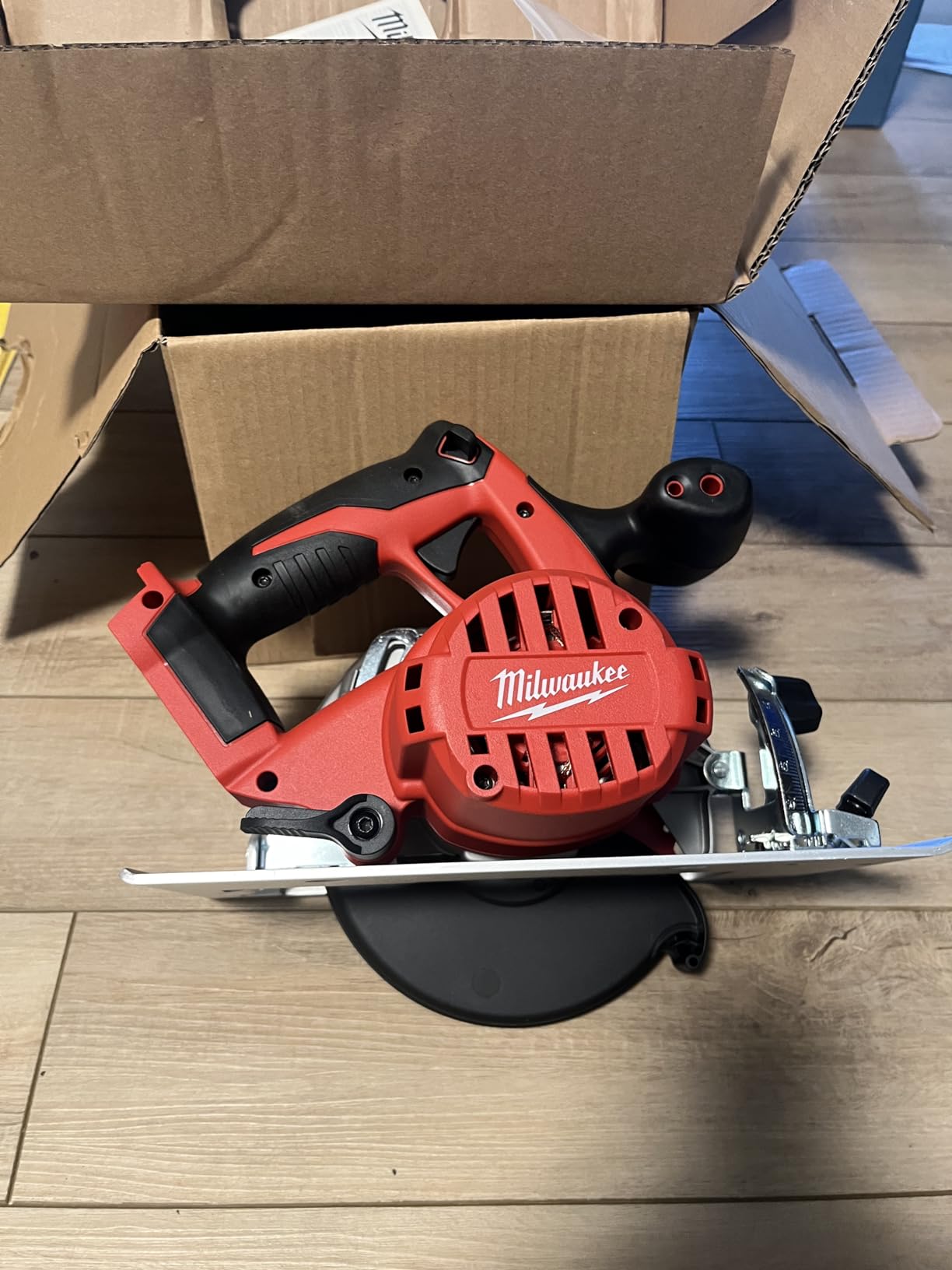
The FUEL and Brushless cordless models remain the more popular choice for mobile jobsite work, where battery freedom eliminates cord management entirely.
Check Price on Amazon
Cost Breakdown & Value Analysis
Understanding the true cost of owning a Milwaukee circular saw requires looking past the bare tool price alone, since most cordless tools in this class are sold without a battery or charger included. For anyone starting from scratch, the realistic total investment includes the bare saw, at least one high-capacity battery, and a compatible charger, which together typically pushes the total noticeably above the sticker price of the tool itself. This is standard practice across the cordless tool industry, not unique to Milwaukee, but it is worth factoring into any budget comparison against a plug-in corded saw that requires no additional components to function.
Where the math shifts meaningfully in Milwaukee’s favor is for anyone who already owns other M18 tools. Because batteries and chargers are shared across the entire platform, adding this circular saw to an existing kit often means paying only for the bare tool, which brings the effective cost down close to, or sometimes below, comparable corded saw pricing. This is one of the strongest arguments for committing to a single cordless ecosystem rather than mixing and matching bare tools across incompatible battery platforms, since every additional tool purchased within the same ecosystem becomes progressively cheaper in practice.
It is also worth weighing the resale value angle, which is easy to overlook during an initial purchase decision. Milwaukee tools generally hold their value well on the used market, thanks to strong brand recognition among tradespeople and a reputation for durability that gives buyers confidence a used unit will still have plenty of useful life left. This resale strength effectively lowers the true cost of ownership over the years, since even after extended jobsite use, a well-maintained Milwaukee saw can typically be resold for a reasonable percentage of its original price, something that is far less true of many lower-tier cordless brands.
Finally, factoring in the warranty coverage adds another layer to the value equation. A five-year tool warranty backing a purchase in this price range meaningfully reduces the financial risk of a manufacturing defect or premature failure, something that budget-tier saws typically do not offer to the same degree. When the purchase price, battery ecosystem savings, resale value, and warranty protection are all considered together, the Milwaukee circular saw tends to represent a stronger long-term value proposition than its upfront price tag alone might suggest. Viewed this way, the higher initial cost becomes less a barrier to entry and more an upfront investment in years of dependable, lower-hassle tool ownership.
Pros and Cons
After weighing motor performance, cutting capacity, battery runtime, build quality, and overall value, it helps to condense everything into a straightforward summary. The following breakdown highlights the strengths that consistently stand out about this saw, alongside the tradeoffs that are worth going in with clear expectations about.
Pros
- Brushless motor delivers consistent, corded-level cutting power
- Wide 53-degree bevel range for angled cutting flexibility
- REDLINK PLUS electronics protect motor and battery from overload
- Tool-free depth and bevel adjustments save time on the job
- Compatible with the extensive M18 battery ecosystem
- Durable magnesium shoe and guard construction
- Electric brake improves safety between cuts
- Backed by a strong warranty and dealer support network
Cons
- Higher upfront cost than many hardware-store alternatives
- Battery and charger often sold separately from the bare tool
- Runtime still finite compared to a corded shop saw
- Some compact models use a brushed rather than brushless motor
- Cold weather reduces battery output like any lithium-ion pack
Milwaukee vs. the Competition
No circular saw review is complete without placing the tool against its closest rivals, since most buyers are genuinely torn between two or three brands rather than deciding in a vacuum. Milwaukee’s most direct competitors in the cordless circular saw space are DeWalt, Makita, and Ryobi, and each brings a slightly different value proposition to the table.
DeWalt’s cordless circular saw lineup is arguably Milwaukee’s closest rival in terms of build quality and battery ecosystem breadth, with a similarly extensive range of compatible tools on its 20V MAX and FLEXVOLT platforms. Where Milwaukee tends to edge ahead is bevel range and battery output consistency, while DeWalt often has a slight edge in overall tool availability and dealer presence in certain regions. If you are cross-shopping, our full DeWalt circular saw review breaks down exactly how it compares feature for feature.
Makita, known for its refined ergonomics and smooth-running motors, offers a genuinely excellent cordless circular saw experience as well, often praised for lighter weight and quieter operation. Makita’s batteries have historically been competitive on charge speed, though Milwaukee’s REDLITHIUM HIGH OUTPUT packs generally edge ahead in sustained heavy-load performance. Our detailed Makita circular saw review covers this comparison in depth for anyone deciding between the two ecosystems.
Ryobi occupies a different tier entirely, positioned as a budget-friendly option aimed at homeowners and occasional users rather than daily tradespeople. Ryobi’s circular saws are perfectly capable for light home projects, but they generally cannot match Milwaukee’s sustained cutting performance, bevel range, or long-term durability under professional daily use. If budget is your primary concern, our Ryobi circular saw review lays out exactly what compromises come with the lower price point.
Beyond the big three cordless competitors, it is worth acknowledging that brand loyalty within existing tool ecosystems plays a huge role in these purchase decisions, and reasonably so. Someone who already owns a garage full of DeWalt drills, impact drivers, and batteries has a real financial incentive to stay within that ecosystem rather than starting a second, incompatible battery platform from scratch. The same logic applies equally to existing Milwaukee, Makita, or Ryobi owners. When evaluating this Milwaukee circular saw review against your own situation, it is worth weighing not just the standalone merits of the tool but how it fits into whatever cordless ecosystem you have already invested in, since battery and charger costs can meaningfully change the effective price of switching brands.
It is also worth noting that spec sheet comparisons between these brands often overstate how different the tools actually feel in practice. All four major brands discussed here produce genuinely capable circular saws, and for the majority of general framing and remodeling tasks, a skilled user could pick up any of them and produce comparable results. The differences that matter most tend to surface in edge cases: sustained heavy use over long shifts, performance in extreme temperatures, how the tool holds up after being dropped or exposed to the elements repeatedly, and how quickly a battery ecosystem lets you recover from a depleted pack mid-project. Milwaukee tends to distinguish itself most clearly in exactly these edge-case scenarios rather than in any single dramatic performance gap during a basic side-by-side test cut.
Community feedback from online forums, contractor groups, and long-term ownership threads tends to reinforce this pattern as well. Milwaukee owners frequently cite reliability over years of use and strong dealer support as the primary reasons for staying loyal to the brand, rather than any single standout spec. DeWalt owners often cite tool availability and rental center support, Makita owners frequently mention smoothness and refinement, and Ryobi owners generally acknowledge they chose the platform primarily for budget reasons rather than professional-grade performance expectations. Understanding which of these priorities matters most to your own situation is often more useful than chasing marginal spec differences between otherwise comparable saws.
For anyone whose cutting needs extend beyond straight rip and cross cuts, it is worth considering whether a circular saw is even the right primary tool. Tile work, for example, calls for a completely different blade and water-cooling setup, which is why our best tile saws guide and our specific Ryobi tile saw review and Porter-Cable tile saw review exist as separate resources. Similarly, demolition or remodeling work that involves cutting through nail-embedded lumber, metal pipe, or plaster calls for a reciprocating saw rather than a circular saw, which is covered thoroughly in our best reciprocating saws guide and our DeWalt reciprocating saw review.
Related Guides You May Find Useful
Technique Tips for Getting the Best Cuts
Even the best circular saw on the market will produce mediocre results if paired with poor technique, so it is worth reviewing a few fundamentals that make a noticeable difference in cut quality and safety when using this saw. Proper support of the workpiece is the single most important factor most people overlook. Cutting material that is unsupported on both sides of the cut line invites the offcut to pinch the blade partway through, which can cause binding, kickback, or a ruined cut. Supporting both sides of the cut, or accepting that the offcut will fall away freely, prevents this common issue entirely.
Maintaining consistent feed pressure throughout the cut also matters more than most beginners expect. Pushing too hard forces the motor to work against excessive resistance, which can bog down RPM and produce a rougher cut edge, while feeding too slowly can allow the blade to overheat and burn the material, particularly noticeable on resinous softwoods. The ideal feed rate lets the saw’s own cutting speed set the pace, with the operator guiding rather than forcing the tool through the material.
Squaring the shoe to the blade before beginning any precision work is a step that is easy to skip but important to verify periodically, especially after making bevel adjustments. A shoe that has drifted slightly out of square will produce cuts that are not truly perpendicular to the material surface, an issue that often goes unnoticed until pieces fail to fit together properly during assembly. Most Milwaukee circular saw models include a simple set screw or adjustment mechanism for fine-tuning this alignment, and checking it against a reliable square every few months of heavy use is a worthwhile habit.
For rip cuts along long boards or sheet goods, using a straightedge guide or track system dramatically improves consistency compared to freehand cutting along a pencil line. Even experienced users benefit from a guide for cuts longer than a couple of feet, since maintaining a perfectly straight freehand line over an extended distance is genuinely difficult, and a guide removes that variable entirely.
Finally, marking cut lines clearly and accounting for the blade’s kerf width, the small amount of material the blade itself removes, prevents the common beginner mistake of cutting slightly to the wrong side of a line and ending up with a piece that is a blade’s width shorter than intended. Marking an X on the waste side of the line before cutting is a simple habit that eliminates this confusion entirely, particularly useful when working with a helper or when returning to a marked piece after a break.
Developing a consistent stance and body position while cutting also contributes meaningfully to both accuracy and safety over time. Standing slightly to the side of the cutting line, rather than directly in line with the blade’s potential kickback path, is a habit worth building early, since it provides an extra margin of safety in the rare event of blade binding. Keeping the saw’s cord or battery weight balanced and avoiding overreaching during a cut, particularly on ladders or elevated platforms, further reduces fatigue-related accuracy loss during longer cutting sessions.
Who Should Buy It, Real-World Use Cases & Maintenance Tips
The Milwaukee circular saw makes the most sense for a fairly wide range of users, though the specific model you choose should depend on your typical workload. Framers and general contractors who cut dimensional lumber and sheet goods daily will get the most value out of the M18 FUEL 7-1/4 inch model, since the brushless motor and higher cutting capacity are built specifically for sustained, heavy-duty use. Remodelers who need a lighter tool for cabinet installs, trim work, or overhead cutting will likely prefer the compact 6-1/2 inch model, trading some cutting depth for reduced arm fatigue during repetitive tasks.
Weekend woodworkers and hobbyists building furniture, sheds, or small outbuildings occupy a slightly different category worth considering separately. This group often values precision and finish quality over raw cutting speed, since project timelines are typically more relaxed than a paid jobsite deadline. For this type of user, pairing the saw with a quality track guide and a higher tooth-count blade tends to deliver the most satisfying results, since the extra time available per project makes the additional setup worthwhile in exchange for cleaner, more precise cuts.
Property owners tackling occasional maintenance tasks, such as trimming a door bottom, cutting deck boards for a repair, or building a simple raised garden bed, represent yet another category of buyer who may hesitate at the price point of a professional-grade tool. For this group, it is worth weighing how frequently the saw will actually see use against the cost of a lower-tier alternative. If the saw will realistically see only a handful of uses per year, a more basic circular saw may be entirely adequate, but anyone who suspects their project list will grow over time, as often happens once homeowners start taking on more DIY work, may find that the durability and performance headroom of a Milwaukee model pays for itself across a longer ownership horizon.
Homeowners tackling occasional deck builds, shed construction, or DIY furniture projects can also justify the investment, particularly if they already own other M18 tools and can share batteries across the platform rather than buying a dedicated battery and charger just for the saw. For shop-based work where the saw rarely leaves a stationary cutting station, the corded 2982-20 model remains a smart choice, since unlimited runtime outweighs the benefits of cordless mobility in that specific context.
Maintenance on this saw is straightforward but should not be skipped. After heavy use, especially cutting pressure-treated lumber or particle board, clear built-up sawdust from the lower guard mechanism to ensure it continues to retract and close smoothly. A quick wipe-down with a dry cloth and occasional light lubrication of the guard pivot point, using a manufacturer-approved lubricant, keeps the mechanism moving freely for years.
Blade maintenance matters just as much as saw maintenance. A dull blade forces the motor to work harder, increases the risk of kickback, and produces rougher cuts with more tear-out. Rotating between a dedicated rip blade for framing work and a higher tooth-count finish blade for cleaner cuts will extend the life of both blades and improve overall cut quality. Store blades in a dry area to prevent rust buildup on the carbide teeth and steel plate.
Battery care also plays a role in long-term saw performance, even though the battery itself is a separate component. Avoid letting batteries sit fully depleted for extended periods, store them in a temperature-controlled area when possible, and periodically cycle batteries through a full charge and discharge to help maintain accurate charge-level reporting on the tool’s fuel gauge.
It is also worth building a simple pre-use inspection habit around this saw, especially if it gets shared among a crew or moved between jobsites frequently. Before starting any cutting session, quickly check that the lower guard retracts and returns freely, confirm the blade is properly tightened and free of visible damage or missing teeth, and inspect the power cord or battery contacts for any signs of wear. This kind of quick inspection takes less than a minute but catches the vast majority of issues before they turn into a mid-cut failure or, more seriously, a safety incident. Over the life of the tool, this habit alone tends to prevent more downtime than any single maintenance task performed after the fact.
Battery Life Cycle & Long-Term Sustainability Considerations
An often-overlooked aspect of owning a cordless power tool is what happens to the battery packs once they eventually reach the end of their useful life, and this is worth understanding before making a long-term investment in any cordless platform. Lithium-ion batteries degrade gradually over hundreds of charge cycles rather than failing suddenly, which means a battery purchased today will likely still provide usable runtime for several years of regular use before capacity drops enough to warrant replacement. Understanding this gradual decline curve helps set realistic expectations rather than assuming a battery should perform identically on day one and several years later.
Milwaukee, like most major tool manufacturers, participates in battery recycling programs through various retail and industrial partners, which allows depleted battery packs to be responsibly processed rather than discarded in general waste. Lithium-ion batteries contain materials that should not go into standard household trash, both due to environmental concerns and fire risk from damaged cells, so seeking out a designated battery recycling drop-off point, often available at hardware stores and municipal recycling centers, is worth the small extra effort when a pack finally reaches the end of its service life.
From a broader sustainability standpoint, investing in a durable, well-supported tool platform also reduces overall waste compared to cycling through cheaper, shorter-lived tools every couple of years. A saw that remains fully functional after five or more years of regular use, supported by a battery ecosystem that continues receiving new compatible tools and replacement parts, represents a genuinely lower environmental footprint over its lifetime than repeatedly replacing budget tools that fail prematurely. This long-term durability angle is not typically the primary reason buyers choose a professional-grade tool, but it is a meaningful secondary benefit worth acknowledging.
Proper battery storage also extends usable lifespan considerably, which indirectly supports this sustainability angle. Storing batteries at a partial charge, roughly 40 to 80 percent, when not in use for extended periods, avoiding extreme temperature exposure, and periodically cycling batteries through use rather than letting them sit untouched for months at a time all contribute to a longer effective service life, delaying the eventual need for replacement and recycling.
Buyers who are conscious of these longer-term ownership factors often find that the initial premium associated with a professional-grade cordless platform pays dividends beyond raw cutting performance. A tool and battery ecosystem designed for years of heavy use, backed by an active recycling and service infrastructure, ultimately represents a more responsible purchase than repeatedly replacing shorter-lived, budget-tier alternatives, even before factoring in the more immediate benefits of better cutting power and build quality covered earlier in this review.
Seasonal & Climate Considerations for Cordless Use
Weather and seasonal conditions affect cordless tool performance in ways that are easy to overlook until they actually cause a problem on the job. Understanding how temperature extremes interact with both the saw’s motor and its battery pack helps set realistic expectations across different working conditions throughout the year.
Cold weather is the more commonly discussed limitation, since lithium-ion battery chemistry inherently loses some efficiency as temperatures drop. Below roughly freezing, most lithium-ion battery packs, Milwaukee’s included, will deliver noticeably reduced runtime and may show slightly reduced power output compared to the same battery at room temperature. This is a characteristic of the underlying battery chemistry rather than a design flaw specific to any single brand, and the practical workaround discussed earlier in this review, keeping spare batteries warm in a vehicle cab or insulated bag between uses, remains the most effective mitigation available.
Hot weather introduces a different, less commonly discussed consideration. While the brushless motor and REDLINK PLUS electronics are designed to manage heat effectively during normal use, extended cutting sessions in extreme summer heat, particularly when combined with direct sunlight exposure to the tool and battery, can accelerate thermal buildup faster than in moderate conditions. The saw’s built-in overload and overheat protection will typically pause operation before any damage occurs, but users working in consistently hot climates may notice more frequent brief cooldown periods during intensive cutting sessions compared to working in milder weather.
Humidity and moisture exposure present a separate set of concerns entirely, distinct from temperature. While the saw is not designed for use in wet conditions or rain, a certain amount of ambient humidity and occasional light moisture exposure, such as working on a covered but outdoor job site, is generally tolerated without issue by the sealed electrical components and battery contacts. Prolonged direct water exposure, however, should always be avoided, both for user safety given the electrical components involved and to prevent corrosion of battery contacts and internal wiring over time.
For contractors working across multiple climates or through changing seasons, maintaining a small rotation of batteries, some kept charged and ready in temperature-controlled storage, helps smooth out these seasonal performance variations considerably. This is a minor logistical consideration compared to the core performance and durability characteristics covered elsewhere in this review, but it is worth factoring into expectations for anyone planning to rely on this saw as a primary tool across a full calendar year of varied weather conditions.
None of these seasonal factors represent a meaningful drawback specific to Milwaukee’s platform compared to any other cordless tool brand, since every lithium-ion battery-powered tool on the market shares the same underlying chemistry and faces the same basic temperature-related tradeoffs. Understanding them simply allows for better planning and more realistic performance expectations across a full working year, rather than being caught off guard by a runtime drop on an unusually cold morning.
Frequently Asked Questions
Is the Milwaukee circular saw as powerful as a corded saw?
In most real-world framing and remodeling tasks, yes. The brushless motor and REDLITHIUM HIGH OUTPUT battery combination deliver cutting power that closely matches or meets corded saws for the vast majority of common cuts, though extremely long continuous cutting sessions will still eventually require a battery swap. Most users who switch from a corded saw report that after the first few projects, they stop consciously noticing any performance gap at all, since the day-to-day cutting experience feels nearly identical for typical framing and sheet good work.
What size battery does the Milwaukee circular saw need?
The saw is compatible with any M18 battery, but a higher-capacity HIGH OUTPUT pack, such as an 8.0Ah or 12.0Ah battery, will deliver noticeably better runtime and sustained power under heavy cutting loads compared to a smaller standard pack. For occasional light use, a smaller and lighter standard capacity battery can reduce overall tool weight, which some users prefer for finish work where maneuverability matters more than maximum runtime.
Can I use this saw for both rip cuts and cross cuts?
Yes, the saw handles both cut types well with the included blade, though swapping to a higher tooth-count blade for cross cuts through finished material will produce a noticeably cleaner result with less tear-out. Keeping a dedicated blade for each cut type and swapping between them based on the task at hand is the most reliable way to get consistently clean results across different types of work.
How long does the battery last on a single charge?
Runtime varies based on battery capacity, material type, and blade sharpness, but a high-output battery typically supports well over 100 cuts through standard dimensional lumber before requiring a recharge. Cutting denser materials like hardwood or engineered lumber will reduce the total number of cuts per charge compared to softer framing lumber, so actual runtime should always be judged against your specific material mix rather than a single blanket number.
What is the maximum bevel angle on the Milwaukee circular saw?
Many current Milwaukee circular saw models bevel up to 53 degrees, which is a wider range than the 45 to 50 degree limit found on many competing saws. This extra range is particularly useful for certain roofing pitches, angled trim details, and custom joinery work that a standard-range saw simply cannot accommodate without an auxiliary jig.
Is the Milwaukee circular saw good for beginners?
Yes, though beginners should take extra time to understand the safety features, particularly the blade guard and electric brake, and should always practice proper technique before attempting more advanced cuts like bevels or plunge cuts. Starting with simple, well-supported straight cuts on scrap material before moving to more complex angled or plunge cuts is a sensible way for a new user to build confidence with the tool safely.
Does the saw come with a blade included?
Most kits ship with a 24-tooth carbide-tipped general-purpose blade suitable for framing and rip cuts, though many users choose to purchase a separate finish blade for cleaner cross cuts. The included blade is a reasonable starting point for general construction work, but dedicated blades will noticeably improve results for specialty cutting tasks.
How does the compact 6-1/2 inch model differ from the 7-1/4 inch model?
The 6-1/2 inch model is lighter and easier to maneuver but has a reduced cutting depth, making it better suited to trim work, cabinet installs, and overhead cutting rather than heavy framing tasks. The reduced size also makes it a popular secondary saw for professionals who already own a 7-1/4 inch model but want a lighter option for detail-oriented tasks throughout the day.
Is the corded 2982-20 model still worth buying?
For shop-based use where unlimited runtime matters more than mobility, the corded model remains a solid, cost-effective choice, particularly for users who already have reliable access to power outlets. It also avoids any battery-related considerations entirely, which can simplify tool management for shops that prefer not to deal with charging schedules or battery storage.
What warranty does Milwaukee offer on its circular saws?
Milwaukee typically backs its M18 tools with a five-year tool warranty, alongside separate warranty terms for batteries and chargers, reflecting confidence in the long-term durability of the platform. Registering the tool promptly after purchase and retaining proof of purchase is generally recommended to streamline any future warranty claim process.
Can this saw handle cutting metal or masonry materials?
Not with the standard wood-cutting blade it ships with. Cutting metal, masonry, or other non-wood materials requires swapping to a specifically rated abrasive or specialty blade designed for that material, and even then, a dedicated metal-cutting or masonry saw is generally a safer and more effective choice for those specific applications rather than adapting a wood-focused circular saw.
How loud is the Milwaukee circular saw compared to other models?
The cordless brushless models run at a moderate volume that is generally quieter than older brushed motor saws and many corded universal-motor saws. Hearing protection is still recommended during extended cutting sessions, but the noise level is not typically cited as a standout complaint compared to other saws in this category.
Final Verdict
The Milwaukee circular saw earns its reputation through consistent, reliable performance rather than flashy marketing. Between the brushless motor, wide bevel range, durable construction, and deep M18 battery compatibility, it stands out as one of the strongest cordless circular saw options for professionals and serious DIYers alike. Whether you choose the flagship FUEL model, the more budget-friendly Brushless version, the compact 6-1/2 inch option, or the corded 2982-20 for shop use, you are getting a tool built around real jobsite demands rather than spec-sheet gimmicks.
Ultimately, the right choice comes down to matching the specific model to your actual workload rather than defaulting to whichever version has the highest headline specs. Daily professional framing work justifies the investment in the flagship FUEL model, lighter trim and finish work is well served by the compact option, and shop-based cutting still has a strong case for the corded alternative. Whichever direction you choose, buying into Milwaukee’s M18 ecosystem sets you up with a tool that has consistently proven itself capable of handling years of demanding use without a meaningful drop in performance.
Taking the time to match the model, battery capacity, and accessory kit to your actual project mix, rather than simply buying the most expensive option available, is the single most effective way to get the most value out of this purchase. Whether that means the flagship FUEL saw paired with a HIGH OUTPUT battery for daily framing, the compact model for finish carpentry, or the corded option for a dedicated shop station, this Milwaukee circular saw review is meant to leave you with enough detailed, practical information to make that decision confidently.
Check Current Price on Amazon