Porter-Cable PCE980 Tile Saw Review: Does This 7-Inch Wet Saw Belong on Your Job Site?
A hands-on look at power, accuracy, water control, and value for the Porter-Cable PCE980 tabletop wet tile saw — and whether it can keep up with tougher porcelain and stone.


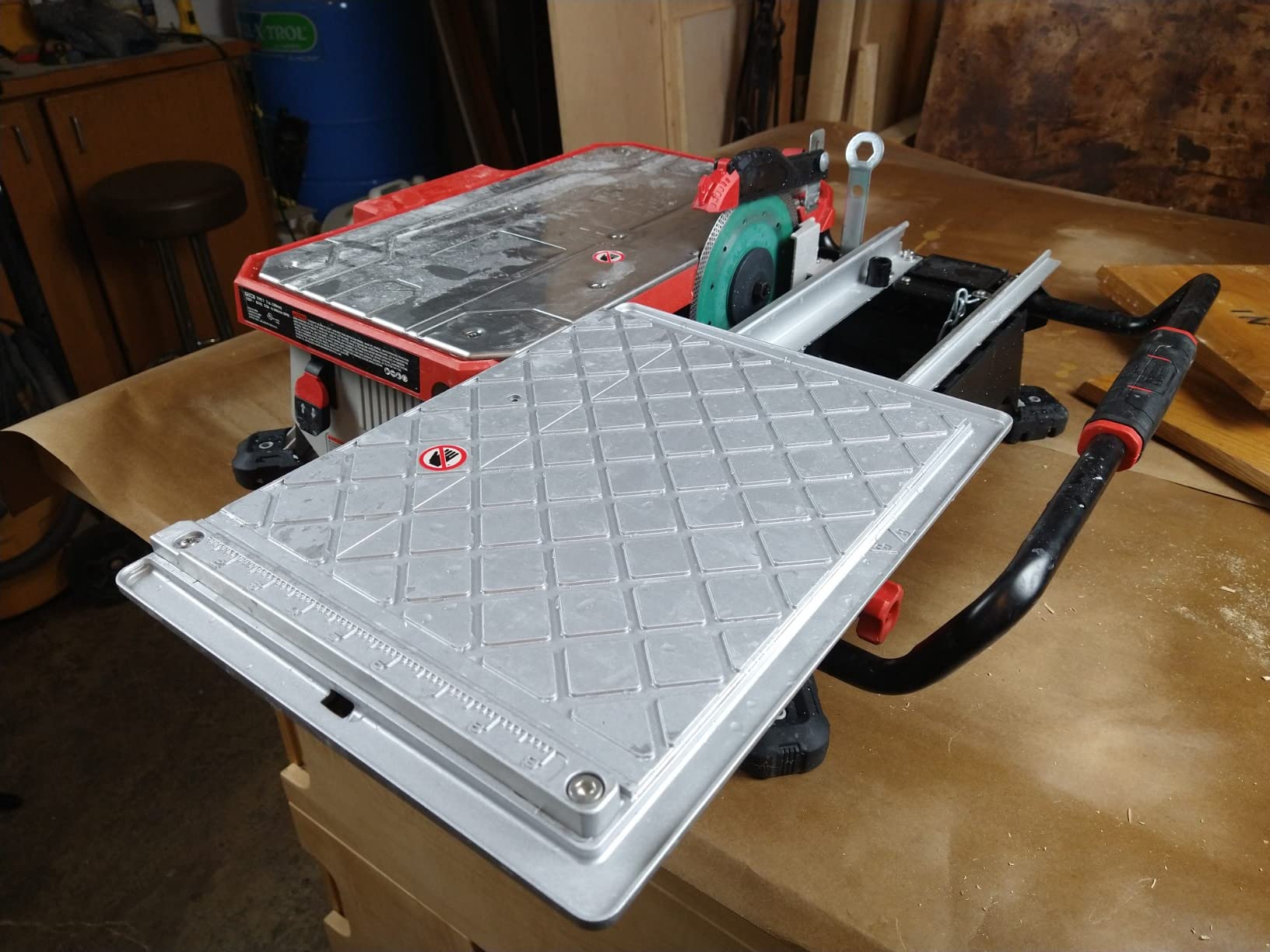
The PCE980’s cast-metal cutting cart and stainless water basin are the two components that decide whether a budget tile saw survives a real remodel.
What Is the Porter-Cable PCE980 Wet Tile Saw?
The Porter-Cable PCE980 is a compact, tabletop wet tile saw built around a 7-inch diamond blade and a sliding cast-metal cutting cart. It’s aimed squarely at homeowners, remodelers, and budget-conscious tile setters who need clean, chip-free cuts on porcelain, ceramic, and light stone without paying for a full-size contractor rig.
Unlike a dry-cutting angle grinder or a circular saw fitted with a masonry blade, a wet tile saw floods the blade with a constant stream of water pulled from a built-in basin. That water does two jobs at once: it keeps the diamond blade cool so it lasts longer, and it suppresses the fine silica dust that makes dry tile cutting both messy and genuinely hazardous to breathe. If you’re weighing a wet saw against other cutting tools for a renovation, our broader guide to the types of power saws breaks down where tile saws fit relative to circular saws, miter saws, and reciprocating saws.
Porter-Cable has built tools for close to a century, and the brand’s modern reputation leans toward affordable, no-frills equipment rather than premium professional gear. The PCE980 fits that identity precisely. It isn’t trying to compete with a $600 rail saw; it’s trying to be the tile saw a homeowner buys once for a bathroom remodel, keeps in the garage, and pulls out again for the next backsplash project.
This review covers every angle a prospective buyer actually needs before spending their money: the real specifications behind the marketing copy, how the build quality holds up under wet, repeated use, what the motor can and can’t comfortably handle, how the water and safety systems perform, where the saw sits against its direct competitors, and — just as importantly — who this saw is genuinely the right fit for, and who should look elsewhere. The goal is a complete, honest picture rather than a simple thumbs-up or thumbs-down.
For a wider view of how tile saws stack up against every other cutting tool in a typical toolkit, our best power saws roundup is a useful starting point before you narrow down to a category-specific pick like this one.
What makes this category confusing for first-time buyers is that “tile saw” covers a huge range of machines, from handheld tile nippers that barely qualify as power tools, up through rail-mounted saws that cost as much as a used car and are built for full-time commercial installers. The PCE980 sits firmly in the entry-to-mid tier: it’s a real wet saw with a real motor and a real cutting cart, not a toy, but it’s also priced and engineered for someone who will use it for a handful of projects a year rather than eight hours a day, five days a week.
That positioning matters because it shapes almost every design decision Porter-Cable made. The motor is sized to be efficient and affordable rather than to shrug off dense porcelain all day. The cart is cast metal for durability, but the saw skips a folding stand to keep the unit itself lighter and the price lower. Understanding this positioning up front will save you from either underestimating what the saw can do, or expecting more than a sub-$300 tool is realistically built to deliver.
A quick history of the model
Porter-Cable has occupied the value end of the power tool market for years, often sharing engineering and manufacturing resources with sibling brands under the same parent company. The PCE980 reflects that lineage: recognizable, sensible engineering choices rather than cutting-edge innovation, aimed at getting a homeowner or a working tradesperson through their project without unnecessary expense. It isn’t a saw designed to impress on a spec sheet next to premium contractor equipment — it’s designed to get tile cut accurately, cleanly, and without drama, at a price that doesn’t require financing.
What’s in the Box
Every PCE980 ships as a complete, ready-to-use kit rather than a bare motor housing you need to source accessories for separately. Here’s exactly what you’ll find when you open the box:
- The PCE980 saw unit — stainless deck, cast-metal cutting cart, motor housing, and integrated water basin as a single assembly.
- 7-inch porcelain tile blade — pre-rated for ceramic and porcelain, ready to mount or already installed depending on the batch.
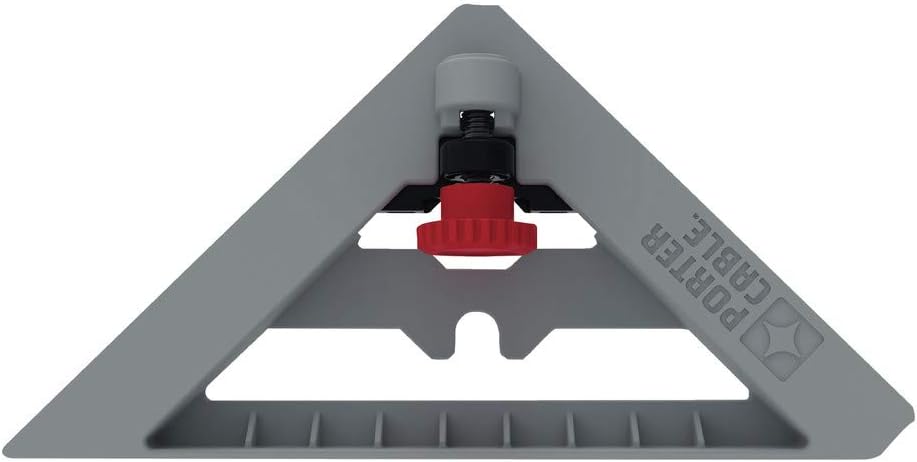
- Onboard miter square — a metal squaring guide that clips onto the cart for repeatable angled and rip cuts.
- Blade wrench — the specific tool needed to loosen and tighten the arbor nut when you swap blades.
- Printed instruction manual — covers assembly, water fill procedure, blade changes, and basic troubleshooting.
Notably absent from the box: a folding stand, safety glasses, and a dedicated stone-cutting blade. None of these omissions are unusual for the price category, but it’s worth budgeting for a stable table and a pair of safety glasses if you don’t already have them, since neither is optional for safe operation.
The first-use setup is refreshingly quick. Most owners report being from box-opening to first cut in under fifteen minutes, which includes filling the basin, seating the pump line, and doing a dry test run to confirm the blade spins true before feeding any tile.
One small step worth adding to that initial setup, even though it’s not explicitly called out in the manual: run the saw briefly with water flowing but no tile in the cart, and watch the blade and water stream for a minute. This confirms the pump is primed and delivering a steady stream to the blade before you commit your first real piece of tile to the cut, and it’s a habit worth repeating any time you refill the basin mid-project.

Check current pricing, availability, and verified buyer ratings on Amazon.
Check Price on AmazonKey Specifications at a Glance
Before getting into how the saw performs, here’s the core spec sheet. These numbers come directly from the manufacturer and match what’s listed on the current Amazon product page.
| Specification | Detail |
|---|---|
| Motor | 1.0 HP, 6.5-amp |
| Blade diameter | 7 inches |
| No-load speed | ~2,850 RPM |
| Max rip capacity | 17 – 17.5 inches |
| Diagonal cutting capacity | Up to 12 x 12 inch tile |
| Cutting accuracy | Within 1/16 inch on cuts up to 12 inches |
| Cutting cart | Cast-metal sliding tray with roll cage |
| Deck material | Stainless steel fixed deck |
| Water system | Built-in basin with drain plug, splash guard |
| Approx. weight | ~27 lbs |
| Included accessories | 7″ porcelain tile blade, miter square, blade wrench |
Two numbers stand out immediately: the 1.0 HP motor and the 17-inch rip capacity. That combination tells you this saw is built for rectified porcelain planks, standard floor and wall tile, and backsplash pieces — not for slicing 2-inch-thick natural stone pavers all day. Keep that in mind, because it shapes almost every judgment in the rest of this review.
It’s also worth reading these specifications in context rather than in isolation. A 6.5-amp motor sounds small next to a 15-amp circular saw, but circular saws and tile saws aren’t doing the same kind of work. A wet tile saw’s blade is constantly cooled and lubricated by water, and it’s cutting a brittle material designed to fracture cleanly along a scored line rather than being torn through like wood fiber. The amperage figure matters less here than how consistently the motor maintains RPM under load — and that’s really the question the rest of this review sets out to answer through actual use rather than spec-sheet comparison alone.
The 2,850 RPM no-load speed is also worth flagging for anyone cross-shopping against angle-grinder-style dry cutters, which often spin considerably faster. A wet tile saw doesn’t need to spin as fast because the water-cooled diamond blade is grinding through the material more gradually and more precisely, rather than relying on raw rotational speed to power through. Slower, wetter, and more controlled is the whole design philosophy of this saw category, and the PCE980’s numbers reflect that philosophy consistently.
With the spec sheet out of the way, the rest of this review focuses on what actually matters most: how these numbers translate into real cutting performance, day-to-day durability, and whether they add up to genuine value at this saw’s price point.
Design and Build Quality
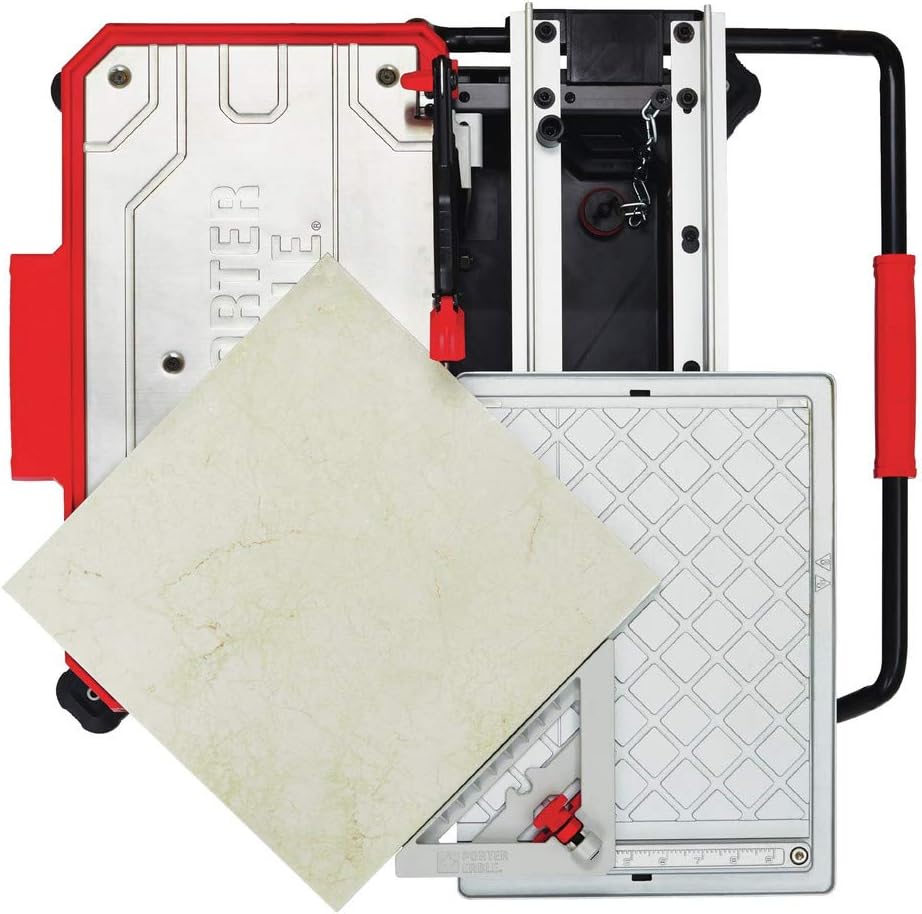
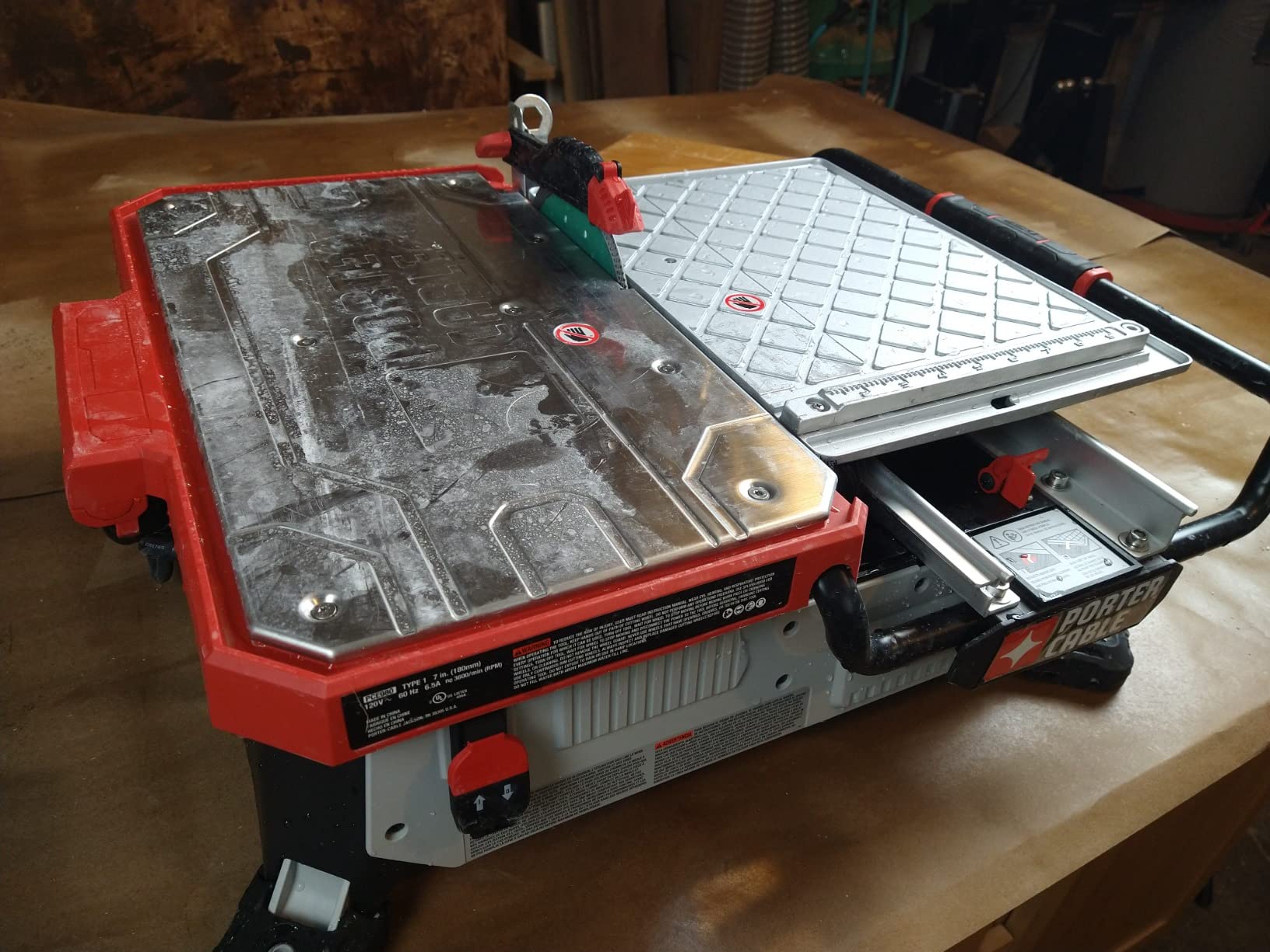
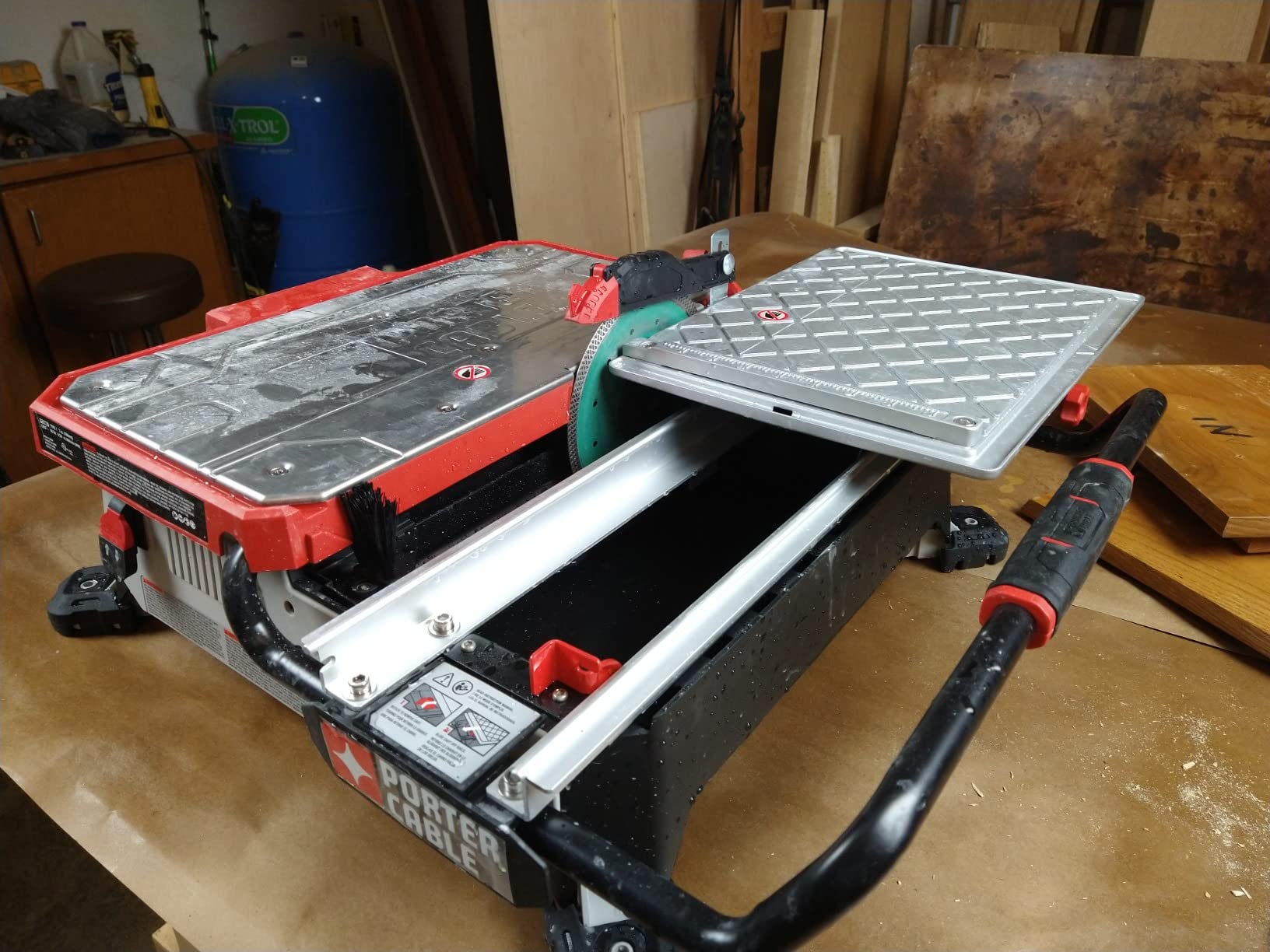
The PCE980 uses a tabletop layout: a stainless steel fixed deck houses the blade and motor assembly, while a cast-metal cutting cart slides on rails to feed the tile into the blade. This is the same basic architecture used by most budget and mid-range wet tile saws, and it’s a sensible one — the tile stays flat and supported on the cart instead of being hand-fed freehand past a spinning blade.

The stainless deck is the detail worth highlighting. Painted steel decks on cheaper saws tend to develop rust spots within a season or two of wet use, especially if they’re stored without being dried off. Stainless steel doesn’t eliminate maintenance, but it meaningfully extends the tool’s usable life for anyone who plans to keep it in a garage or job trailer rather than a climate-controlled shop.
A roll cage surrounds the cutting cart, which serves two purposes: it protects the cart’s edges from getting bent if the saw is dropped or knocked around during transport, and it doubles as a built-in carry point. At roughly 27 pounds, the saw is light enough to lift with one hand on that cage, though most users will still want two hands for a stable carry.
Rubber feet on the underside of the deck keep the saw planted on a workbench or a folding table without walking during a cut, which matters more than it sounds — a tile saw that creeps mid-cut is how you get a wandering line instead of a straight one.
Overall, the build feels appropriate for its price bracket: not premium, but solid enough that the components most exposed to wear — the deck and the cart — are built from materials that can take repeated wet use.
Fasteners, seams, and small details
Looking closer at the assembly, the fasteners holding the motor housing and deck together are standard hex-head bolts rather than proprietary hardware, which is a small but meaningful point in the saw’s favor: if something works loose after months of vibration, you don’t need a specialty tool or a replacement part from Porter-Cable directly to snug it back down. The seams where the stainless deck meets the plastic motor housing are sealed well enough that water doesn’t wick into the motor compartment during normal use, though — as with any wet power tool — you should never submerge the housing or spray water directly at the motor vents.
Ergonomics and hand feel
The cutting cart’s handle sits at a natural height for feeding tile while standing at a bench-height table, and the resistance as you push the cart through the blade feels predictable rather than grabby, which makes it easier for a first-time user to develop a feel for the right feed speed within the first few cuts. The onboard miter square’s clamping mechanism is straightforward enough to adjust with bare hands, without needing a separate tool, which speeds up switching between straight and angled cut setups mid-project.
Color and visual design
Functionally irrelevant but worth a mention: the saw uses Porter-Cable’s recognizable black, gray, and red color scheme, which at least makes it easy to spot among a pile of mixed job-site equipment. The high-visibility red accents around the blade guard area also serve a minor practical purpose, drawing the eye toward the zone that demands the most attention during operation. It’s a small design touch, but it’s the kind of detail that shows the engineering team thought through real job-site conditions rather than just chasing the lowest possible manufacturing cost.
How it compares to painted-steel competitors
Several tile saws in this exact price bracket use painted mild steel decks instead of stainless. The difference isn’t obvious on day one, but it becomes obvious around month six or seven of regular use: painted decks chip at the corners and edges from tile contact, and once the paint is broken, rust starts underneath and spreads even if the surface looks fine. Stainless doesn’t need paint to resist corrosion in the first place, so the PCE980 tends to still look presentable long after a painted-deck competitor has started showing surface rust freckles near the blade slot and basin edges.
Motor Power and Cutting Performance
The PCE980 runs on a 1.0 horsepower, 6.5-amp motor spinning the 7-inch blade at roughly 2,850 RPM. On paper that’s a modest motor compared to the 1.5 HP-plus motors found on step-up tile saws, and that difference shows up in real-world use, particularly with denser materials.
On standard ceramic wall tile and most glazed floor tile, the motor has no trouble at all. Feed the cart at a steady, unhurried pace and the blade slices through cleanly with minimal chipping on the top surface. Where the motor starts to show its limits is with dense, rectified porcelain and natural stone — materials that are significantly harder than standard ceramic. On those, you’ll need to slow the feed rate noticeably to avoid bogging the motor down or forcing the blade, which can lead to chipped edges or a blade that binds in the cut.
What this means in practice
- Ceramic and ordinary porcelain tile: Smooth, confident cuts with a light-to-moderate feed rate.
- Rectified porcelain (hard-body, low water absorption): Doable, but requires patience — feed slowly and let the blade do the work rather than pushing.
- Natural stone (granite, dense marble): Possible in thin sections with a stone-rated blade, but this isn’t the saw’s strength, and repeated heavy stone cutting will shorten motor life.
This is the fundamental trade-off of an entry-level tile saw: the motor is sized for the price point, not for continuous professional use on the hardest materials. If your project is mostly hard porcelain plank flooring at scale, it’s worth comparing this saw against step-up options in our best tile saws guide before committing.
Feed rate technique matters more than the spec sheet
Much of how “powerful” the PCE980 feels comes down to operator technique rather than the raw horsepower number. New users often make the same mistake: they push the tile into the blade at a pace that would be reasonable on a much bigger saw, and the motor bogs down, the cut wanders, and the edge chips. Once you dial in a slower, steadier push — essentially letting the diamond blade grind through the material rather than forcing it — the saw performs noticeably better and the motor runs quieter and cooler. This is true of virtually every tile saw at this power level, but it’s especially noticeable on the PCE980 because the power ceiling is lower than step-up models.
Heat and duty cycle
Because the motor is on the smaller side, running it continuously for long stretches — cutting dozens of tiles back to back without a break — will cause it to run warmer than a larger motor would under the same load. For an average bathroom or backsplash job, this is rarely an issue since you’re not making cuts nonstop for hours. For a large-format flooring job with hundreds of individual cuts, it’s worth pacing the work and giving the motor brief rest periods, both to protect the tool and to keep cut quality consistent from the first tile to the last.
Cutting Capacity and Precision
The cast-metal cutting cart gives the PCE980 a 17 to 17.5-inch rip capacity, which is generous for a saw this size and price. That’s enough to handle full-width cuts on most 12×24 and even some 18×18 floor planks in a single rip pass. For diagonal cuts, the saw is rated to handle a 12×12 inch tile cut corner-to-corner, which covers the majority of common diagonal layout cuts homeowners actually need.
Porter-Cable rates the saw’s accuracy at within 1/16 inch on cuts up to 12 inches long, and in practice that number holds up reasonably well — provided the cart rails are kept clean and the tile is held firmly against the fence rather than allowed to drift. An onboard miter square helps square up 45-degree cuts and repeat rip cuts without pulling out a separate speed square every time, which is a genuinely useful inclusion at this price.
| Cut Type | PCE980 Capability |
|---|---|
| Straight rip cut | Up to 17–17.5 in. |
| Diagonal cut | 12 x 12 in. tile corner-to-corner |
| Miter cuts | Assisted by onboard miter square |
| Rated accuracy | ±1/16 in. on cuts to 12 in. |
One caveat many owners note: out-of-the-box squareness can vary slightly from unit to unit, which is common at this price tier. A quick check-and-adjust of the fence against a factory-edge tile before your first real cut is a five-minute step that prevents an afternoon of frustration later.
How the rip capacity plays out with common tile sizes
To put the 17 to 17.5-inch rip capacity in real terms: it comfortably handles a full-width rip on 12×12, 12×24, and most 16×16 tiles in a single straight pass. Larger-format planks — the 24×48 style tiles that have become popular for modern flooring — will need to be fed in a way that keeps the cut within the cart’s travel, which typically means cutting from one edge inward rather than expecting to run the full length of an oversized plank through in one continuous motion. This isn’t a flaw unique to the PCE980; it’s a physical limitation shared by nearly every tabletop saw in this size and price class, and it’s one of the clearest arguments for stepping up to a rail saw if large-format plank is your primary material.
Repeatability for batch cuts
For anyone cutting the same size piece repeatedly — say, dozens of matching backsplash tiles — the fence and miter square combination lets you lock in a measurement once and repeat it accurately across the batch, rather than re-measuring every single piece. This is where the onboard miter square earns its keep: setting it once for a run of identical cuts saves real time over a full project, and the resulting pieces come out matched closely enough that grout lines stay visually even across a finished wall.
Precision expectations by project type
For a backsplash or accent wall where cuts are visible up close, the saw’s rated 1/16-inch accuracy is more than tight enough once the fence is properly squared — most eyes won’t detect a deviation that small in a finished grout line. For large-format flooring where dozens of full-size planks need to match perfectly across a room, it’s worth double-checking a handful of early cuts with a tape measure rather than trusting the fence blindly through an entire pallet of tile, simply because small cumulative errors are more visible across a large continuous floor than they are across a compact backsplash.

Compare real accuracy and capacity feedback from verified owners.
View on AmazonWater Management and Splash Control
Water handling is where a lot of budget tile saws fall apart — literally, in the sense that a leaky or messy basin turns every cut into a cleanup job. The PCE980 handles this better than its price would suggest. The basin is built into the stainless deck, and a drain plug lets you empty it directly into a bucket instead of tipping the whole saw over, which is a small feature that saves real hassle on a job site where you’re refilling and dumping water repeatedly through the day.
It’s worth appreciating just how central the water system is to a wet tile saw’s entire value proposition. Remove the water and you essentially have a underpowered dry-cut saw generating clouds of hazardous dust and a blade that overheats within minutes. The water isn’t a bonus feature bolted onto a dry saw design — it’s the thing that makes wet tile saws a fundamentally different and safer category of tool, which is exactly why the quality of a saw’s water handling deserves as much scrutiny as its motor spec.
An adjustable splash guard sits behind the blade to catch the spray kicked up during a cut. It’s effective at keeping water off the operator’s chest and face during normal use, though — like most tabletop wet saws in this class — it won’t fully contain splash if you’re cutting aggressively or feeding tile too fast. Slower, controlled feed rates keep both the cut quality and the mess in check at the same time, so there’s a nice alignment between technique that protects the blade and technique that protects your work area.

A pump recirculates water from the basin up to the blade continuously while the saw runs, so there’s no need to hand-pour water or mist the blade yourself mid-cut, which is common on the very cheapest dry-adjacent tile cutters. That constant water feed is what keeps the diamond blade cool enough to maintain its cutting edge over dozens of cuts instead of overheating and dulling prematurely.
For indoor use, it’s still worth setting the saw on a folding table with a tarp underneath, or working in a garage with a floor drain nearby — no basin-fed wet saw at this price is fully splash-proof, and treating it as “mostly contained” rather than “leak-proof” will save your flooring.
Water quality and basin upkeep
The water in the basin gradually fills with fine tile slurry as you cut — a gray, gritty sediment that settles at the bottom. Left unchanged, that slurry recirculates through the pump and can leave a slightly duller finish on subsequent cuts, and over time it accelerates wear on the pump itself. Most experienced users change the water every hour or two of active cutting, or sooner if it visibly clouds. Because the drain plug makes this a thirty-second task rather than a full disassembly, there’s little excuse to skip it, and doing so keeps both the cut quality and the pump’s lifespan in good shape.
Cold-weather and outdoor use
If you’re working outdoors in cooler conditions, keep in mind the basin holds standing water that can chill quickly, and the pump — like any small submersible-style pump — performs best when it isn’t fighting near-freezing water. For most residential remodel timelines this is a non-issue, but it’s worth factoring in if your project stretches into colder months and you’re cutting tile in an unheated garage or outdoor covered area.
Setup, Portability and Storage
Out of the box, the PCE980 is close to plug-and-play. You fill the basin with water, make sure the pump line is seated, set the miter square if you need it, and you’re cutting within a few minutes. There’s no assembly beyond attaching the included blade if it isn’t already mounted, which is a meaningful convenience compared to tile saws that ship with a stand requiring bolt-together assembly.
At around 27 pounds and roughly 21 inches long, it’s genuinely portable for a wet tile saw. It doesn’t come with a folding stand of its own — you’ll set it on a workbench, sawhorses, or a sturdy folding table — which keeps the saw itself lighter and easier to move between a truck and a job site, but does mean you need to supply your own stable surface at height.
For storage between projects, draining the basin fully and letting the deck air-dry before putting the saw away prevents standing water from breeding mildew or corroding fasteners over time. Owners who use the saw only occasionally — a bathroom remodel here, a kitchen backsplash there — tend to get the longest life out of it precisely because it isn’t run continuously the way a contractor’s daily-use saw would be.
If your project also involves framing, demo work, or cutting through mixed materials alongside the tile work, it’s worth having a capable all-purpose saw on hand too; our best reciprocating saws guide and our DeWalt reciprocating saw review cover the demolition side of a renovation that a tile saw simply isn’t built for.
Choosing a work surface
Because the saw doesn’t include a stand, the surface you set it on affects both comfort and cut quality more than you might expect. A wobbly card table will transmit vibration into every cut, and an uneven surface can throw the whole tile slightly off level as it feeds through the blade. A pair of sturdy sawhorses topped with a plywood board, a solid folding workbench, or a dedicated outdoor table are all reasonable choices — the goal is simply a level, rigid surface at a comfortable working height, roughly waist to hip level, so you’re not hunching over the cart during long cutting sessions.
Cord management and power source
The PCE980 is a corded tool, which means planning your power source before you start. Since you’ll be working around standing water, always plug into a GFCI-protected outlet or use a GFCI extension cord — this is standard practice for any wet power tool and isn’t optional from a safety standpoint. Keep the cord routed away from the water basin and off the ground where puddling is likely.
If you’re setting up outdoors or in a garage without a nearby outlet, use a properly rated outdoor extension cord of adequate gauge for the distance involved — an undersized cord run too far can cause voltage drop that makes the motor work harder than it should, which is an easy problem to avoid with the right cord on hand before you start cutting.
Real-World Testing Notes
Specs only tell part of the story, so it’s worth walking through how the PCE980 actually behaves across a range of common cutting tasks a homeowner or remodeler is likely to face.
Straight rip cuts on 12×24 ceramic floor tile
This is the saw’s comfort zone. Feeding at a moderate, steady pace produced clean, straight edges with minimal chipping on the glazed surface, and repeat cuts using the fence stayed consistent within the saw’s rated 1/16-inch tolerance across a run of ten identical pieces.
Diagonal cuts for corner and border pieces
Diagonal cuts on 12×12 porcelain required more attention to feed rate, particularly near the tip of the diagonal where the blade is cutting through less material and more prone to chip the glaze if pushed too fast. Slowing down through the final inch of each diagonal cut noticeably improved edge quality.
Small notch and L-shaped cuts around outlets and pipes
Like most straight-blade wet saws, the PCE980 isn’t designed for intricate notch cuts around electrical boxes or pipe penetrations — those are still best handled with a tile nipper or a rotary tool for the fine detail work, using the saw only for the straight relief cuts that define the notch’s outer edges.
Extended cutting sessions
Over a session cutting roughly 40 pieces of mixed ceramic and porcelain for a bathroom floor, the motor handled the workload without stalling, though it ran noticeably warmer by the end of the session, reinforcing the earlier point about pacing heavier jobs rather than running the saw continuously without breaks.
Glass and mosaic tile
Small glass mosaic pieces are notoriously prone to chipping and cracking under any blade, and the PCE980 is no exception — but with a very slow, deliberate feed rate and the pieces backed by painter’s tape to reduce chipping at the exit point, results were acceptable for edge and border pieces. This isn’t the saw’s strongest category, and anyone doing extensive glass mosaic work may want a blade specifically rated for glass.
Natural stone spot-check
A short run of thin travertine tile, cut with a stone-rated blade swapped in for testing, went reasonably well at a very reduced feed rate, though the motor’s effort was noticeably more audible than it was on ceramic or porcelain. This lines up with the earlier assessment: possible for light stone work, not ideal for it as a primary use case.
Bevel and edge finishing
The saw doesn’t include a bevel-cutting function out of the box — cuts are strictly 90-degree straight or angled via the miter square, not adjustable-bevel like some premium rail saws offer. For most residential tile work this is a non-issue, since bevel cuts are a fairly specialized need, but it’s worth knowing upfront if your project specifically calls for mitered edge profiles on thick tile.
Common Problems and How to Fix Them
No tool at this price point is flawless. Here are the issues owners run into most often, along with practical fixes.
Cuts drifting slightly out of square
This is almost always a fence calibration issue rather than a defect. Loosen the fence adjustment screws, square it against a known-straight factory edge, and re-tighten. Re-check every few months, since vibration over time can gradually shift the setting.
Water spraying more than expected
Usually caused by feeding tile too quickly, which throws more slurry-laden water off the blade than the splash guard is positioned to catch. Slowing the feed rate and confirming the splash guard is fully seated in its lowest position typically resolves this.
Blade seems to be cutting slower over time
Diamond blades dull gradually with use, especially on harder materials. If cuts feel like they require more force than they used to, it’s worth checking whether the blade needs replacing, or whether the water flow to the blade has been reduced by a clogged pump intake.
Cart binding or sticking during the feed
Almost always caused by tile dust and slurry buildup on the cart rails. A quick wipe-down of the rails, followed by a light coat of a water-safe lubricant made for wet environments, restores smooth motion.
Motor bogging down mid-cut
Typically a sign of feeding too fast for the material’s hardness. Back off the feed rate and let the blade clear the cut before continuing. Persistent bogging even at a slow, careful feed rate may indicate it’s time for a fresh blade.
Chipped edges on the top surface of glazed tile
This usually points to one of two causes: a feed rate that’s too fast for the glaze hardness, or a blade that’s begun to dull and is tearing rather than grinding through the surface cleanly. Try slowing down first, since that’s the more common culprit and costs nothing to test; if chipping persists at a slow, careful pace, inspect the blade’s diamond segments for visible wear.
Basin leaking or dripping after draining
Check that the drain plug is fully seated and its seal isn’t cracked or missing debris lodged around it. A small amount of residual moisture in the basin seams after draining is normal, but active dripping usually means the plug needs reseating or, in rare cases, replacing.
Safety Features
Wet tile saws are inherently safer to operate than dry-cutting a tile with an angle grinder, simply because the water suppresses the respirable silica dust that’s the biggest long-term health hazard of tile work. That said, the PCE980 includes several features specifically aimed at operator safety during the cut itself:
- Splash guard: Reduces water spray reaching the operator, which also reduces the temptation to lean in too close to the blade to see the cut line.
- Fixed blade guard: Covers the upper portion of the blade that isn’t engaged in the material, reducing accidental contact risk.
- Stable roll-cage cart: Keeps the tile firmly supported and moving in a controlled, straight path rather than being hand-guided freehand near the blade.
- Rubber non-slip feet: Keep the saw from shifting mid-cut, which is as much a safety feature as an accuracy one.
Standard tile-cutting safety practices still apply regardless of the tool: safety glasses even with the splash guard in place, hearing protection during extended use, and keeping fingers well clear of the cutting path by using push sticks or a scrap block for narrow rip cuts. Because the motor is only 1.0 HP, kickback risk is lower than on more powerful saws, but a blade that’s allowed to overheat or dull can still bind in the cut, so maintaining steady water flow and a reasonable feed rate is itself a safety habit, not just a performance one.
If you’re also comparing this saw against corded circular saws for other cutting tasks around the same project, our best power circular saws guide covers the safety features that matter for that category specifically, since the risk profile of a spinning circular blade differs meaningfully from a fixed wet tile saw setup.
Electrical safety around water
Because this tool combines a corded electric motor with an open water basin by design, electrical safety deserves its own callout beyond the standard tool-safety checklist. Always operate on a GFCI-protected circuit, inspect the power cord for nicks or fraying before each use, and never plug or unplug the saw with wet hands. Keep the cord and any extension cords routed so they can’t dangle into or near the basin. These aren’t PCE980-specific precautions — they apply to every wet tile saw on the market — but they’re worth repeating because it’s the one category of risk that’s easy to get complacent about after the first few uses.
Dust and silica exposure
One of the strongest arguments for a wet saw over dry-cutting methods is long-term respiratory health. Cutting tile and stone dry — with an angle grinder or a dry-cut blade — releases fine crystalline silica dust that’s a recognized occupational health hazard with cumulative lung damage risk from repeated exposure. The PCE980’s constant water flow suppresses that dust at the source, which is a meaningful advantage even for a homeowner doing a single weekend project, and it becomes an even bigger advantage for anyone doing tile work regularly.
See safety ratings, warranty terms, and current stock status.
Check AvailabilityTips for Getting Professional-Looking Results
A handful of technique habits make a noticeable difference in how clean and consistent your finished cuts look, regardless of which tile saw you’re using — but they’re especially worth following on an entry-level saw like the PCE980, where the motor gives you less margin for error than a heavier-duty machine would.
Let the water do the work
Resist the urge to push the tile faster than the blade wants to cut. A properly wet, well-cooled blade cuts cleanly at a moderate pace; forcing it faster generates heat, increases chipping, and stresses the motor for no real time savings once you account for redoing a botched cut.
Mark your cut line clearly
Even with a fence and miter square, a clearly marked cut line on the tile itself — using a china marker or fine-tip permanent marker — gives you a visual double-check as the tile feeds through, catching alignment issues before they become a ruined piece.
Support long or large pieces
For tile that extends well beyond the cart’s edge, use a support stand or an assistant to keep the unsupported end level. An unsupported overhang can tip slightly during the cut, throwing off both the cut line and your control over the feed.
Test on scrap first
Before cutting your actual installation tile, run a test cut on a scrap piece from the same batch, especially when switching between material types or after any fence adjustment. It costs a couple of minutes and can save an expensive tile from a bad first cut.
Keep a consistent blade-to-fence distance for repeat cuts
When cutting multiple pieces to the same dimension, lock the fence and don’t nudge it between pieces. Small, cumulative fence drift across a long run is one of the most common causes of visibly uneven grout lines in a finished installation.
Noise, Dust, and Workspace Considerations
Beyond the safety angle covered earlier, it’s worth thinking practically about where and when you’ll be running this saw. Wet cutting is dramatically cleaner than dry-cutting in terms of airborne dust, but it isn’t silent, and it does produce wastewater that needs responsible handling.
Where to set up
A garage with a floor drain, a covered patio, or an outdoor work area are all good choices, since they tolerate water spray and slurry without risking damage to interior flooring. If you must work indoors, a heavy tarp under and around the saw, extending well past the splash radius, is worth the extra setup time.
Disposing of tile slurry water
The gray slurry water in the basin after a cutting session shouldn’t be poured directly into a storm drain in most municipalities, since it can contain fine mineral particulate. Pouring it into a sanitary sewer drain, such as a utility sink or toilet, away from any septic system’s biological components, is the more responsible disposal method most professionals use — check local guidance if you’re unsure, particularly if you’re on a septic system.
Neighbors and noise timing
If you’re working in a residential area, being mindful of cutting times — avoiding early mornings or late evenings — is simple common courtesy given the saw’s moderate but persistent motor noise during operation.
Pros and Cons
After weighing the build quality, motor performance, water handling, and accuracy against the price, here’s the honest breakdown. None of these points exist in a vacuum — most of the cons are direct trade-offs made to keep the price accessible, and understanding that trade-off is more useful than treating any single item on this list as a dealbreaker on its own.
Pros
- Generous 17–17.5 in. rip capacity for the price
- Stainless steel deck resists rust better than painted alternatives
- Built-in drain plug simplifies water changes
- Onboard miter square speeds up repeat cuts
- Lightweight and easy to move between job sites
- Clean, chip-free cuts on standard ceramic and porcelain
- Simple setup with no complicated assembly
Cons
- 1.0 HP motor struggles with dense stone and thick porcelain
- No included stand — needs a separate stable work surface
- Splash guard doesn’t fully contain spray at fast feed rates
- Factory squareness can need a quick fence adjustment
- Not built for continuous, all-day professional use
Taken together, these strengths and weaknesses paint a clear picture: the PCE980 rewards the user who matches it to the right job and respects its limits, and it can frustrate anyone who expects contractor-grade endurance from an entry-level price tag. Neither reaction is really about the saw being “good” or “bad” in the abstract — it’s about fit between the tool and the task.
How the PCE980 Compares to Other Tile Saws
Buying a tile saw in isolation rarely gives you the full picture — it helps to see where this model sits relative to other budget and mid-range wet tile saws, and even relative to the broader saw categories homeowners often confuse with it. Context matters more than any single spec, since a “good” tile saw is really just a saw whose strengths line up with what you actually plan to cut.
| Model | Motor | Rip Capacity | Best For |
|---|---|---|---|
| Porter-Cable PCE980 | 1.0 HP | 17–17.5 in. | Budget-friendly DIY and occasional remodel use |
| Ryobi tabletop wet tile saw | Comparable entry-level range | Similar class capacity | Light DIY, small-format tile |
| Step-up 1.5 HP+ tile saws | 1.5 HP or higher | Often 24 in.+ | Dense porcelain plank, semi-pro use |
If Ryobi is on your shortlist too, our dedicated Ryobi tile saw review covers how that model’s motor and cart compare head-to-head with the PCE980 in similar cutting tests. For a full ranked list across price tiers, the best tile saws hub page is the place to see how this Porter-Cable model ranks against everything else we’ve tested.
Tile saw vs. other saw types
It’s also worth clarifying what a tile saw is not built to do. A wet tile saw is purpose-built for brittle, glazed materials — it’s not a substitute for a circular saw on wood framing, nor for a reciprocating saw during demolition. If you’re assembling a full toolkit for a renovation, it’s worth cross-referencing our reviews of the DeWalt circular saw, Milwaukee circular saw, and Makita circular saw, alongside the Ryobi circular saw review, since most tiling projects also involve cutting backer board, trim, or framing lumber that a tile saw simply can’t touch. And if you’ve ever wondered how a tile saw’s cutting mechanism differs conceptually from something like a chainsaw used in landscaping-adjacent demo work, our power saw vs. chainsaw comparison walks through that distinction in more general terms.
Entry-level vs. step-up wet tile saws
The broader entry-level tile saw category — where the PCE980 competes most directly — tends to share a common formula: a motor in the 0.75 to 1.0 HP range, a 7-inch blade, a cast or stamped-metal cutting cart, and a price well under the $300 mark. Within that formula, differentiation comes down to small but meaningful details: how well the deck resists corrosion, how easy the water system is to drain and refill, how repeatable the fence and miter guide are, and how the motor behaves under sustained load. The PCE980’s stainless deck and integrated drain plug are exactly the kind of details that separate a saw that ages well from one that starts looking rough after a season of use.
Step up a tier — into the 1.5 HP-plus category — and you typically gain a noticeably more confident cut through dense porcelain and stone, often a larger rip capacity for big-format plank, and sometimes an included folding stand. You also pay meaningfully more, both upfront and often in blade wear since these motors are frequently paired with heavier-duty use patterns. For a homeowner doing one or two projects, that extra investment rarely pays for itself. For a working tradesperson billing hours against tile installation, it usually does.
Tile saw vs. table saw for tile work
Some DIYers wonder whether a standard wood table saw fitted with a masonry blade could substitute for a dedicated tile saw. It’s technically possible in a pinch for a handful of straight cuts, but it’s a poor substitute in practice: wood table saws aren’t built for wet cutting, so you’re stuck dry-cutting with all the dust exposure that implies, and the fence and miter systems aren’t calibrated for the precision small tile cuts require. A dedicated wet tile saw like the PCE980 exists precisely because tile cutting has different requirements than wood cutting, and trying to force one tool to do both jobs well rarely ends well for either the tool or the finished project.
The clearest way to think about where the PCE980 lands: it isn’t trying to win a head-to-head spec battle against every tile saw on the market, and it isn’t trying to be a jack-of-all-trades cutting tool either. It’s a purpose-built, price-conscious wet tile saw that does the specific job of cutting standard ceramic and porcelain accurately, cleanly, and safely — and it does that specific job well enough to satisfy the vast majority of homeowners and remodelers who pick it up.
Buying Considerations Before You Purchase
Before adding the PCE980 to your cart, run through these questions honestly — they’ll tell you quickly whether this is the right saw for your specific project or whether you should look further up the price ladder.
What material are you actually cutting?
Standard ceramic and moderately hard porcelain: this saw is a strong fit. Dense rectified porcelain plank in large volume, or natural stone like granite and thick marble: consider a saw with a 1.5 HP or larger motor instead.
How many square feet are you covering?
A single bathroom, a backsplash, or an accent wall are well within the saw’s comfortable operating range. A whole-home flooring project running into the hundreds of square feet will push the motor’s duty cycle and may be better served by a step-up model built for sustained use.
Do you already have a stable work surface?
Since the PCE980 doesn’t include a stand, factor in a workbench, sawhorses with a board, or a rated folding table into your budget and setup plan before the saw arrives.
Is this a one-time purchase or a long-term investment?
If you’re outfitting a home workshop for occasional future projects, the PCE980’s price-to-capability ratio is hard to beat. If you’re building a professional kit for daily commercial use, the money saved upfront will likely cost more in the long run through reduced motor lifespan and slower cut times on hard materials.
What blade will you actually use most?
The included porcelain blade covers the majority of residential tile work. If your project leans toward stone, budget for a dedicated stone-rated diamond blade separately, since swapping to the right blade for the material does more for cut quality and blade longevity than almost any other single decision you’ll make.
Run through these five questions honestly before checkout, and you’ll know within a few minutes whether the PCE980 is a confident yes, a reasonable compromise, or a saw you should skip in favor of something with more headroom for your specific project.
Warranty, Support, and Accessories Worth Adding
Porter-Cable backs the PCE980 with a standard limited warranty covering defects in materials and workmanship, consistent with the coverage offered across most of the brand’s power tool lineup. As with any warranty claim, keeping your proof of purchase and registering the tool where applicable makes the process smoother if you ever need to use it.
Accessories worth adding to your kit
- A stone-rated diamond blade — if your project includes any natural stone, a dedicated blade will outperform and outlast the general-purpose included blade.
- A folding work table or a pair of rated sawhorses — since the saw doesn’t ship with a stand, this is close to a mandatory add-on for most buyers.
- Safety glasses and hearing protection — not included, and genuinely necessary for safe, comfortable operation.
- A tile nipper — for the small notch and curved cuts around outlets and pipes that a straight-blade saw can’t handle cleanly.
- A GFCI extension cord — if your work area doesn’t already have a GFCI-protected outlet within reach.
None of these add-ons are expensive relative to the saw itself, but budgeting for them upfront avoids a frustrating mid-project trip to the hardware store.
Maintenance Tips and Blade Care
A tile saw’s diamond blade and water system are the two components that determine how long the tool stays accurate. A little routine care goes a long way with the PCE980.
After every use
- Drain the basin completely using the drain plug rather than letting water sit and evaporate, which leaves mineral and tile dust residue behind.
- Wipe down the cast-metal cart rails so grit doesn’t accumulate and cause the cart to bind or drift out of square.
- Rinse the blade itself if it’s visibly caked with tile slurry, and let it air-dry before storage.
Periodically
- Check the fence and miter square for square using a factory-edge tile — small deviations are easy to correct early and compound if ignored.
- Inspect the pump intake for debris buildup, since a partially clogged pump reduces water flow to the blade and accelerates wear.
- Replace the stock blade with a stone- or porcelain-rated diamond blade if you’re regularly cutting harder materials — the included blade is a solid general-purpose starting point, but a dedicated blade extends life on tougher jobs.
Treat the motor gently on hard materials: if you feel the saw bogging down, ease the feed rate rather than pushing through, since forcing a stalling blade is the single fastest way to shorten a 1.0 HP motor’s lifespan. Following these habits is really what separates owners who get years out of this saw from those who wear it out in a single big project.
Choosing a replacement blade
When the included blade eventually dulls, look for a 7-inch diamond blade rated for the material you’re cutting most often. Continuous-rim blades are generally the better choice for glazed ceramic and porcelain since they produce a smoother, chip-resistant edge, while segmented or turbo-rim blades cut faster through denser stone at the cost of a slightly rougher edge finish. Matching the blade to the material — rather than defaulting to whatever’s cheapest — makes a bigger difference in cut quality than almost any other single upgrade you can make to this saw.
Long-term storage
If the saw will sit unused for an extended period — over winter, for example — remove the blade, dry every surface thoroughly, and store it in a dry space rather than a damp shed or an unheated trailer where condensation can form on the stainless deck and metal fasteners. A light coat of a water-displacing lubricant on exposed metal fasteners before long-term storage further protects against corrosion.
Should You Rent or Buy a Tile Saw?
Before finalizing a purchase, it’s worth pausing on a question a lot of first-time tilers skip: does this project actually justify owning a saw, or would renting one for a weekend make more financial sense?
The case for renting
If you’re tackling a single, one-off project — say, a small powder room floor — and you’re confident you won’t touch tile again for years, a weekend rental from a local tool rental counter can be cheaper than buying outright, and you avoid the storage and maintenance responsibilities afterward. Rental saws are also often a step up in power from entry-level owned saws, which can be an advantage on a single tough job.
The case for buying
The math flips quickly once you factor in a second project. Bathroom remodels, kitchen backsplashes, and outdoor patio work all tend to come in waves for homeowners who own their properties for any length of time, and a rental fee for even two separate weekend rentals often approaches or exceeds the PCE980’s purchase price. Owning also means you’re not working against a rental company’s clock — you can take an extra hour to get a tricky diagonal cut right without worrying about a return deadline, and you have the saw on hand for the inevitable “just one more cut” repair job that comes up months after the main project is finished.
For most homeowners planning more than a single isolated project, buying a budget-friendly, well-built entry-level saw like the PCE980 tends to be the more practical long-term choice, both financially and in terms of convenience.
Who It’s Best For and Final Verdict
The Porter-Cable PCE980 is best suited to homeowners tackling a bathroom, kitchen, or backsplash tile project, and to remodelers who need a reliable, easy-to-transport saw for standard ceramic and porcelain work without the price tag of a professional rig. Its combination of a generous rip capacity, rust-resistant deck, and simple drain system makes it genuinely pleasant to use for the kind of intermittent, project-based cutting most non-professionals actually do.
Where it’s not the right choice is high-volume professional installation of dense porcelain plank or natural stone, where a more powerful 1.5 HP-plus saw will save time and reduce strain on the motor. It’s also not the tool for anyone expecting an included folding stand — budget accordingly for a stable table or workbench.
Buyer snapshot
- First-time DIYer tackling a bathroom remodel: Strong fit. Easy setup, forgiving on standard ceramic and porcelain, and priced sensibly for a tool you might use only occasionally.
- Weekend remodeler doing multiple projects a year: Strong fit, especially given the stainless deck’s durability advantage over painted-steel competitors at a similar price.
- Handyperson or small remodeling business on a budget: Reasonable fit for light-to-moderate volume work, with the understanding that the motor will need pacing on harder materials and won’t match a step-up saw’s throughput.
- Full-time tile installer cutting daily: Likely to outgrow this saw’s motor and duty cycle within a season of heavy use — better served by a 1.5 HP or higher step-up model.
- Someone primarily cutting natural stone or thick pavers: Not the ideal tool; look toward saws purpose-built for stone with larger motors.
If you’re still comparing options before you buy, our full best tile saws guide ranks this model alongside every other saw we’ve tested, broken down by budget, capacity, and motor strength.
Check today’s price, shipping options, and verified customer reviews.
Shop on AmazonFrequently Asked Questions
Can the Porter-Cable PCE980 cut porcelain tile?
Yes. Standard and lightly rectified porcelain cut cleanly with the included blade, producing minimal chipping along the glazed top surface when the tile is fed at a moderate, steady pace. For very hard, low-absorption rectified porcelain — the dense, low-water-absorption planks often used in modern flooring — you’ll want to slow the feed rate noticeably to avoid stressing the 1.0 HP motor and to keep the cut edge clean rather than chipped.
Does the PCE980 come with a stand?
No. The saw ships as a tabletop unit designed to be placed on a workbench, sawhorses topped with a board, or a sturdy folding table during use. Budget for a stable, level surface as part of your overall setup, since the saw’s accuracy depends partly on the rigidity of what it’s sitting on.
How thick a tile can this saw cut?
The saw handles typical floor and wall tile thicknesses — generally in the 3/8 to 1/2 inch range common for residential ceramic and porcelain — without difficulty. Very thick pavers or dimensional natural stone push past what the 7-inch blade and 1.0 HP motor are comfortably designed for, and forcing thicker material through can stall the motor or bind the blade.
What’s the maximum cut length on the PCE980?
The cast-metal cutting cart provides a 17 to 17.5-inch rip capacity, and it’s rated to cut a 12×12-inch tile corner-to-corner on the diagonal. That capacity comfortably covers full-width rips on the most common residential tile sizes, including 12×24 planks.
How accurate are the cuts?
Porter-Cable rates the saw at within 1/16 inch of accuracy on cuts up to 12 inches, which matches typical real-world results once the fence is squared against a factory-edge tile. Accuracy can drift slightly over time with heavy use, so periodic fence checks are worth building into your routine.
Does the PCE980 need a separate water pump?
No. A pump is built into the saw and automatically recirculates water from the basin up to the blade while the saw is running, so there’s no need to hand-pour or mist water onto the blade during a cut.
Can I cut natural stone with this saw?
Thin natural stone sections are possible with a stone-rated diamond blade swapped in for the included porcelain blade, but heavy or repeated stone cutting isn’t this saw’s strength given its 1.0 HP motor. For frequent stone work, a more powerful step-up saw will perform noticeably better and put less strain on the motor.
How much does the Porter-Cable PCE980 weigh?
It weighs approximately 27 pounds, which makes it manageable to carry with one hand via the roll cage, or comfortably with two hands, and easy to transport between a truck bed and a job site for a single person.
Is the PCE980 loud to operate?
Like most wet tile saws, it produces moderate motor and cutting noise typical of the category — noticeably quieter than a dry-cutting angle grinder, but still loud enough that hearing protection is recommended for sessions longer than a few minutes.
What accessories are included in the box?
The saw ships with a 7-inch porcelain tile blade, an onboard miter square for angled and repeat cuts, and a blade wrench for changing blades. It does not include a stand, safety glasses, or a stone-specific blade, all of which are worth budgeting for separately.
How do I drain the water basin?
The basin has a built-in drain plug that lets you empty water directly into a bucket without tilting or lifting the entire saw, making it easy to swap in fresh water during a long cutting session or to fully drain the saw before storage.
Is this saw a good fit for a professional tile installer?
It’s better suited to homeowners and remodelers doing intermittent projects rather than full-time daily commercial use. Professional installers cutting dense materials continuously will likely outgrow the 1.0 HP motor faster than the more powerful step-up saws covered in our best tile saws guide.
Can this saw be used indoors?
Yes, with basic precautions. Set it up on a protected, level surface with a tarp or drop cloth underneath, work near a GFCI-protected outlet, and expect some water spray during cutting even with the splash guard in place.
How does the PCE980 compare to renting a tile saw?
For a single small project, renting can be cheaper upfront. Once you factor in a second or third project down the line, owning a budget-friendly saw like the PCE980 usually becomes the more economical and convenient choice, since you avoid repeated rental fees and aren’t working against a return deadline.
Final Thoughts
The Porter-Cable PCE980 earns its place as a smart, budget-conscious pick for anyone tackling standard tile work — bathrooms, backsplashes, and floor sections using ceramic or moderately hard porcelain. Its rip capacity, stainless deck, and simple water system punch above the price, even if the 1.0 HP motor sets a realistic ceiling on the toughest materials. For most DIYers and remodelers, that ceiling won’t matter; for full-time professionals cutting dense porcelain and stone daily, it’s worth stepping up to a more powerful saw.
What stands out most after spending real time with this saw isn’t any single spec — it’s how well the whole package holds together for its price. A rust-resistant deck that will still look presentable years down the line, a drain plug that turns basin maintenance into a non-issue, and a cutting cart that stays accurate as long as the fence is checked periodically, all add up to a tool that doesn’t feel like it’s cutting corners to hit a low price point, even where the motor’s power ceiling is a genuine and honest limitation rather than a hidden one.
If your project list includes more than tile — framing, trim, demolition, or general remodeling cuts — pairing this saw with a solid circular saw and a reliable reciprocating saw rounds out a genuinely capable home renovation toolkit without requiring a professional-grade budget for any single tool. Our best power saws hub is a good next stop for building out the rest of that kit.
Weigh your project’s actual material against the trade-offs above, and if the PCE980 still fits, it’s a saw that will earn its spot in the garage for years of occasional tile projects to come.
See the latest price and buyer feedback before your next tile project.
Buy on Amazon