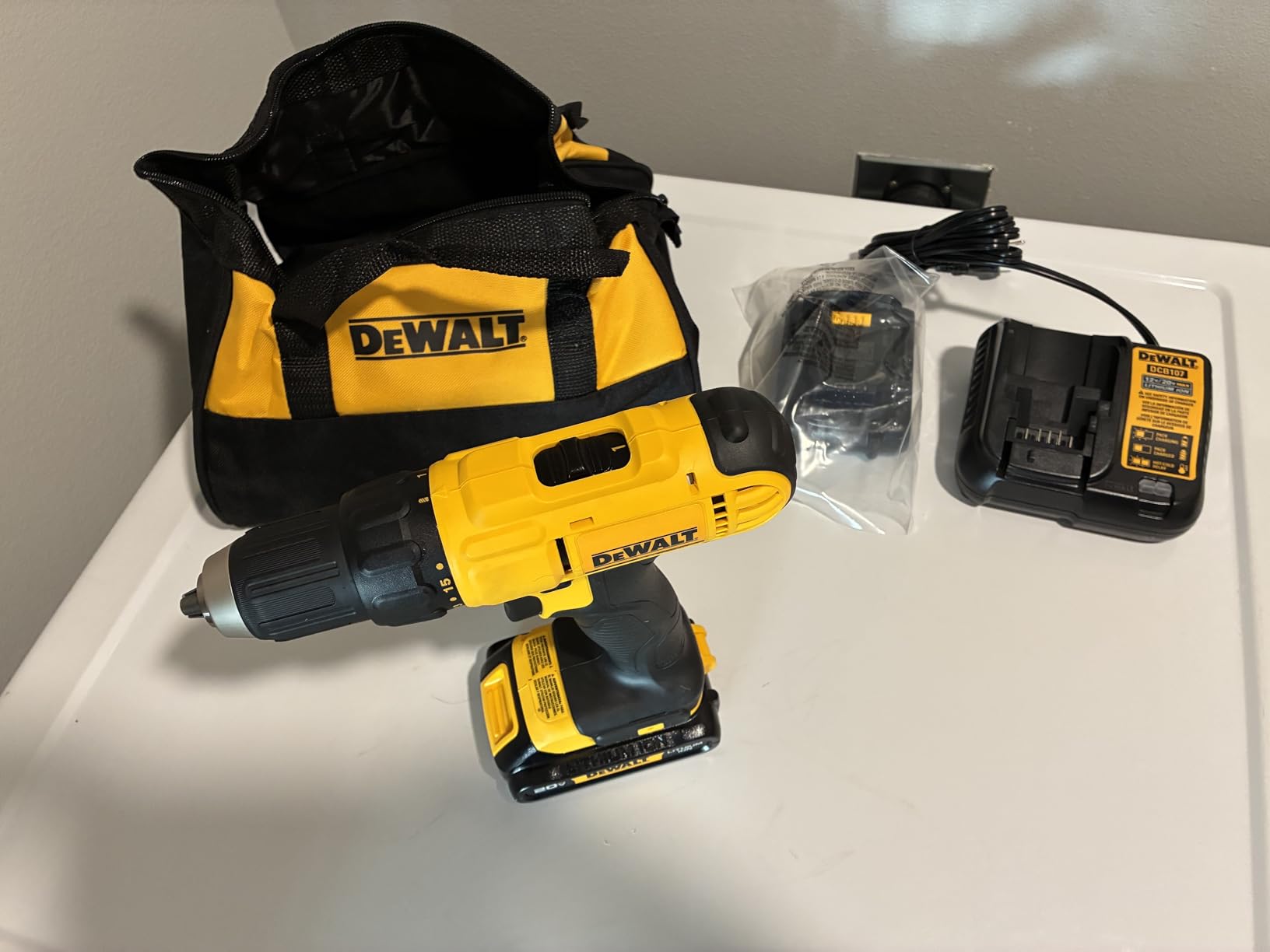
Best DeWalt Drill: The Complete Buying Guide for DIYers and Pros
Comparing power, battery platforms, ergonomics, and value across DeWalt’s top drill drivers and hammer drills to help you pick the right one for your workshop or jobsite.
View on Amazon
Why Trust This DeWalt Drill Guide
Choosing a drill sounds simple until you’re staring at a wall of yellow-and-black boxes, each one promising more torque, more speed, and more battery life than the last. DeWalt alone sells more than a dozen drill drivers and hammer drills across its 20V MAX and XR lineups, and the differences between them aren’t always obvious from the box art. This guide breaks down five of DeWalt’s most popular drill models, compares their real-world performance, and walks through exactly what to look for so you don’t end up with more (or less) tool than you actually need.
We looked at motor type, chuck size, battery compatibility, weight, and included accessories, then weighed all of that against price and the kind of work each drill is realistically suited for. Whether you’re assembling furniture on weekends or running a framing crew five days a week, there’s a DeWalt drill built for your workload — the trick is matching the right one to the job.
Quick Picks: Best DeWalt Drills at a Glance
If you’re short on time, here’s the short version. Each of these drills earns its spot for a different reason, so skim the list and jump to the review that matches your needs.
- Best Overall: DEWALT 20V MAX XR Cordless Hammer Drill Driver (DCD996B) — the most powerful and versatile option for mixed wood, metal, and masonry work.
- Best Value Kit: DEWALT 20V Max Cordless Drill Driver Set (DCD771C2) — an affordable, no-frills combo that covers most home projects.
- Best for Heavy-Duty Drilling: DEWALT Drill Set 20V MAX XR (DCD801H1) — a compact, high-torque option built for demanding daily use.
- Best Compact Kit: DEWALT 20V MAX Cordless Drill Driver Set (DCD777D1) — lightweight and easy to maneuver in tight spaces.
- Best Starter Bundle: DEWALT 20V MAX* Cordless Drill/Driver with bit set (DCD771C2 & DWA2FTS100) — includes a bonus bit set for immediate use out of the box.
For a broader look at how these stack up against competing brands, see our guide to the best drills for DIY and pro use.
Full Comparison Table
| Model | Motor | Chuck Size | Speed Settings | Best For |
|---|---|---|---|---|
| DCD771C2 | Brushed | 1/2 in | 2-speed | General DIY, budget builds |
| DCD801H1 | Brushless | 1/2 in | 2-speed | Compact power, daily pro use |
| DCD996B | Brushless | 1/2 in | 3-speed hammer | Masonry, mixed heavy-duty jobs |
| DCD777D1 | Brushless | 1/2 in | 2-speed | Lightweight everyday use |
| DCD771C2 + Bit Set | Brushed | 1/2 in | 2-speed | First-time buyers, starter kits |
Every model here runs on DeWalt’s shared 20V MAX battery platform, so if you already own another DeWalt tool, batteries and chargers are interchangeable — a detail worth checking before you buy a bare-tool version.
In-Depth Product Reviews
#1 Best OverallDEWALT 20V MAX XR Cordless Hammer Drill Driver (DCD996B)

The DCD996B sits at the top of DeWalt’s drill driver lineup, and it earns that position through sheer versatility. This is a hammer drill, which means it can switch between standard rotary drilling and a hammering action for punching through brick, block, and concrete. For anyone who occasionally needs to anchor a shelf into a masonry wall or run conduit through a foundation, that hammer function turns this from a “nice to have” into a genuinely useful capability.
Under the hood, the brushless motor delivers up to 820 in-lbs of torque, which is enough to drive large lag bolts or spin a hole saw through thick lumber without bogging down. The three-speed gearbox lets you dial in the right balance of speed and torque for the task, from delicate cabinet assembly at low RPM to fast material removal at the top end. The all-metal chuck holds bits securely even under heavy torque, and the LED work light with a delayed shut-off makes it easier to see what you’re drilling into low-light garages or crawl spaces.
Ergonomically, DeWalt kept the DCD996B relatively compact for a three-speed hammer drill, and the rubberized grip stays comfortable through long sessions. It’s sold as a bare tool in many listings, which keeps the price approachable if you already have 20V MAX batteries from another DeWalt tool.
Pros
- Hammer drill function adds masonry capability
- High torque output for demanding tasks
- Three-speed gearbox for precise control
- Durable all-metal chuck
Cons
- Bare tool option requires separate battery purchase
- Heavier than basic drill drivers
Check Price on Amazon
#2 Best Value KitDEWALT 20V Max Cordless Drill Driver Set (DCD771C2)

The DCD771C2 has been a go-to recommendation for years, and it still holds up as one of the best entry points into the DeWalt ecosystem. It ships as a complete kit — drill, two batteries, charger, and a carrying case — so there’s nothing extra to buy before your first project. The compact, lightweight design makes it easy to use overhead or in tight cabinets, and the two-speed transmission covers most everyday drilling and driving tasks without feeling underpowered.
While it uses a brushed motor rather than brushless, that mostly affects runtime and long-term motor wear rather than day-to-day performance for occasional use. For weekend projects, furniture assembly, deck maintenance, and general household repairs, the difference is rarely noticeable. The 1/2-inch single-sleeve ratcheting chuck provides tight bit gripping strength, and the ergonomic handle keeps fatigue low during longer sessions.
This is the drill we’d point most first-time buyers toward, especially if budget is a bigger concern than squeezing out maximum runtime or torque.
Pros
- Complete kit with batteries, charger, and case
- Lightweight and easy to control
- Affordable price point
- Reliable for everyday household tasks
Cons
- Brushed motor has shorter lifespan than brushless
- Less torque than XR-series models
Check Price on Amazon
#3 Best for Heavy-Duty DrillingDEWALT Drill Set 20V MAX XR (DCD801H1)
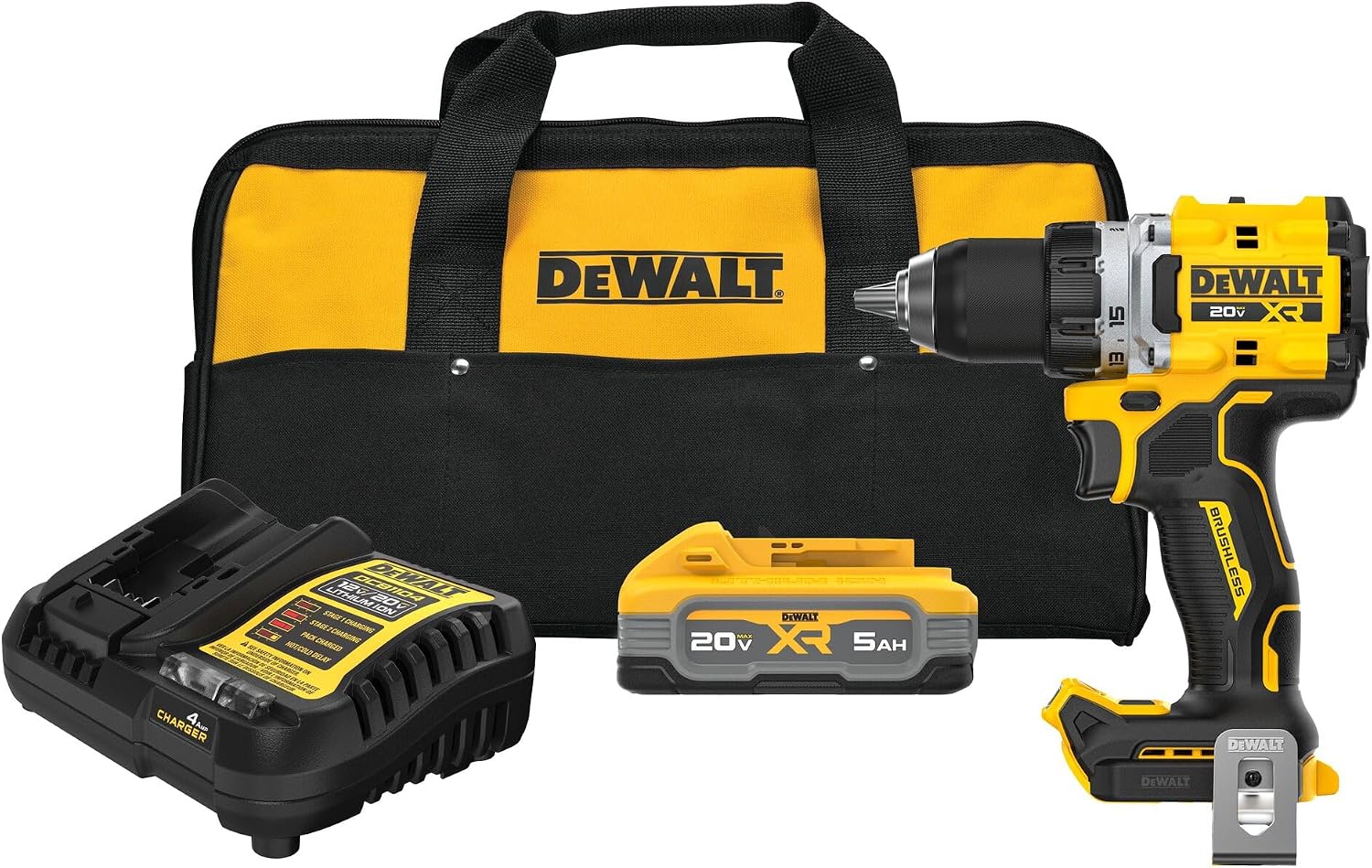
The DCD801H1 is built around DeWalt’s XR brushless motor, and it’s noticeably more compact than the hammer drill above while still delivering serious torque — up to 500 in-lbs. That combination of small size and high output makes it a favorite among tradespeople who spend all day working in tight framing bays, cabinets, or crawl spaces where a longer drill just won’t fit.
The two-speed all-metal transmission handles everything from precision driving to aggressive hole-boring, and the brushless motor means less heat buildup and longer tool life over thousands of cycles. DeWalt also improved the ergonomics here with a more compact grip diameter, which reduces hand fatigue on long jobsite days. The included compact battery keeps the overall weight down without sacrificing runtime for typical drilling tasks.
If your work involves constant, repetitive drilling — cabinet installs, deck framing, or general contracting — this is one of the more comfortable options to hold for extended periods while still hitting well above entry-level torque numbers.
Pros
- Compact size fits tight spaces
- Strong torque for its class
- Brushless motor for durability
- Comfortable, low-fatigue grip
Cons
- Single battery in most kit configurations
- No hammer drill function
Check Price on Amazon
#4 Best Compact KitDEWALT 20V MAX Cordless Drill Driver Set (DCD777D1)
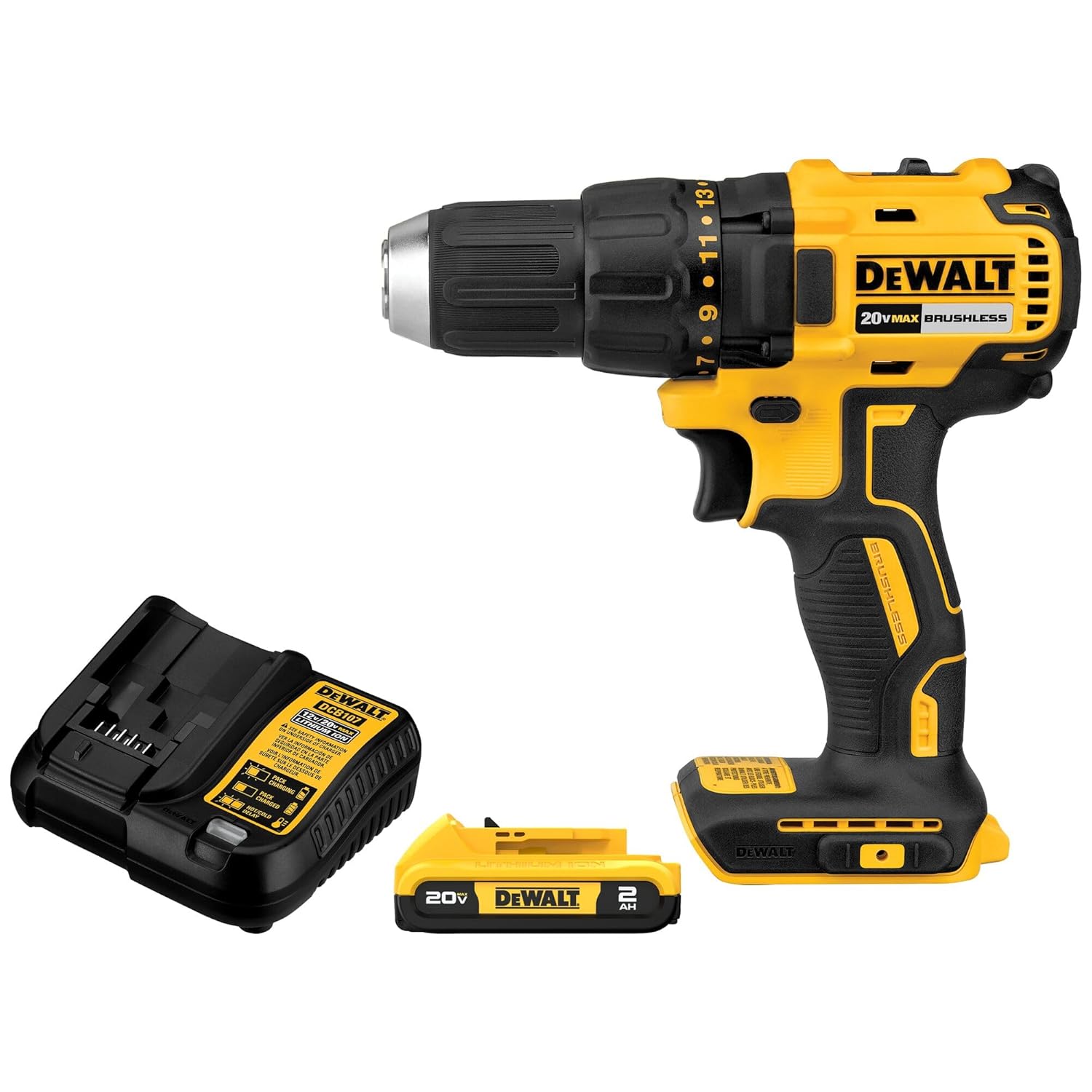
The DCD777D1 splits the difference between the entry-level DCD771C2 and the higher-torque XR models. It uses a brushless motor, which gives it an edge in runtime and motor longevity over its brushed sibling, while staying light enough for one-handed overhead work. This is a solid pick for anyone who wants brushless efficiency without stepping up to a heavier, higher-torque hammer drill.
The two-speed gearbox and 15-position clutch give reasonable control across a range of materials, and the compact battery pack keeps the whole tool nicely balanced. It comes as a full kit with charger and case, so it’s ready to use right away. For general household maintenance, light carpentry, and small remodeling projects, it hits a comfortable middle ground on price, weight, and performance.
Pros
- Brushless motor at a mid-range price
- Lightweight and well-balanced
- Comes as a complete kit
- Good for one-handed overhead tasks
Cons
- Not designed for heavy masonry or hammer-drill tasks
- Compact battery has shorter runtime under load
Check Price on Amazon
#5 Best Starter BundleDEWALT 20V MAX* Cordless Drill/Driver with Bit Set (DCD771C2 & DWA2FTS100)

This bundle pairs the reliable DCD771C2 drill with DeWalt’s DWA2FTS100 bit set, which adds a wide assortment of driving bits, drill bits, and nut drivers right in the box. For someone building a toolkit from scratch, this eliminates a second purchase and gets you drilling and driving on day one without a trip to the hardware store for accessories.
Performance-wise, it’s the same dependable drill driver found in our #2 pick, so expect the same lightweight handling and beginner-friendly two-speed operation. The real value here is convenience — the bundled bit set covers most common fastener types, from Phillips and square-drive screws to standard drill bit sizes for wood and light metal work.
Pros
- Includes a comprehensive bit set
- Great value for first-time toolkit builders
- Same reliable performance as the DCD771C2
Cons
- Brushed motor
- Bit set quality is basic, not premium
Check Price on Amazon
How to Choose the Right DeWalt Drill
Picking the “best” DeWalt drill really depends on what you’re drilling into, how often you use it, and whether you already own DeWalt batteries. Start by asking how much torque you actually need. If your projects are mostly furniture assembly, shelving, and small repairs, a two-speed brushed or brushless drill driver like the DCD771C2 or DCD777D1 will handle everything comfortably. If you’re routinely driving large fasteners, boring big holes, or working with dense hardwood, step up to a higher-torque XR model like the DCD801H1.
Next, consider whether you’ll ever need to drill into concrete, brick, or block. If the answer is yes — even occasionally — the hammer drill function on the DCD996B pays for itself the first time you need to anchor something into masonry without renting a separate rotary hammer.
Finally, factor in battery compatibility. If you already own DeWalt 20V MAX tools, buying a bare-tool drill and reusing your existing batteries can save a meaningful amount of money compared to a full kit. If this is your first DeWalt tool, a kit with included batteries and a charger is almost always the better value.
Understanding DeWalt’s 20V MAX Battery Platform
All five drills in this guide run on DeWalt’s 20V MAX battery system, which is one of the largest cordless platforms on the market. That’s a significant advantage if you’re building out a broader tool collection, because a single battery and charger can power drills, impact drivers, saws, and dozens of other DeWalt tools. Compact batteries (1.3Ah–2.0Ah) keep the tool light for overhead and one-handed work, while larger batteries (4.0Ah–6.0Ah) extend runtime for longer sessions at the cost of extra weight on the tool.
If you’re deciding between drills from different brands, it’s worth comparing battery ecosystems side by side. Our breakdowns of the best Milwaukee drill, best Makita drill, and best Bosch drill options can help you weigh DeWalt against the competition before committing to a platform.
Drill Driver vs Hammer Drill
A standard drill driver spins continuously and is designed for driving screws and drilling into wood, plastic, and light metal. A hammer drill adds a secondary hammering action layered on top of the rotation, which lets the bit chip away at masonry as it spins. This makes hammer drills far more effective at boring into brick, concrete, and block — tasks that would quickly wear out a standard drill driver’s motor and bit.
If you’re not sure which category fits your needs, our dedicated comparison of drill vs impact driver tools is a useful next read, since impact drivers solve a different problem entirely — high-torque fastening rather than hole-boring.
Why Brushless Motors Matter
Three of the five drills reviewed here use brushless motors, and it’s worth understanding why that matters beyond the marketing language. Brushed motors rely on physical carbon brushes that make contact with a spinning commutator, generating friction, heat, and gradual wear every time the tool runs. Brushless motors use electronic controllers to manage power delivery instead, which eliminates that friction point entirely.
In practical terms, brushless motors run cooler, last longer under heavy use, and typically deliver more efficient power transfer from the battery — meaning more runtime per charge for the same battery size. The tradeoff is usually a slightly higher price tag, which is why entry-level kits like the DCD771C2 still use brushed motors to keep costs down for occasional users.
Torque Settings and Clutch Explained
Every drill driver in this lineup includes an adjustable clutch, usually numbered from 1 up to 15 or higher, plus a drill-only setting for maximum torque. Lower numbers apply less rotational force before the clutch disengages, which is ideal for delicate materials or when you don’t want to overdrive a screw. Higher numbers and the drill setting apply full torque, which is what you want when boring holes rather than driving fasteners.
Getting comfortable with clutch settings is one of the fastest ways to avoid stripped screws, split wood, or snapped bits. A good habit is to start on a lower clutch setting and increase it gradually until the screw seats fully without excessive resistance.
Bits, Chucks, and Must-Have Accessories
None of these drills come with an extensive bit selection except the bundled DCD771C2 and DWA2FTS100 pairing, so it’s worth budgeting for a quality bit set separately if you choose one of the other kits. Look for a set that includes a range of Phillips, square, and Torx driving bits alongside general-purpose brad-point or spade bits for wood.
All five drills use a 1/2-inch keyless chuck, which accepts a wide range of standard round and hex-shank bits without needing a separate adapter. A magnetic bit holder attached to the drill’s belt clip is a small but genuinely useful add-on, since it keeps your most-used bit within reach instead of buried in a bag.
Maintenance and Longevity Tips
Cordless drills are relatively low-maintenance, but a few habits go a long way toward extending their working life. Store batteries at partial charge rather than fully depleted if the tool will sit unused for weeks, since lithium-ion cells degrade faster when left empty for extended periods. Keep the chuck free of dust and debris by wiping it down after use, especially if you’ve been drilling into drywall or masonry, since fine particulate can work its way into the jaws over time.
Avoid running the drill at stall speed for extended periods, particularly on brushed models, since sustained high-current draw at low RPM generates excess heat. If you ever notice unusual smoke, smell, or performance loss, it’s worth reviewing our guide on why is my drill smoking before continuing to use the tool.
DeWalt Drills for Pros vs Weekend DIYers
Professional users tend to prioritize compact size, brushless durability, and battery interchangeability across a broader tool fleet, which points toward the DCD801H1 or DCD996B depending on whether masonry work is part of the job. Weekend DIYers are usually better served by a complete kit that includes everything needed out of the box, which makes the DCD771C2 or DCD777D1 more sensible starting points.
If you’re brand new to power tools entirely, it’s worth reading a broader overview like our guide on how to use a drill before making a purchase, since understanding clutch settings, bit selection, and basic technique will help you get more value out of whichever model you choose. And if you’re still deciding between a corded and cordless setup entirely, our corded vs cordless drill comparison lays out the tradeoffs in detail.
Safety Tips for Using a Cordless Drill
Cordless drills are generally straightforward and safe tools, but a handful of habits go a long way toward preventing injuries and mistakes. Always wear eye protection when drilling, since bits can shatter or throw debris unexpectedly, especially in masonry or metal. Secure your workpiece with a clamp whenever possible rather than holding it in your free hand — a bit that catches or binds can cause a surprising amount of torque to transfer back into your wrist.
When drilling into unknown wall cavities, use a stud finder or a wire/pipe detector first, particularly before switching to the hammer function, which can generate more force on impact if the bit catches an unexpected obstruction like a nail or conduit. Keep bits sharp and replace them once they start burning material rather than cutting cleanly, since dull bits require more force and are more likely to slip or bind. Finally, always disconnect or remove the battery before changing bits or performing any maintenance, even though these drills use keyless chucks that make bit changes fast and tempting to do without powering down first.
For newer users still building confidence with cordless power tools generally, it’s worth spending a few minutes with a scrap piece of wood to get a feel for how the clutch, speed settings, and trigger sensitivity behave on your specific model before starting on an actual project.
Frequently Asked Questions
What is the best overall DeWalt drill?
For most users who want maximum versatility, the DEWALT 20V MAX XR Cordless Hammer Drill Driver (DCD996B) is the strongest all-around pick thanks to its brushless motor, three-speed gearbox, and added hammer drill function for masonry work.
Is a brushless DeWalt drill worth the extra cost?
In most cases, yes. Brushless motors run cooler, last longer, and squeeze more runtime out of the same battery. If you use your drill frequently or professionally, the upgrade typically pays for itself over the tool’s lifespan.
Do all DeWalt 20V drills use the same batteries?
Yes, every drill covered in this guide runs on DeWalt’s shared 20V MAX battery platform, so batteries and chargers are interchangeable across compatible tools regardless of which drill model you choose.
What’s the difference between a drill driver and a hammer drill?
A drill driver spins continuously for drilling and driving fasteners into wood, metal, and plastic. A hammer drill adds a hammering action to that rotation, allowing it to bore into masonry materials like brick and concrete.
Which DeWalt drill is best for beginners?
The DEWALT 20V Max Cordless Drill Driver Set (DCD771C2) is a strong beginner choice because it comes as a complete kit with batteries, a charger, and a case, and it’s simple to operate with just two speed settings.
Can I use a DeWalt drill for concrete or brick?
Only if it has a hammer drill function, like the DCD996B. Standard drill drivers aren’t designed for masonry and will wear out quickly or fail to make meaningful progress in brick or concrete.
How long does a DeWalt drill battery last on a single charge?
Runtime depends on battery capacity and how demanding the task is. A compact 1.3Ah battery might last through lighter tasks for an hour or two of intermittent use, while a larger 4.0Ah or 5.0Ah battery can comfortably get through a full day of moderate drilling and driving.
What torque rating should I look for in a drill?
For general household use, 300–500 in-lbs of torque is usually sufficient. For heavier fastening, large-diameter holes, or dense hardwood, look for drills rated closer to 700–800+ in-lbs, like the DCD996B.
Are bare-tool DeWalt drills a good deal?
Bare-tool listings can be a great value if you already own compatible 20V MAX batteries and a charger from another DeWalt tool. If this is your first DeWalt purchase, a full kit is usually more cost-effective.
What size chuck do DeWalt drills use?
All five drills reviewed here use a standard 1/2-inch keyless chuck, which accepts most common round and hex-shank bits without requiring an additional adapter.
How do I know which clutch setting to use?
Start on a lower clutch number and gradually increase it until the fastener seats fully without over-tightening. Use the drill-only setting, which bypasses the clutch entirely, only when boring holes rather than driving screws.
What Real-World Testing Reveals About These Drills
Spec sheets only tell part of the story. Torque numbers, speed ratings, and battery voltage are useful for comparison shopping, but they don’t capture how a drill actually feels after two hours of continuous use, or how it behaves when you’re working one-handed above your head trying to hang a light fixture. That’s why it’s worth thinking beyond the numbers when comparing these five models.
The DCD996B, for example, posts the highest torque figures in this lineup, but that power comes with added weight and a slightly larger body. On paper it looks like the obvious top pick, and for most buyers it still is, but if your projects rarely involve masonry or heavy fastening, that extra weight is dead weight you’ll be holding all day for no practical benefit. Meanwhile, the DCD801H1 trades some peak torque for a noticeably more compact and lighter package, which testers consistently report as more comfortable for repetitive, all-day drilling tasks like cabinet installation or deck framing.
The entry-level DCD771C2 holds up surprisingly well against pricier brushless models for occasional use. Its two-speed transmission and 1/2-inch chuck feel identical in the hand to its brushless siblings; the real difference shows up over months and years of heavy use, where brushed motors wear faster and runtime per charge tends to be shorter. For a homeowner who uses a drill a few times a month, that gap is barely noticeable. For a contractor running the tool five days a week, it adds up quickly.
Common Mistakes When Buying or Using a DeWalt Drill
Even experienced buyers make avoidable mistakes when choosing between DeWalt’s lineup. Here are the most common ones, along with how to sidestep them.
Buying a bare tool without checking battery compatibility
Bare-tool listings are often cheaper because they don’t include a battery or charger, but if you don’t already own compatible 20V MAX batteries, you’ll need to buy them separately — and that cost can quickly erase any savings. Always confirm what’s actually included before comparing prices across listings.
Choosing based on torque alone
Higher torque isn’t automatically better if it comes with more weight and bulk than your projects require. Match the tool to the task: a drill driver with 300–500 in-lbs of torque is plenty for most household work, while only heavy fastening or large-bit boring genuinely benefits from 700+ in-lbs.
Ignoring the hammer drill function entirely
Buyers who skip the hammer drill option to save money sometimes regret it the first time they need to anchor something into concrete or brick. If there’s any chance masonry work is in your future — even occasionally — it’s worth paying the small premium for that added function upfront rather than renting or buying a second tool later.
Overtightening the clutch
Running every task on the highest clutch setting or the drill-only mode is a common way to strip screw heads, split wood, or snap smaller bits. Take the extra few seconds to dial in an appropriate clutch setting for the material and fastener size.
Neglecting battery storage
Leaving lithium-ion batteries fully depleted in a cold garage over winter is one of the fastest ways to shorten their lifespan. Store batteries at roughly 40–80% charge when not in regular use, and keep them somewhere temperature-stable when possible.
Understanding Drill Bit Sizes and Compatibility
All five drills in this guide accept standard 1/2-inch round and hex-shank bits through their keyless chucks, but bit selection still matters for getting good results. For general wood drilling, twist bits and brad-point bits in common fractional sizes (1/16 in through 1/2 in) cover the vast majority of household tasks. For driving screws, matching your bit tip precisely to the fastener head — Phillips #2, square drive #2, or Torx T15 being the most common — prevents cam-out and stripped screw heads.
If you’re stepping up to the hammer drill function on the DCD996B for masonry work, you’ll need carbide-tipped masonry bits specifically designed for hammer drilling rather than standard twist bits, which will dull almost immediately against brick or concrete. Spade bits and hole saws are worth adding to your kit if you regularly need to bore larger-diameter holes for plumbing, electrical runs, or door hardware installation — just be aware that larger bits draw significantly more current and benefit from the higher torque output of models like the DCD996B or DCD801H1.
Weight and Ergonomics: Why They Matter More Than You Think
It’s easy to focus purely on torque and speed specs while shopping, but weight and grip design have an outsized impact on how enjoyable — or exhausting — a drill is to use over a full project. A half-pound difference between models might seem trivial in a spec comparison, but it becomes very noticeable after twenty minutes of overhead drilling while installing cabinets or ceiling fixtures.
DeWalt has clearly optimized different models for different use cases here. The DCD777D1 and DCD801H1 both prioritize a more compact grip diameter and lower overall weight, which reduces hand and wrist fatigue during repetitive tasks. The DCD996B, while heavier, compensates with a well-balanced center of gravity that keeps it from feeling front-heavy even with a larger battery attached. If you can, it’s worth handling a floor model in person before buying, since grip comfort is somewhat personal and depends on your hand size and how you typically hold a tool.
Warranty and Customer Support
DeWalt backs its power tools with a standard three-year limited warranty covering defects in materials and workmanship, along with a one-year free service contract and a 90-day money-back guarantee on most tools when purchased new. Registering your tool shortly after purchase is worth doing, since it simplifies any future warranty claims and ensures DeWalt has accurate records if you ever need service. Keep in mind that batteries typically carry their own separate warranty terms, which are usually shorter than the tool’s coverage, so it’s worth checking the specific battery warranty length for whichever kit you choose.
Related Reading
Continue researching before you buy with these related guides:
Where These Drills Fit in DeWalt’s Broader Lineup
DeWalt organizes its cordless drills into a few loose tiers, and understanding that structure helps explain why these five models are priced and equipped the way they are. At the entry level sits the standard 20V MAX series, represented here by the DCD771C2 and its bit-set bundle, which prioritize affordability and simplicity over raw performance. One step up is the 20V MAX brushless tier, where the DCD777D1 lives, offering better efficiency and longevity without a major jump in size or price.
The XR series, which includes the DCD801H1 and DCD996B, represents DeWalt’s higher-performance tier aimed at tradespeople and serious DIYers. XR tools generally pair brushless motors with more robust internals designed for sustained daily use, and they’re built to accept DeWalt’s higher-capacity XR batteries for extended runtime, though they remain fully compatible with standard 20V MAX batteries as well. The DCD996B sits at the very top of this reviewed lineup by adding hammer-drill capability on top of the XR platform’s existing advantages.
Beyond these five, DeWalt also sells 12V MAX drills for extremely tight spaces and FlexVolt 60V models for heavy-duty construction applications, but for the vast majority of home and general trade use, the 20V MAX and XR lines covered in this guide represent the sweet spot of size, power, and battery ecosystem support.
Matching a DeWalt Drill to Your Specific Project
Rather than trying to declare one universal winner, it helps to walk through a few common project scenarios and see which drill actually fits best. This kind of task-first thinking tends to produce better buying decisions than chasing the highest spec numbers.
Assembling flat-pack furniture
For furniture assembly, you want light weight, easy one-handed control, and a gentle clutch range so you don’t strip the small screws typically used in particleboard furniture. The DCD771C2 or DCD777D1 are both well suited here, since neither is overpowered for the delicate fasteners involved, and both are light enough to use comfortably for an hour or more without arm fatigue.
Building a deck or fence
Deck and fence construction involves driving large numbers of exterior-rated screws into pressure-treated lumber, often at awkward angles. This benefits from higher torque and a more durable brushless motor that can handle sustained use across a full day. The DCD801H1 is a strong fit here thanks to its combination of compact size and above-average torque, and the DCD996B works well too if you also need to anchor ledger boards into a masonry foundation wall.
Hanging shelves and mounting TVs
Wall-mounting projects often mean drilling into a mix of drywall, studs, and occasionally brick or concrete depending on the wall type. If you live in a home with masonry walls, the hammer drill function on the DCD996B removes the guesswork, letting you drill into either material without swapping tools. For standard drywall and stud construction, any of the other four models will handle the job easily.
Renovation and remodeling work
Renovation projects tend to be unpredictable — one day you’re driving drywall screws, the next you’re boring holes through subfloor for plumbing runs. This variability favors a more capable, higher-torque model that won’t feel underpowered when the job suddenly gets tougher. The DCD996B’s three-speed range and hammer function make it the most adaptable choice for renovation work that touches multiple material types over the course of a project.
Light electrical and low-voltage work
Running low-voltage cable, mounting junction boxes, or drilling small pilot holes for wire runs doesn’t demand much torque, but precision and control matter. A lighter, more compact drill like the DCD777D1 or DCD801H1 offers better fine control for these smaller-diameter, lower-torque tasks compared to a bulkier hammer drill.
Price-to-Value Breakdown
Price alone rarely tells the full story with cordless tools, since kit contents vary so much between listings — some include two batteries and a case, others are bare tools that assume you already own compatible batteries. When comparing prices across these five options, it helps to break the value down by what you’re actually getting for the money rather than just the sticker price.
The DCD771C2 and its bundled version with the DWA2FTS100 bit set both deliver strong value for buyers starting from zero, since the total cost of drill, batteries, charger, case, and bits ends up lower than assembling the same set of accessories separately. The DCD777D1 sits in a similar price range but trades the bit set for a brushless motor, which is arguably the better long-term investment if you plan to use the tool regularly for years rather than occasionally.
The DCD801H1 and DCD996B are priced higher, reflecting their brushless motors and, in the case of the DCD996B, the added hammer drill mechanism. For casual users, that premium may not be worth it. For anyone using a drill weekly or professionally, the extra torque, durability, and (in the DCD996B’s case) masonry capability tend to justify the higher upfront cost through fewer replacements and broader task coverage over the tool’s lifespan.
Charging Times and Realistic Runtime Expectations
Battery runtime is one of the most misunderstood specs in cordless tools, largely because manufacturers test under ideal, low-load conditions that rarely match real-world use. A compact 1.3Ah battery paired with any of these drills will typically get you through a couple hours of light, intermittent work — think furniture assembly or occasional driving — before needing a recharge. Step up to a 2.0Ah or 4.0Ah battery and that runtime roughly doubles or triples, which matters more for the higher-torque DCD801H1 and DCD996B, since sustained heavy drilling draws considerably more current than light driving tasks.
Standard DeWalt chargers typically bring a compact battery back to full charge in under an hour, while larger XR batteries can take closer to ninety minutes on a standard charger, or significantly less with DeWalt’s faster charging accessories. For anyone using a drill professionally throughout the day, it’s worth owning at least two batteries so one can charge while the other is in use — a detail that makes kits like the DCD771C2, which ships with two batteries standard, particularly convenient for continuous jobsite work without downtime.
It’s also worth noting that cold weather reduces effective battery runtime across all lithium-ion tools, DeWalt included, so outdoor winter projects may see noticeably shorter working time per charge compared to the same battery used indoors at room temperature.
Noise and Vibration Considerations
None of these five drills are particularly loud compared to corded alternatives or rotary hammers, but there are noticeable differences worth mentioning. The DCD996B, when running in hammer mode, produces more noise and vibration than any of the standard drill drivers, which is expected given the mechanical hammering action required to break through masonry. For extended hammer-drilling sessions, hearing protection is a reasonable precaution even though the noise level is far below that of larger demolition tools.
The brushless models in this lineup — the DCD777D1, DCD801H1, and DCD996B — tend to run slightly quieter and with less vibration during standard drilling compared to the brushed DCD771C2, partly due to more refined internal balancing and the smoother power delivery brushless motors provide. For anyone sensitive to vibration during repetitive tasks, or planning extended sessions of overhead work, this is a small but real quality-of-life difference worth factoring into your decision.
Final Verdict
Choosing between these five drills ultimately comes down to being honest with yourself about how you’ll actually use the tool, not how you imagine you might use it someday. Buying more drill than you need means carrying extra weight for capabilities you’ll rarely tap into, while buying too little can leave you underpowered the first time a project gets more demanding than expected. Take a moment to think back on your last several projects — the fasteners you drove, the materials you drilled into, how long each session ran — and let that history guide the decision more than any single spec on a box.
There isn’t a single “best” DeWalt drill for everyone — there’s a best drill for your specific projects, budget, and how often you plan to use it. For most buyers who want one drill that handles nearly anything, the DEWALT 20V MAX XR Cordless Hammer Drill Driver (DCD996B) is the safest recommendation thanks to its added masonry capability and strong torque output. If you’re just starting out or working with a tighter budget, the DEWALT 20V Max Cordless Drill Driver Set (DCD771C2) remains a dependable, complete-kit option that won’t leave you needing anything else on day one. Whichever model you land on, the shared 20V MAX battery platform means your investment carries forward into future tool purchases, making today’s decision one part of a larger, growing toolkit rather than an isolated one-off buy.
Shop DeWalt Drills on Amazon