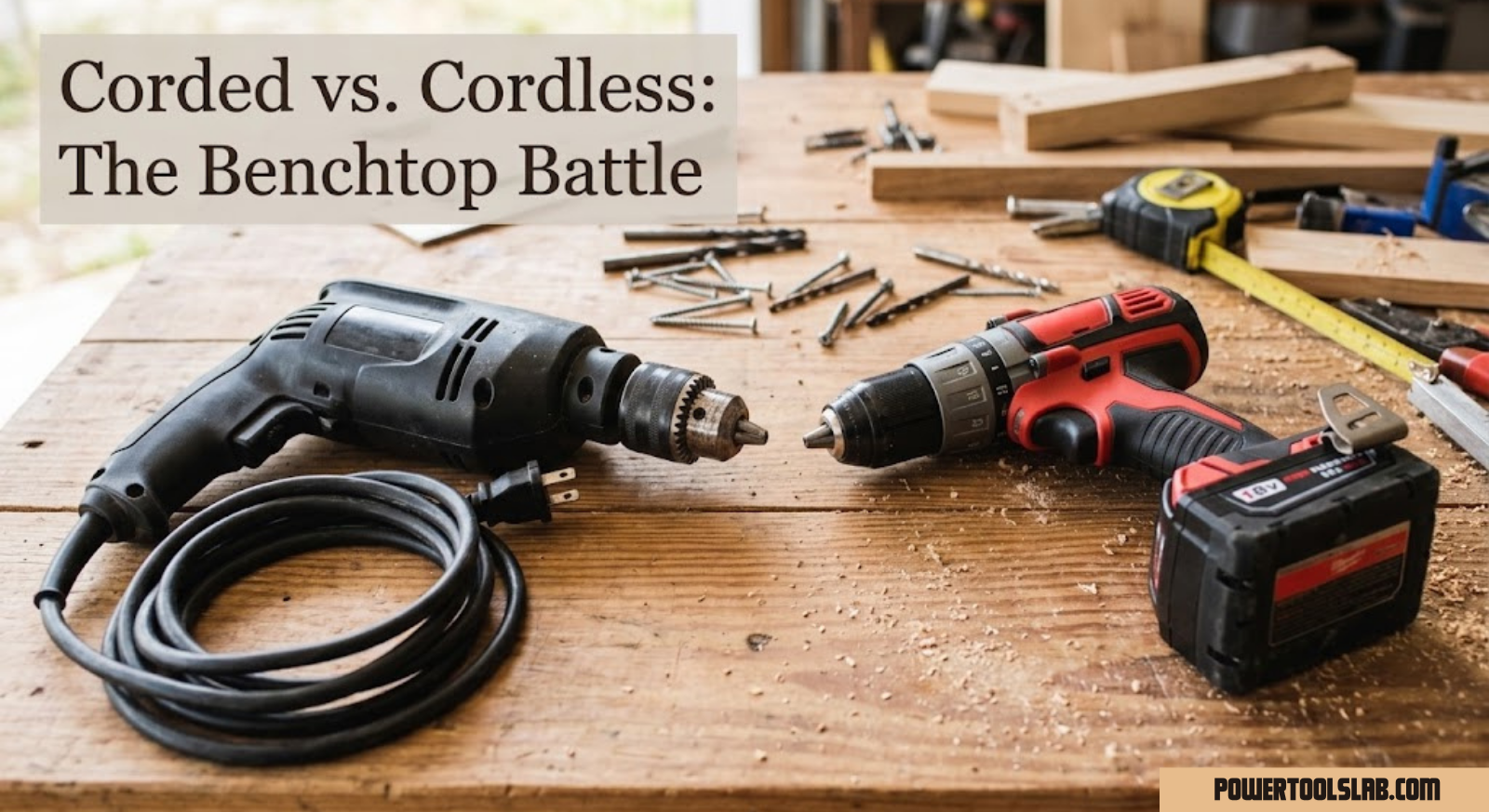
Corded vs Cordless Drill: Which One Actually Belongs in Your Toolbox?
Every drill aisle argument eventually comes down to this exact question. Here’s the honest, spec-backed answer — broken down by power, portability, battery tech, cost, and the jobs each one is built for, so you buy the right tool instead of the popular one.
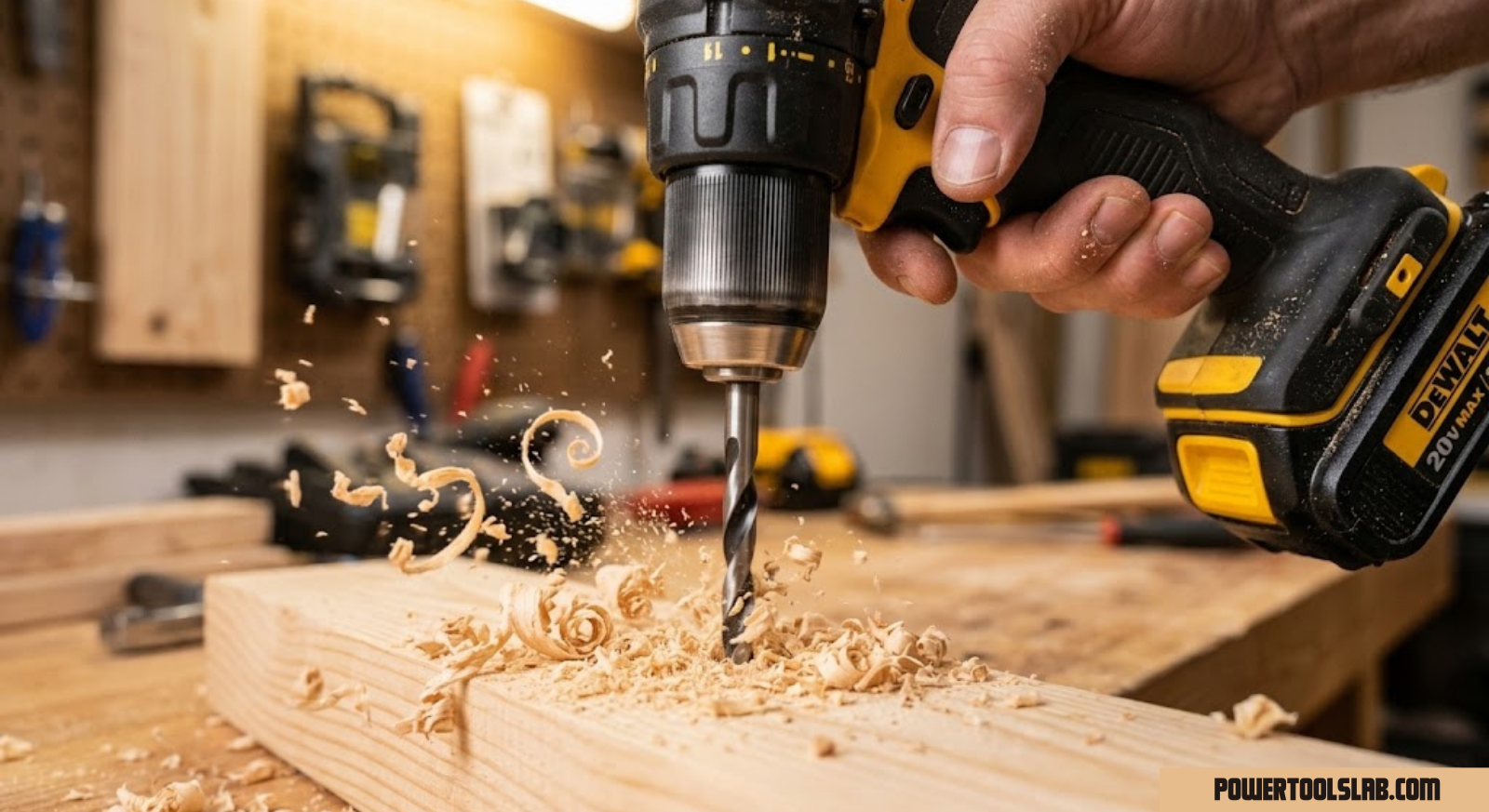
Walk into any hardware store and you’ll see the same split repeated on every shelf: a wall of cordless drills in bright battery-branded colors, and a smaller, quieter section of corded models tucked toward the back. That imbalance tells you something about where the market has moved — but it doesn’t tell you which drill is right for your garage, your job site, or your weekend project list.
The truth is that corded and cordless drills aren’t really competing for the same job anymore. They’ve drifted into different lanes, each one built around a different trade-off: raw, unlimited power versus total freedom of movement. Understanding that trade-off — not just comparing spec sheets — is what actually leads to a purchase you won’t regret six months in.
This guide breaks the decision down piece by piece: how each drill is built, how they perform under real load, what they cost over their lifetime, and which one wins for specific tasks like framing, cabinetry, concrete anchoring, or the odd rescued piece of flat-pack furniture. If you’re also weighing a drill against a different tool entirely, our drill vs impact driver comparison and hammer drill vs regular drill guide cover that ground separately.
It also helps to remember that “corded vs cordless” isn’t a debate that started recently. Corded drills have been the industry standard for the better part of a century, refined into dependable, predictable tools long before battery technology could compete. Cordless drills are the newer entrant, and their rapid improvement — from underpowered, heavy nickel-cadmium tools a couple of decades ago to today’s compact, brushless, high-torque models — is really a story about battery chemistry catching up to what corded tools could always do. That context matters, because it explains why the two categories still coexist rather than one having fully replaced the other: they solved different problems at different points in the technology’s development, and both solutions remain genuinely useful today depending on the job in front of you.
Quick Verdict: Corded vs Cordless at a Glance
If you only read one section, read this one. Here’s the short answer before we get into the why.
Choose Corded If…
- You need constant, unlimited runtime (workshop, production drilling)
- You’re drilling into masonry, concrete, or thick steel regularly
- Budget matters more than convenience
- Your work happens near a fixed power source
Choose Cordless If…
- You move between rooms, floors, or outdoor locations
- You want one battery platform across multiple tools
- You value speed of setup over raw sustained power
- You’re doing furniture assembly, decking, remodeling, or DIY
For most homeowners and weekend DIYers today, a mid-range cordless drill covers 90% of tasks comfortably. For tradespeople doing heavy daily drilling — electricians running conduit, contractors mixing thin-set, metalworkers tapping steel — a corded drill (or a cordless model paired with backup batteries) still earns its keep. The rest of this guide explains exactly why.

What Is a Corded Drill?
A corded drill is exactly what it sounds like — a drill that draws power directly from a wall outlet through a permanently attached cable. There’s no battery, no charge cycle, and no runtime ceiling. As long as the drill is plugged in and the motor is rated for the load, it will keep spinning at full strength indefinitely.
Because the motor is fed directly from mains power rather than a battery pack, corded drills can usually be built with higher continuous wattage for the same size and price point. That’s the entire appeal in one sentence: consistent, undiluted power, with nothing standing between the outlet and the chuck.
Corded drills are also mechanically simpler. Without a battery management system, cell balancing circuitry, or a removable pack, there are fewer components that can fail. Many corded drills sold decades ago are still spinning today in garages and basements — a durability track record cordless tools, with their battery chemistry limitations, can’t fully match yet.
Where Corded Drills Excel
Strengths
- Unlimited runtime — no charging, ever
- Consistent power output from first hole to last
- Typically lighter for the same motor output (no battery weight)
- Lower upfront cost for comparable power
- No battery degradation over years of use
Trade-offs
- Tethered to an outlet — limited by cord length
- Not practical for roofs, ladders, or outdoor sites without power
- Cord can be a tripping hazard or get caught on materials
- Requires an extension cord for larger job sites, adding voltage drop risk
What Is a Cordless Drill?
A cordless drill runs on a rechargeable battery pack that clips into the base of the handle, most commonly lithium-ion in modern tools. That single design change — removing the cord — is what reshaped the entire power tool industry over the last two decades, turning drills from a bench-bound tool into something you can carry up a ladder, across a job site, or into a crawl space.
Modern cordless drills use brushless motors in most mid-to-premium models, which run cooler, last longer, and squeeze more torque out of the same battery charge compared to older brushed designs. Combine that with higher-capacity battery cells, and today’s cordless drills can match — and in short bursts, even exceed — the torque of a mid-range corded drill.
The catch is runtime and consistency. A cordless drill’s power output is tied to its battery’s state of charge, meaning performance can taper slightly as the battery drains, and eventually you’ll need to stop and swap or recharge. For most users this is a minor inconvenience solved by owning a spare battery; for high-volume production work, it can be a real limitation.
Where Cordless Drills Excel
Strengths
- Complete freedom of movement — no outlet needed
- Ideal for outdoor, elevated, or remote work
- Battery platforms share across drills, drivers, saws, and more
- Compact and lightweight for everyday carrying
- Faster setup — pick it up and go
Trade-offs
- Limited runtime per charge
- Batteries degrade over years and eventually need replacing
- Higher upfront cost when batteries and charger are included
- Slightly heavier than an equivalent corded body due to the pack
If you’re just getting oriented in the drill category as a whole, our roundup of the best drills for DIY and pro use is a good next stop after this guide.
Power & Performance: Who Actually Wins?
This is the question everyone asks first, and the honest answer is: it depends on the timeframe you’re measuring. In short, controlled bursts — driving a few screws, boring a handful of holes — a good cordless drill with a modern brushless motor can go toe-to-toe with a corded model of similar size. Where corded pulls ahead is sustained, continuous load: repeated heavy-gauge drilling, mixing compound, or hour-after-hour production work where a battery would need multiple swaps.
Corded drills draw power straight from the grid, so their motor doesn’t experience the voltage sag that happens as a battery cell depletes. That means the 500th hole drilled with a corded tool feels almost identical to the first. A cordless drill, by contrast, will often show a small dip in torque and speed as the battery approaches empty — usually not enough to notice on light tasks, but very noticeable when driving 3-inch lag bolts into hardwood for the fiftieth time in a row.
| Performance Factor | Corded Drill | Cordless Drill |
|---|---|---|
| Peak torque (typical mid-range) | Consistent, motor-limited | High but tapers as battery drains |
| Sustained heavy-duty use | Excellent, no interruption | Good, limited by battery life |
| Cold-weather performance | Unaffected | Battery capacity drops in cold |
| Speed consistency under load | Very stable | Stable with brushless + high-capacity pack |
| Startup power delivery | Instant, full power | Instant, full power (when charged) |
Voltage numbers on cordless drills (12V, 18V, 20V, and so on) are a useful shorthand, but they don’t tell the whole story — two 20V drills from different brands can perform very differently depending on cell quality, motor design, and gearing. If you’re comparing specific cordless options, our breakdowns of the best Dewalt drills and best Milwaukee drills go deeper into real-world torque figures.
Why Corded Drills Rarely “Bog Down”
One detail that rarely gets explained clearly: a corded drill plugged into a standard household circuit has access to far more instantaneous current than a battery pack can safely deliver. That headroom is why a corded drill can push through a stubborn knot in hardwood or a thick piece of plate steel without the motor speed visibly dropping, while a cordless drill under the same load might show a brief dip in RPM as the battery’s discharge limits kick in. It’s not that the cordless motor is weaker — it’s that the power source itself has a ceiling on how much current it can supply at once. High-output batteries with lower internal resistance narrow this gap considerably, which is part of why premium cordless packs cost more than basic ones even at the same voltage and amp-hour rating.
In everyday use, this difference is rarely noticeable, since most drilling and driving tasks don’t approach either tool’s current limits. It only becomes relevant in genuinely demanding, sustained-load situations — which is exactly the scenario where tradespeople still reach for a corded drill or a heavy-duty cordless model with a high-output battery rather than a standard compact pack.
Battery Technology Explained (Why Cordless Has Gotten So Good)
The cordless-versus-corded gap has narrowed dramatically over the past decade, and almost all of that progress comes down to lithium-ion battery chemistry. Older nickel-cadmium (NiCd) packs suffered from the “memory effect,” lost charge quickly, and delivered inconsistent power as they drained. Lithium-ion cells solved most of those problems: they hold a charge longer, deliver flatter power curves, and tolerate partial charging without long-term damage.
Battery amp-hour (Ah) rating tells you capacity, not power. A 2.0Ah battery and a 5.0Ah battery of the same voltage deliver similar peak torque, but the 5.0Ah pack simply runs longer between charges and typically handles sustained heavy loads with less voltage sag, since it can supply current more comfortably.
Common Battery Voltages and What They Mean
| Voltage Class | Typical Use | Notes |
|---|---|---|
| 12V | Light-duty, compact drivers | Best for tight spaces and overhead work |
| 18V / 20V MAX | General-purpose DIY and trade use | The most common category; wide tool ecosystems |
| 40V+ / high-output packs | Heavy-duty drilling, mixing, demolition-adjacent tasks | Closest cordless gets to corded-level sustained power |
Battery lifespan is the other half of the equation. Most quality lithium-ion packs handle 500–1,000 charge cycles before capacity noticeably declines, which for a typical DIYer translates to several years of regular use. Heat, deep discharges, and extreme cold all accelerate that decline, so storing batteries at room temperature and avoiding letting them sit fully drained for long periods meaningfully extends their working life.
How Battery Management Systems Protect Performance
Most modern drill batteries include an internal battery management system, or BMS, that constantly monitors cell voltage, temperature, and current draw. This is part of why lithium-ion packs feel so much more predictable than older chemistries — the BMS steps in to prevent overcharging, overheating, and over-discharging, all of which used to shorten battery life significantly in earlier tool generations. It’s also why you’ll sometimes see a cordless drill briefly cut power under an extremely heavy load rather than stalling the motor outright: the BMS is protecting the cells from a current spike that could otherwise damage them.
This protective layer does add a small amount of complexity compared to a corded tool’s direct electrical connection, but in practice it’s invisible during normal use and mostly shows up as longer-lasting batteries and safer charging behavior. Fast chargers included with many premium cordless kits also rely on this communication between charger and pack to safely deliver higher charge rates without generating excess heat.
Torque, RPM & Chuck Size: Reading the Spec Sheet Correctly
Marketing copy loves to throw around big numbers, but three specs actually determine how a drill performs on your materials: torque, RPM (speed), and chuck size.
Torque (in-lbs or Nm)
Torque is rotational force — it determines whether the drill can power through dense material or drive a long fastener without stalling. Corded drills historically posted higher sustained torque figures for their size class because motor output isn’t capped by a battery’s discharge rate. Modern cordless drills have closed much of that gap, especially in the 18V/20V-and-up range with brushless motors.
RPM (Speed)
Higher RPM is better for drilling smaller holes quickly in soft material; lower RPM with higher torque is better for driving screws or drilling large-diameter holes without burning out the motor or stripping fasteners. Most drills — corded and cordless alike — offer two-speed gearboxes to cover both needs.
Chuck Size
Chuck size (commonly 3/8″ or 1/2″) determines the largest bit shank the drill can hold. Heavier-duty corded and cordless drills both typically use a 1/2″ keyless chuck for larger bits and hole saws, while compact cordless drivers often use 3/8″ chucks to save weight and size.
| Task | Ideal Speed Setting | Recommended Torque Range |
|---|---|---|
| Driving small screws | Low speed, high torque | Low-to-mid clutch setting |
| Drilling wood (small bits) | High speed | Mid torque |
| Drilling large-diameter holes | Low speed | High torque |
| Drilling metal | Low-to-mid speed with steady pressure | High torque |
| Driving long lag bolts | Low speed | Maximum torque, clutch off |
Not sure whether you actually need a hammer function for masonry work? The hammer drill vs regular drill comparison walks through when that added mechanism is worth it.

Portability & Mobility
This is where cordless drills win decisively, and it’s the single biggest reason the market has shifted in their direction. Without a cord, there’s no dragging an extension lead across a yard, no working around outlet placement, and no risk of the cord snagging on scaffolding, ladders, or materials mid-task.
For anyone working on roofs, in attics, on fences, or moving between multiple rooms in a renovation, a cordless drill removes an entire category of friction. You pick it up, you drill, you move to the next spot — no setup, no unplugging, no coiling a cord back up when you’re done.
Corded drills, meanwhile, are genuinely limited to wherever power reaches. Even with a long extension cord, voltage drop over distance can reduce performance on tools with sensitive motors, and running cords across a job site introduces its own safety and logistics headache. For fixed-location work — a workbench, a shop, a stationary drill press setup — this limitation matters far less, which is exactly why corded tools remain common in workshop settings.
Cost Comparison: Upfront Price vs Total Cost of Ownership
Sticker price tells only part of the story. A bare corded drill is almost always cheaper than a cordless drill sold with a battery and charger — but that comparison isn’t apples-to-apples once you factor in what each tool actually includes and how long it lasts.
| Cost Factor | Corded Drill | Cordless Drill |
|---|---|---|
| Typical upfront price | Lower | Higher (includes battery + charger) |
| Ongoing electricity cost | Negligible | Negligible |
| Replacement parts over time | Rare (brushes on older models) | Eventual battery replacement |
| Shared ecosystem savings | None | High — one battery powers many tools |
| Resale value | Moderate | Moderate-to-high (platform tools hold value) |
The ecosystem factor is where cordless often wins long-term. If you buy into a battery platform — Dewalt’s 20V MAX, Milwaukee’s M18, Makita’s 18V LXT, or similar — every additional tool you buy in that same platform, from impact drivers to circular saws to work lights, can skip the battery and charger entirely. Over several tool purchases, that shared-battery model can make cordless meaningfully cheaper than buying an equivalent lineup of standalone corded tools.
Battery replacement is the main recurring cost unique to cordless tools. A quality lithium-ion pack typically lasts several years of regular use before capacity drops enough to warrant replacement, and replacement packs cost a fraction of the original kit price. Corded tools avoid this cost entirely but can’t offer the same cross-tool savings.
Durability & Maintenance
Corded drills have a simplicity advantage: fewer components generally means fewer failure points. Without a battery management system or removable pack, the main wear items are carbon brushes (on brushed motors) and the cord itself, both of which are inexpensive and straightforward to inspect or replace.
Cordless drills have more going on internally — a battery management system, contacts between the pack and the tool, and (on brushless models) more sophisticated electronic motor control. The good news is that brushless motors themselves tend to be more durable than brushed motors since there’s no physical brush contact wearing down over time; the added complexity mostly lives in the battery, not the drill body.
Maintenance Checklist for Either Type
- Keep the chuck free of dust and debris — clean regularly with compressed air
- Store batteries at partial charge (not 0% or 100%) if not used for extended periods
- Avoid exposing tools to extreme heat, which accelerates battery and seal degradation
- Inspect cords on corded models for fraying or exposed wiring before each use
- Lubricate chuck mechanisms occasionally per manufacturer guidance
What Actually Fails First on Each Type
On corded drills, the most common wear items are carbon brushes (on brushed-motor models), the power cord’s strain relief where it enters the housing, and the trigger switch after years of heavy cycling. All three are relatively inexpensive to repair or replace, and a competent tool repair shop can usually service a corded drill for a fraction of the cost of a new one.
On cordless drills, the battery pack is by far the most common failure point, followed by the charging contacts and, less frequently, the internal battery management electronics. The drill body itself — chuck, gearbox, motor — often outlasts several battery packs over its lifetime, especially on brushless models. This is worth keeping in mind when budgeting: a cordless drill’s practical lifespan is often really the lifespan of however many battery replacements you’re willing to buy for it.
If your drill has started acting up — overheating, smoking, or losing power unexpectedly — it’s worth troubleshooting before assuming the worst. Our guide on why your drill is smoking covers the most common causes and fixes.
Best Use Cases: Matching the Tool to the Task
Rather than picking a “winner” overall, it’s more useful to match the tool to what you’re actually doing. Here’s how the two stack up across common tasks.
Furniture Assembly & Light DIY
Winner: Cordless. Quick, low-torque tasks around the house benefit far more from portability than raw power. A compact cordless driver handles flat-pack furniture, shelving, and picture hanging with ease.
Deck Building & Outdoor Projects
Winner: Cordless. Outdoor sites rarely have convenient power access, and moving along a deck frame with a cord underfoot is a recipe for tripping. A higher-capacity battery pack easily handles a full day of decking screws.
Workshop & Bench Production Drilling
Winner: Corded. Repetitive, high-volume drilling at a fixed bench favors unlimited runtime and consistent torque with zero downtime for charging.
Masonry & Concrete Anchoring
Winner: Corded (or high-output cordless hammer drill). Sustained high torque matters here, and traditional corded hammer drills remain a dependable choice, though premium cordless hammer drills have closed much of the gap.
Electrical & Conduit Work
Winner: Cordless. Constant movement between panels, walls, and ceilings makes cord-free operation a major time saver, and modern packs comfortably last a full shift with a spare battery on hand.
Metalworking & Tapping
Winner: Corded. Drilling and tapping steel demands steady, sustained torque at low speed — exactly where corded motors avoid the voltage sag a battery can introduce under heavy load.

Weight, Noise & Ergonomics
Weight distribution differs meaningfully between the two types. Corded drills, without a battery pack, tend to be lighter and more front-weighted, which some users find easier to control for extended overhead work — provided the cord isn’t fighting against you. Cordless drills carry their battery in the handle or as a slide-pack at the base, which shifts weight downward and can actually improve balance for one-handed use, at the cost of slightly more total weight.
Noise levels are broadly similar between comparable corded and cordless models of the same motor class, though brushless cordless motors are often perceived as slightly quieter and smoother-running than older brushed designs, corded or cordless. Vibration depends more on the specific tool’s build quality and any anti-vibration handle design than on power source.
For anyone using a drill for extended sessions — cabinetry installs, long decking runs — grip design, trigger feel, and balance end up mattering more day-to-day than the corded/cordless distinction itself. It’s worth handling a few models in person before deciding if ergonomics are a priority for you.
Overhead and One-Handed Work
Anyone who’s spent an afternoon drilling into a ceiling or working overhead on a ladder knows that weight and balance matter far more than peak torque in that position. A well-balanced cordless drill with a slide-pack battery at the base of the handle often feels more controllable overhead than a heavier corded model with a cord constantly pulling at an awkward angle. Compact, lighter cordless drivers in particular have become popular specifically for this kind of work — installing smoke detectors, running low-voltage wiring, or hanging curtain rods — where fighting a cord for twenty minutes straight is more tiring than the drilling itself.
On the flip side, for two-handed, planted-stance drilling — boring large holes in a stud with an auger bit, for example — the extra heft of a corded drill or a full-size cordless model can actually help by resisting kickback torque, giving you more stable control through the cut.
Brand-by-Brand Breakdown
Both corded and cordless drills are available across every major power tool brand, but each brand has developed a slightly different reputation and battery ecosystem worth understanding before you commit to a platform.
Dewalt
Known for its wide 20V MAX battery ecosystem spanning drills, saws, and outdoor equipment. A strong pick for anyone planning to expand into multiple cordless tools over time. See our full best Dewalt drill picks for model-specific recommendations.
Milwaukee
Frequently favored by tradespeople for high-output M18 and M12 batteries and a reputation for durability under heavy daily use. Explore the best Milwaukee drill lineup if power and job-site toughness are top priorities.
Makita
Known for compact, lightweight tool designs and a large 18V LXT lineup, popular with users who prioritize maneuverability without sacrificing power. Check the best Makita drill options for details.
Bosch
Recognized for precision engineering and consistent performance across both corded and cordless lines, often favored for detail-oriented trade work. Our best Bosch drill guide covers standout models.
Ryobi
A budget-friendly entry point with a huge shared battery platform (One+) covering everything from drills to lawn tools, making it a popular choice for homeowners building out a full DIY toolkit affordably. See the best Ryobi drill picks for value-focused options.
Safety Considerations for Both Drill Types
Regardless of which type you choose, a few safety habits apply universally and are worth building into your routine from day one.
- Always wear eye protection. Drilling produces flying debris regardless of material or drill type.
- Secure your workpiece. Clamping material down reduces the chance of the bit binding and torquing the drill out of your hand.
- Match bit and clutch settings to the material. Overtorquing on delicate materials or fasteners is one of the most common causes of stripped screws and snapped bits.
- For corded drills: inspect the cord regularly, avoid running it through standing water, and use a GFCI-protected outlet, especially outdoors.
- For cordless drills: never use a damaged or swollen battery pack, and avoid exposing batteries to direct heat sources or leaving them in a hot vehicle.
- Disconnect power before changing bits. Unplug corded drills or remove cordless batteries before adjusting the chuck.
If a drill ever overheats, smells burnt, or produces visible smoke, stop using it immediately. That’s usually a sign of an internal fault rather than normal wear — our guide on why your drill is smoking can help you diagnose the cause before it becomes a safety issue.
Common Myths About Corded vs Cordless Drills
A lot of outdated assumptions still float around drill forums and comment sections. Before you make a decision based on secondhand advice, it’s worth clearing a few of these up.
Myth: “Cordless drills can’t handle real work, only light DIY”
This was closer to true a decade ago when nickel-cadmium batteries and brushed motors were the norm. Modern brushless cordless drills with high-capacity lithium-ion packs are used daily on professional job sites for framing, decking, electrical rough-in, and cabinet installation. The gap between corded and cordless performance has narrowed enough that most trades now default to cordless for anything short of continuous heavy-duty drilling.
Myth: “Corded drills are outdated and being phased out”
Not quite. Corded drills remain common in workshops, manufacturing settings, and among tradespeople who value zero downtime over portability. Many professional drill presses and bench-mounted setups are still corded by design, since the tool never leaves a fixed location anyway — there’s no portability benefit to give up.
Myth: “Higher voltage always means more power”
Voltage is only one part of the equation. Motor design, gearing, and battery cell quality all affect real-world torque output. A well-engineered 18V drill can outperform a poorly designed 20V model. Compare torque figures (in-lbs or Nm) rather than voltage alone when judging raw power.
Myth: “Cordless batteries only last a year or two before they’re useless”
With reasonable care — avoiding extreme heat, not leaving packs fully drained for long stretches, and using a charger matched to the battery chemistry — quality lithium-ion drill batteries commonly last three to five years of regular use, and sometimes considerably longer for occasional DIY use.
Myth: “You need the most expensive drill to get good results”
Mid-range drills from reputable brands cover the vast majority of home and light trade tasks perfectly well. Premium models earn their price through extras like brushless motors, higher battery capacity, and build durability — genuinely useful for daily professional use, but often unnecessary for occasional projects.
Environmental & Long-Term Ownership Considerations
Sustainability isn’t usually the first thing people think about when buying a drill, but it’s worth a brief mention since corded and cordless tools age differently.
Corded drills, lacking a battery, have a simpler end-of-life profile — the tool itself is the main component to eventually recycle or replace, and there’s no periodic battery waste generated over its lifespan. For workshops running tools for years on end without much moving around, this simplicity has a genuine long-term footprint advantage.
Cordless drills introduce battery packs as a recurring consumable. Lithium-ion batteries are recyclable, and most major manufacturers and hardware retailers now offer battery take-back or recycling programs, but it’s still an extra disposal step that corded tools don’t require. On the other hand, cordless platforms reduce waste in a different way — sharing one battery ecosystem across many tools means fewer redundant motors, cords, and packaging over a homeowner’s or tradesperson’s tool-buying lifetime compared to purchasing entirely separate corded tools for each task.
If sustainability is a genuine priority for you, look for manufacturers with established battery recycling programs, and consider buying into a single cordless platform rather than mixing brands, which reduces the number of chargers, packs, and duplicate accessories accumulating in your garage over time.
Real-World Scenarios: Which Drill Would You Actually Reach For?
Specs are useful, but seeing the decision play out in everyday situations often makes the choice clearer. Here are a few common scenarios and the drill type that best fits each one.
Scenario: Building a Backyard Deck Over a Weekend
You’re working outdoors, moving along a 12-foot joist run, and driving hundreds of deck screws. A cordless drill (ideally paired with an impact driver for the fasteners) with two batteries on rotation is the clear choice — there’s no convenient outlet in the middle of a yard, and dragging a cord across a half-built deck frame is asking for a trip hazard.
Scenario: Assembling Flat-Pack Furniture for a New Apartment
Short bursts of light driving across multiple rooms. A compact 12V or entry-level 18V cordless driver handles this effortlessly, and the lack of a cord makes moving between rooms fast and hassle-free.
Scenario: Running a Small Woodworking Shop
Fixed bench location, repetitive drilling into hardwood stock for joinery all day long. A corded drill — or a drill press for even more precision — makes more sense here, since the tool never needs to leave the bench and unlimited runtime keeps production moving without battery swaps.
Scenario: Electrical Rough-In Across a New Build
Constant movement between studs, panels, and ceiling joists throughout a house under construction. A cordless drill with a spare battery on the tool belt keeps pace with the job without ever needing to find an outlet mid-task.
Scenario: Anchoring Shelving Into a Concrete Basement Wall
Dense material, sustained high torque required. A corded hammer drill remains a dependable, budget-friendly option here, though a higher-output cordless hammer drill with a fresh battery can also get the job done for smaller anchor points.
How to Choose: A Simple Decision Framework
If you’re still torn, run through these four questions in order — most people land on a clear answer by the third one.
1. Where will you actually be using it?
Fixed workshop or bench location → corded is worth considering. Multiple rooms, outdoors, or elevated work → cordless is the practical choice.
2. How long are your typical drilling sessions?
Short, occasional bursts → either works fine. Long, continuous sessions → corded avoids battery interruptions, or budget for at least two batteries if going cordless.
3. Do you already own other cordless tools?
If you’re invested in a battery platform already, adding a cordless drill to that ecosystem is almost always the more economical move.
4. What’s your budget for the full kit?
If budget is tight and portability isn’t essential, a corded drill delivers more power per dollar. If you can stretch the budget slightly, a cordless kit pays for itself in convenience — and in shared batteries if you plan to add tools later.
Many experienced DIYers and tradespeople end up owning both — a corded drill for the workshop and heavy sustained tasks, and a cordless drill for everything mobile. If that’s within your budget, it’s genuinely the best of both worlds rather than a compromise.

Frequently Asked Questions
Is a corded drill more powerful than a cordless drill?
Corded drills generally deliver more consistent sustained power since they aren’t limited by a battery’s discharge rate, but premium cordless drills with brushless motors and high-capacity batteries can match or exceed corded torque in short bursts.
How long do cordless drill batteries last before needing replacement?
Most lithium-ion drill batteries last 500 to 1,000 charge cycles, translating to roughly three to five years of regular use before capacity noticeably declines, depending on care and storage conditions.
Can a cordless drill handle concrete and masonry work?
Yes, provided it’s a cordless hammer drill with sufficient torque and battery capacity, though heavy or prolonged masonry work still tends to favor corded models for uninterrupted power.
Which is cheaper long-term, corded or cordless?
Corded drills usually have a lower upfront cost, but cordless drills can be cheaper over time if you’re building a multi-tool battery platform, since additional tools skip the cost of a separate battery and charger.
Do cordless drills lose power in cold weather?
Yes, lithium-ion battery capacity temporarily decreases in cold temperatures, which can slightly reduce runtime and peak torque until the battery warms up during use.
What voltage cordless drill do I need for general DIY use?
An 18V or 20V MAX cordless drill covers the vast majority of household and light trade tasks comfortably, while 12V models suit lighter, more compact work.
Are brushless motors worth paying extra for?
Generally yes — brushless motors run cooler, last longer, and deliver more efficient power from the same battery charge compared to brushed motors, making them a worthwhile upgrade for regular users.
Can I use the same battery across different cordless tools?
Only within the same brand’s voltage platform — for example, a Dewalt 20V MAX battery works across Dewalt’s 20V MAX tool lineup, but not with a different brand’s tools.
Is a corded drill better for a first-time DIYer?
Not necessarily — cordless drills are generally easier for beginners due to their portability and lack of cord management, though corded models can be a budget-friendly option if mobility isn’t a priority.
How many batteries should I buy with a cordless drill?
Most users are well-served by two batteries — one in use, one charging — which effectively eliminates downtime for all but the heaviest continuous-use scenarios.
Do cordless drills need more maintenance than corded drills?
Not significantly — the main added consideration is proper battery storage and charging habits, while chuck and bit maintenance requirements are essentially identical between the two types.
What’s the difference between a drill and an impact driver?
A drill offers precise speed control ideal for drilling holes and light fastening, while an impact driver adds rotational force in bursts, making it better suited to driving long or heavy-duty screws. See our full drill vs impact driver guide for a detailed comparison.
Final Verdict
There’s no universal winner between corded and cordless drills — only a better fit for how and where you actually work. Corded drills remain the stronger choice for sustained, heavy-duty tasks in a fixed location where unlimited runtime and consistent torque matter more than mobility. Cordless drills win everywhere else: DIY projects, outdoor work, multi-room jobs, and anyone building out a shared battery platform across several tools.
If you’re still weighing specific models, our roundup of the best drills for DIY and pro use is the natural next stop, with picks broken down by budget, power, and use case.
