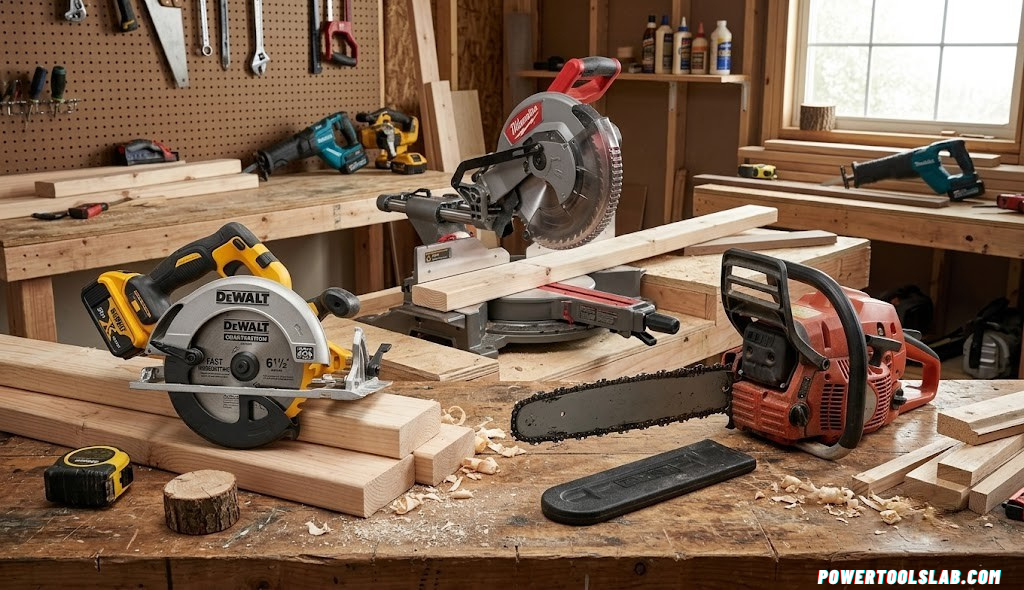
Power Saw vs Chainsaw: Which One Do You Actually Need?
Two categories of cutting tools, two very different jobs. Here’s how to tell them apart and pick the right one for your next project.
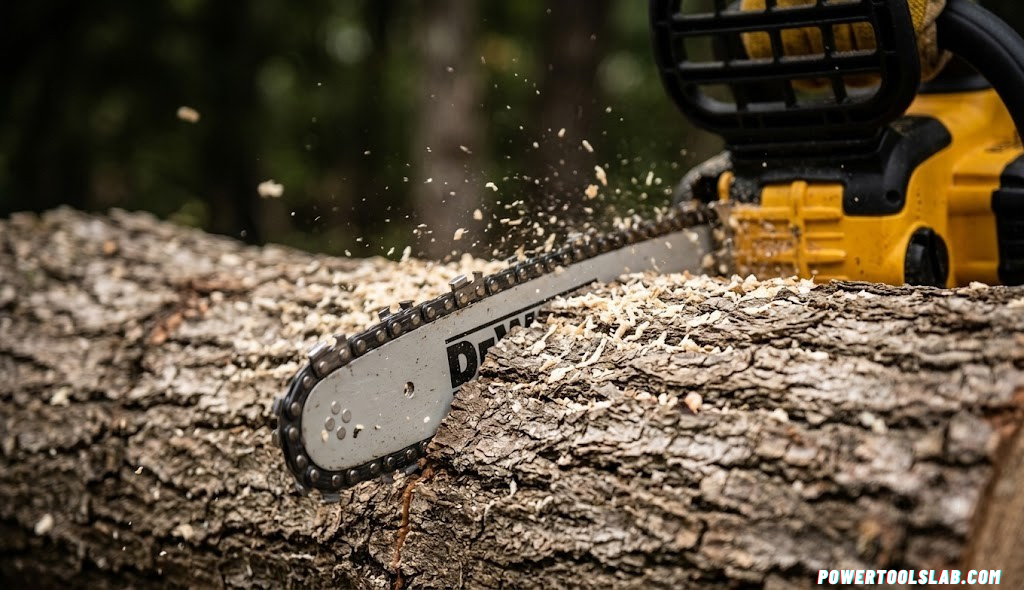
Choosing between a power saw and a chainsaw comes down to the material you’re cutting and the environment you’re working in.
Walk into any hardware store and you’ll find two very different aisles that somehow get lumped into the same conversation: power saws and chainsaws. Someone planning a deck rebuild asks about a power saw. Someone else clearing storm-damaged branches asks about a chainsaw. And yet, on forums and in comment sections, the question keeps popping up — power saw vs chainsaw, which one should I actually buy?
The honest answer is that they’re not really competing for the same job. A power saw is a broad category that includes circular saws, reciprocating saws, tile saws, and jigsaws — tools built for construction, renovation, and precision cutting on flat or manufactured materials. A chainsaw is a single, specialized tool built around a spinning chain and guide bar, engineered almost exclusively for cutting through wood in the round: tree trunks, limbs, firewood rounds, and storm debris.
That distinction matters more than most buying guides let on. If you compare our best power saws roundup against a chainsaw lineup, you’ll notice the use cases barely overlap. This guide breaks down exactly where each tool shines, where it falls short, and how to decide which one deserves a spot in your garage — or whether, like most serious DIYers, you’ll eventually want both.
What Is a Power Saw?
“Power saw” is an umbrella term, not a single product. It refers to any motorized saw designed to cut building materials — wood, metal, tile, drywall, plastic — with speed and precision that a hand saw simply can’t match. Under that umbrella you’ll find several distinct tools, each suited to a different task:
- Circular saws — the workhorse of framing and sheet-good cutting. Fast, portable, and versatile enough to handle plywood, dimensional lumber, and even thin metal with the right blade.
- Reciprocating saws — demolition tools built for rough, aggressive cutting through pipes, nail-embedded wood, drywall, and tight spaces where a circular saw can’t reach.
- Tile saws — precision tools with diamond blades and water cooling systems, designed specifically for cutting ceramic, porcelain, and natural stone tile without chipping or cracking.
- Jigsaws — used for curved and detail cuts in thinner material, common in trim work and craft projects.
Our types of power saws guide breaks each of these down in more detail, but the throughline is consistent: power saws are built for controlled, repeatable cuts on manufactured or flat-profile materials. They’re the tools you reach for when you’re building, renovating, or repairing structures — not when you’re felling a tree or bucking firewood.
Most power saws today run on either corded electric motors or rechargeable battery platforms, and the shift toward cordless has been significant. Brands like DeWalt, Milwaukee, Makita, and Ryobi have all built out extensive battery ecosystems, letting a single battery pack power a circular saw, a reciprocating saw, and half a dozen other tools. That interchangeability is part of why power saws have become the default choice for anyone doing regular home improvement or trade work.

Compare the best circular, reciprocating, and tile saws currently on the market before you buy.
Check Price on AmazonWhat Is a Chainsaw?
A chainsaw is a single-purpose cutting tool built around a loop of chain, studded with cutting teeth, that rotates around a metal guide bar. Unlike a power saw’s straight blade, a chainsaw’s chain moves continuously in one direction, biting into wood fiber by fiber as it travels. That design makes it exceptionally good at one thing: cutting through round, irregular, or thick wood quickly.
Chainsaws come in three main power formats:
- Gas-powered chainsaws — the traditional choice for serious tree work. They offer the most sustained power and the longest runtime without needing to stop for a battery swap or extension cord, but they’re heavier, louder, and require fuel mixing and more involved maintenance.
- Battery-powered chainsaws — increasingly popular for homeowners. They start instantly, run quieter, and skip the fuel and emissions altogether, though runtime and raw cutting power still trail gas models on large-diameter wood.
- Corded electric chainsaws — lightweight and low-maintenance, best suited for light yard work near an outlet, such as trimming small branches or occasional firewood prep.
Bar length is the other major spec that defines a chainsaw’s capability. Shorter bars (12 to 14 inches) are common on homeowner-grade saws for pruning and small branch work. Longer bars (16 to 20 inches or more) are built for felling trees and bucking large logs into firewood rounds. Choosing the right bar length matters just as much as choosing the right power source.
Unlike power saws, chainsaws are almost never used for construction-grade precision work. You won’t see a contractor reaching for a chainsaw to frame a wall or cut plywood to size. Its job is fundamentally different — and that’s the core of the power saw vs chainsaw comparison.
Key Differences at a Glance
Before diving into the deeper comparisons, here’s a side-by-side snapshot of how power saws and chainsaws stack up across the criteria that matter most to buyers.
| Category | Power Saw | Chainsaw |
|---|---|---|
| Primary use | Construction, renovation, precision cuts | Tree felling, limbing, firewood, storm cleanup |
| Cutting mechanism | Rotating or reciprocating blade | Continuous chain loop on a guide bar |
| Best material | Lumber, plywood, drywall, tile, metal | Round or irregular wood, tree limbs, trunks |
| Typical weight | 5–12 lbs | 8–16 lbs |
| Power source | Corded or cordless battery | Gas, corded electric, or battery |
| Maintenance | Blade swaps, occasional brush care | Chain sharpening, bar oil, tensioning |
| Learning curve | Low to moderate | Moderate to high |
| Kickback risk | Low (with guards) | Higher, requires training |
| Typical price range | $60–$250 | $100–$500+ |
Notice how little overlap there is in the “best material” and “primary use” rows. That’s the clearest signal that this isn’t really an either/or decision for most people — it’s a question of matching the tool to the task in front of you.
Cutting Power & Performance
When people ask which tool is “more powerful,” they’re usually asking the wrong question, because power saws and chainsaws are optimized for entirely different cutting geometries.
A circular saw, for example, is optimized for straight-line cuts through flat stock at high RPM, often 5,000 to 6,000 RPM on a cordless model. That speed translates into clean, fast rip cuts and crosscuts on lumber and sheet goods, but the blade’s small diameter — typically 6.5 to 7.25 inches — limits cutting depth to around 2.5 inches. A reciprocating saw trades RPM for stroke length, sacrificing finesse for raw, aggressive cutting through mixed materials, nails and all.
A chainsaw plays an entirely different game. Its chain travels around the bar at high speed, and because the cutting teeth engage continuously rather than in short strokes, it can plow through a 16-inch log in seconds — something no power saw is built to attempt. Bar length effectively sets the maximum cutting diameter, so a chainsaw with a 16-inch bar can fell and buck logs up to roughly that diameter in a single pass.
Where chainsaws lose ground is precision. Even the steadiest hands can’t match the straight-line accuracy of a circular saw riding a guide fence, and that’s exactly why you’ll never see a chainsaw used for framing work or cabinet-grade cuts. Each tool’s cutting power is high in its own lane and largely irrelevant outside it.
Blade & Chain Types Explained
Cutting performance isn’t only about motor speed or bar length — the specific blade or chain riding on that motor plays just as large a role, and it’s an area where buyers often leave real performance on the table simply because they never swap the stock accessory that came in the box.
Power Saw Blades
Circular saw blades are defined largely by tooth count and tooth geometry. A framing blade typically runs 24 teeth, prioritizing speed over finish, and tears through dimensional lumber quickly at the cost of a slightly rougher edge. A finish blade, by contrast, might carry 40 to 60 teeth, producing a much smoother cut suited to trim work, cabinetry, or any surface that will remain visible. Combination blades split the difference and are the default choice for general-purpose work where you don’t want to swap blades constantly between rip cuts and crosscuts.
Material matters too. Carbide-tipped blades hold an edge far longer than plain steel and have become the standard for anything beyond occasional light use. For metal-cutting applications, a dedicated metal-cutting blade with a much higher tooth count and different tooth geometry is required — using a wood blade on metal is both ineffective and dangerous. Reciprocating saw blades follow similar logic: coarse, widely spaced teeth for demolition and rough wood, fine teeth for metal and pipe, and specialized pruning blades with aggressive, widely gullet-spaced teeth for green wood and branches. Tile saw blades are a different category entirely — continuous-rim diamond blades for glazed ceramic and porcelain, and segmented or turbo-rim diamond blades for natural stone, which cuts differently than manufactured tile.
Chainsaw Chains
Chainsaw chains are specified by three core measurements: pitch (the distance between chain links, commonly 3/8 inch or .325 inch on homeowner saws), gauge (the thickness of the drive links, which must match the saw’s bar groove), and drive link count (which determines the chain’s total length for a given bar). Getting any of these three wrong means the chain simply won’t fit or run correctly, which is why replacement chains are always purchased by exact saw and bar specification rather than universally.
Beyond fit, chain type affects cutting behavior and safety. Full-chisel chains use square-cornered cutters that slice aggressively and cut fast, popular with experienced users cutting clean softwood, but they’re more prone to kickback and dull faster when they contact dirt or bark. Semi-chisel chains use rounded-corner cutters that cut slightly slower but hold an edge longer and resist kickback better, making them the more common choice for homeowners and mixed-use cutting. Low-kickback chains add extra safety features, like raised depth gauges that limit how aggressively each cutter can bite, and are increasingly standard equipment on consumer-grade saws sold today.
The takeaway for both categories is the same: the blade or chain you run has as much impact on cutting quality and safety as the tool itself. Matching the right accessory to the material you’re actually cutting is one of the simplest, cheapest upgrades available to either a power saw or chainsaw owner.
Choosing Bar Length and Blade Diameter: A Sizing Guide
Beyond blade and chain type, the physical size of a saw’s cutting edge — bar length on a chainsaw, blade diameter on a power saw — is one of the most consequential purchasing decisions, and it’s frequently oversized “just in case” by first-time buyers who end up with a tool that’s heavier and harder to control than what the job actually required.
Sizing a Chainsaw Bar
The general rule of thumb is to choose a bar that’s roughly two inches longer than the diameter of the largest wood you expect to cut regularly, which gives enough clearance to complete a cut in a single pass without repositioning. For homeowners handling occasional pruning, small branch cleanup, and light yard maintenance, a 12 to 14-inch bar is usually plenty and keeps the saw noticeably lighter and easier to control. For general property upkeep that includes bucking firewood and clearing mid-size storm debris, a 16 to 18-inch bar hits the sweet spot most homeowners settle on. Anything above 20 inches is generally reserved for serious felling work on larger trees, and saws in that range typically pair a longer bar with a more powerful engine or motor to keep the chain moving efficiently through the added length — buying a long bar without the power to match it just slows the saw down and increases strain on the motor.
It’s worth resisting the temptation to buy the longest bar available “for future flexibility.” A longer bar adds weight, reduces maneuverability, and increases the kickback zone at the tip, all without adding any benefit if the wood you’re actually cutting rarely exceeds a modest diameter. Sizing down slightly, rather than up, tends to produce a saw that gets used comfortably rather than one that ends up feeling like overkill for most cuts.
Sizing a Circular Saw Blade
Circular saw blade diameter directly determines maximum cutting depth, and the standard sizes cover most needs without much overlap in practical use. A 6.5-inch blade, common on many cordless models, is lighter and more compact, cutting to a depth of roughly 2 1/8 inches at 90 degrees — enough for most dimensional lumber and sheet goods. A 7.25-inch blade, the traditional standard size, extends that depth to around 2.5 inches, giving a bit more margin for thicker stock or angled cuts where the effective cutting depth is reduced. Larger format saws with 8.25-inch or bigger blades exist for cutting thicker timbers, though they’re less common outside specialized framing work.
For most home and general contractor use, the difference between 6.5-inch and 7.25-inch blades comes down to weight versus capacity — the smaller size trims a noticeable amount of tool weight for all-day comfort, while the larger size adds a bit of cutting margin for thicker material or bevel cuts. Reciprocating saw “size” works differently, since it’s governed by blade length rather than a fixed disc diameter; longer blades reach further into a cut but flex more under lateral pressure, so matching blade length to the actual material thickness produces cleaner, more controlled results than defaulting to the longest blade on the shelf.
| Tool | Common Size | Best For |
|---|---|---|
| Chainsaw bar | 12–14 in | Pruning, light branch work |
| Chainsaw bar | 16–18 in | Firewood, general property upkeep |
| Chainsaw bar | 20 in+ | Felling larger trees |
| Circular saw blade | 6.5 in | Lighter weight, everyday cutting |
| Circular saw blade | 7.25 in | Extra depth, thicker stock and bevels |
Portability & Weight
Portability matters differently depending on the job. For construction work, portability means being able to carry a saw up a ladder, along a roofline, or through a job site all day without fatigue. For tree work, portability means being able to maneuver a running saw safely overhead or at odd angles.
Most cordless circular saws weigh between 6 and 9 pounds, and reciprocating saws often come in even lighter. That relatively low weight, combined with a compact form factor, is why tradespeople can run a power saw one-handed for extended periods without excessive strain. Battery platforms have also made power saws far more portable overall — no cord to manage, no compressor or generator required.
Chainsaws, on the other hand, tend to run heavier, especially gas models, which must carry an engine, fuel tank, and often a larger bar and chain assembly. A 16-inch gas chainsaw can weigh 12 to 16 pounds fully fueled, and that weight is felt acutely when cutting overhead or at extended reach. Battery chainsaws have narrowed the gap somewhat, trimming several pounds off comparable gas models, but they still tend to be bulkier than a typical power saw due to the bar and chain guard.
If your work involves moving a tool around a job site repeatedly throughout the day, a power saw’s lighter profile is a meaningful advantage. If your work is centered on one or two heavier cutting sessions — felling a tree, clearing storm debris — the added weight of a chainsaw is simply the cost of the cutting capability it delivers.
Power Source Deep Dive: Battery vs Gas vs Corded
Power source is arguably the single biggest factor shaping how a tool feels to actually use day to day, and it deserves a closer look than a quick spec-sheet comparison usually gives it.
Battery Power
Battery technology has transformed both categories over the past several years. Modern lithium-ion platforms deliver enough torque and runtime to handle the vast majority of homeowner tasks, and the convenience factor is hard to overstate — no cord to trip over, no fuel to mix, instant startup, and quiet operation that won’t draw neighborhood complaints at odd hours. The tradeoff is runtime under heavy load: a battery circular saw ripping through thick engineered lumber or a battery chainsaw bucking a large-diameter log will drain a pack faster than lighter-duty cutting, which means serious users often keep two or three batteries in rotation to avoid downtime waiting for a charge.
Battery platform compatibility is worth planning around from the start. Buying into a single brand’s ecosystem — where one battery powers a circular saw, reciprocating saw, drill, and increasingly a chainsaw or blower too — pays off quickly in reduced clutter and cost, since additional bare tools are typically cheaper than a full kit with a new battery and charger included.
Gas Power
Gas remains the standard for anyone doing sustained, heavy-duty chainsaw work — commercial tree service, large property clearing, or full days of firewood processing. A gas engine doesn’t care how many logs you’ve already cut; it delivers consistent power until the tank runs dry, and refueling takes seconds compared to waiting on a battery charge cycle. Gas power saws are far less common today, largely because corded and battery electric motors have caught up in capability for construction-grade cutting, but gas chainsaws haven’t been fully displaced for a reason: raw, sustained cutting power at a lower price point than comparable battery models with similar bar length.
The tradeoffs are real, though. Gas engines require fuel mixing (for two-stroke models), periodic carburetor and air filter maintenance, pull-cord starting that can be finicky in cold weather, and meaningfully more noise and vibration during operation.
Corded Electric
Corded tools are the quiet middle child of this comparison — less common than they once were, but still relevant for specific scenarios. A corded electric chainsaw, for instance, is a smart choice for homeowners who only need to trim small branches or do light pruning near the house, where an outlet is always within reach. Corded circular saws remain popular in workshops and on job sites with reliable power access, since they never need charging and typically deliver consistent power regardless of how long they’ve been running. The obvious limitation is the cord itself — working radius is capped by extension cord length, and dragging a cord through a job site or yard adds its own hassle and trip hazard.
| Power Source | Best For | Main Tradeoff |
|---|---|---|
| Battery | General homeowner use, quiet operation, convenience | Runtime limited under heavy sustained load |
| Gas | Heavy-duty, sustained chainsaw work | Noise, emissions, fuel and engine maintenance |
| Corded electric | Light work near a power source | Limited by cord length and outlet access |
There’s no universally “best” power source — only the best match for how often you’ll use the tool, how far you’ll be from an outlet, and how much sustained cutting power a given job actually demands.
Safety Considerations
Safety is where the power saw vs chainsaw comparison gets genuinely serious, because the injury profiles of these tools are quite different.
Power saws, particularly circular saws, come equipped with spring-loaded blade guards, and many modern models include electric brakes that stop the blade within a fraction of a second after the trigger is released. Reciprocating saws carry lower kickback risk since the blade moves in a straight line rather than spinning. Tile saws add a layer of safety through water cooling, which reduces dust and blade heat. That said, power saws still cause a significant number of home workshop injuries, almost always tied to improper blade guard use or cutting freehand without a guide.
Chainsaws carry a different and generally higher risk profile, largely due to kickback — a sudden, violent upward and backward motion that occurs when the tip of the guide bar contacts an object unexpectedly. Modern chainsaws include chain brakes and low-kickback chain designs to mitigate this, but proper training and protective gear remain essential. Standard recommended gear for chainsaw operation includes cut-resistant chaps, a helmet with a face screen, hearing protection, and sturdy boots — a more extensive kit than most power saw tasks require.
Power Saw Safety Advantages
- Blade guards and electric brakes on most modern models
- Lower kickback risk overall
- Easier to control with guide fences and stable bases
Chainsaw Safety Considerations
- Kickback risk requires dedicated technique and training
- Exposed chain demands protective chaps and helmet
- Heavier tool increases fatigue-related risk on long jobs
Neither tool is inherently “unsafe” when used correctly, but chainsaws demand a steeper learning curve and more dedicated protective equipment before a first-time user should operate one unsupervised.
Understanding Kickback and Bind-Up: Prevention Techniques
Kickback gets mentioned constantly in chainsaw safety discussions, but it’s worth actually explaining the mechanics, because understanding why it happens is what makes prevention techniques make sense rather than feeling like arbitrary rules.
Rotational kickback occurs when the upper portion of the chainsaw’s bar tip — the “kickback zone” — contacts an object, whether that’s a branch, a log, or even the ground during an awkward cut. The chain’s cutting teeth grab at that contact point, and because the chain is moving so fast, the reactive force snaps the bar upward and back toward the operator with startling speed, often before there’s any time to react. This is precisely why proper technique emphasizes cutting with the lower portion of the bar, keeping the tip clear of material whenever possible, and maintaining a firm two-handed grip with the thumb wrapped underneath the front handle rather than resting on top of it.
Pinch kickback and pull-in are related but distinct risks. Pinch occurs when the wood closes around the bar mid-cut, gripping the chain and stalling it suddenly — common when cutting a log that’s under tension, such as one bent or supported at both ends. Pull-in happens on the underside of the bar, when the bottom of the chain grabs and pulls the saw forward unexpectedly. Both are manageable with proper cutting technique: reading the wood’s tension before cutting, using wedges to keep a cut open on longer logs, and maintaining solid footing so a sudden pull or push doesn’t throw off balance.
Power saws have their own version of this risk, generally called blade bind or kickback, though the mechanics differ. A circular saw kicks back when the blade binds in the kerf — often because the material pinches shut behind the blade as internal stresses in the wood release, or because the saw wanders off a straight line and gets pinched at an angle. This is why supporting the workpiece properly (so the cut-off section doesn’t sag and pinch the blade) and using a riving knife or splitter, standard on most modern circular saws, matters as much as the blade guard itself. Reciprocating saw kickback tends to be milder given the tool’s straight-line blade motion, but an aggressive push into bound material can still cause the saw to jump unexpectedly.
Across both tool categories, the underlying prevention principles overlap more than people expect: maintain a firm, balanced stance; never overreach; keep the cutting edge sharp, since dull blades and chains require more force and are more prone to binding; and stay alert to how the material is behaving as the cut progresses, rather than assuming a straight, predictable path from start to finish.
Maintenance Requirements
Ongoing maintenance is one of the most overlooked factors in the power saw vs chainsaw decision, and it has a real impact on long-term ownership cost and convenience.
Power saws are relatively low-maintenance. A circular saw mostly needs periodic blade replacement, occasional cleaning of sawdust from the base and guard, and — on corded or brushed models — brush inspection over time. Reciprocating saw blades are inexpensive and simple to swap. Tile saws need their water reservoir cleaned and diamond blades replaced when cutting quality drops. None of this requires specialized tools or deep mechanical knowledge.
Chainsaws demand considerably more hands-on care. The chain needs regular sharpening to maintain cutting efficiency — a dull chain not only cuts poorly but increases kickback risk. Bar oil needs to be topped off regularly to keep the chain lubricated and prevent premature bar wear. Chain tension needs periodic adjustment as the chain stretches with use. Gas models add another layer: fuel mixing, air filter cleaning, spark plug checks, and carburetor care to keep the engine running reliably, especially after seasonal storage.
| Maintenance Task | Power Saw | Chainsaw |
|---|---|---|
| Blade/chain replacement | Occasional, simple swap | Requires sharpening between replacements |
| Lubrication | Rarely needed | Bar oil required every use |
| Fuel/engine care | N/A (electric) | Required for gas models |
| Tensioning adjustments | N/A | Regular chain tensioning needed |
| Storage prep | Minimal | Fuel drain or stabilizer for gas models |
If low-maintenance ownership is a priority, power saws have a clear edge. Chainsaw ownership is manageable, but it does come with a recurring maintenance rhythm that new owners should budget time for.

From compact battery models to full-size gas saws for felling, compare current bestsellers.
Check Price on AmazonTroubleshooting Common Problems
Even well-maintained tools run into trouble occasionally, and knowing what’s likely behind a common symptom saves a trip to the repair shop for issues that are often a five-minute fix.
Circular Saw Issues
A circular saw that wanders off a straight line during a cut is usually pointing to a dull or warped blade rather than an operator error — inspect the blade for missing or damaged carbide tips before assuming a technique problem. A saw that bogs down or stalls mid-cut on material it previously handled fine often means the blade has dulled enough that it’s generating excess friction and heat rather than cutting cleanly; a fresh blade typically resolves this immediately. Burn marks along a cut edge point to the same root cause — a dull blade rubbing rather than slicing through the wood fibers. If a cordless model won’t reach full power, check that the battery is fully seated and charged, since a partially connected battery can deliver reduced power without triggering an obvious error.
Reciprocating Saw Issues
Excessive vibration or blade wobble during a cut is often a sign the blade clamp isn’t fully tightened, or that a bent blade needs replacing. If the saw struggles to complete cuts it previously handled with ease, check blade sharpness first — reciprocating blades dull faster than circular saw blades given their more aggressive, repetitive cutting action, especially when used on nail-embedded material.
Tile Saw Issues
Chipped or cracked tile edges usually trace back to one of two causes: a dull diamond blade that needs replacing, or insufficient water flow to the cutting area, which causes heat buildup that stresses the tile. Checking the water reservoir level and pump function before a cutting session prevents most chipping issues before they start.
Chainsaw Won’t Start
For gas chainsaws, a no-start condition after storage is most often old or stale fuel — draining the tank and refilling with fresh fuel resolves the majority of seasonal starting problems. If fresh fuel doesn’t solve it, a fouled spark plug or clogged air filter are the next most likely culprits, both of which are inexpensive, simple checks before assuming a more serious engine issue. Battery chainsaws that won’t start typically point to either a depleted or improperly seated battery, or a triggered safety interlock — most models require the chain brake to be disengaged and the trigger lockout properly released before the motor will engage.
Chainsaw Cutting Crooked or Slow
A chainsaw that pulls to one side while cutting almost always indicates uneven chain sharpening — if one side’s cutters are sharper than the other, the chain naturally steers toward the duller side. This is a strong argument for either learning to hand-file a chain evenly or using a sharpening jig that maintains consistent angles across every cutter. A chain that cuts slowly despite looking sharp may have improperly set depth gauges, which control how deeply each cutter bites into the wood; depth gauges that are too high prevent the cutters from engaging properly regardless of how sharp the cutting edge itself is.
Excess Smoke or Burning Smell
On a chainsaw, smoke or a burning smell during cutting almost always signals insufficient bar oil reaching the chain — stop immediately and check the oil reservoir and oil delivery hole before continuing, since running a dry chain damages the bar groove and drive sprocket quickly. On a power saw, a burning smell more often points to a dull blade generating excess friction, though on corded models it’s also worth checking that the motor isn’t being pushed beyond its duty cycle during extended, continuous use.
Most of these issues share a common thread: they’re prevention problems as much as repair problems. A blade or chain replaced on schedule, fuel handled properly, and batteries kept charged and clean sidestep the majority of the troubleshooting scenarios above before they ever become a mid-project interruption.
Cost Comparison
Upfront price is only part of the cost equation. To get a full picture, it helps to separate purchase price from ongoing running costs.
Entry-level circular saws start around $60 to $90, with mid-range cordless models from major brands landing between $120 and $200 when purchased as a bare tool on an existing battery platform. Reciprocating saws follow a similar range, often slightly less. Tile saws vary more widely depending on cutting capacity, from around $150 for compact benchtop models up to $500+ for larger, more capable units.
Chainsaws span a wider range. Compact battery chainsaws for light pruning start around $100 to $150. Mid-range gas saws suitable for occasional felling and firewood work run $200 to $350. Professional-grade gas chainsaws with larger displacement engines and longer bars can exceed $500.
Running costs tell the rest of the story. Power saw blades are relatively cheap and infrequent purchases — a quality circular saw blade might last through dozens of projects before needing replacement. Chainsaws carry ongoing costs for bar and chain oil, fuel (for gas models), and periodic chain sharpening or replacement, which adds up over a season of regular use. None of these costs are prohibitive, but they do tilt the long-term cost of ownership slightly in favor of power saws for buyers who use their tools only occasionally.
Seasonal Use Cases and Planning Your Purchase
Timing your purchase around when you’ll actually need a tool can save both money and frustration, since demand for power saws and chainsaws follows fairly predictable seasonal patterns.
Chainsaw demand spikes hard heading into and immediately after storm season and again in early fall as homeowners prep firewood for winter. That means retailers often run their best chainsaw promotions in late winter and early spring, before the seasonal rush drives prices up and popular models out of stock. Buying a chainsaw in January or February, well ahead of storm season, is a smart way to get a better deal and avoid the scramble that happens when everyone needs a saw at the same time after a major weather event.
Power saw demand follows a different rhythm, tracking more closely with construction and renovation seasons. Spring and early summer tend to be the busiest stretch for deck building, fence projects, and exterior renovation work, which means circular saws and reciprocating saws see the heaviest use during these months. Interior renovation projects, including tile work, run more evenly throughout the year, though winter months often see a bump as homeowners tackle indoor projects while outdoor work is less practical.
Beyond simply timing a purchase, thinking seasonally can help you decide whether ownership even makes sense. If your chainsaw need is genuinely limited to one autumn firewood session and the occasional storm cleanup, a mid-range battery or corded electric model likely covers it without needing to invest in a heavier-duty gas saw that will spend most of the year sitting idle. If you’re tackling a spring-to-fall run of renovation projects, on the other hand, investing in a higher-capacity power saw platform with a shared battery ecosystem pays off across multiple projects rather than being a single-use purchase.
It’s also worth factoring in storage climate. Homeowners in regions with genuine winter freezes need to think about where a gas chainsaw’s fuel system will sit for months at a time, since ethanol-blended fuel left in a tank over winter is one of the most common causes of small-engine starting problems come spring. Battery tools sidestep this specific issue entirely, though batteries themselves have their own temperature-sensitive storage recommendations worth following.
Best Use Cases for Power Saws
Power saws earn their keep on almost any project that involves building, renovating, or repairing a structure. Some of the most common scenarios include:
- Framing and deck building — circular saws handle repeated straight cuts through dimensional lumber quickly and accurately. Our best power circular saws guide covers top options for this exact use case.
- Demolition and remodeling — reciprocating saws cut through nail-embedded wood, PVC pipe, and drywall in tight spaces where other tools can’t reach. See our best reciprocating saws picks for renovation-ready models.
- Bathroom and kitchen tile work — a dedicated tile saw delivers the clean, chip-free cuts needed for ceramic, porcelain, and stone. Check our best tile saws comparison for water-cooled options.
- Trim and detail work — jigsaws handle curved cuts and detail work that straight-blade saws can’t manage.
- Sheet good breakdown — cutting plywood, MDF, and OSB down to size for cabinetry, subflooring, or shelving projects.
If your to-do list involves anything with “build,” “remodel,” “install,” or “repair” in it, a power saw is almost certainly the tool you need — not a chainsaw.
Best Use Cases for Chainsaws
Chainsaws exist for one core mission: cutting through wood in the round, at scale, faster than any hand tool or power saw could manage. Typical scenarios include:
- Tree felling — taking down trees safely requires the bar length and cutting speed only a chainsaw provides.
- Limbing and pruning — removing branches from a downed tree or trimming overgrown limbs from a standing one.
- Bucking firewood — cutting felled trunks into stove-length rounds for seasoning and burning.
- Storm cleanup — clearing fallen limbs and trees blocking driveways, fences, or roofs after severe weather.
- Land clearing — cutting through brush, saplings, and small trees when preparing land for construction or landscaping.
None of these tasks translate well to a power saw. Attempting to fell a tree with a circular saw, for instance, isn’t just inefficient — it’s genuinely unsafe given the blade depth and lack of chain-driven cutting speed. If your project involves standing timber, downed limbs, or firewood, a chainsaw is the only sensible choice.
Circular Saws vs Chainsaws
Since circular saws are the most commonly owned power saw, it’s worth a direct comparison. A circular saw’s 6.5 to 7.25-inch blade is designed for depth-limited, straight-line cuts on flat stock — think plywood sheets, deck boards, and framing lumber. Its guide fence and flat base make it ideal for repeatable, accurate cuts, but its cutting depth tops out around 2.5 inches, which rules out anything resembling a tree limb or log.
A chainsaw has no such depth limitation within its bar length — a 16-inch bar can cut through a 16-inch-diameter log in one pass, something no circular saw blade could approach. But that same design makes a chainsaw far less precise for straight, flat cuts; there’s no fence, no flat base to ride against a guide, and the chain’s cutting action is inherently rougher.
In short: reach for a circular saw when cutting flat, manufactured material with precision, and reach for a chainsaw when cutting round or irregular wood where raw cutting depth matters more than finish quality. For a deeper look at circular saw options, our best power circular saws guide and individual reviews of the DeWalt circular saw, Milwaukee circular saw, Makita circular saw, and Ryobi circular saw are worth a look.
Reciprocating Saws vs Chainsaws
Reciprocating saws and chainsaws both get used for cutting branches, which makes this comparison come up more often than you’d expect. A reciprocating saw fitted with a pruning blade can handle small to medium branches — typically up to around 4 to 6 inches in diameter — and its compact, one-handed design makes it easier to maneuver in tight spots, like cutting close to a fence line or trimming near a structure.
For anything larger, a chainsaw pulls ahead decisively. Its continuous chain cutting action moves through thick branches and trunks far faster than a reciprocating saw’s back-and-forth stroke, and it simply has the bar length to handle diameters a reciprocating saw blade can’t reach. Reciprocating saws also generate more vibration and fatigue when pushed into thicker material, since they’re working against the wood rather than through it in one smooth motion.
The practical takeaway: keep a reciprocating saw on hand for quick, precise branch trimming and demolition work — our best reciprocating saws guide and the DeWalt reciprocating saw review are good starting points — but budget for a chainsaw if you’re regularly dealing with anything larger than a forearm-thick limb.
A Note on Tile Saws
It’s worth addressing directly: a tile saw and a chainsaw have zero functional overlap. Tile saws use a diamond-coated blade and a water cooling system specifically engineered to make clean, chip-free cuts through ceramic, porcelain, and natural stone. A chainsaw’s chain would shred, not cut, tile material, and using one for masonry work would damage both the tool and the material.
If your project involves flooring, backsplash, or shower tile installation, a dedicated tile saw is non-negotiable — no amount of chainsaw power translates to precision tile cutting. For anyone tackling a tile project, our best tile saws roundup and reviews of the Ryobi tile saw and Porter-Cable tile saw are the better starting point than any chainsaw comparison.
Ergonomics, Vibration & Fatigue Over Long Sessions
Specs on a product page rarely capture what a tool actually feels like after two or three hours of continuous use, and ergonomics turns out to be one of the more decisive factors in how much someone enjoys — or dreads — using a given saw.
Vibration is the biggest hidden cost of extended cutting sessions. Gas chainsaw engines transmit noticeable vibration through the handles, and while modern anti-vibration mounting systems have improved this significantly compared to older designs, a full day of felling or bucking can still leave hands and forearms fatigued, occasionally contributing to the numbness some users describe as a mild case of hand-arm vibration exposure. Battery chainsaws generally transmit less vibration simply because there’s no combustion engine involved, which is one of the quieter advantages battery users often cite once they’ve made the switch.
Power saws carry their own ergonomic considerations. A circular saw held at an awkward angle for an extended cut, or a reciprocating saw pushed horizontally overhead during demolition work, both put strain on the wrist and shoulder in ways that add up over a workday. Tool weight distribution matters here — a saw that’s front-heavy or poorly balanced forces the user to compensate with grip strength rather than letting the tool’s own balance do some of the work. This is part of why handling a saw in person, or at minimum reading hands-on reviews that specifically address balance and grip comfort, is worth the extra step before buying rather than choosing on spec sheet numbers alone.
Grip design has also evolved meaningfully across both categories. Rubberized overmold grips, positioned auxiliary handles, and — on chainsaws — properly positioned front and rear handles that keep the operator’s body out of the direct kickback path all contribute to a tool that’s genuinely more comfortable and safer to run for extended periods. When comparing two similarly specced saws, ergonomics is often the deciding factor that separates a tool people reach for happily from one that ends up gathering dust after the first tiring project.
Practical fatigue management applies regardless of which tool you’re running: taking short breaks every 20 to 30 minutes during sustained cutting, switching cutting hands or stance periodically where safe to do so, and not pushing through noticeable hand numbness or grip fatigue are all simple habits that reduce both short-term discomfort and longer-term strain injuries.
Working Conditions: Dust, Moisture & Uneven Terrain
The environment a tool operates in shapes performance and safety just as much as the tool’s own specs, and power saws and chainsaws each face a distinct set of conditions worth planning around.
Dust and Debris Management
Power saws, especially tile saws and circular saws cutting engineered lumber or masonry-backed materials, generate significant fine dust that poses both a respiratory hazard and a workspace cleanliness issue. Tile saws address this directly through water cooling, which suppresses dust at the source while also extending blade life and improving cut quality — running a tile saw dry, even briefly, is hard on both the blade and the operator’s lungs. Circular saws cutting treated lumber, MDF, or masonry board benefit from a dust collection attachment where the tool supports one, and a properly rated dust mask is worth wearing regardless, particularly indoors or in enclosed spaces with limited airflow.
Chainsaws produce less airborne fine dust but generate substantial wood chips and debris that can strike the operator, especially when cutting overhead or working close to the saw. Eye protection isn’t optional for chainsaw work, and a full face screen paired with safety glasses underneath offers the most complete protection against flying debris and branch snap-back.
Wet and Green Wood
Cutting wet or green wood behaves differently than dry, seasoned material for both tool categories. A chainsaw chain moves through green wood relatively easily since the wood fibers haven’t hardened, but the sap and moisture can gum up the chain faster, requiring more frequent cleaning and oiling to maintain smooth operation. Power saws cutting wet or pressure-treated lumber face a different issue: moisture can cause the blade to bind more readily in the cut, and pressure-treated chemicals can accelerate blade wear, making carbide-tipped blades a better long-term choice than standard steel for this kind of material.
Uneven and Sloped Terrain
Chainsaw work frequently happens outdoors on uneven ground, which adds a stability challenge that power saw users rarely face. Maintaining solid footing before starting a cut, avoiding overreaching on a slope, and never cutting above shoulder height without proper support are all critical habits, since a loss of footing mid-cut with a running chainsaw is a serious hazard. Power saws are more commonly used on stable, flat surfaces — a workbench, sawhorses, or a framed structure — which is part of why their overall injury profile skews lower, though cutting on a ladder or roofline introduces its own stability concerns that deserve the same careful footing and balance considerations.
Weather conditions matter too. Rain and high humidity increase slip risk for both tool categories and can affect grip on handles, while cold temperatures can make gas engines harder to start and slightly reduce battery performance and runtime across both power saws and chainsaws. None of these conditions rule out using either tool, but planning around them — choosing dry footing, appropriate footwear, and realistic expectations for cold-weather battery runtime — makes for a safer, more efficient work session.
Real-World Project Scenarios
Abstract comparisons only go so far. Walking through a handful of realistic project scenarios makes the power saw vs chainsaw decision much more concrete.
Scenario: Building a Backyard Deck
A weekend deck-building project involves ripping and crosscutting dozens of pressure-treated boards, notching joists around posts, and trimming decking to length as you go. This is squarely circular saw territory — a reciprocating saw might make an appearance for trimming joist hangers or cutting through an old post embedded in concrete, but a chainsaw has no role here at all. Our best power circular saws guide is the right starting point for a project like this.
Scenario: Clearing Storm Damage
A fallen tree across a driveway after a storm is the textbook chainsaw scenario. Depending on the tree’s diameter, a mid-range chainsaw with a 16 to 18-inch bar handles both bucking the trunk into movable sections and limbing the smaller branches. A reciprocating saw might help with cleanup of smaller debris afterward, but it’s not equipped to handle the trunk itself safely or efficiently.
Scenario: Remodeling a Bathroom
Tearing out an old vanity and tub surround calls for a reciprocating saw to cut through nail-embedded framing and old plumbing. Installing new porcelain floor tile calls for a dedicated tile saw to get clean, chip-free edge cuts around the room’s perimeter and fixtures. Again, no chainsaw involvement whatsoever — this entire project lives in power saw territory, and our best reciprocating saws and best tile saws guides cover the right tools for each stage.
Scenario: Prepping Firewood for Winter
Turning a truckload of tree-length logs into stacked, seasoned firewood is entirely a chainsaw job — bucking each log into stove-length rounds as efficiently as possible. A gas chainsaw with a mid-length bar is the traditional choice here given the sustained cutting volume involved, though a battery model with a couple of spare packs can keep pace for smaller quantities.
Scenario: Building a Garden Shed
Framing walls, cutting rafters, and installing siding on a small outbuilding is another circular-saw-dominated project, with a reciprocating saw useful for trimming and rough openings. If the shed sits at the edge of a wooded lot and a few overhanging branches need clearing first to make room, that’s the one moment a chainsaw might briefly join the job site — a good reminder that these two tool categories aren’t mutually exclusive, just rarely needed for the same task at the same time.
Which One Should You Buy?
The clearest way to decide is to look honestly at the projects on your near-term list. If you’re building, renovating, or repairing anything involving lumber, sheet goods, or tile, a power saw — specifically a circular saw for general use, a reciprocating saw for demolition, or a tile saw for flooring and backsplash work — is the right investment. Our best power saws guide is the best starting point for comparing across all these categories in one place.
If your priorities lean toward yard maintenance, tree work, or firewood preparation, a chainsaw is the tool that actually solves your problem. No power saw, regardless of blade quality or motor power, is designed to fell a tree or buck firewood safely and efficiently.
Choose a Power Saw If You…
- Are framing, building, or renovating
- Need precise, straight cuts on lumber or sheet goods
- Are installing tile or flooring
- Want lower ongoing maintenance
Choose a Chainsaw If You…
- Need to fell or trim trees
- Are prepping or bucking firewood
- Deal with regular storm or yard debris
- Are clearing land or brush
Most homeowners with any amount of property eventually end up owning both, simply because the two tools solve completely different problems. If budget forces a choice, prioritize whichever tool matches the project actually in front of you right now.
A Quick Self-Assessment
If you’re still on the fence, running through a short set of honest questions tends to clarify the decision faster than reading another spec comparison. Ask yourself what’s actually sitting on your project list for the next six to twelve months, since that near-term window is a far better predictor of which tool you’ll use than a vague sense of “I might need it someday.” Consider how much of your property is wooded or landscaped versus how much of your time goes toward building or renovating — a heavily wooded lot with mature trees points toward chainsaw ownership being worthwhile even if tree work only happens once or twice a year, while a property with minimal landscaping but an active renovation project points firmly toward a power saw.
Think honestly about your comfort level with each tool’s risk profile as well. Some buyers are perfectly comfortable learning proper chainsaw technique and investing in the protective gear it requires; others would rather hire out tree work entirely and stick to power saws for anything they handle themselves. Neither approach is wrong, and being honest about which category you fall into prevents buying a tool that ends up sitting unused out of hesitation to actually run it.
Finally, weigh how the tool fits into your existing setup. If you already own a cordless battery platform from building out a power saw collection, checking whether that same brand offers a compatible chainsaw can make the decision easier and cheaper, since you’re adding capability rather than starting an entirely separate tool ecosystem from scratch.
Top Recommended Brands
Brand reliability matters for both tool categories, since cutting tools see repeated stress and need to perform consistently over years of use. In the power saw space, DeWalt, Milwaukee, Makita, and Ryobi consistently rank among the most trusted names, each with slightly different strengths.
- DeWalt — known for durable build quality and a massive battery ecosystem; see our full DeWalt circular saw review and DeWalt reciprocating saw review.
- Milwaukee — favored by tradespeople for high torque and premium build; check out our Milwaukee circular saw review.
- Makita — praised for smooth, efficient motors and lighter overall weight; read our Makita circular saw review.
- Ryobi — a strong budget-friendly option for homeowners and occasional users; see the Ryobi circular saw review and Ryobi tile saw review.
- Porter-Cable — solid mid-range value, especially for tile work; our Porter-Cable tile saw review covers its strengths in detail.
For chainsaws, look for brands with a strong parts and service network, since chains, bars, and replacement parts need to be readily available. Established outdoor power equipment brands typically offer better long-term support than off-brand alternatives, particularly for gas models that require occasional professional servicing.
Comparing Warranty Coverage & Manufacturer Support
Warranty terms rarely make it into the excitement of a new tool purchase, but they matter considerably once something eventually needs repair or replacement, and coverage varies more between power saws and chainsaws than buyers often expect.
Most major power saw brands offer somewhere in the range of a three-year limited warranty on tools purchased as part of a registered kit, with some brands extending coverage further for registered users or professional-grade lines. Battery packs typically carry their own separate, often shorter warranty period, since batteries degrade with use in a way that’s treated differently from a mechanical tool defect. Because power saws have relatively few moving parts prone to failure — a motor, a blade guard mechanism, and on cordless models a battery interface — warranty claims tend to be less frequent than with more mechanically complex tools.
Chainsaws, particularly gas models, often carry shorter standard warranty periods, commonly around one to two years for homeowner-grade saws, reflecting the added mechanical complexity of an internal combustion engine and the harder-use conditions chainsaws typically face. Professional-grade gas chainsaws sometimes offer extended coverage specifically because they’re built to a higher durability standard from the outset. Battery chainsaws generally fall in line with other cordless tools on the same platform, often matching the multi-year coverage of a brand’s power saw lineup since the underlying motor technology is similar.
Beyond the stated warranty period, parts and service availability deserves real consideration, especially for chainsaws. A saw from a brand with a strong dealer network means replacement chains, bars, and air filters are easy to find locally, and a saw needing engine work has somewhere nearby to go for service. Off-brand or lesser-known chainsaw manufacturers can undercut price significantly, but if a replacement part or repair becomes necessary, the savings can evaporate quickly if parts are hard to source or require shipping and long wait times. This is less of a concern with power saws, where blades are largely standardized across brands and easy to find at any hardware store regardless of which manufacturer made the tool.
Registering a new tool promptly after purchase, keeping the original receipt, and reading the specific warranty terms for battery coverage versus tool coverage are simple steps that pay off if a problem does surface down the line — and they’re steps worth taking for either a power saw or a chainsaw purchase.
Noise, Emissions & Environmental Impact
Noise level is one of those details that rarely makes it into a spec sheet comparison, but it shapes the real-world experience of using either tool far more than most buyers expect. Gas chainsaws are, without question, the loudest tools in this entire comparison, frequently producing well over 100 decibels at the operator’s ear — loud enough that hearing protection isn’t optional, it’s mandatory. That noise level also means neighborhood-friendly timing matters if you’re clearing storm debris or bucking firewood in a residential area; running a gas chainsaw at sunrise is a fast way to upset the people next door.
Battery-powered chainsaws cut that noise dramatically, often running 15 to 20 decibels quieter than a comparable gas model, which in practical terms feels like roughly half the perceived loudness. Corded electric chainsaws are quieter still, though their tethered design limits where they can be used. Power saws sit on the quieter end of the spectrum overall. A cordless circular saw or reciprocating saw typically produces noise in a range closer to household power tools — noticeable, but nowhere near the sustained roar of a gas engine under load.
Emissions are the other side of this equation. Gas chainsaws burn a two-stroke fuel mixture, which means they produce exhaust emissions and require fuel storage and mixing, both of which carry a small but real environmental footprint compared to electric alternatives. This is part of why battery chainsaw adoption has grown so quickly among homeowners — no exhaust, no fuel smell, no idling emissions while you reposition between cuts. Power saws, being almost universally electric (corded or cordless) at this point, don’t carry this consideration at all; their environmental footprint is tied entirely to electricity source and battery manufacturing rather than direct emissions.
If you’re working in a neighborhood with tight property lines, doing early-morning or evening yard work, or simply prefer a quieter tool overall, factor noise into the power saw vs chainsaw decision alongside cutting capability. A battery chainsaw or corded electric model can be a smart middle ground for homeowners who want tree-cutting capability without the noise and emissions of a gas engine.
Common Mistakes to Avoid
A surprising number of tool-related injuries and frustrations trace back to a handful of avoidable mistakes, and they tend to differ between power saw users and chainsaw users.
Power Saw Mistakes
- Removing or wedging back the blade guard — a common shortcut that dramatically increases injury risk and is never worth the minor convenience.
- Cutting freehand without a guide fence or clamped straightedge — leads to wandering cuts, bound blades, and potential kickback even on a circular saw.
- Using a dull or wrong-tooth-count blade — forces the motor to work harder, produces rough cuts, and increases the chance of the material binding on the blade.
- Ignoring cord or battery placement — tripping hazards and accidental cord cuts are more common than most DIYers expect on job sites with multiple corded tools running.
Chainsaw Mistakes
- Cutting with the tip of the bar — the single most common cause of kickback; the lower portion of the bar near the base should do the cutting whenever possible.
- Skipping protective chaps and a face screen — even experienced users get complacent, and this remains one of the most preventable causes of serious chainsaw injuries.
- Running a dull or improperly tensioned chain — a dull chain requires more force to cut, which increases the chance of the saw jumping or binding unexpectedly.
- Felling trees without assessing lean and escape routes — tree felling has its own set of planning steps that go well beyond simply starting a cut, and skipping them is a leading cause of serious accidents.
- Fueling a hot saw — refueling a gas chainsaw immediately after use, while the engine is still hot, creates a fire risk that’s easy to avoid by simply letting the saw cool first.
Most of these mistakes come down to skipping a safety step in the name of saving a few minutes. Whether you’re running a power saw on a framing job or a chainsaw on a felling job, the fastest way to lose far more time than you saved is an avoidable injury.
DIY vs Professional: When to Call an Arborist or Contractor
Owning the right tool doesn’t automatically mean every job is a DIY job, and knowing where that line sits matters for both safety and, frankly, the quality of the finished result.
When to Call a Professional for Tree Work
Certain chainsaw scenarios genuinely call for a certified arborist or professional tree service rather than a homeowner with a new saw. Any tree that’s leaning toward a structure, power line, or fence should be handled by a professional — the risk of an unpredictable fall is simply too high to justify a DIY attempt. Large-diameter trees beyond what your saw’s bar length can comfortably handle, trees with visible rot or structural damage, and any felling work near power lines all fall into professional territory. Storm-damaged trees are particularly deceptive, since a tree that looks stable can be under significant internal tension from a partial break, and cutting into that tension without proper training can cause the trunk or branch to snap violently and unpredictably. If there’s any doubt about a tree’s stability or your ability to control its fall direction, the cost of a professional tree service is far cheaper than the alternative.
On the other hand, routine pruning of low branches, bucking an already-felled tree into firewood rounds, and clearing small storm debris that’s already on the ground are all well within reach of a homeowner with a properly sized chainsaw and basic safety training.
When to Call a Contractor for Power Saw Work
Power saw projects have their own line between DIY-appropriate and professional-only work, though it tends to be less about physical danger and more about structural or code implications. Cutting into load-bearing walls, framing structural modifications, or any work that affects a home’s structural integrity should involve at minimum a consultation with a contractor or structural engineer, since a miscalculated cut can compromise more than just the immediate project. Electrical and plumbing work that intersects with cutting — such as cutting into a wall that might contain wiring or pipes — carries its own risk that goes beyond simple saw operation.
Standard deck building, fence installation, shed framing, and interior trim or tile work are generally well-suited to an experienced DIYer with the right power saw and a bit of research into local building codes, particularly for anything requiring a permit. When in doubt about whether a project crosses into professional territory, a quick call to a local building department or a contractor for a project assessment is a low-cost way to avoid a costly mistake.
The overarching principle for both tool categories is the same: owning the tool is only part of the equation. Matching your skill level, the project’s actual risk profile, and the tool’s capability is what determines whether a job should be DIY or handed off to a professional.
Regulations, Permits & Local Considerations
Beyond skill level and safety, a handful of local rules and regulations can affect how and when you’re able to use either tool, and it’s worth a quick check before starting a project rather than finding out mid-cut.
Tree Removal Ordinances
Many municipalities regulate tree removal, particularly for larger or older trees, sometimes requiring a permit before a healthy tree over a certain diameter can be felled, even on private property. Protected species ordinances exist in some areas specifically to preserve mature tree canopy, and removing a protected tree without the proper permit can result in fines. Before running a chainsaw on anything beyond routine pruning or already-fallen debris, a quick check with the local planning or zoning department clarifies whether a permit applies to your specific situation.
Noise Ordinances
Local noise ordinances frequently restrict the hours during which loud power equipment, including gas chainsaws and some power saws, can be operated — commonly limiting use to daytime hours and excluding early mornings, evenings, and sometimes weekends entirely. HOA communities often layer additional restrictions on top of municipal rules. Checking these restrictions ahead of a project, particularly a multi-day one like felling and processing a large tree, avoids the frustration of a neighbor complaint or citation partway through the work.
Building Permits for Power Saw Projects
Structural work involving power saws — deck construction, load-bearing wall modifications, and many types of additions or renovations — typically requires a building permit and inspection in most jurisdictions. Skipping this step doesn’t just risk a fine; it can complicate a future home sale if unpermitted structural work surfaces during a buyer’s inspection. Cosmetic or non-structural projects, like installing tile or replacing trim, generally fall outside permit requirements, but it’s worth confirming with a local building department for anything that touches plumbing, electrical, or structural elements.
Burn Permits and Debris Disposal
If a chainsaw project generates brush or wood debris you plan to burn rather than haul away, many areas require a burn permit, and some municipalities prohibit open burning entirely depending on the season or current fire risk conditions. Checking local regulations before piling up brush for burning avoids both fines and, more importantly, unintended fire risk during dry conditions. Municipal yard waste pickup or a local debris disposal service are often simpler, permit-free alternatives for smaller cleanup projects.
None of these regulatory checks take more than a few minutes, typically a quick search of your municipality’s website or a phone call to the relevant department, but skipping them is one of the more avoidable ways a straightforward DIY project turns into an unexpected headache.
Building a Complete Toolkit
Rather than treating this as a single either/or purchase, it helps to think about your toolkit the way a contractor or serious homeowner eventually does: as a set of specialized tools, each earning its place by solving a problem the others can’t. A circular saw handles the bulk of framing and sheet-good work. A reciprocating saw steps in for demolition and awkward-angle cuts. A tile saw comes out specifically for flooring and backsplash projects. And a chainsaw sits in the shed for the handful of times a year you’re dealing with a downed tree, an overgrown hedge line, or a truckload of firewood that needs bucking to length.
One practical advantage worth factoring in: if you’re already invested in a cordless battery platform for your power saws, checking whether that same brand offers a compatible battery chainsaw can simplify your toolkit considerably. Sharing one battery ecosystem across multiple tools means fewer chargers cluttering the garage and the ability to swap a charged battery from your circular saw straight into your chainsaw mid-project, without needing to maintain two completely separate power systems.
For renters, apartment dwellers, or anyone without regular access to trees or firewood, skipping the chainsaw entirely and renting one for the rare occasion it’s needed is a perfectly reasonable approach. Chainsaw rentals are widely available at hardware stores and equipment rental centers, and for a once-a-year storm cleanup or a single tree removal, renting often makes more financial sense than owning a tool that will otherwise sit unused for months at a time.
On the other hand, anyone with a wooded property, a wood-burning stove, or a habit of doing their own landscaping will find a chainsaw pays for itself quickly compared to hiring out tree work. The same logic applies in reverse for power saws — a homeowner who never plans to build, remodel, or install tile has little reason to own a tile saw sitting idle in a closet. Buy for the projects you actually do, not the ones you might theoretically attempt someday.
Storage, Winterizing & Long-Term Care
How a tool spends its downtime has a bigger impact on its lifespan than most owners realize, and the storage needs of power saws and chainsaws differ enough to deserve separate attention.
Storing Power Saws
Power saws are relatively forgiving in storage. The main considerations are keeping blades clean and lightly rust-protected if you’re in a humid climate, storing batteries at partial charge rather than fully depleted or fully topped off if the tool will sit unused for an extended stretch, and keeping the tool itself somewhere dry to avoid corrosion on the base plate and motor housing. A basic wall-mounted tool rack or a dedicated case keeps blades from nicking against other tools in storage, which matters more for preserving cut quality than most people expect.
Winterizing a Gas Chainsaw
Gas chainsaws need more deliberate end-of-season prep. Running the tank dry or adding a fuel stabilizer before storage prevents the ethanol-blended fuel common at most gas stations from breaking down and gumming up the carburetor over winter — one of the single most common reasons a gas chainsaw won’t start reliably come spring. Beyond fuel, a pre-storage cleaning of the air filter, a check of the spark plug, and a light oiling of the chain and bar before it sits idle all help the saw start smoothly when it’s needed again. Storing the saw with the chain brake engaged and the bar cover on protects both the chain and anyone reaching for it in storage.
Storing Battery Chainsaws
Battery-powered chainsaws sidestep the fuel-related storage headaches entirely, but the battery pack itself has its own care requirements. Most lithium-ion batteries hold up best in long-term storage at roughly 40 to 60 percent charge, kept in a moderate-temperature space rather than a hot garage or freezing shed. Storing a pack fully drained can lead to a deep discharge state that shortens its usable life, while storing it fully charged for extended periods can accelerate capacity loss — a quick top-off or partial discharge before a long off-season is worth the two minutes it takes.
Chain and bar care applies across both fuel types: a light coat of bar oil on the chain before storage prevents surface rust, and backing off chain tension slightly for long-term storage reduces stress on the bar and drive sprocket.
Extending Tool Lifespan: Pro Tips
A handful of habits separate tools that last a decade from ones that need replacing every couple of seasons, and most of them take only a few extra minutes per use.
- Clean after every use, not just when it looks dirty — sawdust and resin buildup on a power saw’s base plate or a chainsaw’s clutch cover trap moisture against metal surfaces and accelerate corrosion over time.
- Match the blade or chain to the material every time — forcing the wrong accessory through the wrong material doesn’t just produce a worse cut, it stresses the motor and drivetrain unnecessarily.
- Don’t force a cut — if a saw is bogging down or a chain is struggling, that’s a sign to check sharpness or technique, not to push harder. Forcing a struggling tool is one of the fastest ways to burn out a motor prematurely.
- Keep cutting edges sharp on a schedule, not just when performance drops off — a chain or blade that’s allowed to go fully dull before sharpening puts more cumulative stress on the tool than one maintained proactively.
- Store batteries and fuel properly during off-seasons — as covered above, this single habit prevents the majority of “why won’t my saw start” problems that show up at the beginning of a new season.
- Have the tool serviced periodically if it sees heavy use — an annual professional tune-up for a frequently used gas chainsaw, checking the carburetor, sprocket wear, and bar condition, catches small issues before they become expensive repairs.
None of this requires special expertise — it’s mostly a matter of building a five-minute post-use routine and sticking to it. Owners who do this consistently tend to get noticeably more years of reliable service out of both power saws and chainsaws compared to those who only think about maintenance once something stops working.
Accessories and Add-ons Worth Considering
The saw itself is only part of the setup. A handful of accessories, some inexpensive and some more of an investment, meaningfully improve safety, convenience, and results for both power saw and chainsaw owners.
For Power Saws
- Guide rails and straightedges — clamp-on tracks that turn a circular saw into a near-panel-saw-quality cutting tool, especially useful for breaking down full sheets of plywood cleanly.
- Extra blades in multiple tooth counts — keeping a framing blade, a finish blade, and a metal-cutting blade on hand means never being caught without the right tool for an unexpected material.
- A dedicated blade storage case — protects blade teeth from nicking against other tools and keeps them organized by type and condition.
- Dust collection attachments — where supported, these connect to a shop vac and dramatically cut down on airborne dust during indoor cutting.
- Extra batteries and a multi-bay charger — for cordless platforms, having two or three charged batteries in rotation eliminates downtime waiting for a single pack to recharge mid-project.
For Chainsaws
- A quality chain sharpening kit or file guide — keeping a chain sharp between professional sharpenings is one of the highest-value habits a chainsaw owner can build, and a basic round file kit is inexpensive.
- Extra chains sized to your bar — swapping a dull chain for a sharp spare mid-project keeps work moving without an on-site sharpening break.
- Bar and chain oil, plus fuel stabilizer for gas models — consumables worth keeping stocked rather than discovering you’re out of mid-project.
- A proper carrying case or scabbard — protects the bar and chain during transport and storage, and reduces the chance of an accidental cut while moving the saw around a truck bed or garage.
- Felling wedges — inexpensive plastic wedges that help control the direction of a fall and prevent the saw from binding in longer cuts.
Shared Safety Gear
Regardless of which tool dominates your project list, a base layer of protective gear applies to both: safety glasses or a face shield, hearing protection for anything beyond brief use, work gloves suited to the task, and sturdy closed-toe boots. Chainsaw-specific additions — chaps, a helmet with an integrated face screen, and cut-resistant gloves — are worth budgeting for as part of the tool purchase itself rather than an afterthought, since skipping this gear is one of the most common and most preventable contributors to chainsaw injuries.
None of these accessories are strictly mandatory to get a saw running, but collectively they’re what separates a frustrating, stop-and-start experience from a smooth one — and in the case of safety gear, they’re what separates a manageable mishap from a serious injury.

See current ratings and pricing on the most popular power saws and chainsaws.
Check Price on AmazonFrequently Asked Questions
Is a power saw the same thing as a chainsaw?
No. Power saw is an umbrella term covering circular saws, reciprocating saws, tile saws, and jigsaws, all designed for controlled, precise cuts on building materials. A chainsaw is a distinct tool built around a rotating chain on a guide bar, purpose-built for cutting through wood, tree limbs, and trunks.
Can a circular saw replace a chainsaw for cutting firewood?
A circular saw can cut small branches and dimensional lumber, but it struggles with thick rounds and green wood. A chainsaw is far more efficient for felling, bucking, and limbing because of its longer cutting bar and chain-driven design.
Which is safer for a beginner, a power saw or a chainsaw?
Most power saws, especially circular saws and tile saws, are generally considered easier to control for first-time users because they have guards, guide fences, and stable bases. Chainsaws require more hands-on training due to kickback risk and the exposed cutting chain.
Do chainsaws require more maintenance than power saws?
Yes, in general. Chainsaws need regular chain sharpening, bar oil top-offs, tension adjustments, and air filter cleaning on gas models. Power saws like circular and reciprocating saws mainly need blade changes and occasional brush or battery care.
Is it cheaper to own a power saw or a chainsaw long term?
Power saws tend to have lower running costs since blades last longer and require less specialized upkeep. Chainsaws add ongoing costs for bar oil, fuel or batteries, and chain sharpening or replacement.
Can I use a reciprocating saw instead of a chainsaw for tree limbs?
For small to medium branches, a reciprocating saw fitted with a pruning blade can work well and is easier to control in tight spaces. For thicker limbs or trunks, a chainsaw is faster and more efficient.
What is the main difference in how power saws and chainsaws cut?
Power saws typically use a single rotating or reciprocating blade for straight, controlled cuts on flat material. Chainsaws use a continuous loop of cutting teeth on a chain that moves around a guide bar, allowing deep, fast cuts through round or irregular wood.
Are cordless power saws as powerful as gas chainsaws?
Battery-powered tools have improved significantly, but for heavy-duty tree felling and large-diameter cutting, gas-powered chainsaws generally still deliver more sustained power and runtime than cordless alternatives.
Do I need both a power saw and a chainsaw for home projects?
Many homeowners eventually own both, since they serve different purposes. A power saw like a circular or tile saw handles construction and renovation tasks, while a chainsaw covers yard work, tree trimming, and firewood prep.
Which tool is better for cutting tile or masonry?
A dedicated tile saw, a category of power saw, is the correct tool for cutting ceramic, porcelain, or stone tile cleanly. A chainsaw is not designed for masonry and should never be used on tile or stone.
How long does a chainsaw chain typically last?
With regular sharpening, a quality chainsaw chain can last through many cutting sessions, but exact lifespan depends on wood type, how often it hits dirt or rocks, and maintenance habits. Most users replace chains every one to two seasons of moderate use.
What safety gear is essential for chainsaw use that power saws don’t require?
Chainsaw operators typically need chaps or protective pants, a helmet with a face screen, and hearing protection due to kickback risk and exposed blade contact. Power saws still require eye and hearing protection, but the injury risk profile is different.
Can I sharpen a chainsaw chain myself, or should I take it to a shop?
Most owners can learn to hand-file a chain themselves using a round file guide matched to the chain’s pitch, and doing so between shop sharpenings keeps the chain cutting efficiently. A professional sharpening service is worth using periodically for a more precise, even edge, especially if the chain has hit dirt or rocks and needs more aggressive correction than a hand file can easily manage.
Do I need a permit to use a chainsaw or power saw on my own property?
Using the tool itself doesn’t typically require a permit, but certain projects might. Removing a large or protected tree, or undertaking structural work with a power saw, can require a permit in many municipalities, so it’s worth checking local regulations before starting a larger project.
Resale Value & Total Cost of Ownership
Purchase price and running costs only tell part of the ownership story. What a tool is worth if you eventually sell it, and how well it holds up against depreciation, is a factor worth weighing for anyone who tends to upgrade equipment every few years rather than keeping the same tool indefinitely.
Power saws from well-known brands tend to hold resale value reasonably well, particularly cordless models tied to a popular battery platform. A used circular saw in good working condition, especially one still compatible with a widely adopted battery ecosystem, typically retains a meaningful percentage of its original value on the secondhand market, since buyers already invested in that same battery platform are often willing to pay a fair price for a compatible bare tool. Reciprocating saws and tile saws follow similar patterns, though tile saws in particular hold value well if they’ve been properly cleaned and maintained, since a neglected tile saw with a corroded water reservoir or worn blade is far less appealing to a secondhand buyer.
Chainsaws present a more mixed picture. Gas chainsaws depreciate somewhat faster on the used market, partly because buyers are understandably cautious about a used engine’s condition and maintenance history, and partly because a poorly maintained gas saw can have real mechanical issues that aren’t obvious without a proper inspection. Battery chainsaws depreciate similarly to other cordless tools tied to a battery platform, though the battery pack’s own remaining lifespan becomes a factor in what a buyer is willing to pay, since a battery nearing the end of its useful charge cycles represents a near-term replacement cost for whoever buys the tool.
For buyers thinking in terms of total cost of ownership rather than just sticker price, a few practical principles apply across both categories. Buying into an established, widely available battery platform tends to preserve resale value better than a niche or discontinued platform, since compatible tools and batteries remain in demand longer. Keeping maintenance records, especially for gas chainsaws, gives a future buyer confidence and can meaningfully improve resale price compared to a tool with an unknown service history. And factoring in how often a tool will actually be used before deciding between a premium or budget-tier purchase helps avoid overspending on capability that will mostly sit unused, or underspending on a tool that will wear out faster than the frequency of use justifies.
Ultimately, total cost of ownership is the sum of purchase price, running costs like blades, chains, fuel and oil, maintenance time, and whatever residual value the tool holds when its useful life with you comes to an end. Looking at the full picture rather than just the number on the price tag tends to produce a more satisfying long-term purchase, whether that purchase is a power saw or a chainsaw.
Conclusion
Power saw vs chainsaw isn’t really a rivalry — it’s a case of two tool categories built for completely different jobs. Power saws, whether that’s a circular saw, reciprocating saw, or tile saw, are the right choice for construction, renovation, and precision work on flat or manufactured materials. Chainsaws exist for one mission: cutting through wood in the round, whether that’s felling a tree, clearing storm debris, or prepping firewood for winter.
The smartest approach is to match the tool to the project directly in front of you, rather than trying to force one tool to do the other’s job. For most homeowners and DIYers building out a well-rounded toolkit, that eventually means owning both. Start with whichever category solves your most immediate need, and browse our best power saws guide for a full breakdown of the top circular, reciprocating, and tile saw options worth considering.