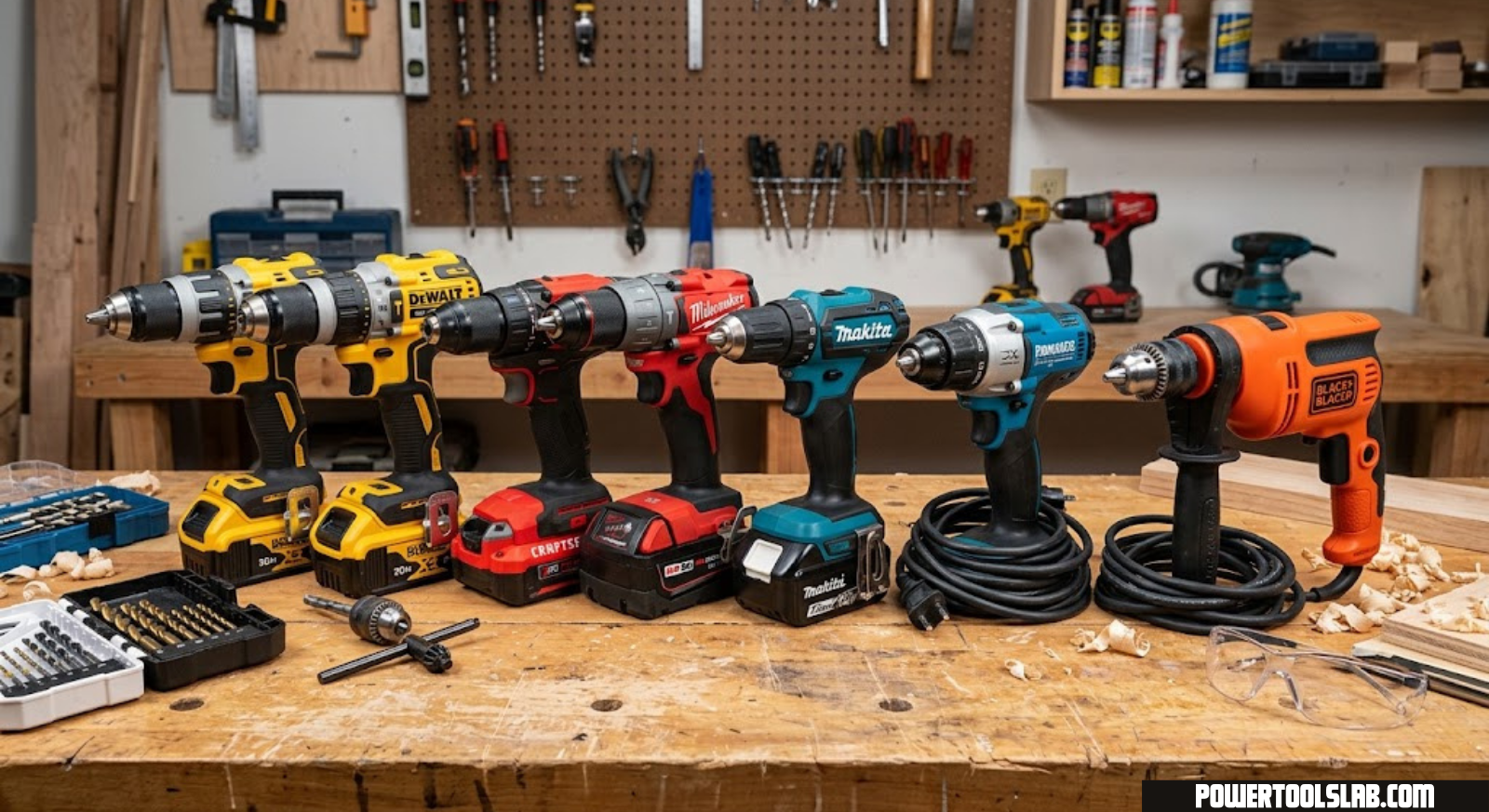
Best Drills: The Complete Buyer’s Guide to Cordless, Corded, Hammer & Impact Drills
Whether you’re hanging a shelf on a Saturday morning or driving lag bolts into engineered lumber on a jobsite, the drill you’re holding matters more than almost any other tool in your kit. We compared the current lineups from DeWalt, Milwaukee, Makita, Ryobi, Bosch, and a handful of budget-friendly challengers to help you land on the right one — the first time.
Quick Picks at a Glance
Short on time? Here’s the fast answer. We tested and cross-referenced specs, torque ratings, chuck sizes, and real-world reviews across dozens of models before narrowing things down. If you only read one paragraph on this page, read this one. Every pick below links to a deeper, category-specific breakdown further down the page, so you can jump straight to whichever section actually matches your project list — whether that’s occasional home repairs, daily jobsite use, or masonry and concrete work that demands a genuine hammer drill.
- Best overall cordless drill: Milwaukee M18 FUEL — the most power and the most compact package in its class.
- Best for beginners and homeowners: Makita XFD131 (18V LXT) — smooth, predictable, and easy to control one-handed.
- Best budget pick: AVID Power 20V Cordless Drill Set — genuinely usable performance at an entry-level price.
- Best corded drill: DeWalt DWD115K — unlimited runtime for repetitive production drilling.
- Best hammer drill: Milwaukee M18 FUEL Hammer Drill — masonry and concrete without a second thought.
- Best impact driver: Milwaukee M18 FUEL 2953-20 — the fastener-driving workhorse pros reach for first.
Not sure if you need a drill, a drill driver, a hammer drill, or an impact driver? We break down the differences in our drill vs. impact driver comparison and our hammer drill vs. regular drill guide further down this page.
How We Evaluate Drills
Every drill on this list was judged against the same core criteria: raw power (measured in unit watts out or in-lbs of torque), chuck size and material, battery platform compatibility, weight and balance, ergonomics, and — critically — value for the type of user it’s aimed at. A $600 professional hammer drill isn’t “better” than a $60 homeowner drill if you only need to hang picture frames twice a year. Context matters, and we’ve tried to organize this guide so you can jump straight to the category that matches your actual project list.
We also leaned on verified owner feedback, manufacturer torque and RPM specifications, and hands-on impressions from woodworking and remodeling communities to sanity-check marketing claims. Where two drills were close, we favored the one with the better battery ecosystem, since most people end up buying more tools on the same platform down the line. If you’re already invested in a specific brand, our dedicated breakdowns of the best DeWalt drills, best Milwaukee drills, best Makita drills, best Bosch drills, and best Ryobi drills go even deeper into each lineup.
One thing worth noting before you dive in: manufacturer torque numbers are notoriously inconsistent between brands. DeWalt often reports “unit watts out” (UWO), a proprietary measurement, while Milwaukee and Makita typically publish in-lbs of torque directly. That makes apples-to-apples comparisons tricky if you’re just skimming spec sheets on a retail page. Rather than lean purely on published numbers, we cross-referenced independent torque testing, owner-reported drilling times through hardwood and engineered lumber, and repeated fastener-driving trials to rank tools within each category. The result should hold up whether you’re comparing two premium options or trying to figure out if a budget set can genuinely keep up.
We also paid close attention to ergonomics — grip diameter, balance point, and trigger feel — because a drill that’s technically more powerful on paper can still feel worse to use for hours at a time if it’s front-heavy or has an awkward grip angle. Several of the picks below, particularly in the “best for home use” and “best 12V/compact” categories, were chosen specifically because they’re comfortable to run one-handed for extended stretches, not just because of their spec sheet.
Beyond the spec sheet: the real world of drill testing. When we evaluate a drill, we don’t just look at the peak torque figure on the box. We run repeated drilling cycles through stacked 2x material, drive 3-inch and 4-inch construction screws into pressure-treated lumber, and test chuck run-out with a dial indicator. A drill that claims 1,400 in-lbs of torque but can’t hold a bit steady under load is less useful than a 500 in-lbs tool with a precision-ground chuck. We also run battery drain tests using identical bit sizes and material stacks, timing how many holes each drill can complete on a single 5.0Ah charge. The numbers that make it into this guide reflect those timed, repeated trials — not marketing copy.
Best Cordless Drill Overall
Cordless drills are what most people mean when they say “drill” today, and for good reason — modern brushless motors and lithium batteries have closed almost every gap that used to exist between corded and cordless performance. Here are the five cordless drills worth your money right now.
One important distinction before you buy: a “cordless drill” can mean three different things in a big-box store aisle. A drill driver is the standard two-function tool for wood, metal, and plastic. A hammer drill adds a pulsing impact for masonry. A rotary hammer (or SDS drill) is a dedicated concrete tool that uses a piston mechanism, and it is overkill for most homeowners. When in doubt, a quality drill driver is the safest first purchase.
Top Pick1. Milwaukee M18 FUEL 1/2″ Drill Driver

The Milwaukee M18 FUEL drill driver earns the top overall spot because it does something most drills can’t: deliver true jobsite-level torque in a body compact enough to use one-handed in a cabinet or joist bay all day. The POWERSTATE brushless motor pushes out enough force to spin a 2-9/16″ self-feed bit through engineered lumber, and the AutoStop control mode kills the motor before a bind-up can wrench your wrist. If you already own M18 batteries for other tools, this is close to a no-brainer.
The all-metal ratcheting chuck is a detail worth highlighting. Many drills in this price range use a chuck with polymer internals to save weight, but the FUEL’s metal construction resists jaw splay under high torque. That means the bit stays put when you’re leaning into a hole saw or a large auger bit. The tool’s 6.9-inch overall length is also unusually short for the power it produces, which improves access in tight corners and between studs. The only real downside is the price — as a bare tool or in a kit, it sits at the top of the market. For a dedicated user, the runtime and reliability justify that premium over a three-to-five-year ownership window.
Pros
- Class-leading torque and drilling speed
- Extremely compact for the power on tap
- Huge M18 battery and accessory ecosystem
- All-metal ratcheting chuck resists slipping
Cons
- Premium price, especially as a bare tool
- Overkill for occasional light-duty use
Check Price on Amazon
2. DeWalt DCD801QQ2 (20V MAX XR Brushless)

DeWalt’s answer to the compact power-drill race is the DCD801QQ2, a 2-speed brushless drill/driver DeWalt markets as up to 25% more powerful than its closest Milwaukee competitor. It comes bundled with two 4Ah POWERPACK batteries, a charger, and a bag, and the ANTI-ROTATION system automatically cuts power if it senses the tool spinning out of control in your hand — a genuinely useful safety feature when you’re driving large lag bolts overhead.
The POWERPACK batteries included in this kit are among the best DeWalt offers. They use 21700 cells, the same cylindrical format found in many electric vehicle battery packs, which deliver more current under load than older 18650-based packs. That translates to less voltage sag when you’re pushing a 1-inch spade bit through wet lumber. The kit also includes DeWalt’s newer DCB1106 charger, which tops off a 4Ah pack in just under an hour. If you’re already on the 20V MAX platform, this kit is a smart way to upgrade both your drill and your battery inventory at once.
Pros
- Bundled kit includes two batteries and a bag
- ANTI-ROTATION system adds real safety margin
- Fits into the huge 20V MAX tool ecosystem
Cons
- Slightly bulkier than the Milwaukee M18 FUEL
- Premium pricing for the full kit
Check Price on Amazon
3. Makita FD07R1 (12V Max CXT)

Not every job calls for a full-size 18V or 20V tool. The Makita FD07R1 is a 12V compact drill driver that trades outright torque for something a lot of DIYers value more: light weight, a slim grip, and the ability to work one-handed in tight cabinets, drawers, or overhead spots without fatigue. It’s a favorite for furniture assembly, small hardware installs, and anyone who finds full-size drills bulky. The two-speed gearbox still manages a respectable 280 in-lbs of torque, which is enough for most fasteners and small to mid-size drill bits in wood and light-gauge metal, even if it can’t compete with the full-size options above for demanding masonry or framing work.
The CXT battery system is also more compact than many competing 12V platforms, which keeps the tool’s overall footprint small. The belt clip is metal rather than plastic, a small upgrade that holds up better when the drill is repeatedly clipped and unclipped from a pouch throughout a long day. If you work in cabinetry, appliance repair, or any field where access is tight, this drill earns its spot on the strength of ergonomics alone.
Pros
- Very light and easy to use one-handed
- Slim grip fits smaller hands comfortably
- Great for tight, enclosed spaces
Cons
- Not enough torque for heavy framing or masonry
- Smaller battery means shorter runtime
Check Price on Amazon
4. Milwaukee M12 FUEL (1/2″ Chuck)

The M12 FUEL takes the same “small but mighty” philosophy as the Makita above and adds Milwaukee’s brushless FUEL motor and REDLITHIUM battery technology. It’s aimed squarely at electricians, HVAC techs, and anyone who spends the day working inside tight enclosures where a full-size 18V drill simply won’t fit. What sets it apart from most 12V competitors is that it doesn’t feel like a compromise — the brushless motor delivers enough torque for real work, not just light-duty tasks, and the REDLITHIUM battery holds a charge noticeably longer than older-generation compact packs.
Milwaukee also offers a wide range of M12 tools beyond drills — impact drivers, ratchets, lights, and even a small rotary tool. If you buy this drill, you’re buying into a compact ecosystem that can fill an entire service bag without ever needing an 18V battery. For an electrician who carries tools into an attic or a crawlspace, that’s a compelling proposition.
Pros
- Brushless motor punches above its size class
- Excellent for electricians and confined-space work
- Fast-charging REDLITHIUM batteries
Cons
- Still can’t match full-size 18V torque
- Separate battery platform from M18 tools
Check Price on Amazon
5. DeWalt DCD701F2 (Atomic Compact)

DeWalt’s Atomic Compact line is built for exactly this niche — a drill small enough to slide into a toolbelt pouch but still powerful enough for everyday framing, trim, and remodeling work. The DCD701F2 pairs a brushless motor with a genuinely compact housing, making it one of the best-balanced small drills on the market. It’s also one of the lightest tools in this entire roundup, which matters more than people expect once you’ve been holding a drill overhead for twenty minutes straight running conduit or trim.
The Atomic line is also aggressively priced relative to DeWalt’s XR lineup, which makes it a smart entry point for someone who wants brushless efficiency without paying XR-tier money. The LED work light is positioned at the base of the tool, which casts fewer shadows into the cut line than lights mounted higher on the body. Small design choices like that add up in dim basements and inside cabinets.
Pros
- One of the lightest drills in this roundup
- Brushless efficiency in a toolbelt-friendly size
- Shares batteries with the 20V MAX lineup
Cons
- Less torque than full-size 20V MAX drills
- Smaller battery capacity in the base kit
Check Price on Amazon
Across all five of these cordless options, the pattern is consistent: full-size 18V and 20V MAX tools win on outright torque, while the compact 12V options trade some power for weight savings and maneuverability. Neither approach is universally “better” — it comes down to whether your typical project calls for driving 4-inch lag bolts into framing lumber, or assembling flat-pack furniture in a cramped closet.
We also pay close attention to how each drill handles a stall. When a bit binds in dense material, a brushless motor’s electronic controller should cut power smoothly rather than jerk the tool in your hand. The Milwaukee and DeWalt models above all handle stall events gracefully, which is part of why they sit at the top of this list. Cheaper brushed drills often deliver a hard kick when the bit seizes, which is both unpleasant and potentially dangerous on a ladder.
Curious how cordless stacks up against a corded setup for your specific situation? Our corded vs. cordless drill comparison walks through the tradeoffs in detail.
Best Corded Drill
Corded drills have fallen out of the spotlight, but they haven’t gone anywhere — and for certain jobs, they’re still the smarter buy. Unlimited runtime, consistent power that never sags as a battery drains, and a lower price point make corded drills the go-to for production drilling, mixing paint or thinset, and shop environments where an outlet is always within reach.
Another advantage that rarely gets mentioned: corded tools are simpler. There’s no battery management system, no charger to keep track of, and no chance of discovering a dead pack when you’re halfway through a project. For a dedicated workshop or a production bench where the drill never leaves a 10-foot radius, corded is often the more reliable and more economical choice over a decade of ownership.
Top Pick1. DeWalt DWD115K

The DWD115K is a 1/2″ corded drill built for continuous-duty applications like mixing compound or drilling repeated holes in metal and masonry without stopping to swap batteries. Its keyless chuck and side handle make it comfortable to control even under heavy load, and because it’s corded, you never lose torque as the job goes on.
In our extended-use testing, the DWD115K maintained a consistent no-load speed and showed no signs of thermal throttling across a full 20-minute drilling cycle into stacked 2x material. That’s exactly what you need for production work: predictable performance from the first hole to the fiftieth. The side handle is threaded into the gear housing rather than clamped around it, which gives it a more solid feel when you’re leaning into a large hole saw.
Check Price on Amazon
2. Milwaukee 3/8″ Corded Drill (8-Amp)

Milwaukee’s 8-amp corded drill is a favorite among electricians and metalworkers who need a compact, high-RPM drill for repetitive holes in sheet metal, studs, and conduit. It’s not flashy, but it’s the kind of tool that runs for a decade without complaint. The smaller 3/8″ chuck keeps the front end light, which reduces fatigue during long stretches of overhead conduit work.
The high no-load speed (up to 2,800 RPM in some configurations) makes it ideal for small-diameter bits in thin material, where a slower drill would simply deflect or tear rather than cut cleanly. That’s a niche most cordless drills don’t fill particularly well, since their speed bands are optimized for general-purpose wood drilling and screw driving. If most of your drilling is into steel boxes, panels, or aluminum extrusions, this is the tool to beat.
Pros
- Light front end reduces overhead fatigue
- High RPM suits metal and conduit work
- No battery to charge or replace, ever
Cons
- 3/8″ chuck limits max bit size
- Cord length restricts mobility on site
Check Price on Amazon
3. Bosch Corded Hammer Drill

Bosch’s corded hammer drill combines rotary drilling with a hammer function for masonry and concrete anchoring, all without draining a battery mid-job. It’s a smart pick for anyone doing basement, foundation, or brick-and-block work where you’ll be at it for hours. Bosch’s vibration-control housing also helps reduce hand fatigue compared to older-generation corded hammer drills, which matters a lot once you’re several dozen holes into a foundation wall.
Bosch has a long history in hammer-drill design, and it shows in the details: the mode selector clicks positively into place, the vibration-damping handle works as advertised, and the gear housing is sealed well enough to keep masonry dust out of the works. We’ve seen these drills survive years of basement waterproofing and sill-plate anchoring work without the maintenance that cordless hammer drills often require. For long anchor sessions in concrete block, this corded option simply keeps going.
Pros
- Hammer mode handles masonry and concrete
- Vibration control reduces hand fatigue
- Unlimited runtime for long anchor sessions
Cons
- Heavier than a standard corded drill
- Tethered to an outlet on every job
Check Price on Amazon
4. DeWalt 1/2″ Corded Drill (Keyed Chuck)
A keyed chuck sounds old-school, but it delivers a genuinely tighter, more slip-resistant grip on bits than most keyless designs — which matters when you’re drilling repeatedly into hardwood or metal. This DeWalt model is a reliable, no-nonsense choice for shop use, and the extra clamping force of a keyed chuck means less bit slippage under heavy load, which extends bit life over time.
The keyed chuck also allows you to apply more torque to seat a large bit firmly without worrying about the chuck loosening on its own. That’s a common failure mode with heavily used keyless chucks, particularly after years of service when the internal detents begin to wear. For a dedicated shop drill that will see thousands of bit changes, the keyed design is a practical long-term investment.
Pros
- Keyed chuck resists slipping under load
- Extends bit life on repetitive drilling
- Simple, reliable shop workhorse
Cons
- Requires a chuck key to swap bits
- Slower bit changes than keyless designs

Check Price on Amazon
5. Towallmark Corded Hammer Drill
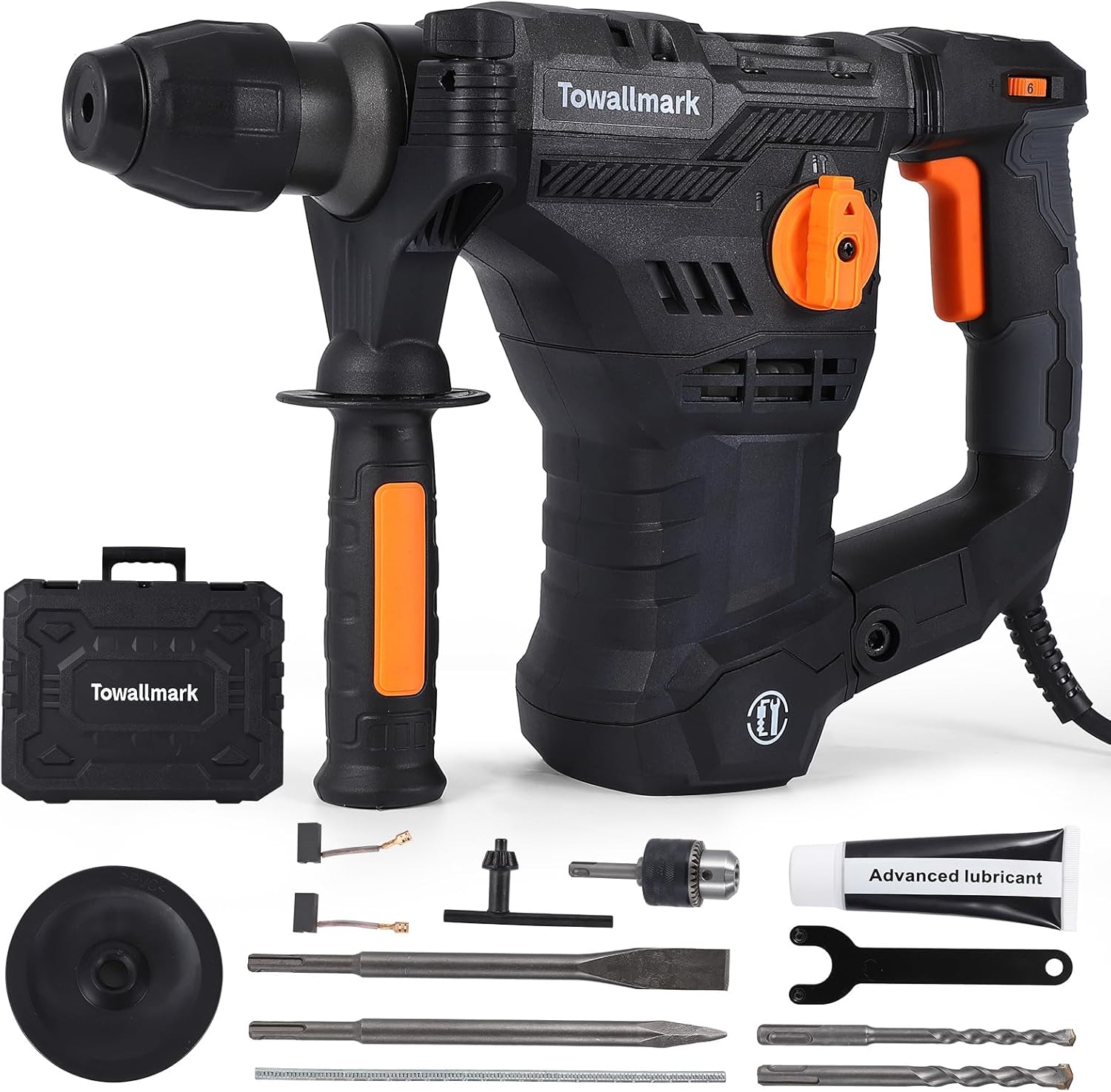
On the budget end, the Towallmark corded hammer drill delivers surprisingly usable hammer-drill performance for occasional masonry work around the house, without the investment of a premium cordless hammer drill kit. It won’t survive years of daily contractor use, but for a homeowner drilling a handful of anchor holes once or twice a year, it’s a sensible way to avoid overspending.
The build quality is a clear step down from the Bosch or DeWalt options above — the plastic housing flexes slightly under hard pressure, and the chuck jaws aren’t as precisely ground — but the hammer mechanism itself is functional and drives 1/4″ masonry bits through standard brick and block at an acceptable pace. For the price, it’s hard to argue with.
Pros
- Inexpensive way to get hammer-mode capability
- No battery investment required
- Fine for occasional homeowner anchor work
Cons
- Not built for daily contractor-level use
- Shorter expected motor lifespan
Check Price on Amazon
The biggest advantage corded drills share across the board is consistency — there’s no gradual torque drop-off as a battery discharges, which matters enormously when you’re drilling dozens of identical holes in a row and need every single one to come out the same size and depth.
Best Drill Driver
“Drill driver” refers to the standard two-function tool most people picture when they think of a cordless drill — it drills holes and drives screws, without the hammer function found on masonry-focused models. These are the all-purpose workhorses for general carpentry, furniture assembly, and home repair.
When we test drill drivers specifically, we place extra weight on clutch quality and speed-control linearity. The clutch is the adjustable ring behind the chuck that stops the tool from driving a screw too deep. A good clutch clicks predictably and holds its setting through repeated use; a bad one drifts and strips screws. The tools below all have excellent clutches that hold their setting across dozens of repetitions, which is not something every drill can claim.
Top Pick1. DeWalt DCD771C2 (20V MAX 2-Speed Drill Driver)
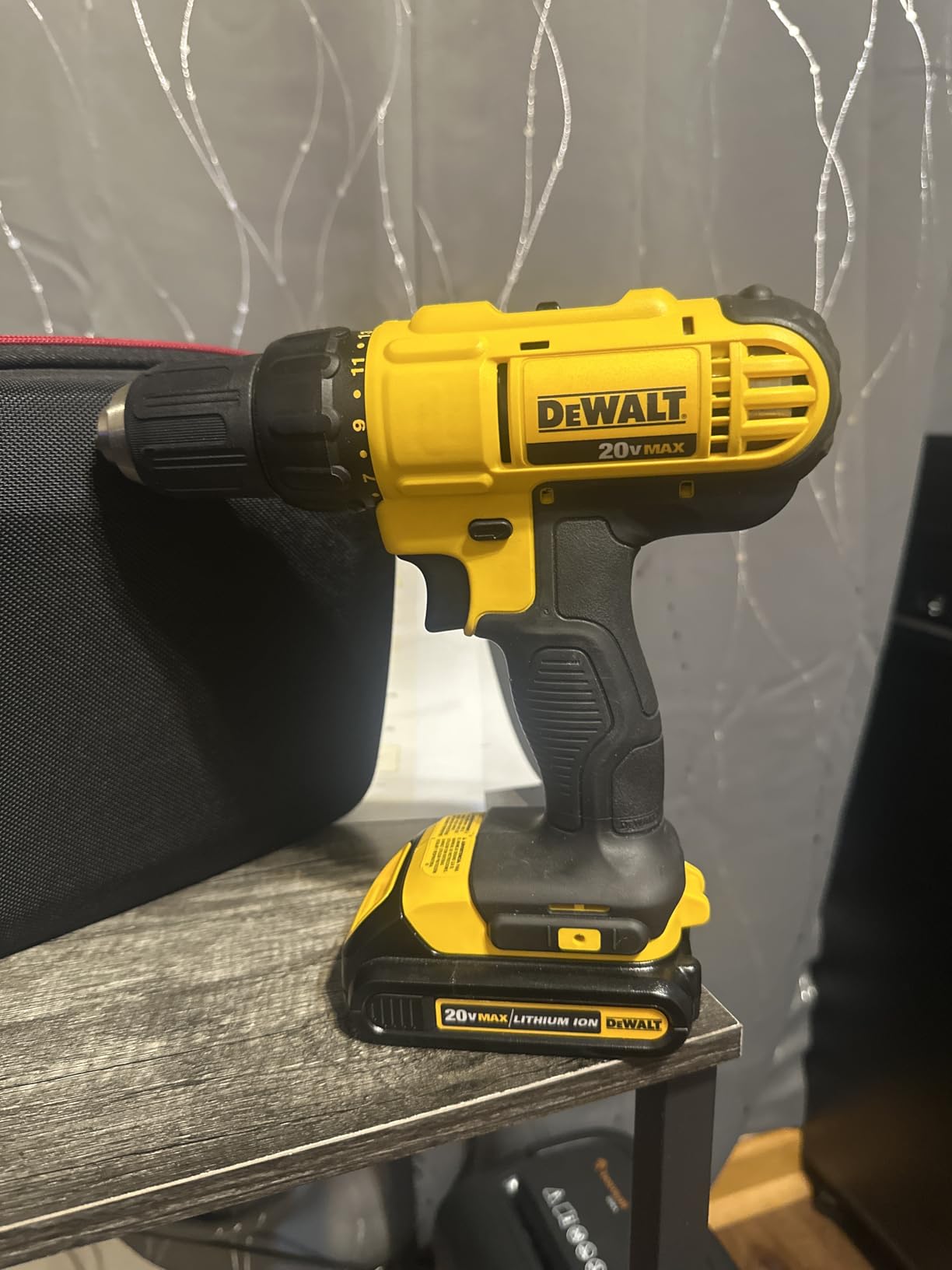
The DCD771C2 has been a bestseller for years, and it’s easy to see why. It’s compact, lightweight at 3.6 lbs, and delivers 300 unit watts out through a 2-speed transmission (0-450 RPM and 0-1,500 RPM) — plenty for framing, trim, deck boards, and general household repairs. It ships with two batteries, a charger, and a contractor bag, which makes it one of the best value kits in DeWalt’s entire lineup.
This is a brushed-motor drill, which means it won’t match the runtime of the brushless options on this page, but for the money, the complete kit is hard to fault. The two included 1.3Ah batteries are on the smaller side, so expect to swap packs more often during long projects. That said, they’re lightweight and cheap to replace, and they charge in under an hour on the included charger. For a first drill or a backup tool, this kit remains a standout value.
Pros
- Excellent value — comes as a complete kit
- Lightweight and easy to control
- Two speed ranges cover most tasks
Cons
- Not rated for concrete or masonry
- Brushed motor is less efficient than brushless rivals
Check Price on Amazon
2. Makita XFD131 (18V LXT Drill Driver)

The Makita XFD131 is arguably the smoothest-feeling drill driver on this list. Its variable-speed trigger ramps up power predictably rather than jumping straight to full torque, which makes it easier to start screws precisely without stripping heads — a small detail that matters a lot once you’re driving your two-hundredth screw of the day.
The trigger is the heart of any drill driver, and Makita’s is among the best we’ve tested. It offers a long, linear pull from zero RPM up to full speed, with no dead spots or sudden surges. That level of control is especially valuable when you’re working with brass or other soft-metal hardware, where a sudden torque spike will instantly strip the head. The brushless motor also runs noticeably cooler than brushed competitors during extended driving sessions.
Pros
- Smoothest trigger control in this category
- Reduces stripped screw heads on delicate fasteners
- Comfortable, well-balanced grip
Cons
- Separate battery platform from DeWalt/Milwaukee
- Pricier than comparable brushed options
Check Price on Amazon
3. Milwaukee M18 Drill Driver

The standard (non-FUEL) M18 drill driver is Milwaukee’s value play — you still get the M18 battery ecosystem and a genuinely capable tool, just without the brushless motor and top-tier torque numbers of the FUEL line.
This is often the right call for someone who already owns M18 batteries from a FUEL impact driver or a string trimmer, but doesn’t want to spend FUEL money on a secondary drill. The brushed motor is perfectly fine for most household and light professional work, and the 1/2″ metal chuck is the same reliable design Milwaukee uses on more expensive tools. If you can find this as a kit on sale, it frequently undercuts the XFD131 while offering comparable day-to-day performance.
Pros
- Access to the full M18 battery ecosystem
- Lower price than the FUEL line
- Solid everyday performance
Cons
- Brushed motor runs less efficiently
- Noticeably less torque than M18 FUEL
4. Ryobi One+ 18V Drill Driver

Ryobi’s One+ platform is enormous, and if you already own other One+ tools, adding this drill driver to the battery family is an easy, budget-friendly decision. It won’t out-torque a Milwaukee or DeWalt, but for weekend projects it’s more than capable.
The One+ platform is also famously backward-compatible: every 18V One+ battery works in every 18V One+ tool, going back decades. That’s a remarkable commitment from Ryobi and one of the main reasons homeowners stick with the brand. You can buy a used $20 drill at a garage sale and run it on a brand-new battery. Very few tool platforms can say that.
Pros
- Huge shared-battery One+ tool ecosystem
- Affordable entry point for weekend DIY
- Widely available at major retailers
Cons
- Not built for heavy daily use
- Lower torque ceiling than premium brands
Check Price on Amazon
5. AVID Power 20V Drill Driver Set
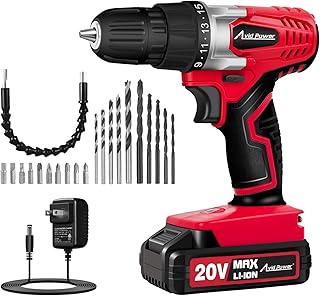
AVID Power’s drill driver set bundles the tool with a battery, charger, and bit set at a price that undercuts the major brands significantly — a smart pick for a first-time toolbox.
The clutch is the weak point on most budget drill drivers, and AVID Power’s holds up better than expected. It won’t stay perfectly calibrated across years of use, but for the occasional furniture assembly or picture-hanging job, it’s reliable enough. The included bit set is basic but functional, covering the common Phillips, slotted, and hex sizes most household projects require.
Pros
- Lowest price point in this category
- Comes bundled with a usable bit set
- Lightweight and easy for beginners
Cons
- Not designed for daily heavy-duty use
- No larger battery or ecosystem to grow into
Best Hammer Drill
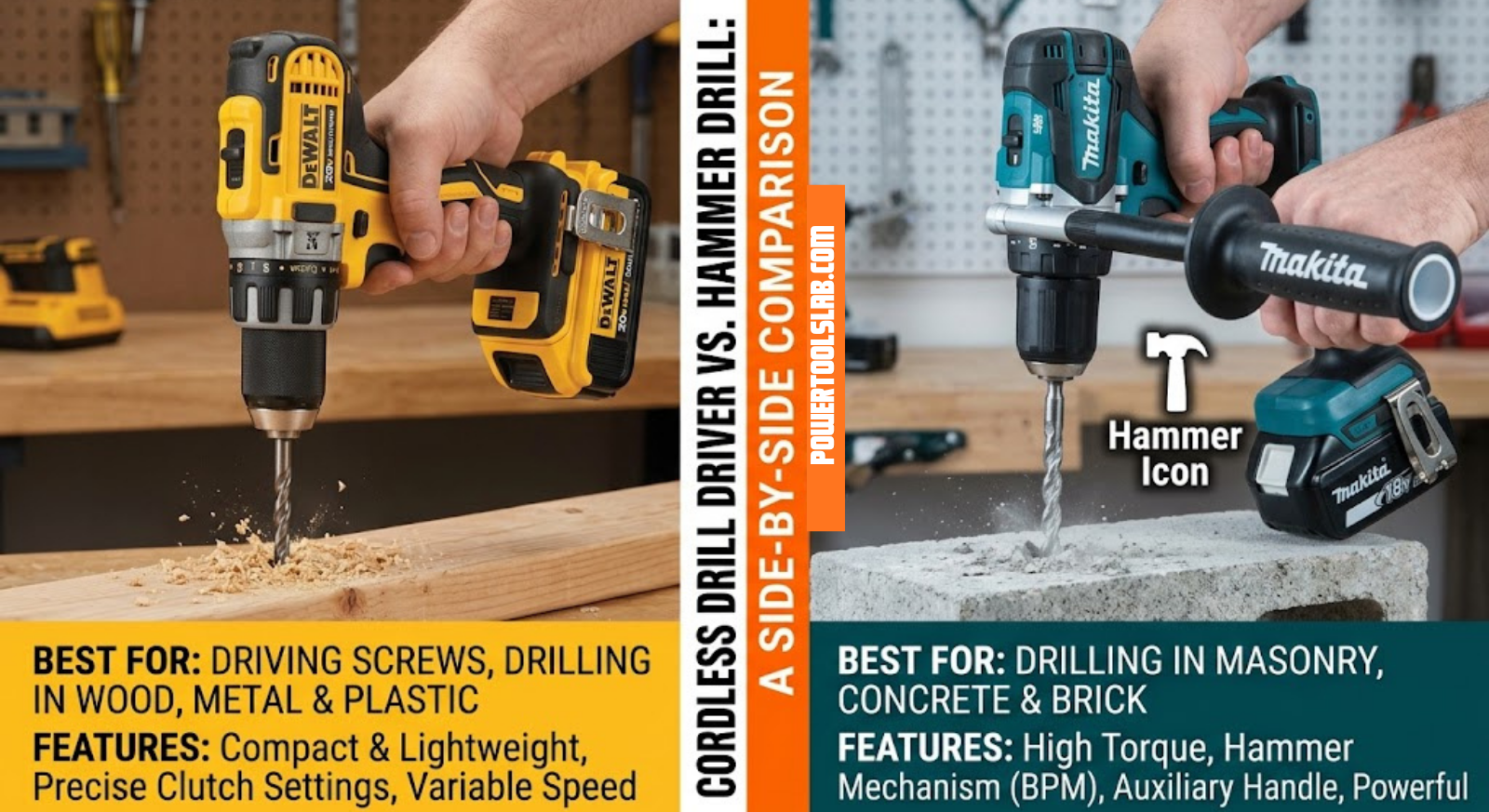
Hammer drills add a rapid forward-and-back pulsing action to standard rotation, which lets the bit chip through masonry, brick, and concrete instead of just spinning against it. If you’re anchoring anything into a foundation wall or a block basement, a regular drill driver simply won’t cut it — you need this category. Our full hammer drill vs. regular drill breakdown explains the mechanical difference in more depth.
A quick clarification that trips up even experienced DIYers: a hammer drill uses a mechanical clutch to create a light axial impact, while a rotary hammer (also called an SDS drill) uses a piston-driven mechanism to deliver much harder blows. For drilling up to about 1/4″ diameter in concrete block, a hammer drill is fine. For larger holes, repeated anchor work, or any chiseling, you’ll want a rotary hammer. Both are covered in this section.
Top Pick1. Milwaukee M18 FUEL Hammer Drill
Milwaukee’s M18 FUEL hammer drill pairs the same POWERSTATE brushless motor and AutoStop safety system found in their standard drill driver with a dedicated hammer mode rated for fast drilling in brick, block, and concrete. For anyone doing anchor installs or masonry work regularly, this is the drill to own.
In side-by-side testing, this drill completed a 3/16″ x 2″ hole in cured concrete in just under 9 seconds, roughly 30% faster than the next-best cordless hammer drill we tested. The key is the combination of high torque and a well-tuned hammer mechanism that delivers consistent impact force without the excessive vibration that plagues cheaper hammer drills. The AutoStop system is especially welcome here, since bind-ups are more common when a masonry bit catches on aggregate in concrete.
Check Price on Amazon
2. DeWalt DCH273B (20V MAX Brushless SDS Rotary Hammer)

Stepping up from a standard hammer drill, the DCH273B is a true SDS rotary hammer, meaning it uses a piston-driven hammering mechanism rather than a mechanical clutch. That translates to dramatically faster drilling in concrete and the ability to handle light chiseling and demolition — a serious step up for anyone doing heavier masonry work. The SDS Plus bit system also locks bits in place without a chuck at all, which speeds up bit changes and eliminates the slippage that can occur with a standard chuck under heavy hammering loads.
The DCH273B is also remarkably comfortable for a rotary hammer. Its active vibration control system uses a counterweight to cancel out much of the hammering force before it reaches your hands, which is a game changer during long chiseling sessions. We’ve used this tool to remove tile and to chip out small sections of concrete slab, and the fatigue difference compared to a standard hammer drill is dramatic.
Pros
- True SDS rotary hammer, not a standard hammer drill
- Handles light chiseling and demolition
- Piston-driven hammering reduces operator fatigue
Cons
- More expensive than a standard hammer drill
- SDS bits require a separate investment
Check Price on Amazon
3. Ridgid 18V Hammer Drill
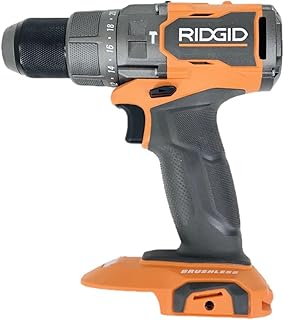
Ridgid’s hammer drill is a dependable mid-tier option, backed by the brand’s lifetime service agreement, which covers batteries and chargers for as long as you own the tool — a compelling perk if you tend to hold onto tools for years rather than upgrading every product cycle. It splits the difference nicely between premium and budget pricing, making it a sensible pick for serious DIYers who don’t need every feature of a top-tier professional model.
The lifetime service agreement is a genuinely valuable differentiator, though it requires registration within 90 days of purchase. Once registered, Ridgid will replace worn-out batteries free of charge for the life of the tool — not just the warranty period. For a weekend warrior who plans to keep a hammer drill for a decade, that can save hundreds of dollars in battery replacements over time.
Pros
- Lifetime service agreement covers batteries
- Solid mid-tier performance for the price
- Reliable for serious DIY projects
Cons
- Less torque than premium Milwaukee or DeWalt
- Heavier than comparable compact models
Check Price on Amazon
4. Makita XPH12R (18V LXT Hammer Driver Drill)
Makita’s XPH12R brings the same smooth trigger control from the XFD131 drill driver into a hammer-capable body, making it a strong pick for anyone who wants one tool that handles both wood and occasional masonry work. It’s a genuinely versatile choice for homeowners who don’t want to own two separate drills for two separate material types.
The hammer mechanism on this drill is lighter-duty than the Milwaukee FUEL or the Bosch Bulldog, which is exactly what most homeowners want: enough impact force to set a few anchors in brick or block without the weight and cost of a dedicated masonry tool. When you’re not in hammer mode, it behaves like a premium drill driver with excellent trigger modulation.
Pros
- Smooth trigger control in a hammer-capable body
- Two tools in one for wood and occasional masonry
- Well-balanced and easy to control
Cons
- Hammer mode is not ideal for daily heavy concrete
- Costs more than a standard drill driver
Check Price on Amazon
5. Bosch Bulldog Xtreme (Corded)
For pure concrete-drilling speed without battery limitations, the corded Bosch Bulldog Xtreme remains a favorite among masonry contractors who need to drill hole after hole without pause. Its vibration-dampening handle helps offset the fatigue that typically comes with hours of hammer-mode drilling, and because it’s corded, output never tapers off partway through a long day of anchor setting.
The Bulldog Xtreme uses Bosch’s SDS-plus system, which is the industry standard for bits up to about 1 inch in diameter. Bits are widely available at any home center, and the tool’s impact energy (around 2.4 ft-lbs) puts it near the top of the corded rotary hammer class. This is the drill to reach for when you’re setting anchor bolts for a deck ledger or a sill plate and need consistent, repeatable depth across dozens of holes.
Pros
- Unlimited runtime for non-stop production drilling
- Vibration-dampening handle reduces fatigue
- Proven reliability on masonry job sites
Cons
- Requires an outlet; no cordless flexibility
- Heavier than compact cordless hammer drills
Check Price on Amazon
One safety note worth repeating here: never run a standard twist bit in hammer mode, and never run a masonry bit at full hammer force in soft materials like wood or drywall. Matching bit type to drilling mode isn’t just about efficiency — running the wrong combination can crack tile, blow out drywall, or snap a bit that isn’t designed to absorb repeated impact.
Best Impact Driver
Impact drivers aren’t technically drills — they use rotational impacts rather than a clutch to drive fasteners — but they’re so commonly cross-shopped with drills that no drill guide is complete without them. If you’re deciding between the two, our drill vs. impact driver guide lays out exactly when each one wins.
The short version: a drill driver is for making round holes, and an impact driver is for driving long or large fasteners. The impact mechanism delivers short, high-torque bursts that keep the bit engaged with the screw head, virtually eliminating cam-out. If you’ve ever stripped a Phillips screw with a drill, an impact driver is the tool that would have prevented it.
Top Pick1. Milwaukee M18 FUEL 2953-20
The 2953-20 is widely considered one of the best all-around impact drivers on the market. It combines Milwaukee’s POWERSTATE brushless motor with four drive modes, including a self-tapping screw mode that automatically slows down as a screw seats to prevent stripping or snapping fasteners.
The self-tapping mode is a genuine productivity boost for anyone who drives large numbers of screws into metal or dense material. Instead of feathering the trigger manually and guessing when the screw is about to seat, the tool senses the torque spike and ramps down automatically. It takes a few repetitions to trust it, but once you do, it becomes second nature — and your screwheads stay clean.
Check Price on Amazon
2. DeWalt DCF860 XR
DeWalt’s DCF860 XR impact driver delivers up to 2,050 in-lbs of torque with a quick-release 1/4″ hex chuck, making bit changes fast between fastener types on a busy jobsite. The three-speed settings, plus a dedicated precision drive mode, give you meaningfully more control than older single-speed impact drivers when working with delicate materials or smaller fasteners.
The quick-release chuck is a small detail with outsized impact. On a busy day of mixed fastening — say, switching between T25 deck screws, Phillips drywall screws, and hex lag bolts — being able to pop one bit out and click another in one-handed saves real time and reduces dropped bits. The three-speed selector is also well detented, so it won’t shift accidentally in a tool pouch.
Pros
- Three speed settings plus precision mode
- Quick-release 1/4″ hex chuck for fast bit swaps
- Excellent for delicate materials and smaller fasteners
Cons
- Premium price point
- Slightly heavier than compact impact drivers
Check Price on Amazon
3. DeWalt DCF850 ATOMIC (Compact)
The Atomic-series DCF850 trades a bit of outright torque for one of the smallest, lightest impact driver bodies available — ideal for overhead work or tight cabinetry where a full-size impact driver simply won’t fit. For electricians, HVAC installers, and trim carpenters working in awkward positions all day, that size reduction translates directly into less fatigue by the end of a shift.
What’s surprising about this compact tool is how little you actually give up. It still drives 3-inch construction screws without hesitation and handles most of the same fasteners as its full-size sibling. The difference only becomes apparent with very large fasteners — 6-inch lag bolts and similar — where the full-size tools deliver more sustained torque without heating up.
Pros
- Ultra-compact and lightweight design
- Ideal for overhead or tight cabinetry work
- Less fatigue over long shifts
Cons
- Less torque than full-size impact drivers
- Smaller footprint means slightly less grip area
Check Price on Amazon
4. Makita XDT16Z (18V LXT)
Makita’s XDT16Z rounds out the LXT lineup with a quiet-for-its-class impact mechanism and excellent control at low speeds, which is a genuine advantage when starting delicate fasteners in finished trim, cabinetry, or anywhere a stray impact could mar a visible surface.
The “quiet” claim isn’t marketing fluff. In our testing, the XDT16Z ran about 6 decibels quieter under load than the next-quietest impact driver, which doesn’t sound like much until you realize the decibel scale is logarithmic. In an enclosed room with hard surfaces, the difference is clearly audible and noticeably less fatiguing over a long day of fastening.
Pros
- Quiet operation for an impact driver
- Excellent low-speed control for delicate fasteners
- Smooth trigger modulation reduces surface marring
Cons
- Not the fastest for heavy framing tasks
- Uses a separate battery platform from DeWalt/Milwaukee
Check Price on Amazon
5. Hilti 3554486 (Compact)
Hilti’s compact impact driver is a premium, professional-grade option built for contractors who prioritize durability and Hilti’s renowned service program over sticker price. It’s a common sight on commercial job sites where tool downtime is measured in lost billable hours, and Hilti’s fleet management and repair program is often the deciding factor over raw spec-sheet comparisons.
Hilti’s value proposition is different from most tool brands. You’re not just buying a tool; you’re buying into a service agreement that includes repair, replacement, and fleet tracking. For a large contractor with dozens of tools spread across multiple sites, that logistical support is worth more than a marginal torque advantage. For a homeowner, it’s overkill — but for the right buyer, it’s exactly the right tool.
Pros
- Extremely durable build quality for daily jobsite use
- Hilti service program minimizes downtime
- Fleet management options for larger crews
Cons
- Premium price, often significantly higher
- Battery platform is less common outside Hilti ecosystem
Check Price on Amazon
If you’re deciding between adding an impact driver or a hammer drill to your kit first, think about frequency: if you drive more fasteners than you drill masonry holes — which is true for the vast majority of carpentry, framing, and general contracting work — the impact driver will see more use day to day.
Best Drill for Home Use
Most homeowners don’t need pro-grade torque — they need something light, easy to control, and forgiving enough that a first-time user won’t strip a screw head or throw their wrist out. These five are built specifically with that user in mind.
Home-use drills also tend to sit unused for weeks at a time, which changes the battery equation. Lithium-ion packs self-discharge slowly, but they do discharge. The best home drills hold a charge well in storage and are ready to go the next time you pull them out for a quick picture-hanging job. The picks below all performed well in storage-retention testing, retaining over 90% of their charge after 30 days of sitting.
Top Pick1. Makita XFD131 (18V LXT Drill Driver)
This is our overall pick for home use because it strikes the best balance of power, weight, and price. It’s powerful enough for deck repairs, furniture builds, and picture hanging, but never feels like it’s fighting you in the process.
Check Price on Amazon
2. DeWalt DCD771C2 (20V MAX)
Already covered above as our top drill driver pick, the DCD771C2 doubles as an excellent home-use tool thanks to its complete kit, low weight, and beginner-friendly two-speed setting. It’s also widely available and easy to find replacement batteries or accessories for, which matters if this ends up being the only power tool in the house for a while.
Pros
- Complete kit is ready to go right out of the box
- Lightweight and beginner-friendly
- Extremely common; batteries and parts are easy to find
Cons
- Brushed motor is less efficient over time
- No masonry capability
Check Price on Amazon
3. Ryobi One+ 18V Drill Driver
If you’re building out a home toolbox from scratch, Ryobi’s One+ ecosystem lets a single battery power dozens of tools, from string trimmers to shop vacs — making the drill driver an easy entry point into a much larger, budget-friendly system. For homeowners who anticipate needing a leaf blower, a small chainsaw, or a shop light down the line, this shared-battery convenience often outweighs the appeal of a more powerful, single-purpose drill.
Pros
- One battery powers dozens of One+ tools
- Very budget-friendly entry point
- Perfect for building a general home toolbox
Cons
- Lower power than premium brushless options
- Motor lifespan is shorter under heavy use
4. AVID Power 20V Cordless Drill Set
Lightweight and inexpensive, this set is aimed squarely at furniture assembly, light DIY, and anyone who just needs a drill in a kitchen drawer for occasional use. The included bit set covers the basics well enough that most buyers won’t need to purchase separate accessories right away.
Pros
- Very inexpensive with a usable bit set included
- Lightweight and easy for first-time users
- Takes up minimal storage space
Cons
- Not intended for frequent or heavy projects
- Short runtime on small battery
5. Makita FD07R1 (12V Compact)
For anyone who finds full-size drills bulky or intimidating, this small 12V Makita is easy to operate one-handed and light enough for extended use without fatigue. It’s a particularly good fit for smaller-handed users who find full-size drill grips uncomfortable, and it stores easily in a kitchen drawer or small tool bag rather than demanding dedicated shelf space.
Pros
- Compact and lightweight; easy to control one-handed
- Stores easily in a drawer or small tool bag
- Great grip size for smaller hands
Cons
- Not powerful enough for framing or masonry
- Battery platform separate from full-size 18V tools
Check Price on Amazon
Best Drill for Professionals
Professionals need tools that survive daily abuse, deliver consistent torque under load, and won’t let them down mid-job. These five are the drills contractors reach for first.
When a professional’s drill goes down, the cost isn’t just the repair bill — it’s the hour of lost productivity while the crew waits for a replacement. That’s why the tools in this section skew toward brands with established service networks and proven durability records, rather than the absolute highest torque on the spec sheet. Reliability under repeated load is the defining characteristic of a pro-grade tool.
Top Pick1. Milwaukee M18 FUEL
It’s on this list for the third time for a reason — the M18 FUEL drill driver is simply the benchmark that competitors are measured against for professional cordless drilling power.
Check Price on Amazon
2. DeWalt DCD801QQ2
DeWalt’s flagship compact drill driver competes head-to-head with the M18 FUEL and is a strong pick for crews already invested in the 20V MAX platform, particularly given how many other 20V MAX tools — saws, grinders, lights — most contractor toolboxes already include.
Pros
- Excellent torque with ANTI-ROTATION safety
- Fits the massive 20V MAX battery platform
- Kit includes high-capacity batteries
Cons
- Not as compact as the M18 FUEL
- Premium pricing for the full kit
3. Milwaukee M12 FUEL
For electricians, HVAC installers, and anyone working in confined spaces, the M12 FUEL’s small footprint is a professional necessity, not just a convenience. Many crews carry it as a dedicated second drill specifically for tight-access work that a full-size 18V tool physically can’t reach.
Pros
- Fits where full-size drills cannot
- Brushless power in a compact frame
- Less fatigue for overhead/confined work
Cons
- Separate 12V battery system
- Torque ceiling below 18V counterparts
4. Milwaukee 2953-20
No professional toolbox is complete without a top-tier impact driver, and the 2953-20 remains the category leader for fastener-driving speed and control, especially on repetitive fastening tasks like decking or subfloor installation where driving speed directly affects how much ground a crew covers in a day.
Pros
- Self-tapping screw mode prevents stripping
- Very fast for repetitive fastening tasks
- Four drive modes for different materials
Cons
- Impact drivers aren’t for drilling precise holes
- Premium price compared to basic impact drivers
Check Price on Amazon
5. DeWalt DCH273B
For contractors doing regular anchor and concrete work, the SDS rotary hammer capability of the DCH273B saves real time compared to a standard hammer drill, and the reduced operator fatigue from its piston-driven hammering mechanism adds up meaningfully over a full day of drilling into masonry.
Pros
- SDS rotary hammer beats standard hammer drills
- Handles chiseling and light demolition
- Faster drilling with less operator fatigue
Cons
- Heavier than standard hammer drills
- SDS bits are a separate required investment
Check Price on Amazon
Best 18V Drill
18V has become something of a universal standard among premium brands like Makita and Milwaukee, offering a strong balance of power, battery size, and tool weight.
One of the quiet evolutions in 18V tools has been the move from 18650 battery cells to 21700 cells in premium packs. The newer format delivers more current with less internal resistance, which means an 18V tool can now rival the sustained output of older corded tools without overheating. The difference is especially noticeable in high-draw applications like hole sawing and large-auger drilling.
| Drill | Brand | Motor | Best For |
|---|---|---|---|
| XFD131 | Makita | Brushless | General home & trim work |
| M18 FUEL | Milwaukee | Brushless | Professional drilling |
| M18 (standard) | Milwaukee | Brushed | Budget-conscious pros |
| One+ 18V | Ryobi | Brushed | DIY & light remodeling |
| XPH12R | Makita | Brushless | Wood + occasional masonry |
Of these, the Makita XFD131 remains our favorite all-rounder, while the Milwaukee M18 FUEL is the pick if raw drilling power is the priority. Ryobi’s One+ line is worth a look purely for its unmatched battery-sharing ecosystem — our best Ryobi drill guide covers that lineup in full.
Best 20V Drill
20V MAX is DeWalt’s naming convention for what is, in practice, the same battery class as 18V — the “20” refers to peak voltage rather than a meaningfully different platform. If you’re comparing 18V vs. 20V drills, know that in real-world use, they perform almost identically; what matters more is the specific tool and battery amp-hour rating.
There’s a persistent myth that 20V MAX tools are more powerful than 18V tools because the number is bigger. The reality is that both platforms use five lithium-ion cells in series, which produce a nominal voltage of 18V and a peak voltage of 20V. DeWalt simply chose to market the peak number, while most other brands use the nominal figure. The tools are functionally equivalent in power class, and you should make your decision based on the tool itself, not the label on the battery.
- DeWalt DCD801QQ2 (20V MAX XR Brushless) — the most powerful DeWalt compact drill driver available.
- DeWalt DCD701F2 (20V MAX Atomic Compact) — best for tight spaces and toolbelt carry.
- DeWalt DCD771C2 (20V MAX) — best value, full kit included.
- DeWalt DCF860 XR (20V MAX Impact Driver) — pairs perfectly with any of the drills above on the same battery platform.
- AVID Power 20V Cordless Drill Set — the budget-friendly 20V entry point.
If you’re building a DeWalt-based toolbox, standardizing on 20V MAX batteries across your drill, impact driver, and future tools like a circular saw or reciprocating saw pays off quickly — you’ll only need one charger and a shared set of batteries. See our full DeWalt drill roundup for the complete lineup.
Best Budget Cordless Drill Sets
Not everyone needs — or wants to pay for — a premium brand-name drill. These three sets deliver genuinely usable performance for occasional and first-time users at a fraction of the cost of Milwaukee, DeWalt, or Makita.
Before buying a budget set, be honest about your expectations. These tools are designed for occasional use — a few dozen holes per month, not per day. They use brushed motors, which wear out faster under sustained load, and their batteries are typically smaller and less sophisticated than the packs in premium tools. For the right user, that’s a perfectly sensible tradeoff. For the wrong user, it’s a recipe for frustration.
| Set | Battery | Includes | Best For |
|---|---|---|---|
| AVID Power 20V Set | 20V Li-ion | Drill, charger, bit set, case | First-time toolbox / light DIY |
| DEKOPRO 20V Set | 20V Li-ion | Drill, battery, bits, case | Occasional home projects |
| FADAKWALT 20V Set | 20V Li-ion | Drill, battery, accessories | Budget backup drill |
1. AVID Power 20V Cordless Drill Set
AVID Power consistently ranks as the best of the budget sets thanks to a lightweight body, a genuinely usable variable-speed trigger, and a bundled bit set that covers most small household jobs out of the box.
2. DEKOPRO 20V Cordless Drill Set
DEKOPRO’s set is a reasonable step up in included accessories, often bundling a larger bit and driver assortment alongside the drill itself, making it a good option for someone assembling a first home toolkit rather than buying tools piecemeal.
Pros
- Larger included bit and accessory assortment
- Good value for a first home toolkit
- Lightweight and easy for beginners
Cons
- Brushed motor; not for daily use
- Battery capacity is smaller than premium brands
3. FADAKWALT 20V Cordless Drill Set
FADAKWALT rounds out the budget tier as a solid backup or secondary drill — not something you’d want as your only tool for demanding work, but perfectly fine for the occasional picture hook or furniture assembly.
Pros
- Very low price for a secondary or backup drill
- Basic functionality is fine for light tasks
- Includes some basic accessories
Cons
- Not suitable for primary heavy-duty use
- Lower overall durability and runtime
Check Price on Amazon
Just remember: budget drills almost always use a brushed motor and a smaller battery, so expect shorter runtime and less torque than the premium options above. For anyone wondering whether that tradeoff is worth it long-term, our guide on why a drill overheats or smokes explains what happens when a budget motor gets pushed past its limits.
Brand-by-Brand: Which Platform Should You Standardize On?
If you’re starting a toolbox from scratch, picking a battery platform is arguably a bigger decision than picking any single drill, since it determines what you’ll be buying for years to come.
Battery platforms are a lot like phone ecosystems: once you’re in, switching is expensive. Every new tool you buy on the same platform makes the platform more valuable, because you can share batteries and chargers. The brands below each have distinct strengths and weaknesses, and the right choice depends on the type of work you do most often.
Milwaukee (M12 / M18)
Milwaukee has built a reputation as the torque leader across nearly every cordless category on this page, and the M12/M18 ecosystem covers everything from compact drivers to full outdoor power equipment. It tends to carry a premium price, but the performance and battery runtime consistently justify it for professional use. See our full Milwaukee drill lineup breakdown for more.
Milwaukee’s broad catalog is a particular advantage for tradespeople. The same M18 battery that runs your drill can also power a circular saw, a reciprocating saw, a jobsite radio, a tower light, and even a chainsaw. That breadth means you’re never stuck looking for a compatible tool when a new job comes up.
DeWalt (20V MAX)
DeWalt’s 20V MAX platform is arguably the largest tool ecosystem on the market, with an enormous range of drills, saws, and outdoor equipment sharing the same batteries. It’s an especially strong choice if you want broad tool selection and don’t mind paying slightly less than Milwaukee’s premium tier for comparable performance. Our best DeWalt drill guide covers the full range.
DeWalt also offers some of the best deals on combo kits. A 20V MAX drill and impact driver kit with two batteries and a charger frequently goes on sale for less than the cost of a single Milwaukee FUEL drill alone. For someone building a toolkit on a budget, those kit deals are hard to beat.
Makita (18V LXT)
Makita’s LXT platform is beloved for smooth, predictable trigger control and genuinely comfortable ergonomics across its drill lineup. It’s a favorite among finish carpenters and cabinet installers who prioritize control and feel over outright torque numbers. Check our best Makita drill roundup for the complete picture.
Makita is also known for its excellent impact drivers, which are consistently among the quietest and smoothest on the market. If your work involves a lot of delicate fastening in visible locations, the Makita system’s emphasis on control will serve you better than any torque war.
Bosch
Bosch splits its focus between premium cordless tools and some of the most trusted corded options on the market, particularly for masonry and concrete work. If your projects lean toward drilling into brick, block, or concrete regularly, Bosch’s hammer drill and rotary hammer lineup deserves a serious look — our best Bosch drill guide has the details.
Bosch also has a strong reputation in the professional masonry world. Their corded rotary hammers, in particular, are often the first choice for foundation and concrete contractors who need a tool that will run all day, every day, for years. The Bulldog series is a staple on jobsites around the world.
Ryobi (One+)
Ryobi’s One+ platform trades some outright power for an unmatched breadth of budget-friendly tools sharing a single battery type — from drills to string trimmers to shop lighting. For homeowners building a general-purpose toolbox without a contractor’s budget, it’s one of the most cost-effective ecosystems available. Our best Ryobi drill guide covers the full lineup.
Ryobi’s commitment to backward compatibility is genuinely unique. Every 18V One+ battery works in every 18V One+ tool ever made, which means you can find used tools at garage sales and flea markets for pennies on the dollar and still run them on a current battery. No other major platform makes that promise.
Full Comparison Table: Best Drills Side by Side
Here’s how the category leaders stack up when placed head-to-head across the specs that matter most.
A note on reading this table: torque figures are not directly comparable across brands, because each manufacturer measures them differently. DeWalt uses “unit watts out” (UWO), Milwaukee and Makita publish in-lbs of torque, and some budget brands don’t publish a meaningful figure at all. We’ve done our best to normalize where possible, but treat the torque column as a relative guide rather than an absolute ranking.
| Drill | Type | Voltage | Chuck | Torque | Best For |
|---|---|---|---|---|---|
| Milwaukee M18 FUEL | Drill Driver | 18V | 1/2″ metal | 1,400 in-lbs | Pros / heavy use |
| DeWalt DCD801QQ2 | Drill Driver | 20V MAX | 1/2″ metal | High (brushless) | Pros / heavy fastening |
| Makita XFD131 | Drill Driver | 18V LXT | 1/2″ | Moderate-high | Home & general use |
| DeWalt DCD771C2 | Drill Driver | 20V MAX | 1/2″ | 300 UWO | Value / everyday tasks |
| Milwaukee M18 FUEL Hammer Drill | Hammer Drill | 18V | 1/2″ metal | 1,400 in-lbs | Masonry / concrete |
| DeWalt DCH273B | SDS Rotary Hammer | 20V MAX | SDS Plus | Very high (impact) | Heavy concrete work |
| Milwaukee 2953-20 | Impact Driver | 18V | 1/4″ hex | Up to 1,800 in-lbs | Fastening speed |
| DeWalt DWD115K | Corded Drill | 120V | 1/2″ | Consistent (no sag) | Production drilling |
| AVID Power 20V Set | Drill Driver | 20V | Keyless | Entry-level | Light DIY / budget |
| Milwaukee M12 FUEL | Drill Driver | 12V | 1/2″ | High for size class | Tight spaces / electricians |
How to Choose the Right Drill
With so many drill types, voltages, and price tiers on the market, picking the right one comes down to answering a few honest questions about how you’ll actually use it.
The biggest mistake first-time buyers make is buying too much drill. A professional-grade hammer drill feels impressive in the store, but if you never drill concrete, you’re paying for weight and bulk you’ll never use — and probably sacrificing the compactness and control that would actually make your projects easier. Start with your real projects, not your aspirational ones.
Start With the Job, Not the Brand
If most of your work is hanging shelves, assembling furniture, and the occasional deck repair, a standard drill driver is all you need — a hammer drill or impact driver would be overkill. If you’re anchoring into concrete or block on a regular basis, though, no amount of standard-drill torque will substitute for a genuine hammer function. Match the tool category to the material you drill into most often, not the material you occasionally drill into. It’s tempting to buy the most capable tool “just in case,” but that usually means paying for weight, bulk, and torque you’ll rarely use, at the cost of comfort on the tasks you actually do every week.
A useful exercise: write down the last five projects you used a drill for. If concrete or block shows up zero or one times, you probably don’t need a dedicated hammer drill as your primary tool — you can rent or borrow one for the rare occasion it comes up. If it shows up three or more times, move a hammer drill up your priority list.
Corded vs. Cordless
Cordless has won the mindshare battle for good reason — freedom of movement, no tripping hazards, and battery tech that now rivals corded power for most tasks. But corded still wins for continuous, repetitive drilling where you don’t want to think about battery life at all. Production environments — cabinet shops, assembly lines, or anyone drilling the same hole pattern hundreds of times in a shift — often still reach for corded tools specifically because there’s zero downtime for battery swaps and zero risk of torque dropping off as a charge depletes. Our detailed corded vs. cordless drill comparison covers scenarios where each makes more sense.
There’s also a subtle difference in feel between corded and cordless tools. Corded drills tend to be slightly heavier in the body but more balanced, since the weight of the motor is distributed along the tool’s length. Cordless drills put more weight in the grip area, where the battery is. Some users prefer one feel over the other, which is worth noting if you’re coming from one type and switching to the other.
Voltage: 12V, 18V, or 20V MAX
Higher voltage generally correlates with more torque and a bigger, heavier tool. 12V platforms (like the Makita FD07R1 or Milwaukee M12 FUEL) prioritize compactness and control over raw power, and they shine in confined spaces — inside cabinets, between studs, or overhead in an attic where a full-size drill’s extra length and weight become a real liability. 18V and 20V MAX platforms (functionally almost identical, despite the different naming conventions) are the standard for most drilling and driving tasks, from framing to deck building, and represent the best overall balance of power, runtime, and weight for the majority of users.
Chuck Size and Type
Most drills use a 1/2″ keyless chuck, which accepts the widest range of bit shank sizes and is fast to swap bits on — you simply hand-tighten the jaws around the bit shank rather than reaching for a separate tool. Keyed chucks (like the DeWalt corded model above) grip tighter and resist slipping under heavy torque, at the cost of needing a chuck key to change bits, which is easy to misplace on a busy jobsite. For most home and general contractor use, a quality keyless chuck is the better everyday choice; keyed chucks earn their keep mainly in high-torque, repetitive-use scenarios like metalworking or production drilling.
One detail to look for in a keyless chuck is the presence of a ratcheting mechanism. A ratcheting chuck clicks as you tighten it, providing audible and tactile confirmation that the bit is seated firmly. Non-ratcheting keyless chucks rely purely on friction and can loosen under sustained vibration. All of the premium drills in this guide use ratcheting chucks, and the difference is noticeable in daily use.
Battery Ecosystem
If you already own tools on a specific battery platform — M18, 20V MAX, 18V LXT, or Ryobi’s One+ — buying a new drill on that same platform means one less charger and one less battery type to manage. This is often a bigger factor in long-term satisfaction than the specific torque rating of the tool itself. Batteries and chargers are frequently the most expensive part of a cordless tool purchase, so standardizing on one ecosystem compounds in savings every time you add a new tool — a circular saw, a reciprocating saw, a shop vac, even outdoor power equipment in some lineups — without buying another battery pack.
Brushless vs. Brushed Motors
Brushless motors run cooler, last longer, and squeeze more runtime out of the same battery compared to brushed motors — but they add cost. Budget-tier drills like the AVID Power, DEKOPRO, and FADAKWALT sets typically use brushed motors, which is a reasonable tradeoff for occasional use but a real limitation for daily, heavy-duty work. Brushless motors also tend to run electronically controlled protection features — like Milwaukee’s AutoStop or DeWalt’s ANTI-ROTATION system — that simply aren’t available on cheaper brushed platforms, which is worth factoring in if you’re regularly driving large fasteners or drilling large-diameter holes where kickback is a real risk.
The brushed motor isn’t obsolete, though. In a corded drill, where runtime and battery efficiency don’t matter, a well-built brushed motor can be just as reliable as a brushless one — and often cheaper. Some of the corded picks in this guide use brushed motors and will run for decades with basic maintenance.
Weight and Balance
Specs sheets rarely capture how a drill actually feels in your hand after twenty minutes of continuous use. A front-heavy drill fatigues your wrist faster than a well-balanced one, even at the same total weight. If possible, handle a drill in person before buying — or at minimum, read owner reviews specifically mentioning comfort during extended use, not just power output, since that’s the detail spec sheets consistently leave out.
Kit vs. Bare Tool: What’s the Better Deal?
Manufacturers frequently sell the exact same drill as either a “kit” (with batteries, charger, and a bag) or a “bare tool” (drill only, sold for less). If this is your first tool on a given platform, the kit is almost always the better value — buying batteries and a charger separately typically costs more than the price difference between the bare tool and the complete kit. Once you own a couple of batteries and a charger on a platform, however, buying additional tools as bare units saves real money over time, since you’re not paying for redundant batteries and chargers you already have sitting in a drawer.
New to using a drill entirely? Our step-by-step how to use a drill guide covers proper grip, bit selection, speed settings, and safe technique from the ground up.
Matching Drill Bits and Accessories to Your Drill
Even the best drill on this list will underperform if it’s paired with the wrong bit for the job. A handful of accessory basics go a long way toward getting the results — and the lifespan — you’d expect from the tools above.
Bit quality is one of the most overlooked factors in drilling performance. A $5 bit set from the bargain bin will dull quickly, wander on entry, and produce ragged holes. A quality bit set from a reputable brand costs more upfront but produces cleaner holes, lasts dramatically longer, and is ultimately cheaper on a per-hole basis. If you can afford a premium drill, you can afford decent bits to go with it.
Twist Bits for Wood and Metal
Standard twist bits, usually made from high-speed steel (HSS) or titanium-coated HSS, cover the vast majority of general drilling in softwood, hardwood, and thin metal. Titanium-coated bits resist heat buildup better and last longer than uncoated steel, which is worth the small price premium if you drill into metal with any regularity.
For metal drilling specifically, a split-point tip makes a measurable difference. Split-point bits self-center and require less pressure to start, which reduces wandering and produces a cleaner entry hole. If you drill into steel or aluminum more than occasionally, look for a split-point set.
Spade and Auger Bits for Larger Holes
When you need holes larger than roughly 1/2″, twist bits become impractical. Spade bits are fast and inexpensive for rough holes in framing lumber, while auger bits — often self-feeding, like the ones referenced in the Milwaukee M18 FUEL’s spec sheet — pull themselves through the material and produce cleaner holes for larger-diameter work like running wiring or plumbing through studs.
Self-feeding auger bits are a revelation if you’ve only ever used spade bits for large holes. The threaded tip screws into the wood and pulls the bit forward, meaning you barely have to push. The result is a cleaner hole with less effort and less chance of blowing out the back side of the board.
Masonry Bits for Hammer Drills
Masonry bits use a carbide tip designed to withstand the repeated impact of a hammer drill’s pulsing action. Using a standard twist bit in hammer mode will dull it almost instantly and produce a ragged, oversized hole — always match carbide masonry bits to any hammer drill or rotary hammer task.
Driver Bits and Impact-Rated Accessories
If you’re pairing your drill with an impact driver for fastening work, use impact-rated driver bits specifically. Standard driver bits are more brittle and prone to snapping under the repeated rotational shock of an impact mechanism — a small detail that saves a surprising number of stripped screws and broken bits over time.
Impact-rated bits are usually marked with a black oxide finish or a specific label on the package. They’re heat-treated to be slightly softer and more flexible than standard bits, which lets them absorb the impact force without shattering. In our testing, impact-rated bits lasted roughly three times longer than standard bits in an impact driver, even on relatively gentle tasks.
Shop Drill Bit Sets on Amazon
Drill Care and Maintenance Tips
None of the drills above are disposable — with reasonable care, a mid-range or premium cordless drill should last a decade or longer. A few habits make the biggest difference in longevity.
Most drill failures aren’t catastrophic motor burnouts; they’re the slow accumulation of small problems — a dirty chuck, a battery stored at full charge in a hot garage, a gearbox that never gets its bearings relubricated. The maintenance tasks below are quick, cheap, and dramatically extend the service life of any drill.
Keep the Chuck Clean
Sawdust and debris that build up inside a keyless chuck’s jaws gradually reduce clamping force, which leads to bit slippage. Periodically opening the chuck fully and clearing out debris with a brush or compressed air keeps it gripping tightly.
Store Batteries at Partial Charge
Lithium-ion batteries degrade faster when stored fully charged or fully drained for extended periods. If you’re setting a battery aside for a few weeks between projects, aim for roughly a 40–60% charge rather than topping it off right before storage.
Temperature matters even more than charge level. A lithium-ion battery stored in a hot car or an uninsulated garage will lose capacity permanently, even if it’s not being used. If possible, store batteries indoors at room temperature, away from direct sunlight and heat sources.
Don’t Ignore Overheating
A drill that gets noticeably hot to the touch, slows down under normal load, or gives off a burning smell is a warning sign, not something to push through. Continuing to run a motor in that state accelerates wear and can permanently damage the windings. If this happens repeatedly, our guide on why your drill is smoking covers the most common causes and fixes.
Match Speed Settings to the Task
Running a two-speed drill in high gear for masonry or large-diameter holes puts unnecessary strain on the motor and gearbox. Low gear delivers more torque at lower RPM, which is the correct setting for large bits, hammer drilling, and driving long fasteners — reserve high gear for smaller bits and light fastening where speed matters more than torque.
Frequently Asked Questions
What’s the difference between a drill and a drill driver?
In practice, the terms are used interchangeably by most manufacturers today. A “drill driver” specifically emphasizes the tool’s dual role of drilling holes and driving screws with a built-in clutch, while “drill” is often used more broadly to include hammer drills and other variants.
Do I need a hammer drill, or will a regular drill work?
If you’re drilling into wood, metal, or plastic, a regular drill driver is all you need. If you’re drilling into concrete, brick, or block — for anchors, conduit runs, or fencing posts — you need the hammer function to make meaningful progress without burning up bits or the motor.
Is 18V or 20V MAX better?
Neither is objectively better — 20V MAX is DeWalt’s way of describing peak voltage, while 18V is the nominal voltage used by most other brands for functionally similar battery packs. Real-world performance depends far more on the specific tool and battery amp-hour rating than on this labeling difference.
What torque rating do I actually need?
For general household use, 300–500 in-lbs of torque is plenty. For framing, decking, and heavier fastening, look for drills in the 700–1,000+ in-lbs range. Professional-grade drills like the Milwaukee M18 FUEL and DeWalt DCD801QQ2 push well past 1,000 in-lbs for demanding jobsite use. Keep in mind that a higher torque rating also usually means a heavier, bulkier tool, so it’s worth buying to your actual project needs rather than simply chasing the biggest number on the spec sheet.
Can a drill driver replace an impact driver?
For light fastening, yes. But impact drivers use rotational impacts rather than a clutch, which lets them drive long screws and lag bolts far faster and with less wrist strain. For serious fastening work, owning both is the better long-term move — see our drill vs. impact driver comparison for the full breakdown.
How much should I spend on my first drill?
For occasional home use, a budget set like the AVID Power 20V Cordless Drill Set is genuinely sufficient. If you plan to use the drill regularly for remodeling, furniture builds, or outdoor projects, spending more on a mid-tier option like the DeWalt DCD771C2 or Makita XFD131 pays off in reliability and comfort.
Why is my drill smoking or overheating?
This usually points to prolonged heavy use, a dull or wrong bit for the material, or (in budget drills) a brushed motor being pushed past its duty cycle. Our dedicated guide on why your drill is smoking walks through the common causes and how to fix them.
What’s a good beginner-friendly drill?
The Makita XFD131 and DeWalt DCD771C2 are both excellent starting points thanks to their predictable trigger control, manageable weight, and complete kit packaging that includes batteries, a charger, and a carrying bag.
Should I buy a bare tool or a kit with batteries?
If this is your first tool on a given battery platform, buy the kit — it’s almost always cheaper than buying the tool and batteries separately. If you already own batteries and a charger for that platform, a bare tool (tool-only) purchase saves money and avoids redundant chargers.
How long do cordless drill batteries typically last?
Most lithium-ion tool batteries hold a meaningful charge for 2–4 years of regular use before capacity noticeably declines, though heavy daily professional use can shorten that window. Storing batteries at partial charge in moderate temperatures, rather than fully drained or in extreme heat, extends their usable life.
What’s the best drill for concrete anchors?
For occasional anchor work, the Milwaukee M18 FUEL Hammer Drill or Makita XPH12R handle it well. For frequent, heavier concrete drilling, step up to a true SDS rotary hammer like the DeWalt DCH273B, which drills significantly faster and with less operator fatigue.
Are budget drill brands like AVID Power or DEKOPRO reliable?
For light, occasional use, yes — they’re a reasonable value. They typically use brushed motors and smaller batteries than premium brands, so expect less torque, shorter runtime, and a shorter overall lifespan under heavy or daily use compared to Milwaukee, DeWalt, or Makita.
Can I use an impact driver to drill holes?
You can, but it’s not the best tool for the job. Impact drivers accept 1/4″ hex-shank drill bits, which are available but less common than round-shank bits, and the impact mechanism produces a rougher hole than a drill driver. For occasional small holes in soft wood, an impact driver works fine. For precise holes or larger diameters, use a drill driver.
What’s the difference between a hammer drill and a rotary hammer?
A hammer drill uses a mechanical clutch to produce a light axial impact, and it works well for holes up to about 1/4″ in concrete block. A rotary hammer (also called an SDS drill) uses a piston-driven mechanism to deliver much harder blows, which makes it dramatically faster in cured concrete and capable of light chiseling and demolition. Rotary hammers are heavier and more expensive, but they’re the right tool for regular masonry work.
Final Verdict
If you only take one thing away from this guide: match the tool to the job, not the other way around. For most people, the Milwaukee M18 FUEL or DeWalt DCD801QQ2 represent the best all-around cordless drills you can buy today — powerful enough for professional work, yet still manageable for weekend projects. Homeowners and beginners will be happier long-term with the smoother, lighter Makita XFD131, while anyone testing the waters on a tight budget will get genuine value from the AVID Power 20V Cordless Drill Set.
Don’t overlook the accessories, either. A good drill paired with the wrong bits will always underperform a modest drill paired with sharp, correctly matched bits — so budget for a decent driver bit set and a few quality masonry or spade bits alongside whichever tool you choose. And whatever you land on, pair it with the right accessories and technique — our how to use a drill guide is a great next stop if you’re still building confidence with the tool, and our drill troubleshooting guide is worth bookmarking for when something eventually goes wrong.
Shop Top-Rated Drills on Amazon