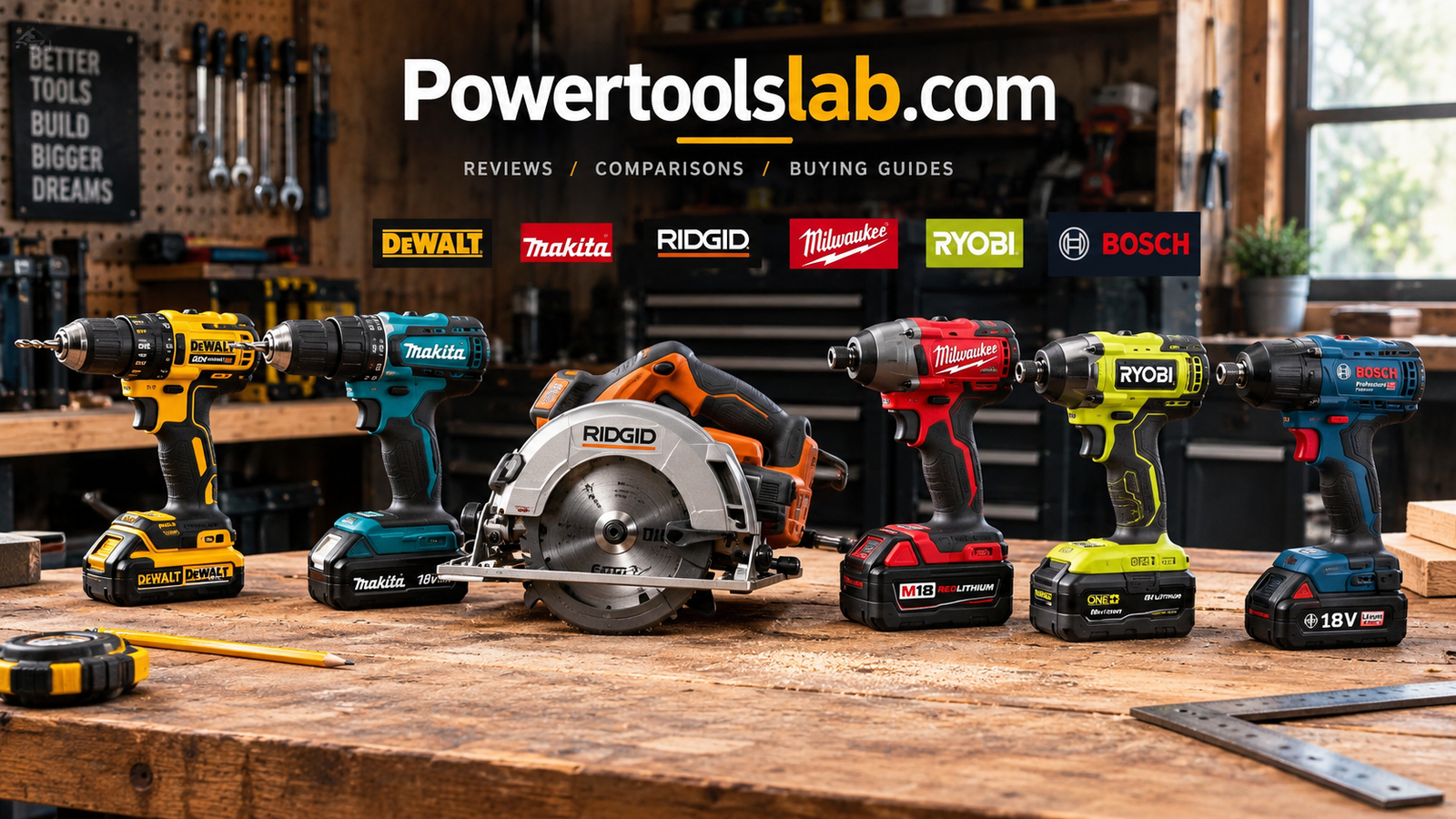
Best Power Tool Brands: Which Ones Actually Earn a Place in Your Workshop
A hands-on, no-nonsense guide to the brands worth your money, the battery platforms worth committing to, and the tools each company does better than anyone else.
Walk into any hardware store and you will face a wall of yellow, red, teal, green and blue plastic, every box promising more power, longer runtime and a tougher build. The truth is that most of the leading names make genuinely good tools. What separates them is not raw quality so much as philosophy: who they build for, how they price their batteries, how deep their catalogs run and how well they treat you when something breaks.
This guide cuts through the marketing. We compare the brands that dominate job sites, garages and weekend projects, explain where each one shines, be honest about where each one stumbles, and help you match a brand to the way you actually work. If you are choosing a first cordless kit or planning to switch platforms, the sections below will save you money and frustration.
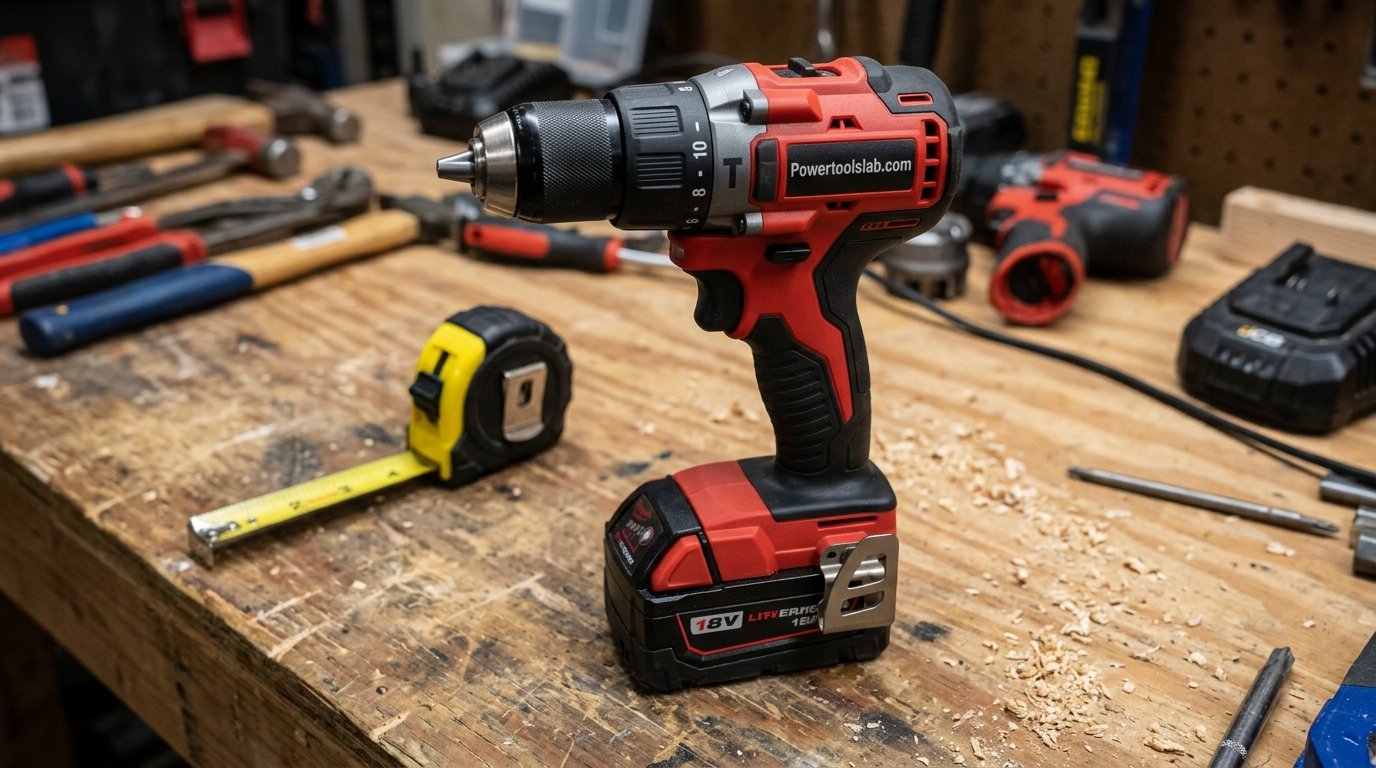
What Makes a Power Tool Brand Great?
Before ranking anyone, it helps to agree on what “best” means. A single tool can be excellent while its maker is a poor long-term partner, and the reverse is just as common. Power tools are rarely a one-off purchase. You buy a drill, then an impact driver, then a saw, then a light, and every one of those purchases either deepens or weakens your commitment to a battery platform. So a great brand is judged on the whole ecosystem, not on any single product.
The Six Things That Really Matter
- Performance under load. Torque, cutting speed and the ability to keep working when the material fights back. Brushless motors and smart electronics have narrowed the gap, but real differences remain in heavy-duty tools.
- Battery platform breadth. How many tools run on the same pack, and how long that pack format has stayed compatible. A brand with hundreds of tools on one battery is worth far more than one with a dozen.
- Durability and repairability. Metal gearboxes, sealed switches, replaceable brushes on corded tools and available spare parts all extend a tool’s life.
- Ergonomics. Balance, grip shape, weight and switch placement decide whether a tool feels like an extension of your hand or a chore by the third hour.
- Warranty and service. Terms vary widely and change over time, so always confirm current coverage. A generous warranty means little if the service center is slow.
- Value over time. The cheapest kit is not always the cheapest choice once you count replacement batteries and the tools you will eventually add.
Keep those six points in mind as you read. They explain why a brand that tops one list can sit mid-table on another, and why the best choice for a plumber is not automatically the best choice for a homeowner repainting a fence.
Tools You Buy Once Versus Tools You Build Around
A useful mental shortcut is to separate “anchor” tools from “occasional” tools. Anchor tools are the ones you will reach for constantly: the drill driver, the impact driver, the circular saw and the reciprocating saw. Those deserve the strongest performance and the best ergonomics you can afford. Occasional tools, such as a rotary tool or an inflator, matter far less, and it is perfectly reasonable to fill those gaps with whatever fits your battery platform. If you want a deeper look at the most important anchor tool of all, our roundup of the best drills for DIY and pro use is a good companion to this guide.
1. DeWalt: The Job Site Default
If there is a single brand that defines the modern contractor’s truck, it is DeWalt. The yellow-and-black livery has been a fixture on construction sites for decades, and the company, which is part of Stanley Black & Decker, has leaned into that reputation by building tools that feel deliberately overbuilt. Grips are chunky, housings are thick, and the whole range is designed around the idea that a tool will be dropped, kicked, rained on and used again the next morning.
The backbone of the lineup is the 20V MAX system, with FLEXVOLT batteries stepping up to higher-voltage performance while remaining compatible with many 20V tools. That crossover is a real advantage: one pack can power a compact drill in the morning and a heavy saw in the afternoon. The catalog is enormous, covering everything from drills and impact drivers to miter saws, table saw options, nailers, grinders, lights, radios and outdoor equipment.
Where DeWalt Excels
Saws are arguably the strongest part of the range. Their cordless circular saws deliver the kind of cutting speed that used to require a cord, and the reciprocating saws chew through demolition work with confidence. If cutting is your main task, read our detailed DeWalt circular saw review and our DeWalt reciprocating saw review for hands-on impressions. For drilling, our guide to the best DeWalt drill walks through which models suit which jobs.
DeWalt also does a good job with jobsite organization. The TSTAK and ToughSystem storage lines nest together, latch reliably and hold up outdoors, which matters more than it sounds when you carry a dozen tools across a site every day.
Pros
- Extremely broad catalog on one battery platform
- Strong cordless saws and demolition tools
- Widely available in stores and easy to service
- Tough housings built for daily abuse
Cons
- Some tools are bulkier than rivals
- Premium lines carry premium prices
- Entry-level yellow tools vary in quality across generations
Best for: framers, carpenters, remodelers and serious DIYers who want a deep, dependable ecosystem and do a lot of cutting.
2. Milwaukee: Innovation and Raw Power
Milwaukee earned its place at the top of many professional wish lists by chasing performance relentlessly. The company, a subsidiary of Techtronic Industries, built its reputation on electricians’, plumbers’ and mechanics’ tools, and that trade-focused DNA still shows. Where a rival might offer one good option, Milwaukee often offers three, each tuned for a specific task and user.
The lineup revolves around two cordless platforms. M12 is the compact system, ideal for tight spaces, overhead work and anyone who prizes light weight. M18 is the full-size platform, with the brand’s brushless Fuel tools and high-capacity batteries delivering serious output. What sets the brand apart is its willingness to invent new categories, from cordless press tools to powerful cordless outdoor equipment and worksite lighting that turns a dark basement into a workable room.
Where Milwaukee Excels
Impact drivers, impact wrenches, right-angle drills and drywall tools are perennial favorites, and the brand’s electronics do a good job of protecting motors and batteries under stress. Cutting tools have also improved sharply. Our Milwaukee circular saw review covers how the company’s saws compare on speed and control, and our list of the best Milwaukee drill models helps you pick between compact and full-size options.
There is also a strong connected-tools story. Inventory tracking and tool management features appeal to contractors managing fleets of tools across several crews, though casual users can ignore that layer entirely.
Pros
- Class-leading power in impact tools and heavy-duty drills
- Two well-developed platforms for compact and full-size work
- Constant innovation and unusual specialty tools
- Strong reputation among tradespeople
Cons
- Often priced above competitors
- Battery platform split means M12 and M18 do not share packs
- Some specialty tools are overkill for homeowners
Best for: electricians, plumbers, mechanics, HVAC techs and demanding users who value cutting-edge performance and are happy to pay for it.
3. Makita: Japanese Precision and Quiet Reliability
Makita approaches power tools with a craftsman’s temperament. The Japanese manufacturer has been making electric tools for over a century, and its products reflect that patience: smooth motors, balanced bodies, and a refined feel that experienced users tend to appreciate more the longer they own a tool. Where some brands shout, Makita quietly works.
The main cordless platform is the 18V LXT system, one of the largest single-battery ecosystems in the industry, with a catalog running into the hundreds of tools. Alongside it sit the compact 12V max CXT line and the higher-output XGT system for heavy-duty work. The LXT breadth is remarkable: beyond the usual drills and saws you will find cordless fans, vacuums, radios, coffee makers and a full outdoor range, all sharing the same battery.
Where Makita Excels
Balance and low vibration are the brand’s calling cards. Circular saws and track-style cutting tools are especially well regarded, and our Makita circular saw review explains why the company’s cutting tools feel so composed. For drilling, the best Makita drill roundup shows how the compact drivers pair light weight with dependable torque.
Makita is also a favorite among woodworkers and finish carpenters because its tools are quieter and smoother than many rivals. Dust extraction technology, in which tools communicate with compatible vacuums, adds a useful layer for anyone cutting indoors.
Pros
- Huge 18V LXT catalog with long-term battery compatibility
- Smooth, balanced, low-vibration tools
- Reputation for longevity and easy servicing
- Excellent for precise or finish-quality work
Cons
- Kits can be pricier than similar big-box offerings
- Less flashy innovation than the boldest rivals
- Availability of some models varies by region
Best for: woodworkers, finish carpenters, remodelers and anyone who values smoothness, balance and longevity over headline specifications.
4. Bosch: German Engineering for Precision Work
Bosch is one of the oldest names in the industry, and the company brings an engineer’s mindset to everything it sells. The brand is split into two visible lines. The blue Professional range targets trades and serious users, while the green range serves homeowners and lighter projects. That distinction matters, because the two lines differ noticeably in build quality, expected duty cycle and price.
Bosch shines wherever accuracy matters. Its laser measures, rotary hammers, jigsaws, routers and precision drills have long been benchmarks, and its accessories, including drill bits, saw blades and jigsaw blades, are often the ones other brands are compared against. Many professionals run tools from other platforms but still buy Bosch bits and blades without a second thought.
Where Bosch Excels
Rotary hammers and hammer drills are standout categories, delivering impressive drilling power in masonry without brutal vibration. Bosch’s compact drill drivers also tend to be light and well balanced. Our guide to the best Bosch drill models breaks down how the Professional and homeowner lines differ. If you are unsure whether masonry work justifies a hammer function, our comparison of a hammer drill vs regular drill explains the trade-offs clearly.
The main limitation is platform breadth. While the 18V system is capable and includes plenty of core tools, it does not stretch as far into specialty and outdoor categories as DeWalt, Milwaukee or Makita. That is rarely a problem for a focused kit, but it can matter if you dream of a single battery for everything.
Pros
- Outstanding accuracy, especially in measuring and precision tools
- Superb rotary hammers and hammer drills
- Industry-standard drill bits and saw blades
- Clear split between professional and homeowner lines
Cons
- Smaller cordless catalog than the biggest rivals
- Green-line tools are not built to professional standards
- Some models are harder to find in local stores
Best for: concrete and masonry drillers, installers, tradespeople who need precision, and buyers who want great accessories to use on any platform.
5. Ryobi: The Homeowner’s Best Friend
No brand has done more to make cordless tools approachable than Ryobi. Sold primarily through a single major home-improvement chain, the green tools are priced to let a beginner build a serious collection without a second mortgage. And unlike many budget lines, the collection stays coherent, because the ONE+ 18V battery has been compatible across a vast range of tools for decades.
That compatibility is the brand’s secret weapon. A battery bought years ago will often still power a brand-new tool, and the catalog stretches from drills and saws to string trimmers, leaf blowers, pressure washers, inflators, work lights, vacuums and even fun extras such as speakers and fans. If you want one battery to run the whole house and yard, few systems compete on sheer versatility per dollar.
Where Ryobi Excels
Value is the headline. For occasional projects, Ryobi tools do the job without the price tag of professional gear. Its brushless HP line closes some of the gap with premium rivals, and there is also a higher-voltage 40V line for outdoor power equipment. Read our best Ryobi drill guide for the pick of the range, and our Ryobi circular saw review and Ryobi tile saw review for a realistic look at cutting performance.
Where Ryobi falls short is sustained heavy use. Motors, gearboxes and battery packs are designed for weekend duty, not eight-hour days. That is not a flaw, it is a clear design target, but professionals should look elsewhere.
Pros
- Excellent value and low entry cost
- Long-running battery compatibility across a giant range
- Great for home, garage and yard in one system
- Easy to find and easy to buy into
Cons
- Not built for daily professional abuse
- Standard-line tools are less refined than premium rivals
- Limited availability outside its main retail channel
Best for: homeowners, first-time buyers, renters, hobbyists and anyone who wants a single affordable battery system for house and yard.
7. Budget and Value Brands Worth Considering
Not everyone needs a professional kit, and the budget end of the market is better than it has ever been. The smartest way to shop here is to accept that these tools are designed for light to moderate use and to match them to projects accordingly.
Ridgid
Sold through a major home-improvement chain and also a part of the Techtronic family, Ridgid sits between Ryobi and the premium brands. Its orange tools are solid, and the brand has long been known for generous service programs for registered products. Table saws, wet-dry vacuums and cordless drills are particular strengths.
Craftsman and Kobalt
Craftsman, now owned by Stanley Black & Decker, has lived through several reinventions, and its current tools aim squarely at homeowners and hobbyists with fair pricing. Kobalt is Lowe’s house brand, offering decent cordless systems and well-reviewed hand tools with an easy path to returns and support in store. Both are strong choices if you shop at those retailers and want convenience with reasonable performance.
Black+Decker, Skil and Worx
These brands lean toward light-duty tasks. They are ideal for hanging shelves, assembling furniture, small repairs and the kind of household jobs where a heavy-duty tool would be wasted. They also make good backup tools to keep in an apartment closet or car trunk.
Porter-Cable and Tile Cutting Value
Porter-Cable has long offered inexpensive corded tools with dependable basics, and its tile saws remain popular for small bathroom and kitchen jobs. Our Porter-Cable tile saw review covers the realities of cutting ceramic and porcelain on a budget, and our roundup of the best tile saws compares wet saws across several price levels.
8. Battery Platforms: The Real Decision Behind Every Brand
Most people think they are choosing a drill. In reality they are choosing a battery. Once you own two or three packs and a charger, switching brands means abandoning that investment, so the platform quietly becomes the most important decision you make. Think of buying into a platform the way you would think about choosing a phone ecosystem: the first device is easy, but everything you add later depends on it.
How to Compare Platforms
- Tool count. Does the platform include the specific tools you will want in two or three years, not just the ones you need today?
- Voltage tiers. Compact 12V systems are lighter and ideal for tight spaces, while 18V or 20V systems handle general work and higher tiers handle demanding saws and outdoor gear.
- Battery capacity and charging. Look at amp-hour ratings and how quickly the charger refills a pack. A fast charger effectively doubles the value of a single battery.
- Backward compatibility. Some brands have kept the same pack shape for many years, protecting your investment. Others introduce new formats that quietly strand older batteries.
- Battery quality. Modern lithium-ion packs from established brands include temperature monitoring and cell balancing, which protects both the pack and the tool.
Understanding Voltage Marketing
You will notice some brands say 18V while others say 20V MAX. These are effectively the same nominal battery: 20V is the peak voltage right off the charger, while 18V is the nominal voltage under load. Do not treat this as a performance difference. Focus instead on real-world output, tool design and pack capacity.
Can You Mix Platforms?
Absolutely, and many professionals do. Third-party adapters exist, but they add risk and can void warranties, so it is safer to simply own two small platforms than to rely on adapters. A common combination is a main platform for anchor tools plus a compact 12V system for lighter work.
| Brand | Main Platform | Compact Line | Catalog Breadth |
|---|---|---|---|
| DeWalt | 20V MAX and FLEXVOLT | Compact 12V-class tools | Very large |
| Milwaukee | M18 | M12 | Very large |
| Makita | 18V LXT and XGT | 12V max CXT | Very large |
| Bosch | 18V | 12V | Moderate |
| Ryobi | ONE+ 18V and 40V | USB Lithium and compact tools | Very large, home focused |
9. Best Power Tool Brand by Tool Category
No single company wins every category. If you are comfortable mixing brands, or simply want to know which company tends to make the strongest example of a specific tool, this section is for you. These are general tendencies, not laws, because individual models change constantly.
| Tool Category | Strong Choices | Why They Stand Out |
|---|---|---|
| Drill drivers | Makita, Milwaukee, DeWalt | Balance, torque and smooth clutches |
| Impact drivers | Milwaukee, DeWalt, Makita | Speed and sustained power |
| Circular saws | DeWalt, Makita, Milwaukee | Cutting speed and low vibration |
| Reciprocating saws | Milwaukee, DeWalt | Aggressive cutting for demolition |
| Rotary hammers | Bosch, Hilti, Milwaukee | Masonry power and vibration control |
| Track saws and sanders | Festool, Makita | Precision and dust control |
| Nailers | Metabo HPT, Milwaukee, DeWalt | Reliable firing and easy service |
| Homeowner kits | Ryobi, Ridgid, Craftsman | Price and battery breadth |
Saws
Cutting tools reveal a brand’s character better than almost anything. For straight, powerful cuts through framing lumber, DeWalt and Milwaukee are the usual leaders, while Makita often wins on control and comfort. Our best power circular saws comparison ranks current options, our best reciprocating saws guide covers demolition tools, and our master list of the best power saws pulls it all together.
Air Compressors
Air tools are a different ecosystem, and here the winners are often specialists. Several tool brands make good compressors, but the right one depends on tank size, airflow and noise level more than on a badge. If you are shopping, start with our guide on how to choose an air compressor, browse the best air compressors, and once yours arrives, follow our walkthrough on how to use an air compressor safely and effectively.
10. Best Power Tool Brand by Type of User
The most useful way to choose is to start with who you are, not with the brand. Here is how the leading names line up against the most common types of buyers.
The Occasional DIYer
If you hang pictures, assemble furniture and tackle a few projects each year, buy for value. Ryobi is the natural pick, with Ridgid, Craftsman and Kobalt as solid alternatives if you shop at their retailers. A compact drill driver, an impact driver and a decent circular saw will handle almost everything, and you can add tools slowly.
The Serious Home Renovator
Someone tackling a kitchen remodel, deck build or basement finish should step up to a prosumer platform. DeWalt and Makita offer the best balance of price and capability here, and Milwaukee is a strong option if you plan to use impact tools heavily. This is also where the choice between cord and battery becomes important, and our comparison of corded vs cordless drill options helps you decide where each type still makes sense.
The Professional Tradesperson
Pros should pick the brand that best matches their trade and their local supply network. Electricians and plumbers often favor Milwaukee. General contractors and framers commonly favor DeWalt. Finish carpenters, cabinet installers and cutters who work close to clients often prefer Makita or Festool for their smoothness and dust control. The best brand for you is also the one your suppliers stock and your crew already uses, because shared batteries save real money on a site.
The Woodworker
Hobbyist and semi-pro woodworkers benefit from precision, low vibration and dust management. Corded tools still make excellent sense in a shop where you are always near an outlet, and Bosch, Makita and Festool all make excellent corded routers, sanders and saws. Cordless is wonderful for convenience, but a woodworker will often mix both.
The Mechanic and Auto Enthusiast
Impact wrenches, ratchets and work lights are the priority here. Milwaukee’s mechanic-focused range and Makita’s compact 18V tools are popular, while budget-conscious garage users often thrive on Ryobi or Ridgid.
| If You Are… | Start With | Because |
|---|---|---|
| A beginner or renter | Ryobi | Low cost and a wide range of home and yard tools |
| A renovator | DeWalt or Makita | Strong all-around performance and deep catalogs |
| An electrician or plumber | Milwaukee | Compact, powerful trade-focused tools |
| A finish carpenter | Makita or Festool | Smooth, precise and dust-conscious |
| A masonry worker | Bosch or Hilti | Excellent rotary hammers |
11. Warranties, Service and Smart Buying Tips
Once you have narrowed down a brand, a few practical decisions separate a good purchase from a regrettable one. These are lessons most people learn the hard way.
Read the Warranty Carefully
Warranty terms vary by brand, tool category and even by region, and manufacturers change them regularly. Compare the length of coverage for the tool, the battery and the charger separately, and note whether registration is required. Some brands offer longer coverage on premium lines, and some offer extended service programs for professional users. Always confirm the current terms on the manufacturer’s site before buying.
Check Local Service and Parts
A great tool is a headache if the nearest authorized service center is three states away. Before committing to a brand, find out whether replacement parts, brushes, chucks and batteries are easy to get. Brands with strong retail and online parts networks make long-term ownership far smoother.
Buy Kits Strategically
A combo kit is the cheapest way to enter a platform, because the batteries and charger are subsidized across several tools. But do not buy a six-tool kit if you will only use two. A two-tool kit with a good battery is often better value than a large kit full of tools you will not touch.
Prioritize Battery Capacity Wisely
Higher amp-hour packs run longer but weigh more, so choose capacity to match the task. A compact pack keeps a drill light for overhead work, while a large pack suits a saw or an impact wrench that draws heavy current. Owning one of each is a smart compromise.
Look After Your Tools
- Store batteries at moderate temperatures and avoid leaving them in a hot vehicle.
- Clean vents and chucks regularly so motors can cool and bits can seat correctly.
- Use sharp, correct blades and bits. Dull accessories cause more damage to tools than almost anything else.
- Do not run any tool to complete exhaustion repeatedly; let it cool between long, heavy tasks.
Frequently Asked Questions About Power Tool Brands
What is the best power tool brand overall?
There is no single winner, because the best brand depends on how you work. DeWalt, Milwaukee and Makita are the most consistently recommended for serious use, while Ryobi leads for value and home use. Choose based on the tools you need, the battery platform you prefer and the service available near you.
Which is better, DeWalt or Milwaukee?
Both are excellent. Milwaukee tends to lead in innovation and in impact tools, while DeWalt has an enormous catalog and particularly strong saws. If you work in the electrical or plumbing trades, Milwaukee often gets the edge. For general carpentry and remodeling, DeWalt is a very safe bet.
Is Makita better than DeWalt?
Makita is often praised for smoothness, balance and durability, and its 18V LXT catalog is enormous. DeWalt tends to feel more rugged and jobsite-oriented. Neither is objectively better, so it comes down to which feels better in your hand and which fits your tool needs.
Are Ryobi tools good enough for serious projects?
For most home projects, yes. Ryobi tools handle decks, shelving, fencing and general repairs comfortably. They are not designed for daily professional workloads, so if you use tools for eight hours a day, a professional brand will hold up better.
Which power tool brand has the longest-lasting batteries?
Battery life depends on pack capacity, the tool’s efficiency and how you care for it. Milwaukee, Makita and DeWalt all offer high-capacity packs and good electronics that protect cell health. Proper storage and avoiding heat matter as much as brand.
Can I use one brand’s battery on another brand’s tools?
Not directly. Batteries are proprietary and fit only their own brand’s tools. Third-party adapters exist, but they can void warranties and introduce safety risks, so most people are better off sticking with one platform or owning two small ones.
What is the difference between 18V and 20V MAX?
Mostly marketing. Both refer to essentially the same battery configuration. The 20V figure is the maximum voltage measured with no load, while 18V is the nominal voltage under use. Compare actual performance, not the number on the label.
Are brushless tools worth the extra money?
Usually, yes. Brushless motors are more efficient, run cooler, last longer and deliver more work per battery charge. They cost more, but the extra runtime and durability generally pay off for regular users.
Which brand is best for a beginner?
Ryobi is a great starting point thanks to its low prices and wide tool range. If you can afford a little more and want room to grow, a compact DeWalt or Makita kit is a strong step up.
Are professional brands worth the higher price?
If you use tools often or in demanding conditions, yes. Better motors, stronger gearboxes and longer service life reduce downtime and replacement costs. For occasional use, the extra performance may never come into play, and a budget brand can be the smarter purchase.
Should I buy a combo kit or individual tools?
A combo kit is usually cheaper per tool and includes batteries and a charger. Buy individual “bare” tools later, once you own the platform. Just avoid large kits containing tools you are unlikely to use.
Where should I start if I am switching brands?
Begin with the tools you use most, typically a drill driver and an impact driver, and sell or gift your old tools gradually. Avoid switching everything at once; change platforms as tools wear out or as sales make sense.
Conclusion: Choose the Platform, Not Just the Product
The best power tool brand is the one that matches your work, your budget and your long-term plans. DeWalt gives you a rugged, deep ecosystem that excels at cutting and framing. Milwaukee pushes performance and innovation, especially for the trades. Makita rewards you with smooth, balanced tools built to last. Bosch delivers precision and unbeatable accessories, Ryobi makes cordless ownership affordable for everyone, and specialists such as Festool and Hilti offer refinement where it matters most.
Start with the tools you will use most, pick the battery platform you will be comfortable living with for years, and add to it gradually. Do that, and you will spend less, work faster and enjoy your projects more, whichever color of plastic ends up in your toolbox.