How Many Amps Does a Typical Power Tool Use?
From a 3-amp orbital sander to a 15-amp circular saw, here is what your tools actually pull from the wall, why the numbers differ, and how to keep your circuits, cords, and generator from paying the price.
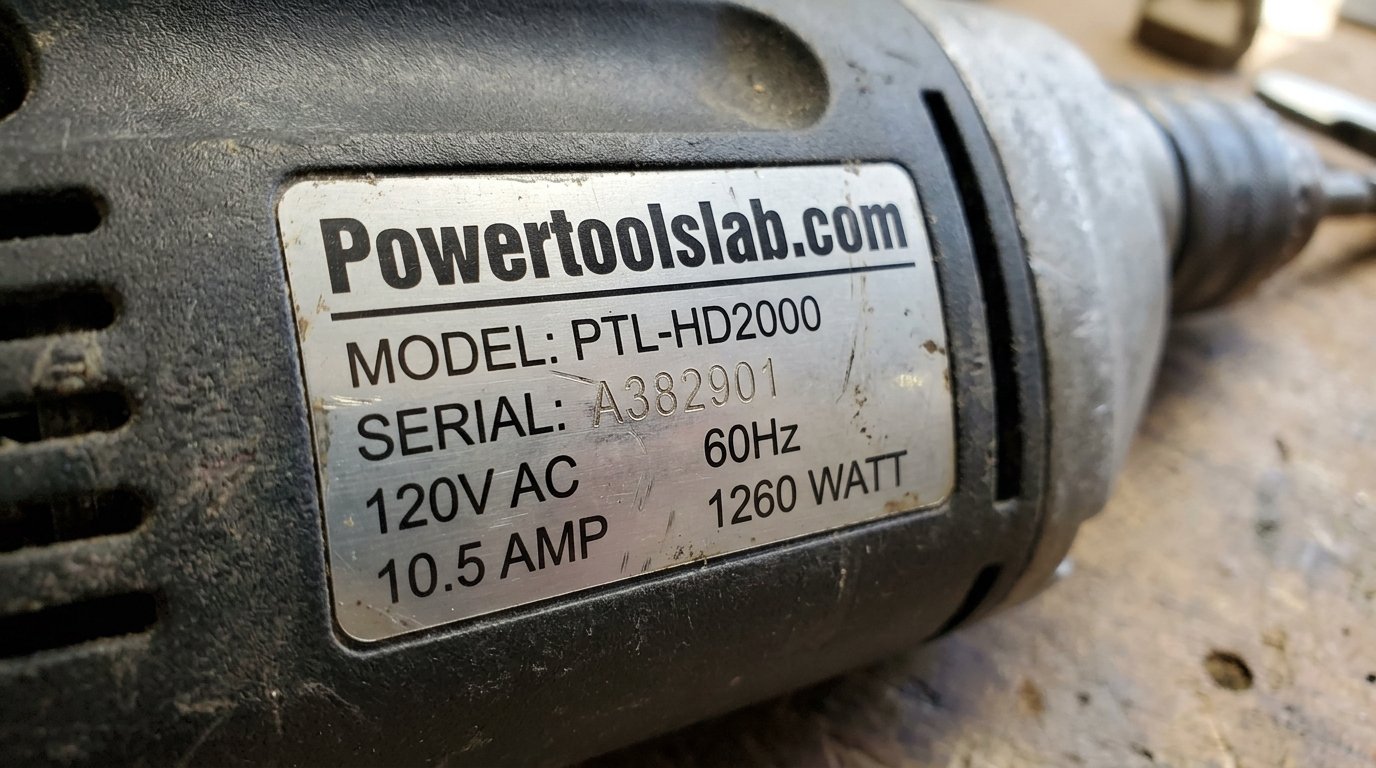
Flip almost any corded power tool over and you will find a small rating plate with a handful of numbers stamped on it. One of them is followed by a capital A, and that number is the tool’s amp rating. It looks like trivia until the day a breaker trips halfway through a cut, a long extension cord runs warm, or a generator stalls the moment you squeeze the trigger. Then it becomes the most important number on the tool.
So how many amps does a typical power tool use? There is no single figure, because “power tool” covers everything from a palm sander that sips two or three amps to a large air compressor that gulps more than a household circuit comfortably supplies. What you can say is that most handheld corded tools land somewhere between 3 and 15 amps on a standard 120-volt outlet, and that the biggest and hardest-working tools sit right at the top of that range.
This guide walks through the numbers tool by tool, explains the simple math behind them, and shows why the number on the label is not always what you draw in real use. Along the way we will cover cordless tools (which measure things differently), circuit and extension cord limits, and how to size a generator so it does not choke. If you are also weighing up brands as you read, our overview of the major power tool brands is a useful companion.
1. The Short Answer: Typical Amp Draw at a Glance
Quick answer: A typical corded power tool uses about 5 to 15 amps at 120 volts. Light-duty tools such as sanders and oscillating multi-tools use 2 to 5 amps, mid-range tools such as drills and jigsaws use 4 to 8 amps, and heavy cutters such as circular saws, miter saws, and table saws use 12 to 15 amps.
The table below gives a working range for the tools most people own. These are nameplate-style figures for common 120-volt models. Your exact tool may sit above or below them, so always trust the label on your own machine.
| Tool | Typical Rated Amps (120V) | Load Level |
|---|---|---|
| Orbital / random orbital sander | 2 – 3.5 A | Light |
| Oscillating multi-tool | 2.5 – 5 A | Light |
| Corded drill (3/8 in.) | 3 – 5 A | Light to medium |
| Corded drill (1/2 in.) | 5 – 8 A | Medium |
| Hammer drill | 6 – 10 A | Medium to heavy |
| Jigsaw | 4 – 7 A | Medium |
| Angle grinder (4.5 in.) | 7 – 11 A | Medium to heavy |
| Belt sander | 7 – 11 A | Heavy |
| Reciprocating saw | 10 – 15 A | Heavy |
| Circular saw (7-1/4 in.) | 13 – 15 A | Heavy |
| Miter saw (10–12 in.) | 12 – 15 A | Heavy |
| Jobsite table saw (10 in.) | 13 – 15 A | Heavy |
| Router (full-size) | 10 – 15 A | Heavy |
| Thickness planer | 13 – 15 A | Heavy |
| Portable air compressor | 8 – 15 A | Heavy with surge |
Notice the pattern. Tools that spin small, light parts (sanders, multi-tools) draw very little. Tools that force a blade through dense material, or that spin a big cutter at high speed, draw a lot. Current follows effort: the harder the motor has to work, the more amps it pulls.
Browse corded power tools and compare amp ratings side by side.
2. Amps, Volts, Watts, and Horsepower Explained
Before diving into individual tools, it helps to understand the four numbers you will keep bumping into. Once these click, every rating plate becomes easy to read.
Volts: the push
Voltage is the electrical pressure behind the current. In North America, standard household outlets deliver about 120 volts, while larger tools and shop machines may run on 240 volts. Think of it as water pressure in a pipe.
Amps: the flow
Amperage is the volume of current actually flowing. Continuing the plumbing comparison, amps are how many gallons per minute move through the pipe. A tool “uses” amps in proportion to how hard its motor is working at that instant.
Watts: the work
Watts measure real power, the rate at which energy is consumed. For simple loads you get watts by multiplying volts by amps. Motors are a bit more complicated because of something called power factor, but the basic relationship is a very handy rule of thumb.
For example, a circular saw rated at 15 amps on a 120-volt outlet is designed to draw around 1,800 watts at full load (15 × 120). A 5-amp drill sits closer to 600 watts.
Horsepower: the marketing number
Many tools advertise horsepower instead of amps. One mechanical horsepower equals about 746 watts of output. Because motors are never perfectly efficient, a tool marketed as “2 HP” actually needs more electrical input than 1,492 watts to deliver that output, which is why it may draw around 15 amps on a 120-volt circuit. Be cautious with “peak horsepower” claims, which describe a momentary surge rather than something the motor can sustain. Amps on the rating plate are a far more honest guide to what the tool demands from the wall.
Why 240 volts halves the amps
Because watts stay the same while voltage doubles, amps drop by half. A machine that pulls 24 amps at 120 volts would pull about 12 amps at 240 volts. That is why big stationary tools, such as cabinet table saws and large compressors, are often wired for 240 volts. The wiring runs cooler, the breaker can be smaller, and the motor starts more easily.
| Amps at 120V | Approx. Watts | Approx. Amps at 240V |
|---|---|---|
| 3 A | 360 W | 1.5 A |
| 5 A | 600 W | 2.5 A |
| 8 A | 960 W | 4 A |
| 10 A | 1,200 W | 5 A |
| 13 A | 1,560 W | 6.5 A |
| 15 A | 1,800 W | 7.5 A |
A clamp meter shows the real amp draw of any corded tool while it works.
3. Drills, Drivers, and Hammer Drills
Corded drills are the workhorses of almost every toolbox, and their amp ratings scale neatly with chuck size. A compact 3/8-inch drill typically draws 3 to 5 amps, which is plenty for wood, plastic, and light metal work. A full-size 1/2-inch drill usually lands between 5 and 8 amps, because it is built to turn larger bits and handle higher torque, especially in tough materials or with auger and spade bits.
Hammer drills add a hammering mechanism that pounds the bit forward while it rotates, and that extra job costs current. Expect most corded hammer drills to be rated at roughly 6 to 10 amps. Rotary hammers, which use a more powerful piston-driven mechanism for serious masonry, often fall in a similar band or go higher, especially SDS-max models built for chipping and large-diameter holes.
Corded versus cordless drills
The amp figure on a corded drill is not directly comparable to a cordless one, which we will unpack in the cordless section. If you are trying to decide between the two styles, our comparison of corded vs cordless drills lays out the trade-offs in power, run time, and price. And if you are stepping up to masonry, the guide to hammer drills versus regular drills explains when the extra amps are worth it.
Pros of corded drills
- Constant power with no battery fade
- Great for long, repetitive drilling jobs
- Usually cheaper for the same torque
- No charging downtime
Cons of corded drills
- Tied to an outlet or extension cord
- Cord can snag or limit reach
- Amp draw matters on shared circuits
- Less convenient on ladders and roofs
What affects a drill’s real draw?
- Bit size and type: Larger bits and self-feeding bits demand more torque and therefore more current.
- Material: Dense hardwood, steel, and concrete push the motor harder than softwood or drywall.
- Feed pressure: Leaning on the drill forces the motor to work against resistance and raises the draw.
- Speed setting: Low-gear, high-torque work can pull more current than high-speed drilling in light material.
If a drill ever starts smelling hot or smoking, that is a sign the motor is being overloaded, and it is worth reading why a drill starts smoking before you use it again. When you are ready to shop, the roundup of the best drills for DIY and pro use covers both corded and cordless options.
Compare corded and cordless drills for every budget.
4. Circular, Miter, and Table Saws
Saws are where amp ratings climb, because cutting through lumber demands both speed and torque. A standard corded 7-1/4-inch circular saw is usually rated at 13 to 15 amps, which is about the most a 120-volt tool can practically be designed to draw on a standard 15-amp household circuit. That is not a coincidence: manufacturers push motor size right up to the limit of what a regular outlet can supply.
Ten- and twelve-inch miter saws sit in the same neighborhood, typically 12 to 15 amps. Jobsite table saws, the portable ones that run on ordinary outlets, are almost always 13 to 15 amps. Big cabinet saws and contractor-style shop machines are a different story. Many are wired for 240 volts precisely so they can deliver several horsepower without demanding 30 or more amps on a single leg.
| Saw Type | Typical Voltage | Typical Rated Amps |
|---|---|---|
| Corded circular saw (7-1/4 in.) | 120V | 13 – 15 A |
| Worm-drive circular saw | 120V | 13 – 15 A |
| 10-inch miter saw | 120V | 12 – 15 A |
| 12-inch sliding miter saw | 120V | 13 – 15 A |
| Jobsite table saw | 120V | 13 – 15 A |
| Cabinet table saw | 240V | 12 – 16 A |
Why saws draw so much
A saw blade spins fast, and every tooth has to shear wood fibers. When you push a circular saw through wet lumber, an engineered beam, or a thick stack of plywood, the motor works harder to hold its speed, and the amp draw spikes toward, and sometimes past, the nameplate value. A dull blade multiplies this effect, because it rubs and burns rather than slicing cleanly. Keeping blades sharp is one of the cheapest ways to reduce strain on both the motor and the circuit.
If you are just getting oriented with the different kinds of saws, the explainer on the types of power saws is a good starting point, and our guide to the best power circular saws compares popular models. Curious how a saw stacks up against gas-powered cutting? See how a power saw compares to a chainsaw for a clear breakdown of power, portability, and use cases.
See top-rated models and check each amp rating before you buy.
5. Reciprocating Saws, Jigsaws, and Other Cutters
Reciprocating saws are demolition tools, and their motors are sized accordingly. Full-size corded models are commonly rated between 10 and 15 amps, with the strongest ones at the top of that range. The push-pull blade action, combined with the rough materials they cut (nail-embedded lumber, pipe, and metal studs), keeps the load high even though the blade only moves a short distance. Compact one-handed versions draw less, often 5 to 8 amps, but give up some cutting speed.
Jigsaws are more delicate. Most corded jigsaws land between 4 and 7 amps, with the top-end, heavy-duty orbital-action models reaching the upper edge of that range. Because they make curved, controlled cuts in thinner stock, they do not need the sheer muscle of a circular or reciprocating saw. Oscillating multi-tools are lighter still, typically drawing 2.5 to 5 amps, and they are a good example of how amp draw follows the size of the job rather than the value of the tool.
Rough amp ranges for cutting tools:
- Full-size reciprocating saw: about 10 to 15 A
- Compact reciprocating saw: about 5 to 8 A
- Jigsaw: about 4 to 7 A
- Oscillating multi-tool: about 2.5 to 5 A
- Electric chainsaw (14 to 16 in.): about 8 to 12 A
Corded electric chainsaws and pole saws are worth a special mention. They run between 8 and 12 amps in most consumer models, which puts them squarely in the range of a big drill or a mid-size saw. Because they are often used outdoors on long extension cords, matching the cord gauge to the tool is especially important, something we cover in a later section.
When you are ready to compare specific models, the guides to the best reciprocating saws and the wider best power saws roundup put amp ratings alongside real-world performance, so you can see what you get for the extra draw.
Find the right reciprocating saw or jigsaw for the job.
6. Grinders, Sanders, and Surface Tools
Surface-finishing tools cover the widest spread of amp ratings in the whole workshop. At the gentle end, random orbital sanders and detail sanders typically draw 2 to 3.5 amps. They spin a comparatively small pad against a light load, and the motor rarely has to fight for speed. Palm sanders sit in the same band. At the aggressive end, belt sanders are rated around 7 to 11 amps, because they spin a large loop of abrasive against wood and remove material quickly.
Angle grinders are the notable heavy hitters. A 4.5-inch grinder is commonly rated between 7 and 11 amps, while 7- and 9-inch models used for concrete, steel, and heavy cutting can run well above that, often at the very top of what a 120-volt circuit can supply. Because grinding disks bind, spark, and load up, grinders are also tools where the real draw during a hard cut can exceed the rating plate for brief moments.
| Tool | Typical Amps | Notes |
|---|---|---|
| Palm / detail sander | 1.5 – 2.5 A | Very low draw |
| Random orbital sander | 2.5 – 3.5 A | Popular for finish work |
| Belt sander (3×21 in.) | 7 – 8 A | Aggressive stock removal |
| Belt sander (4×24 in.) | 10 – 11 A | Heavy-duty models |
| Bench grinder (6–8 in.) | 3 – 5 A | Steady but modest |
| Angle grinder (4.5 in.) | 7 – 11 A | Spikes if disk binds |
| Angle grinder (7–9 in.) | 13 – 15 A | Very heavy load |
| Heat gun | 10 – 15 A | Resistive heating; steady draw |
Heat guns deserve a note because they behave differently from motor-driven tools. A heat gun is essentially a hair dryer with a much hotter element, and heating elements draw a steady, constant current rather than one that rises and falls with load. A 1,500-watt heat gun draws about 12.5 amps the entire time it is on, which is why plugging one into a circuit that already feeds a space heater or vacuum can trip the breaker in seconds.
Explore sanders and grinders in every size and power class.
7. Routers, Planers, and Shop Machines
Woodworking machines that shape and smooth stock tend to be power-hungry. A compact trim router typically draws 4 to 7 amps, which is enough for edge profiles and light joinery. Full-size fixed-base and plunge routers, the ones that swing big bits at 20,000 rpm or more, commonly sit between 10 and 15 amps, with 3-plus horsepower models bumping right up against the limits of a standard circuit.
Benchtop thickness planers are another heavy category. A typical 12- to 13-inch portable planer is rated at around 15 amps and can trip a breaker if the knives are dull or you take too deep a pass. Jointers, drill presses, band saws, and dust collectors round out the shop. Drill presses are gentler, often 3 to 8 amps depending on motor size, while band saws and dust collectors vary widely with motor horsepower.
Shop machine amp ranges:
- Trim / compact router: about 4 to 7 A
- Full-size router: about 10 to 15 A
- Benchtop planer: about 13 to 15 A
- Drill press: about 3 to 8 A
- Benchtop band saw: about 3 to 6 A
- Shop vacuum: about 5 to 12 A
- Dust collector (1 to 2 HP): about 8 to 20 A at 120 V, less at 240 V
The hidden problem of running several machines
In a small shop it is easy to forget that a dust collector, a shop vac, and a saw often run at the same time. Add their amp ratings together, and you may discover that a single 15-amp circuit is being asked to supply 25 or more amps. That is a fast way to trip breakers, and it is also a fast way to overheat wiring in an older building. The sensible fix is to spread machines across separate circuits, or to add dedicated 20-amp circuits for the biggest tools.
If you are outfitting a woodworking space, matching each machine to the right circuit early saves a lot of frustration later. Brand-by-brand comparisons in our power tool brands guide can help you pick machines that suit your electrical setup.
Browse routers and benchtop planers with clear amp ratings.
8. Air Compressors and Tile Saws: The Heavy Hitters
Air compressors deserve their own section because their electrical behavior is unusual. The motor does not run steadily. It cycles on when tank pressure drops and shuts off when the tank refills, and each start comes with a surge of current. Small pancake and hot-dog compressors typically draw 8 to 12 amps while running, while larger portable 1.5 to 2 HP models sit at 12 to 15 amps. Big stationary units of 5 HP and up are commonly wired for 240 volts and draw 20 to 30 amps or more.
The number of amps a compressor needs is tied directly to how much air it produces, and sizing the right one for your tools is a subject of its own. Our walkthrough on what size air compressor you need explains CFM and PSI in plain English, and the best air compressors roundup lists popular models along with their electrical requirements. Because compressors are pressure vessels, safety matters too, so read our notes on air compressor safety before you set one up.
| Compressor Class | Typical Voltage | Typical Running Amps |
|---|---|---|
| Small pancake / hot-dog (2–6 gal) | 120V | 8 – 12 A |
| Portable twin-stack (6–10 gal) | 120V | 11 – 15 A |
| Stationary 60-gallon (3–5 HP) | 240V | 15 – 25 A |
| Large stationary (5+ HP) | 240V | 20 – 30+ A |
Wet tile saws
Tile saws sit in the middle. Compact 7-inch models often draw 5 to 8 amps because they use a smaller diamond blade and cut relatively thin material. Larger 10-inch wet saws, built to slice porcelain and stone quickly, are commonly rated around 13 amps or more. They also run a small water pump, which adds a little to the total. Whichever you choose, water plus electricity means you should always plug a wet saw into a GFCI-protected outlet. If you are comparing models, see our picks for the best tile saws.
Check compressor amp draw against your circuit before you order.
9. Cordless Tools: Amps vs Amp-Hours
Cordless tools trip people up because they mix two different amp-related terms. The first is amps, a measure of current flowing at a moment in time. The second is amp-hours (Ah), a measure of how much charge a battery stores. A 5.0 Ah battery can deliver 5 amps for one hour, or 10 amps for half an hour, or 50 amps for six minutes, at least in theory. Amp-hours describe run time, not power.
What determines a cordless tool’s actual power is the battery’s voltage and how much current it can safely deliver. A typical 18V or 20V (max) pack multiplied by a 5.0 Ah rating stores roughly 90 to 100 watt-hours of energy. A cordless circular saw cutting through framing lumber may pull 30 to 50 amps from the battery momentarily, far higher than a corded saw draws from the wall, because the voltage is much lower. That is simply the same watts-equals-volts-times-amps math at a smaller voltage.
| Feature | Corded Tool (120V) | Cordless Tool (18–20V) |
|---|---|---|
| Rating you see | Amps drawn from outlet | Voltage and amp-hours of battery |
| Typical draw for a saw | 13 – 15 A from wall | 30 – 50+ A from battery briefly |
| Run time | Unlimited while plugged in | Depends on Ah and workload |
| Circuit concerns | Breaker and cord size matter | Only the charger touches the outlet |
What about the charger?
Battery chargers are the only part of a cordless system that plugs in, and they are very light loads. Standard chargers typically draw 1 to 3 amps from the wall. Rapid chargers, which refill a big pack in under an hour, might pull 3 to 6 amps. Charging a handful of batteries in a row on a shared circuit rarely causes trouble, but a full multi-bay charging station with many chargers running at once can add up.
Pros of cordless
- Total freedom from outlets and cords
- No circuit or extension cord limits
- Great for ladders, roofs, and remote sites
- Batteries share across a whole tool line
Cons of cordless
- Run time is limited by battery size
- Batteries are costly and wear out
- Peak power can lag behind corded models
- Cold weather can reduce output
If you are choosing a battery platform, take a look at our reviews of the best DeWalt drills and the best Milwaukee drills, two of the most popular cordless ecosystems, where battery capacity and real-world performance are compared directly.
Compare battery kits and see amp-hour ratings at a glance.
10. Startup Surge and Load: Why Amps Change
The number on the rating plate describes one operating point, usually the full-load draw that the manufacturer measured in the lab. In real work, your tool’s amp draw moves around constantly, and understanding why helps you avoid nuisance trips and premature motor failure.
Inrush current at startup
An electric motor at rest has very little resistance, so when you first squeeze the trigger it draws a brief burst of current several times its running value. This inrush lasts a fraction of a second, but it is why a lightly loaded circuit can still trip when a big tool starts, and why a generator sized only to a tool’s running watts may stall. Universal motors in handheld tools have moderate inrush, while induction motors in compressors, table saws, and shop machines can pull five or more times their running current for an instant. Soft-start electronics in many newer tools tame this surge, which is a genuine advantage on generators and shared circuits.
Load-dependent draw
Once a motor is up to speed, its draw depends on how hard it is working. A circular saw idling in the air might pull only 4 or 5 amps, but push it through a thick beam and the draw can climb to or past its nameplate rating. If the load gets so heavy that the blade slows dramatically, current rises steeply as the motor struggles, and this is exactly the kind of overload that overheats windings and burns out a tool.
Things that push amp draw higher:
- Dull blades, bits, or abrasive disks
- Forcing the tool instead of letting it cut
- Dense, wet, or knotty material
- Long, thin, or undersized extension cords (they cause voltage drop, which makes the motor draw more)
- Low supply voltage on a heavily loaded circuit
- Worn brushes, bearings, or a clogged air intake
The link between overload and overheating
Extra current means extra heat. That is why a tool that hums, slows down, or smells hot is telling you to back off. Persistent overload is the leading cause of premature motor failure, and it is also why it pays to match the tool to the task in the first place: a 5-amp drill forced to bore large holes in hardwood will burn out long before a 8-amp model.
Fresh blades and bits reduce strain and amp draw.
11. Circuits, Breakers, and Extension Cords
Knowing a tool’s amps only matters if you can compare it with what your wiring can safely supply. In most homes, general-purpose outlets sit on either a 15-amp or a 20-amp circuit. A 15-amp breaker will carry 15 amps, but for anything that runs continuously (three hours or more) electrical practice recommends staying at about 80 percent of the breaker rating, which is 12 amps on a 15-amp circuit and 16 amps on a 20-amp circuit. Shop tools cut in bursts, so they do not strictly fall under the continuous rule, but the guideline is a wise margin when several machines share a line.
| Breaker Size | Max Load | Comfortable Continuous Load (80%) |
|---|---|---|
| 15 A | 15 A (1,800 W at 120V) | 12 A (1,440 W) |
| 20 A | 20 A (2,400 W at 120V) | 16 A (1,920 W) |
| 30 A (240V) | 30 A (7,200 W at 240V) | 24 A (5,760 W) |
The practical takeaway: one 15-amp saw fits on a 15-amp circuit, but a saw plus a dust collector plus a shop light quickly does not. If your breaker keeps tripping, add up the tools that are on at once, or plug the second machine into a different circuit.
Choosing an extension cord
The wire in an extension cord has resistance, and long or thin cords lose voltage along the way. A motor fed with reduced voltage compensates by drawing more current, which heats both the motor and the cord. Wire thickness is described by gauge (AWG), and a lower number means thicker wire. As a general rule of thumb for 15-amp tools on 120 volts:
| Cord Length | Recommended Minimum Gauge (up to 15 A) |
|---|---|
| Up to 25 ft | 14 AWG |
| 25 – 50 ft | 12 AWG (14 AWG for lighter tools) |
| 50 – 100 ft | 12 AWG |
| 100 ft or more | 10 AWG |
- Always choose a cord rated for outdoor use if there is any chance of damp conditions.
- Uncoil the entire cord before use. A coiled cord traps heat.
- Use GFCI-protected outlets for wet tools and outdoor work.
- Never daisy-chain multiple extension cords to reach farther. Buy one cord of the right length.
- Replace any cord with cracked insulation, exposed wire, or damaged plugs.
Compressors and other pressure equipment add their own considerations, so make sure to also review our guide to air compressor safety when setting up powered equipment in a garage or shop.
Get a heavy-duty extension cord sized for your loads.
12. Generators, Running Costs, and Buying Tips
Job sites without power, storm outages, and remote projects all lead to the same question: can my generator run this tool? The answer depends on both running watts and starting watts. Multiply the tool’s amps by the voltage to find running watts, then allow generous headroom for startup surge. A 15-amp circular saw needs about 1,800 running watts, but a generator rated for only 2,000 running watts may stall on startup, especially with inverter-type units that have lower surge capacity. A comfortable target is a generator with a running rating at least 25 to 50 percent above the largest tool you plan to power, and a surge rating well above the tool’s startup requirement.
| Tool | Approx. Running Watts | Suggested Generator Size |
|---|---|---|
| Random orbital sander (3 A) | 360 W | 1,000 W or more |
| Corded drill (6 A) | 720 W | 1,500 W or more |
| Circular saw (15 A) | 1,800 W | 3,000 W or more |
| Compressor (12 A) | 1,440 W (higher surge) | 3,500 – 4,000 W or more |
| Two tools at once (15 A + 6 A) | 2,520 W | 4,000 W or more |
What does it cost to run?
Power tools cost surprisingly little in electricity because they run in short bursts. To estimate, convert watts to kilowatts and multiply by hours and your electricity rate. A 15-amp saw at 1,800 watts running for one hour is 1.8 kilowatt-hours. At an example rate of 15 cents per kWh, that is about 27 cents for an hour of continuous full-load cutting, and in practice a saw is actually cutting only a small fraction of that time. Even a busy weekend of woodworking rarely adds more than a dollar or two to a power bill.
Smart buying tips
- Read the amps, not just the horsepower. The rating plate reveals real electrical demand.
- Match the tool to your circuits. If your garage has a single 15-amp line, a 15-amp saw is your ceiling.
- Consider soft-start features. They reduce surge and are friendlier to generators and shared circuits.
- Pick brushless where possible. Brushless motors are more efficient and generate less heat for the same output, especially in cordless tools.
- Buy for your typical job, not your rarest one. A 5-amp drill covers most household tasks, and a hammer drill is worth it only if you drill concrete often.
- Maintain your tools. Clean vents, sharp accessories, and healthy brushes keep amp draw close to the rating.
If you are still choosing brands or specific models, browse our brand guide and the individual buying guides linked below to compare features and real-world performance.
Find a generator with enough running and starting watts.
Frequently Asked Questions
How many amps does the average power tool use?
Most corded handheld power tools use between 5 and 15 amps at 120 volts. Light tools like sanders draw 2 to 3.5 amps, mid-range tools like drills and jigsaws draw 4 to 8 amps, and heavy tools like circular saws and reciprocating saws draw 12 to 15 amps.
How many amps does a corded drill use?
A 3/8-inch corded drill typically draws 3 to 5 amps, while a 1/2-inch drill draws around 5 to 8 amps. Corded hammer drills usually range from about 6 to 10 amps depending on motor size and mode.
How many amps does a circular saw draw?
A standard 7-1/4-inch corded circular saw is usually rated at 13 to 15 amps, which is right at the limit of a 15-amp household circuit. The real draw rises when cutting thick or wet lumber and drops when the blade spins freely.
Can I run a 15-amp tool on a 15-amp circuit?
Yes, a single 15-amp tool can run on a 15-amp circuit, but there will be little headroom. If anything else is on the same circuit, such as lights, a shop vacuum, or a dust collector, the breaker may trip. A dedicated 20-amp circuit is a better choice for heavy shop tools.
How do I convert watts to amps for a power tool?
Divide watts by volts. A 1,200-watt tool on a 120-volt outlet draws about 10 amps, because 1,200 divided by 120 equals 10. For motors, real draw can be slightly higher because of power factor and efficiency losses.
Do cordless tools use amps?
Yes, but the amps are drawn from the battery, not the wall. Battery labels list amp-hours, which show capacity, not power. Only the charger plugs into an outlet, and it typically draws a small 1 to 3 amps.
Why does my tool trip the breaker when it starts?
Motors draw a large inrush of current at startup, often several times their running amps for a fraction of a second. If the circuit is already carrying other loads, that surge can trip the breaker. Lightening the circuit load or using a soft-start tool usually solves it.
What size extension cord should I use for a power tool?
For 15-amp tools, use 14-gauge cords up to about 25 feet, 12-gauge cords for 50 to 100 feet, and 10-gauge cords beyond that. Thicker wire reduces voltage drop and prevents the motor and cord from overheating.
How big a generator do I need to run a circular saw?
A 15-amp circular saw needs roughly 1,800 running watts, plus extra for startup surge. A generator of about 3,000 running watts gives a comfortable margin, especially if you may run a second tool or a light.
Do power tools use a lot of electricity?
Not really. Because tools run in short bursts, even a 15-amp saw might use only a few cents of electricity per hour of actual work. Compressors and heat guns that run continuously cost more, but the total is still small for most home users.
Why do 240-volt tools draw fewer amps?
Because power equals volts times amps, doubling the voltage cuts the amps needed for the same power in half. A tool that draws 24 amps at 120 volts draws about 12 amps at 240 volts, which allows smaller wiring and lower heat.
Does a higher amp rating mean a better tool?
Not automatically. Amps show how much current the motor is designed to draw, and higher amps usually suggest a stronger motor, but efficiency, build quality, and design matter just as much. Brushless motors, for instance, often deliver more work for the same or fewer amps.
Conclusion
So, how many amps does a typical power tool use? For most corded tools on a standard outlet, the answer is somewhere between 5 and 15 amps, with light finishing tools at the low end and saws, routers, planers, and compressors at the high end. What matters more than any single number is understanding how that figure connects to your circuits, your extension cords, and the job you are actually doing.
Read the rating plate before you buy, add up the loads that will run together, choose cords with enough copper for the distance, and keep blades and bits sharp so your motors stay cool. Give big tools their own circuits, plan generators around starting watts rather than running watts, and remember that cordless tools shift the amp story from the wall to the battery. With those habits, you will stop tripping breakers, protect your tools, and get more done with fewer headaches.
Browse power tools on Amazon and compare amp ratings before you buy.
Pingback: Power Tool Safety: What Is Never to Be Engaged