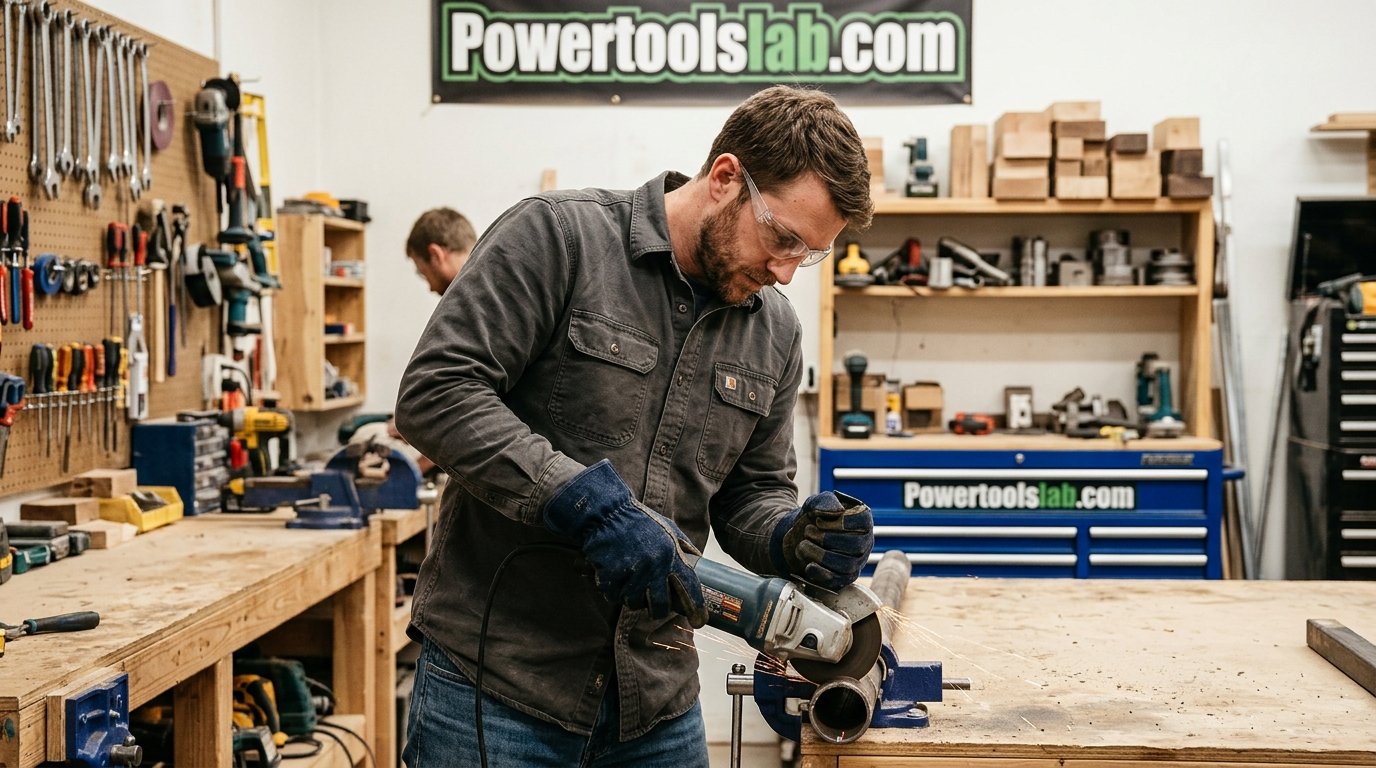
What Is Never to Be Engaged When Using Power Tools: The Non-Negotiable Safety Rules
Every serious workshop injury starts with one shortcut. Here are the things you should never do, never skip and never engage with when a motor is spinning in your hands.
The Core Rule: Never Engage a Tool You Are Not Ready to Control
If you ask what is never to be engaged when using power tools, the honest answer is simple: never engage the trigger until your body, your workpiece, your accessory and your surroundings are all ready. A power tool does not forgive hesitation. It turns a small mistake into an emergency in a fraction of a second.
Most accidents are not caused by exotic failures. They come from routine habits: skipping glasses for one quick cut, holding a board with a free hand, or leaving the guard off because it is “in the way.” This guide walks through the biggest never-do rules in the order you will meet them in a real project.
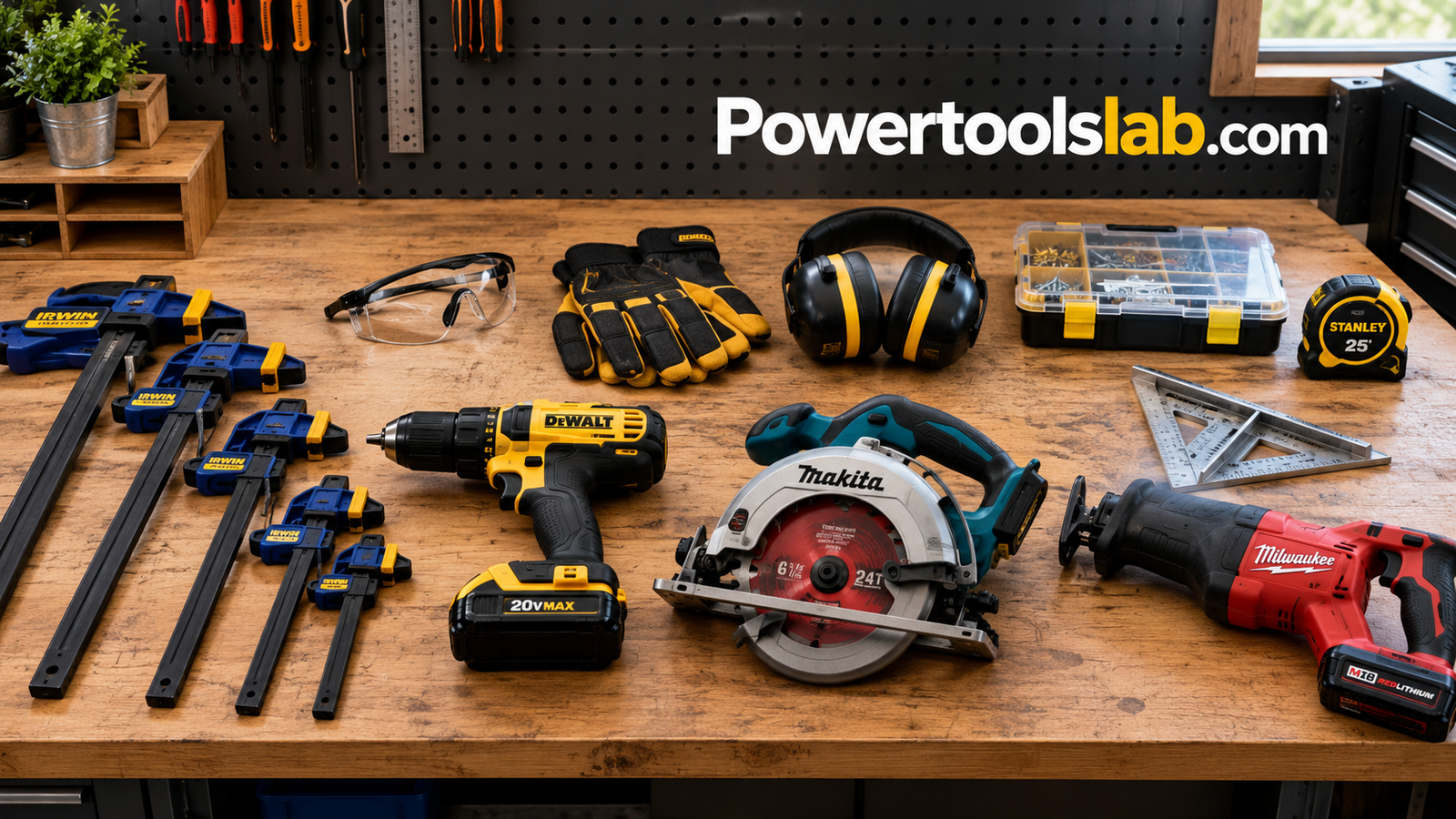
Start with the basics: quality safety glasses.
Shop Safety Glasses on AmazonNever Skip Eye, Ear and Lung Protection
Chips, sparks and dust travel faster than you can blink. Regular prescription glasses are not a substitute for impact-rated eyewear, and sunglasses are not either. Choose wraparound lenses that seal the sides.
Noise is the quiet injury. Circular saws, routers and air compressors regularly exceed the level where hearing damage begins after short exposure. Foam plugs or earmuffs cost little and prevent permanent loss. For sanding, cutting masonry or working with treated lumber, add a rated dust mask or respirator.
If your project involves compressed air, read our guide on air compressor safety before you start.
Protect your hearing and lungs too.
Shop Hearing and Dust ProtectionNever Wear Loose Clothing, Jewelry or Dangling Hair
Rotating bits, blades and belts catch fabric instantly. Drawstrings, loose sleeves, gloves with long cuffs, necklaces and long hair have all pulled people toward spinning tools. Roll sleeves, tie hair back, remove rings and wear closed, sturdy shoes.
Gloves are a special case. They protect against splinters and vibration when handling material, but many shops ban them at drill presses, lathes and other rotating tools because a snagged glove pulls the hand in. Use fitted, thin gloves only where the tool type allows.
Fitted work gloves for material handling.
Shop Work Gloves on AmazonNever Remove, Wedge or Bypass Safety Guards
Guards, riving knives, anti-kickback pawls and trigger safeties exist because someone was hurt without them. Pinning a lower blade guard open on a circular saw is one of the most common and most dangerous shortcuts. If a guard sticks, clean it or replace it.
Not sure how the tool family you own is designed to protect you? Our overview of types of power saws explains which safety features to expect, and our best circular saws roundup highlights models with reliable guards and electric brakes.
- Check guard movement before each use
- Replace bent or cracked guards
- Keep the manual nearby
- Tape or wedge a guard open
- Remove a riving knife for convenience
- Use a tool with a broken switch
Need a saw with better built-in protection?
Browse Circular Saws on AmazonNever Cut or Drill Unsecured Material
Holding a small board with one hand while the other operates a tool is how fingers are lost. Clamp the workpiece to a bench, sawhorse or vise so both hands stay on the tool and out of the cutting path.
Also avoid cutting where the offcut can bind or pinch the blade. Support both sides of the cut, and let the waste piece fall freely. When drilling, a bit that catches can spin the whole workpiece, so clamps matter here too. Our guide on how to use a drill covers grip and stance in detail.
Good clamps are cheap insurance.
Shop Clamps on AmazonNever Use a Dull, Damaged or Wrong Accessory
A dull blade does not just cut poorly. It overheats, binds and kicks back. A cracked grinding wheel can shatter. A bit that does not match the material will wander, smoke and stress the motor. If a drill starts to smell or smoke, see why your drill is smoking before you use it again.
Always match the accessory rating to the tool’s maximum speed, and confirm the bit or blade is fully seated and tightened. Unplug or remove the battery before every change.
Fresh blades and bits make every cut safer.
Shop Blades and BitsNever Ignore Power, Cord and Battery Hazards
Damaged cords, undersized extension cords and wet conditions are a shock and fire risk. Never use a tool with frayed insulation, never yank a plug by the cord, and never use corded tools in damp areas without GFCI protection.
Overloading a circuit is another quiet hazard. Check how many amps a typical power tool uses before running several at once. On the cordless side, never charge damaged batteries and never leave them in hot vehicles. Our comparison of corded vs cordless drills helps you weigh the trade-offs.
Use the right heavy-duty extension cord.
Shop Extension CordsNever Carry, Hand Off or Set Down a Live Tool
Do not carry a tool with your finger on the trigger, and do not set down a saw until the blade has fully stopped. Coasting blades still cut. Never hand a running tool to another person, and never point a nailer or air tool at anyone, even when you believe it is empty.
Disconnect power before adjusting, changing accessories or clearing jams. That single habit prevents a huge share of accidental starts.
Keep tools safely carried and stored.
Shop Tool BagsNever Work Distracted, Tired or Impaired
Fatigue, alcohol, certain medications and phone distractions all slow reaction time. Save complex cuts for when you are rested. If you feel rushed, stop; deadlines are never worth an injury.
Keep children and pets out of the work area, and never let an untrained person operate your tools. Good lighting also matters: if you cannot clearly see the cut line, add a work light.
Better light means better decisions.
Shop LED Work LightsNever Force the Tool or Overreach
Pushing a tool harder than it wants to go overloads the motor and increases kickback risk. Let the blade or bit do the work at its natural speed. Adjust your feed rate and, if needed, use a more powerful tool.
Keep both feet planted and your body balanced. Never stand on a ladder’s top step, and never reach across a spinning blade. If you are unsure which brand and class suits heavy jobs, our power tool brands guide and best drills for DIY and pro use are good starting points.
Upgrade to a tool that matches the job.
Browse Cordless DrillsNever Neglect Cleanup, Maintenance and Storage
Sawdust builds up, cords tangle and tools left on the floor cause trips and falls. Clean up as you go, inspect tools regularly and store them dry, unplugged and out of children’s reach. See how to organize power tools in your garage for practical ideas.
Keep a fire extinguisher and a first-aid kit within reach, and know where the nearest power shutoff is.
Stay prepared for the unexpected.
Shop Safety KitsNever-Do Summary Table
| Never Do This | Why It Is Dangerous | Do This Instead |
|---|---|---|
| Skip eye and ear protection | Debris and noise cause permanent damage | Wear rated glasses and hearing protection |
| Wear loose clothing | Fabric gets pulled into moving parts | Fitted clothes, tied hair |
| Bypass guards | Exposes you to blade contact and kickback | Fix or replace the guard |
| Hold work by hand | Hands enter the cutting path | Clamp material securely |
| Use dull accessories | Binding, overheating, kickback | Replace or sharpen |
| Overload circuits | Fire and shock risk | Check amperage and use GFCI |
| Force the tool | Motor strain and loss of control | Let the tool work at its pace |
Build your safety kit in one go.
Shop Safety EssentialsFrequently Asked Questions
What should never be done when using power tools?
Never remove guards, skip protective gear, work on unsecured material, use damaged accessories or cords, or operate a tool while tired or distracted.
Is it safe to wear gloves with all power tools?
No. Avoid gloves around rotating tools such as drill presses and lathes, where they can snag. Use fitted gloves only where the tool’s manual allows.
Why is kickback so dangerous?
Kickback throws the tool or workpiece back toward you with sudden force. It is usually caused by binding, dull blades or unsupported cuts.
Can I use an extension cord with any power tool?
Only if it is rated for the tool’s amperage and length. Thin cords overheat and reduce tool performance.
Should I unplug a tool when changing blades or bits?
Yes. Always unplug corded tools or remove the battery from cordless tools first to prevent accidental starts.
Is it okay to use a power tool in wet conditions?
Avoid it. Water greatly increases shock risk. If you must work in damp areas, use GFCI protection and tools rated for the environment.
How do I know if a blade or bit is too dull?
Signs include burning, smoke, rough cuts, extra effort and unusual noise. Replace or sharpen it before continuing.
Should beginners use cordless or corded tools?
Either can be safe when used correctly. Cordless tools offer freedom from cords, while corded tools give steady power. See our corded vs cordless comparison.
What protective gear is essential?
Impact-rated eye protection, hearing protection, a dust mask for dusty jobs, sturdy shoes and fitted clothing.
Can I leave a tool running while I step away?
Never. Switch it off, wait for it to stop and set it down safely before moving away.
How should I store power tools safely?
Keep them clean, dry, unplugged and secured out of children’s reach, ideally in a dedicated cabinet or wall system.
Conclusion
The things never to engage with power tools all share one theme: control. Never start a tool before you are protected, prepared and focused, and never remove a safeguard that was designed to keep you whole. Build these habits into every project, and the tools will serve you for decades.
Gear up properly before your next project.
Shop Power Tool Safety Gear