Tool Buying Guide
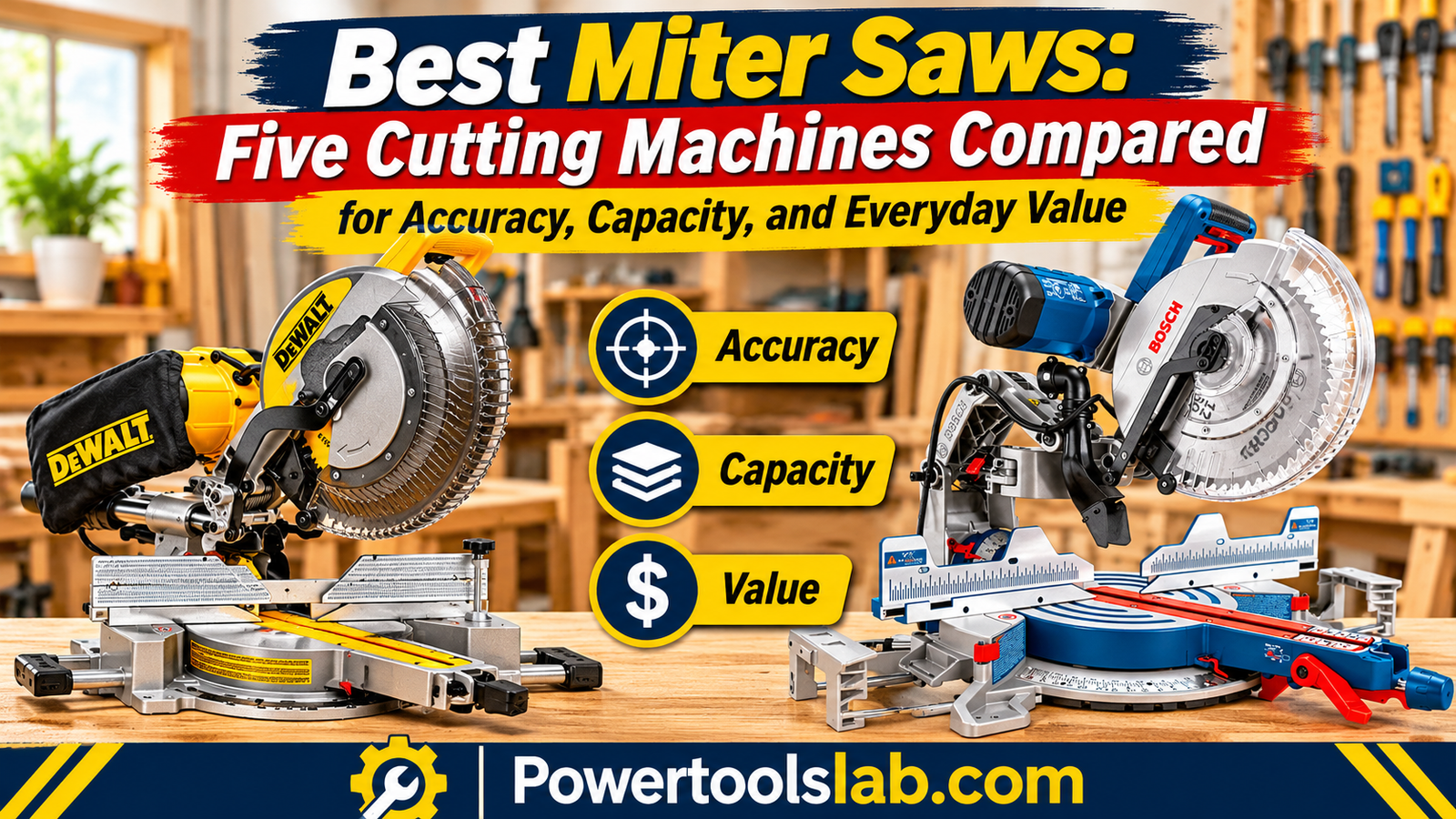
Best Miter Saws: Five Cutting Machines Compared for Accuracy, Capacity, and Everyday Value
A miter saw is the tool that turns a stack of trim, framing lumber, or furniture parts into clean, repeatable, perfectly angled cuts. We compared five of the most popular saws in the category — from full-size 12-inch sliding workhorses to lean, portable 10-inch compound models — to help you match the machine to the work you actually do.
The Short Version
Five Miter Saws, Five Different Kinds of Shop
Nobody buys a miter saw because it is exciting. You buy one because you are tired of crosscuts that wander, miters that do not close, and bevels that need a hand plane to fix. A good miter saw removes that whole category of frustration: you set the angle, you pull the trigger, and the cut comes out the way you drew it — the first time and the fiftieth time.
What surprised us while putting this guide together is how differently people define “the best” miter saw. A trim carpenter installing crown molding all day wants a tall fence, smooth travel, and rock-solid detents. A homeowner building a deck wants raw crosscut capacity and something that can be hauled up a driveway without a second person. A furniture maker wants a 10-inch blade that leaves a glue-ready edge and a table wide enough to register small parts against. None of those people need the same saw.
So we organized this guide around jobs rather than hype. The five saws below cover the full spread of the category: a premium 12-inch double-bevel slider, a space-saving 12-inch glide design, a value-packed 10-inch dual-bevel slider, a straightforward 10-inch compound saw, and a friendly sliding compound model aimed at the home workshop. Each one earns its place for a reason, and we spell out those reasons — along with the trade-offs — in the individual reviews.
Before we get into individual machines, one honest note about how to read any miter saw review, ours included: numbers on a spec sheet are the beginning of the conversation, not the end. Blade size tells you a lot about capacity but nothing about cut quality. Motor ratings tell you about potential, not about how smoothly the saw tracks through wet pressure-treated lumber. What separates a saw you keep for fifteen years from one you replace in three is design details — fence rigidity, detent quality, dust shrouding, blade guard behavior, and how the tool feels at the moment of the cut.
That is the lens we used throughout. Let us start with the head-to-head.
Quick Comparison: Our Top Picks
| # | Image | Product | Key Specs | Verdict | Check Price |
|---|---|---|---|---|---|
| 1 |  |
Top PickDEWALT DWS780 12″ Double Bevel Sliding Compound Miter SawBest Overall |
|
The do-everything 12-inch saw for demanding, repeatable cuts. | Check Price on Amazon |
| 2 | 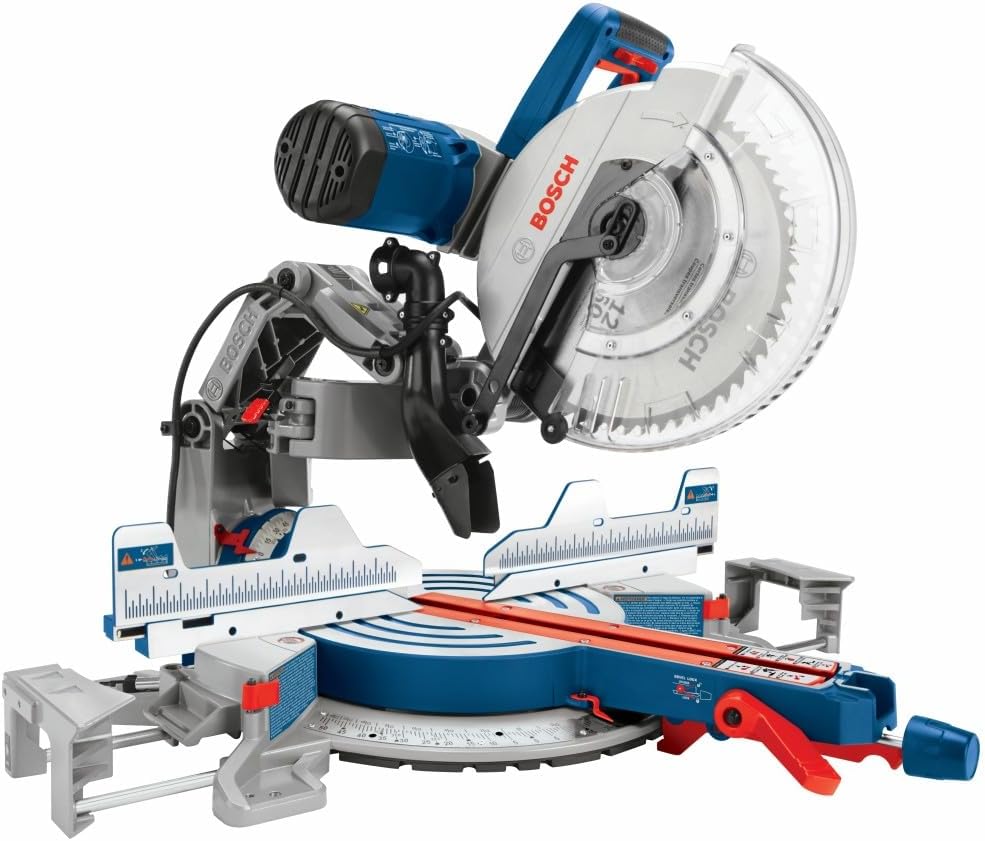 |
Bosch GCM12SD 12″ Dual-Bevel Glide Sliding Miter SawBest Glide System |
|
Silky-smooth glide in a space-saving footprint. | Check Price on Amazon |
| 3 | 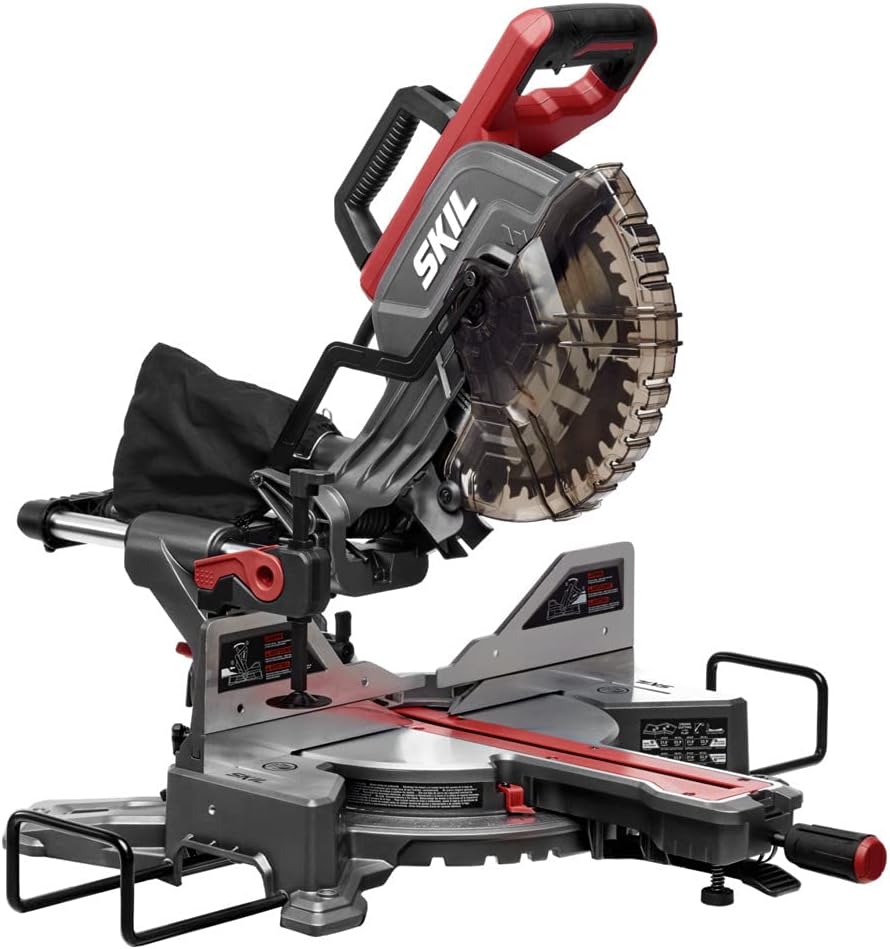 |
SKIL MS6305-00 10″ Dual Bevel Sliding Compound Miter SawBest Value Slider |
|
Sliding versatility without the premium price tag. | Check Price on Amazon |
| 4 | 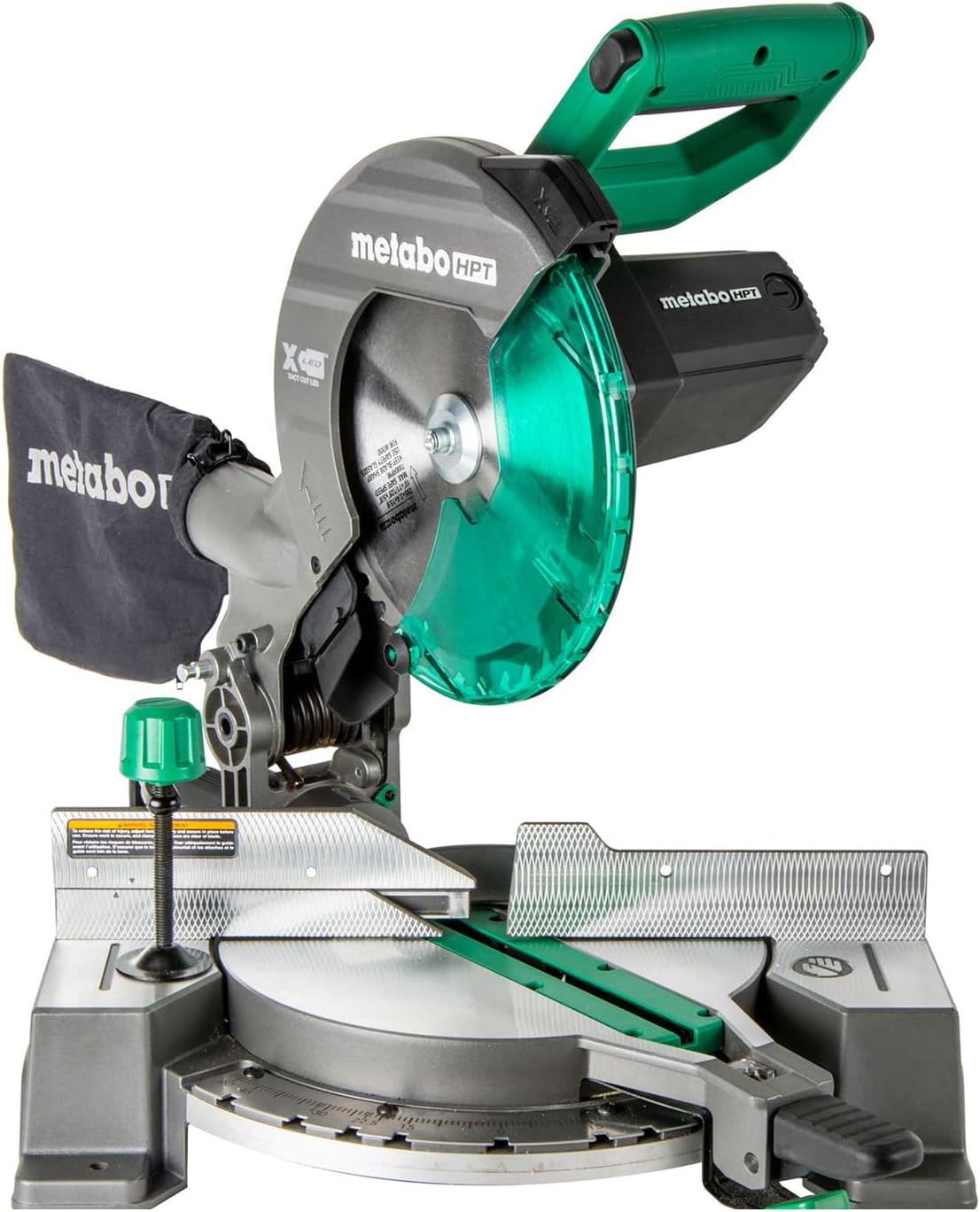 |
Metabo HPT C10FCG2 10″ Compound Miter SawBest Budget / Best Portable |
|
Honest, portable compound saw for straightforward work. | Check Price on Amazon |
| 5 | 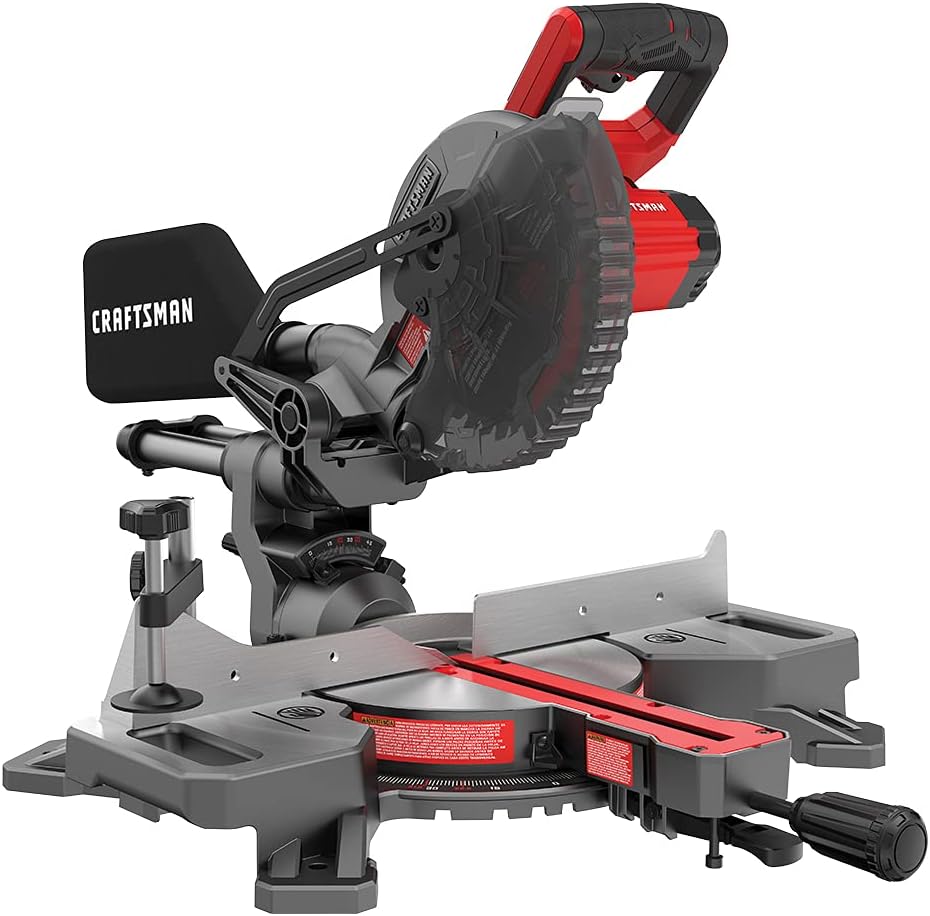 |
CRAFTSMAN Sliding Compound Miter SawBest for Home Workshops |
|
A friendly sliding saw for weekend builds and repairs. | Check Price on Amazon |
Ready to Start Shopping?
Compare current pricing and availability across the miter saw category.
Browse Miter Saws on AmazonDeep Dive 01
Why a Miter Saw Earns Its Space in the Shop
Walk into almost any serious shop — cabinet shop, trim crew, deck builder’s garage — and there is one saw sitting in the middle of the room with a pile of offcuts underneath it. It is the miter saw, and it is there because it solves a specific problem better than any other tool: making accurate, repeatable crosscuts and angled cuts in solid stock, quickly, with minimal setup.
Every other cutting tool asks you to bring the work to the machine or to guide the machine along the work. The miter saw does something different. You clamp the material to the table, swing the head to your angle, and bring the blade to the wood. The workpiece never moves, which means it never wanders, and the cut lands exactly where you set it. For anything under about a dozen feet of lumber per day — trim, casing, base, framing members, furniture parts, decking boards — that is the fastest, most accurate workflow available.
The four cuts a miter saw is built for
- Crosscuts. Straight 90-degree cuts across the grain, the bread-and-butter cut for cutting boards to length.
- Miter cuts. Angled cuts across the face of the board, made by swinging the saw table left or right. This is how picture frames, window casing, and crown corners come together.
- Bevel cuts. Angled cuts through the thickness of the board, made by tilting the saw head. Compound saws tilt; single-bevel saws tilt one direction, double-bevel saws tilt both.
- Compound cuts. A miter and a bevel at the same time, which is exactly what crown molding and complex trim transitions demand.
Sliding models add a fifth capability: sliding crosscut capacity. Because the head travels forward and back on rails or glide arms, the saw can cut much wider boards than a fixed-head saw of the same blade size. That single feature is why sliding compound saws have become the default choice for anyone who regularly handles wide baseboard, shelving stock, or decking.
How a miter saw differs from the saws it gets confused with
The most common comparison in this category is the circular saw versus miter saw debate, and the answer is genuinely about workflow. A circular saw is portable and can break down sheet goods and long stock anywhere, but every cut quality depends on your ability to hold a straight line. A miter saw is stationary and specialized, but its cuts are repeatable to a degree that freehand work simply cannot match. Most growing shops end up owning both, because they solve different problems.
It is also worth understanding where the miter saw sits in the broader landscape of types of power saws. Table saws dominate sheet goods and rip cuts. Reciprocating saws handle demolition. Jigsaws do curves. Tile saws handle masonry and ceramic. The miter saw’s lane is precise crosscutting and joinery prep, and no other saw occupies it as well.
If you are building out a first serious tool collection, our roundups of the best power saws and the best power circular saws put the miter saw in context alongside the other machines you will eventually want.
Where a Miter Saw Pays for Itself
- Trim and finish work — base, casing, chair rail, crown, and built-ins where gaps show.
- Repeat-length cutting — a stop block on the fence turns out identical parts all afternoon.
- Deck and porch framing — angled ends, mitered corners, and clean birdsmouth prep.
- Furniture parts — legs, aprons, rails, and slats cut to length with glue-ready ends.
Building Your First Saw Setup?
See how the miter saw compares with the circular saw for your projects.
Check Price on AmazonDeep Dive 02
What Actually Matters When You Choose a Miter Saw
Spec sheets are loud. Capacity charts, motor numbers, and feature bullets all compete for attention, and it is easy to buy the saw with the longest list rather than the saw that fits your work. After spending time with all five machines in this guide, these are the decision points we would weigh first — in roughly this order.
1. Blade size and what it really controls
The two mainstream sizes are 12-inch and 10-inch. A 12-inch blade gives you more raw cutting height and, on a sliding design, more crosscut width. A 10-inch blade is lighter, cheaper to replace, spins up quickly, and often leaves a cleaner edge in fine material because the blade deflects less and has less mass to vibrate. If you are cutting tall baseboard and crown day in and day out, 12 inches is the safer bet. If you are mostly working with boards under about six inches wide, a 10-inch saw gives up very little and gains portability.
2. Sliding versus non-sliding
A sliding saw’s head travels toward you, dramatically increasing crosscut width. The trade-offs are footprint, cost, and the need to keep the rails clean. Non-sliding compound saws are lighter, cheaper, and simpler, and they stay accurate longer because there is less to flex. Our table saw versus circular saw discussion makes a similar point about matching machine complexity to the work: more capability is only valuable if you use it.
3. Single bevel versus double bevel
A single-bevel saw tilts one way, which means you flip the workpiece for opposite bevels. A double-bevel saw tilts both directions, so you never have to reposition a long, unwieldy board. Trim carpenters doing lots of compound cuts find double bevels worth every penny; occasional users doing simple crosscuts and basic miters may never notice the difference.
4. Detents, locks, and fence quality
This is where good saws separate from great ones. Positive stops should land with a crisp, repeatable click and hold zero through a full day of work. The miter lock should grab without creeping. The fence should be rigid, square, and tall enough to register wide stock on edge. None of these show up in a headline, and all of them determine whether your cuts close tight.
5. Cut-line visibility
Being able to see exactly where the blade will land transforms accuracy. Many modern saws use a light-based shadow or line system rather than a laser, and the advantage is that the mark stays accurate even after you change blades or alter the bevel. Whatever the technology, look for a clear, well-aligned indication of kerf position before you commit.
6. Dust collection and shop cleanliness
Miter saws make fine dust in large volumes, and the stock ports on most models are optimistically small. A saw with a well-shrouded blade and a decent port paired with a vacuum keeps the cut line visible and the air breathable. If you want the deeper background on vacuum sizing, our guide to what size air compressor you need covers shop-air planning, and dust extraction deserves the same kind of deliberate thinking.
7. Motor type and electrical draw
Most corded miter saws in this class run on standard shop circuits, but it is still smart to know what your circuit can deliver before you pair a saw with a dust extractor on the same breaker. If you are curious about the electrical side, our article on how many amps a typical power tool uses is a practical reference. And if you are choosing between motor technologies across a whole tool platform, brushless versus brushed motors explains the trade-offs clearly.
8. Portability, weight, and stand compatibility
A saw that never leaves the shop can be as heavy as you like. A saw that travels to job sites should balance well when lifted and should mount to a stand without a wrestling match. Stand height matters more than people expect — a miter saw set too low turns every cut into a back stretch.
The Rule We Keep Coming Back To
Buy the saw that matches your most frequent cut, not your most impressive imagined project. A perfect 10-inch compound saw used weekly beats a 12-inch slider that lives under a tarp because it is too heavy to set up.
Ready to Compare Models?
See today’s selection of sliding and compound miter saws.
Check Price on AmazonDeep Dive 03 · Top Pick
DEWALT DWS780 12″ Double Bevel Sliding Compound Miter Saw
Best Overall
The Saw That Covers the Most Ground
Some tools are specialists. The DWS780 is a generalist in the best sense — a full-size 12-inch double-bevel slider that handles rough framing in the morning and paint-grade crown in the afternoon without complaint. If you want one saw that will not be the reason a cut goes wrong, this is the category’s safest answer.
Key Features
- 12-inch double-bevel sliding compound design. Tilts both directions for compound work without flipping long stock, and slides for wide crosscuts that a fixed-head saw cannot reach.
- Wide sliding capacity. The rail system gives the saw genuine reach, so shelving, baseboard on edge, and wide decking boards are all in play.
- LED cut-line positioning. A shadow-based cut indicator helps you land the blade precisely and stays accurate through blade changes.
- Tall, rigid fence support. Designed to register tall stock upright, which is what makes crown and base work accurate rather than approximate.
- Durable, jobsite-ready build. The kind of machine that tolerates being moved, bumped, and worked hard.
Pros
- Handles nearly every common cut a builder or remodeler faces
- Double bevel saves time and effort on compound cuts
- Excellent cut-line visibility for precision work
- Strong fence and detent system supports repeatable accuracy
- Deep ecosystem of stands, blades, and accessories
Cons
- Full-size 12-inch sliders are heavy to move solo
- Needs real bench or stand space behind it
- More saw than a light-duty hobbyist typically needs
How It Performs in Real Use
The thing you notice first is stability. The head has weight to it, and when you bring it down through a wide board it tracks without chatter. That matters more than any headline spec, because chatter is what turns a clean miter into one that needs filler. Second, the detent system inspires confidence — once you set an angle, it stays, which is the whole business model of a trim crew cutting the same 35.3-degree corner twenty times in a row.
The cut-line indicator is the third standout. Rather than a pencil mark and hope, you get a visible reference that shows exactly where the kerf will fall. It keeps you honest on material that has been ripped slightly oversize, and it makes back-beveling a joint a visual task rather than a guess.
If there is a learning curve, it is in the physical size. This is not a saw you tuck on a shelf. It wants a dedicated stand or a deep bench, and it wants to live in one place. The upside is that once it is set up, it behaves like a permanent installation: square, consistent, and ready.
Who It Is Best For
Trim carpenters, remodelers, and serious DIYers who want a single saw that does everything from framing to finish work, and who have the shop space to keep a full-size slider set up permanently.
Deep Dive 04
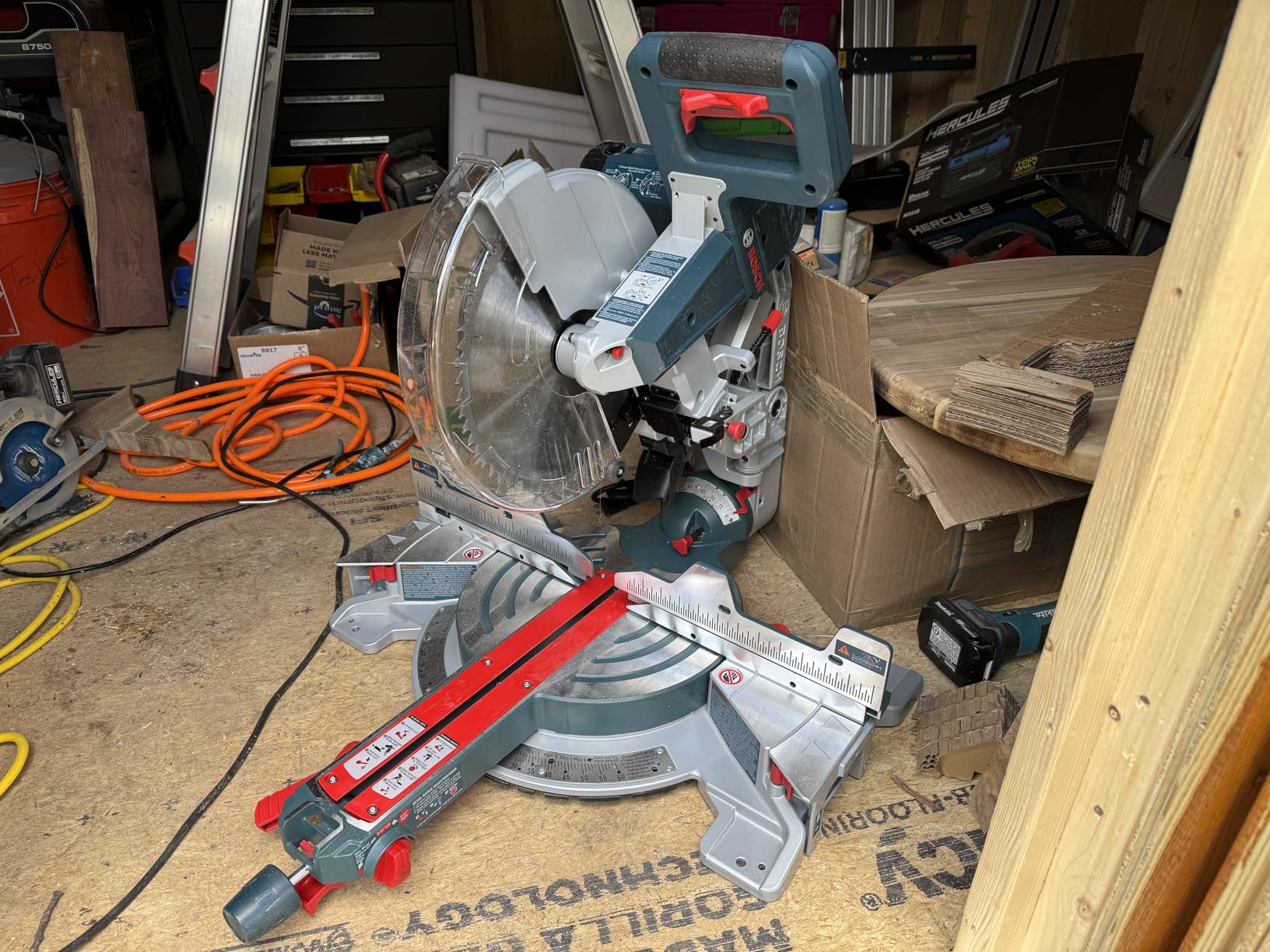
Bosch GCM12SD 12″ Dual-Bevel Glide Sliding Miter Saw
Best Glide System
Full-Size Capacity Without the Full-Size Footprint
Most sliding saws grow backward: rails extend behind the tool, and your bench suddenly needs another two feet of clearance. The GCM12SD takes a different route with an articulated glide design that keeps the mechanism compact behind the head while still delivering the travel you need for wide stock. It is the saw we recommend to anyone working in a shop where every square foot is spoken for.
Key Features
- 12-inch dual-bevel configuration. Tilt in both directions for compound cuts without repositioning the workpiece.
- Compact glide mechanism. The articulated arm design keeps the saw’s rear clearance tight, so it fits against a wall or on a shallow bench.
- Smooth, controlled travel. The glide action feels damped and precise rather than loose, which helps on long sliding cuts.
- Large-format cutting capacity. Wide baseboard, shelving, and decking boards are well within reach.
- Large, supportive table and fence. Gives long stock a stable reference surface on both sides of the blade.
Pros
- Saves meaningful space behind the saw compared with rail sliders
- Glide motion is exceptionally smooth and controllable
- Full 12-inch capacity for tall and wide stock
- Dual bevel speeds up compound trim work
- Wide table supports long workpieces well
Cons
- Premium positioning means a bigger investment
- Heavy enough that portability is not its strength
- Glide mechanism deserves more routine cleaning than a simple pivot saw
How It Performs in Real Use
The glide action is the headline, and it lives up to it. Where some sliders feel like they are on rails that need persuasion, this one moves with an almost hydraulic smoothness. That matters when you are sliding through wide hardwood and want consistent feed pressure across the whole cut — inconsistent feed is how you get burn marks and wander on the exit side of the board.
The compact rear clearance changes where you can put the saw, which changes how your shop works. Against a wall on a standard bench, it behaves like a fixed saw but cuts like a slider. For shops that also do assembly at the same bench, that reclaimed depth is genuinely useful.
Capacity is the other story. Wide shelving stock and deep baseboard cut flat, on-edge tall stock registers against the fence, and compound angles for crown are within the machine’s comfort zone. It is a professional tool in the sense that it rewards careful setup and stays accurate when treated well.
Who It Is Best For
Finish carpenters, cabinetmakers, and shop owners with limited space who want full 12-inch sliding capacity and a refined, smooth cutting feel.
Deep Dive 05
SKIL MS6305-00 10″ Dual Bevel Sliding Compound Miter Saw
Best Value Slider
Sliding Versatility Without the Premium Price
There is a specific gap in the market: people who want the wide-cut capability of a slider but do not want to spend pro-tier money or haul a pro-tier machine. The MS6305-00 sits right in that gap. It is a 10-inch dual-bevel sliding compound saw that gives up very little in everyday capability while keeping weight and cost in check.
Key Features
- 10-inch dual-bevel sliding compound design. Tilts both directions and slides for wide crosscuts — the two features most budget saws leave out.
- Strong capacity for its blade class. Handles common trim, shelving, and framing stock comfortably.
Easier to move from bench to truck bed and back than full-size 12-inch sliders. - Approachable adjustments. Controls are laid out for people who use the saw occasionally, not just professionals.
- Value-focused platform. Leaves room in the budget for a quality blade and a decent stand, which matter more than people expect.
Pros
- Dual bevel and sliding action at a value-oriented price
- Lighter and easier to transport than 12-inch models
- 10-inch blades are affordable and leave clean edges
- Great fit for DIY projects, hobby shops, and light remodeling
- Simple setup out of the box
Cons
- Less cutting height than 12-inch machines for tall stock
- Not intended for all-day commercial production
- You may eventually want a finer blade for paint-grade work
How It Performs in Real Use
For the projects most homeowners and hobbyists actually tackle — cutting deck boards, trimming out a room, building shelves, breaking down lumber for a workbench — this saw is more than capable. The sliding action handles wide boards that a non-sliding 10-inch saw would simply refuse, and the dual bevel means you can cut compound angles without a production plan for flipping stock.
Where it shows its price point is in long-session refinement. Extended commercial days will highlight the difference between a value slider and a premium one in fence rigidity and detent crispness. But for the realistic workload of a home shop — a few dozen cuts a weekend, mixed materials, varied angles — it is a genuinely satisfying tool to use.
One practical tip: pair it with a good blade and the saw’s output quality jumps a full class. The blade is the part that touches the wood, and it is the cheapest upgrade in the entire category.
Who It Is Best For
DIYers, hobby woodworkers, and homeowners who want sliding and dual-bevel capability without investing in a professional-grade machine.
SKIL MS6305-00
Dual bevel and sliding action at a price that leaves room for a good blade.
Check Price on AmazonDeep Dive 06
Metabo HPT C10FCG2 10″ Compound Miter Saw
Best Budget · Best Portable
The Honest, Portable Compound Saw
Not every job needs sliding rails and dual bevels. A huge amount of real-world work is straight crosscuts plus simple miters, and for that a clean, well-made compound saw is the smarter buy. The C10FCG2 is the lean, purpose-built option in this group: a 10-inch compound miter saw that prioritizes simplicity, portability, and a stable work surface over feature count.
Key Features
- 10-inch compound miter design. Straightforward operation with miter and bevel capability for standard trim and framing work.
- Light, easy to carry. Moves from garage to deck to basement without a second pair of hands.
- Generous table support. A broad work surface keeps stock stable on both sides of the blade.
- Simple, durable construction. Fewer moving assemblies means fewer adjustments and less to maintain.
- Practical size for small shops. Fits on a compact bench and stores easily when not in use.
Pros
- Very easy to transport and set up anywhere
- Simple controls make it beginner-friendly
- Wide table keeps smaller parts steady
- Excellent choice for trim repairs and simple miters
- Low maintenance with fewer moving parts
Cons
- No sliding travel, so wide boards need flipping or another saw
- Single-direction bevel requires repositioning stock for opposite angles
- Less suited to heavy production work
How It Performs in Real Use
This is the saw you grab when the job is “cut these twelve pieces to length and miter the corners.” Setup is quick, the controls are obvious, and the saw does not ask anything of you. For new woodworkers that simplicity is a real advantage: there are fewer adjustments to get wrong, and the learning curve is measured in minutes.
The table deserves specific credit. Small parts are where compound saws often frustrate people — a short block has less support and can shift as the blade contacts it. A wide, flat table with good support on both sides of the kerf keeps those parts where you put them, which is the difference between a tight joint and a gap.
The limitation is capacity. Without sliding travel, wide boards must be cut in two passes and flipped, which costs accuracy if you are not careful. If most of your work is narrower stock — trim, framing members, legs, rails — you will never miss it.
Who It Is Best For
Beginners, apartment and small-garage woodworkers, and anyone who values portability and simplicity over maximum capacity.
Metabo HPT C10FCG2
Portable, simple, and ready for everyday crosscuts and miters.
Check Price on AmazonDeep Dive 07
CRAFTSMAN Sliding Compound Miter Saw
Best for Home Workshops
The Friendly, Do-It-All Weekend Saw
There is a certain kind of tool that is easy to like: intuitive to adjust, comfortable to use, and backed by a platform you can find parts and accessories for without hunting. The CRAFTSMAN sliding compound miter saw fits that description. It brings the sliding format to the home workshop at a level that suits weekend projects, repairs, and hobby builds.
Key Features
- Sliding compound format. Sliding travel extends crosscut capacity so you can handle wider boards in one clean pass.
- Compound bevel capability. Tilts for angled cuts, opening up trim work, frames, and angled joinery.
- Approachable adjustment system. Miter and bevel settings are laid out for quick, confident changes between cuts.
- Supportive table and fence. Gives stock a steady reference surface for consistent results.
- Commonly available platform. Stands, blades, and accessories are easy to find, which keeps the saw useful for years.
Pros
- Sliding capacity handles wide shelving, trim, and decking
- Very approachable for weekend DIYers
- Wide availability of blades, stands, and accessories
- Good balance of capability and value
- Straightforward to set up and store
Cons
- Not built for high-volume commercial production
- Rails need routine cleaning to keep travel smooth
- Serious trim pros may want dual bevel and a taller fence
How It Performs in Real Use
For a home workshop, this saw hits the sweet spot. It cuts deck boards in a single pass, trims out a door, and handles the wide shelving stock that a non-sliding saw would struggle with. Adjustments are quick to make and easy to understand, which matters when you are switching between a 45-degree frame cut and a straight crosscut every few minutes.
Owners in this category tend to keep their saw for a long time, and the platform support is part of why. Blades are easy to find, stands are easy to match, and the saw’s basic format is familiar enough that any shop can service or support it.
Our advice for this class of saw is the same as for the SKIL: spend the difference on a quality finish blade and a solid stand. Those two upgrades do more for your results than any feature checkbox on the tool itself.
Who It Is Best For
Homeowners, DIYers, and hobbyists who want sliding versatility for weekend projects and household repairs at a sensible price.
CRAFTSMAN Sliding Compound Miter Saw
Sliding capacity and easy adjustments for the home workshop.
Check Price on AmazonDeep Dive 08
Matching the Saw to the Job: Which One Fits Your Work?
The five saws in this guide divide naturally into two families: full-size 12-inch sliders for heavy, wide, and demanding cuts, and 10-inch machines that trade a little capacity for lighter weight and simpler operation. Choosing between them is less about budget than about what you cut most often.
Grouping the saws by job type
| # | Image | Product | Key Specs | Best For | Check Price |
|---|---|---|---|---|---|
| 1 | |
DEWALT DWS780 12″ Double Bevel Sliding CompoundBest for Trim & Remodeling |
|
Daily professional finish and framing work | Check Price on Amazon |
| 2 | |
Bosch GCM12SD 12″ Dual-Bevel GlideBest for Small Shops |
|
Precision work where bench space is tight | Check Price on Amazon |
| 3 | |
SKIL MS6305-00 10″ Dual Bevel Sliding CompoundBest Value for DIY |
|
Homeowners who want slider capability | Check Price on Amazon |
| 4 | |
Metabo HPT C10FCG2 10″ CompoundBest for Portability |
|
Small spaces, beginners, simple cuts | Check Price on Amazon |
| 5 | |
CRAFTSMAN Sliding CompoundBest for Weekend Projects |
|
Home workshops and general DIY | Check Price on Amazon |
Choose a 12-inch slider if…
You cut tall baseboard, wide shelving, decking, or framing stock regularly, and you want a machine that never feels outmatched by the material. The DEWALT and Bosch both belong in this class, and both reward a permanent shop setup. If you also do demolition or rough work alongside the finish work, a companion saw for rough cutting is worth considering — our guide to the best reciprocating saws covers the tool that handles the tearing-out phase before the miter saw handles the fitting phase.
Choose a 10-inch saw if…
Your work lives mostly under a certain width, you value portability, or you are outfitting a first workshop. The SKIL adds sliding and dual bevel to that class; the Metabo HPT keeps things maximally simple; the CRAFTSMAN lands in between. For a first shop, our roundup of the best power tools for beginners explains how to sequence purchases so you get usable capability early without overspending.
Choose by trade, not by feature list
- Trim carpentry: double bevel, tall fence, crisp detents, excellent cut-line visibility. The DEWALT and Bosch shine here.
- Framing and decks: wide sliding capacity, robust build, easy to move to a job site. 12-inch sliders generally fit best.
- Furniture and small parts: flat, wide table, clean blade, accurate zero. A 10-inch saw can be ideal here.
- General home maintenance: simple adjustments, easy storage, common accessories. The Metabo HPT, SKIL, and CRAFTSMAN all qualify.
And if you are still deciding between saw categories entirely, the comparison of jigsaw versus reciprocating saw, our guide to the best jigsaws, and the best tile saws round out the picture. For rough outdoor cutting, the power saw versus chainsaw discussion is a useful reality check on what each tool is actually designed to do.
Find the Right Size for Your Work
Compare 10-inch and 12-inch sliding compound saws side by side.
Check Price on AmazonDeep Dive 09
Blades, Kerf, and Cut Quality: The Upgrade That Changes Everything
Here is the single most useful thing we can tell anyone buying a miter saw: the blade matters at least as much as the saw. A premium saw with a rough framing blade will tear out fibers and burn edges, while a modest saw with a sharp, appropriate blade can produce joints that close without filler. Blade selection is the cheapest and most dramatic improvement available in this entire category.
Tooth count and what it means at the cut
Blade tooth count is a trade-off between speed and finish. Low tooth counts remove material quickly and clear chips aggressively, which is what you want in framing lumber and construction stock. High tooth counts take smaller bites, produce finer dust, and leave a surface that needs little or no sanding — exactly what you want in hardwoods, plywood edge banding, and paint-grade trim.
- Low tooth count (rough work): fast, cool-running, ideal for framing and treated lumber.
- Medium tooth count (general purpose): a sensible everyday blade for mixed work.
- High tooth count (finish work): clean, slow, precise — the blade you install before cutting fine trim.
Thin kerf versus full kerf
Thin-kerf blades remove less material, so the saw works less hard and you waste less wood — meaningful when you are cutting expensive hardwood. Full-kerf blades are more rigid and resist deflection on heavy cuts. As a practical rule, use thin kerf on modest-power saws and on fine material, and consider full kerf where the saw has power to spare and you are pushing wide boards.
Blade geometry, carbide, and hook angle
Beyond tooth count, tooth geometry determines how aggressively the blade grabs. A blade with an aggressive hook angle cuts fast but can splinter delicate face material; a gentler geometry is more forgiving on the top surface. Carbide tips hold an edge far longer than steel, and they can be resharpened rather than discarded, which makes them economical over the long run even though the upfront cost is higher.
Reading the cut for problems
- Burn marks on the edge usually mean feed pressure is inconsistent or the blade is dull or gummed with resin.
- Tearout on the top face usually means the teeth are entering too aggressively for the material, or there is no zero-clearance backing behind the cut.
- A cut that drifts away from the mark often points to blade deflection, a loose arbor, or a fence that has moved.
- Excessive vibration can indicate a warped blade, a buildup of pitch, or a damaged tooth.
The Zero-Clearance Trick
Clamping a scrap board or a piece of hardboard behind your workpiece gives the blade fibers to cut into as it exits, which dramatically reduces tearout. It costs nothing and works on every saw in this guide.
Blade choice also interacts with the rest of your cutting kit. If you are choosing which saws belong in your shop overall, our guides to the best cordless circular saws and the best angle grinders cover complementary cutting and finishing work, and the best power circular saws roundup explains how blade selection changes results in that category too.
Upgrade Your Cut Quality Today
Finish blades transform a miter saw’s output more than any accessory.
Check Price on AmazonDeep Dive 10
Tuning a Miter Saw for Dead-On Accuracy
Out of the box, most miter saws are close to accurate. “Close” is fine for rough framing and meaningless for a mitered frame where the gap shows. The good news is that a handful of checks and adjustments takes a saw from approximate to precise, and the process takes less time than you would think.
Start with a known square
Everything depends on your reference. Use a reliable combination square or a machinist’s square, not the one that has been rolling around a toolbox for a decade. Check the square itself before you trust it against the saw.
Check and set the table-to-fence relationship
The fence must be square to the table and flat along its length. Sight down it, check it with the square in two positions, and correct any twist. A fence that is not straight will make one end of the board cut differently from the other, and no amount of miter adjustment will fix that.
Verify the zero-detent
Move the head to the 90-degree stop, cut a test piece in two, and check the resulting angle. If the two halves do not close flat against a square, adjust the detent stop until they do. Then repeat at 45 degrees in both directions. Take the time to test at several angles, not just zero.
Calibrate the bevel
Set the head to zero bevel and confirm that the blade is truly perpendicular to the table. Then test a 45-degree bevel cut against a known reference. On double-bevel saws, check both tilt directions independently — they can differ.
Check the blade, the arbor, and the guard
A warped blade throws off every measurement, and a guard that drags can push stock out of position during the cut. Rotate the blade by hand and watch the teeth for runout; make sure the guard returns cleanly and does not snag.
Build repeatable workflow habits
- Use a stop block for repeat lengths. Measuring and marking each piece invites variation; a clamp and a stop do not.
- Mark the kerf, not the board. Account for the blade’s width in your layout or your parts will come out long.
- Support long stock. A board that sags off the table changes the angle of the cut as you bring the head down. Outfeed support is not optional.
- Let the blade reach speed before it contacts the material, and feed steadily rather than forcing it.
- Test cuts on scrap from the same batch before committing to finish material.
Workshop layout makes accuracy easier
Where the saw sits changes how accurately you can use it. Set the table height so the saw’s deck sits just below your belt line, keep the support surface flush with the saw table, and give yourself outfeed room on both sides. If your shop is cluttered, our guide on how to organize power tools in the garage covers layout thinking that directly improves accuracy, because tools you can set up properly are tools that cut properly.
It is also worth understanding how miter saw accuracy compares with other machines. The circular saw versus miter saw comparison covers this directly, and the table saw versus circular saw guide explains where each machine’s accuracy comes from.
Set Up for Precision
Stands, supports, and measuring accessories make every cut more repeatable.
Check Price on AmazonDeep Dive 11
Safety Practices and Workshop Setup
A miter saw is one of the more approachable power tools in the shop, and that familiarity is exactly why it deserves respect. The blade is exposed at the front of the cut by design, workpieces are held by hand near the line, and the process encourages rhythm and speed. Attention and a few fixed habits keep that rhythm safe.
Non-negotiable personal protection
- Eye protection, always. Chips and dust fly toward the operator on every cut. Use safety glasses with side protection.
- Hearing protection. Miter saws are loud enough to cause damage over a working day. Earmuffs or plugs should be as routine as glasses.
- Dust protection. Fine dust is a long-term respiratory hazard. Use extraction at the source and consider a mask for extended sessions.
- No gloves near the blade. Gloves can catch on rotating teeth and pull a hand into the cut.
- Secure clothing, hair, and jewelry. Nothing loose should be anywhere near the blade path.
Workpiece control
Both hands should stay well clear of the blade path, and the stock should be held firmly against the fence and the table. Use the hold-down clamp whenever the part is short, narrow, or awkward. Short offcuts are the most dangerous pieces in the shop because they move unpredictably as the blade exits.
Blade and guard discipline
- Unplug the saw before changing a blade, adjusting the guard, or clearing a jam.
- Never disable, tie back, or defeat the blade guard or the safety switch.
- Let the blade come to a complete stop before raising the head.
- Keep the lower guard clean so it retracts and returns freely.
There is a broader principle here that applies to every power tool in the shop, and it is worth reading in detail: our article on what should never be engaged when using power tools covers the shared safety rules, and the guide to air compressor safety is a good companion for anyone running shop air alongside their saws.
Shop environment
- Stable, level mounting. A saw on a wobbly stand is a saw that moves during the cut.
- Clear floor area. Cords, offcuts, and dust underfoot turn a simple cut into an accident.
- Good lighting. Cut-line indicators work far better in a well-lit shop.
- Dust extraction connected and running. Visibility is a safety feature.
- A dedicated blade-change area, away from the working zone, so adjustments never happen mid-task.
Teaching new users
If you are introducing someone to the saw, teach the sequence before the speed: set the angle, clamp the piece, stand clear of the line of the blade, let the motor reach full speed, and make the cut with steady pressure. Our guide to the best power tools for beginners emphasizes the same principle — safe habits built early become automatic later.
Protect Yourself First
Quality eye and hearing protection is the cheapest safety investment you will make.
Check Price on AmazonDeep Dive 12
Maintenance and Longevity: Keeping a Miter Saw Cutting Like New
Miter saws are mechanically simple, which is exactly why they last a long time when treated well and degrade noticeably when ignored. Almost everything that goes wrong with a miter saw is preventable: dust in the wrong places, a dull blade, a fence that has been knocked out of square, or a guard that no longer returns freely.
After every session
- Blow or brush dust from the table, fence, detents, and the guard pivot.
- Wipe the rails or glide mechanism so travel stays smooth.
- Empty the dust bag or check the extraction port for clogs.
- Inspect the power cord for damage before coiling it.
Monthly, or after heavy use
- Check the fence and bevel squareness against a trusted reference and re-adjust if needed.
- Inspect the blade for resin buildup, dull carbide, or damaged teeth.
- Clean pitch and resin from the blade — a clean blade cuts cooler and more accurately.
- Tighten the arbor hardware and any mounting fasteners that have loosened.
- Confirm the hold-down clamp still applies firm, even pressure.
Blade care in detail
Blades are wear items, but they are also renewable. A carbide blade that has become dull can usually be resharpened for a fraction of the cost of a new one, and the result is a blade that cuts like it did when new. Clean blades regularly with a purpose-made cleaner and a soft brush; aggressive abrasives can damage carbide tips. Store blades flat or hanging, never loose in a drawer where teeth can chip.
Storage and transport
- Store the saw with the head locked down and the table clear.
- Keep it covered in a dusty shop, but let it breathe so moisture does not collect.
- When transporting, support the head and protect the blade — loose tools in a truck bed do real damage.
- Keep a small maintenance kit in the shop: square, hex keys, blade cleaner, a soft brush, and a spare blade.
When to service rather than adjust
Some problems are beyond user adjustment. Excessive vibration that persists with a known-good blade, a motor that smells hot or sounds rough, a bearing that growls during travel, or a table that is visibly warped are all signs that the tool needs professional attention. Continuing to work around those symptoms produces bad cuts and, eventually, a safety problem.
Good shop habits extend beyond the saw itself. The guide on organizing power tools in the garage covers storage that protects your tools, and the article on power tool brands is useful context when you are thinking about serviceability and long-term parts support. For anyone running a broader kit, the breakdown of brushless versus brushed motors explains which tools are likely to need brush service and when.
Keep Your Saw Sharp
Blade cleaners, spares, and shop accessories keep cut quality consistent.
Check Price on AmazonQuestions & Answers
Frequently Asked Questions About Miter Saws
What size miter saw should I buy as a beginner?
If most of your work involves trim, shelving, furniture parts, and general home repairs, a 10-inch saw covers the vast majority of cuts and is lighter to move and store. If you regularly handle tall baseboard, wide shelving, or decking, a 12-inch slider will save you from flipping boards and redoing cuts. Match the blade size to the widest cut you actually make, not the widest cut you can imagine.
Is a sliding miter saw worth the extra cost?
For most people, yes — sliding capacity is the feature that most expands what the saw can do. It allows wide boards to be cut flat in a single clean pass, which is far more accurate than cutting a wide board in two passes and flipping it. The trade-offs are a larger footprint, more weight, and rails that need regular cleaning.
What is the difference between a compound and a sliding compound miter saw?
A compound saw tilts its head for bevel cuts in addition to swinging the table for miters. A sliding compound saw does all of that and also travels forward and back on rails or glide arms, which increases crosscut width significantly. A sliding compound saw is the more versatile format; a non-sliding compound saw is lighter and simpler.
Do I need a double-bevel miter saw?
Double-bevel saws tilt in both directions, so you never have to flip a long board to cut the opposite bevel. For trim work with lots of compound cuts, that is a real time-saver and a real accuracy advantage. For simple crosscuts and basic miters, a single-bevel saw does the job fine.
Can a miter saw cut straight through a thick board?
A miter saw is designed to cut most dimensional lumber comfortably, and sliding models handle wide stock well. Very thick or very wide material may require flipping the board or using a different saw entirely. Always cut with the blade at full speed and let it do the work rather than forcing it.
Why are my miter saw cuts not accurate?
The most common causes are a fence that is not square, a detent that has drifted, a dull or warped blade, stock that is not fully supported, and inconsistent feed pressure. Check the saw against a trusted square first, then confirm the blade and the workpiece support. Small changes in these areas usually solve the problem.
What blade should I use for cutting trim and molding?
Use a high-tooth-count finish blade designed for clean cuts in solid wood and sheet goods. Fewer teeth cut faster but leave a rougher surface. A finish blade is the single most cost-effective upgrade to any miter saw in this guide.
How do I reduce tearout on the top face of the board?
Back up the cut with a scrap board or hardboard so the blade has material to exit into, use a sharp finish blade, and let the blade reach full speed before contact. Also make sure the hold-down clamp is doing its job — a workpiece that shifts slightly will always tear out.
Should I buy a corded or cordless miter saw?
Corded saws remain the default for stationary shop use because they deliver consistent power without battery management. Cordless models make sense for job sites and locations without convenient power. Think about where the saw will live: if it sits on a stand in the garage, corded is usually the practical choice.
How often should I change the blade?
There is no fixed interval — replace or resharpen when cuts start to burn, require extra feed pressure, or show increased tearout. Frequent use in resinous or abrasive material dulls blades faster. Keeping a spare finish blade on hand means you never lose a work session to a dull edge.
Can I use a miter saw for cutting metal or plastic?
Miter saws are designed for wood and wood-based materials. Cutting other materials requires purpose-built blades and, in many cases, a different tool entirely. Using a saw outside its design intent creates hazards and damages the machine.
What accessories are worth buying with a miter saw?
A sturdy stand or a solid bench with outfeed support, a good finish blade, a reliable square, a hold-down clamp, and eye and hearing protection. Those five items make more difference to your results than any optional feature on the saw itself.
Still Deciding?
Compare the full range of miter saws and read current availability.
Check Price on AmazonFinal Verdict
Which Miter Saw Should You Buy?
After working through the category, the answer is satisfyingly straightforward: the best miter saw is the one that handles your most frequent cut without compromise, and none of the five in this guide is a bad choice.
If you want one saw that covers the widest range of work and never leaves you wishing for more capability, the DEWALT DWS780 is our top pick. It is a full-size double-bevel slider with the fence support, cut-line visibility, and build quality to handle both rough work and paint-grade trim.
If your shop is tight but your standards are not, the Bosch GCM12SD delivers full 12-inch sliding capacity in a remarkably compact footprint, with a glide action that makes long sliding cuts feel controlled and effortless.
If you want sliding and dual-bevel capability without the professional price tag, the SKIL MS6305-00 is the value standout — and the one we point most DIYers toward. If you want maximum simplicity and portability, the Metabo HPT C10FCG2 is an honest, capable compound saw that does the basics extremely well. And if you want an approachable, versatile machine for a home workshop, the CRAFTSMAN Sliding Compound is easy to like and easy to keep running.
Whichever you choose, do the two things that guarantee good results: square the saw before you trust it, and put a quality blade on it before you judge it. Those two habits separate a tool that frustrates from a tool you reach for every single day.
Ready to Make Your Cut?
See current pricing on our top pick and the rest of the field.
Check Price on Amazon