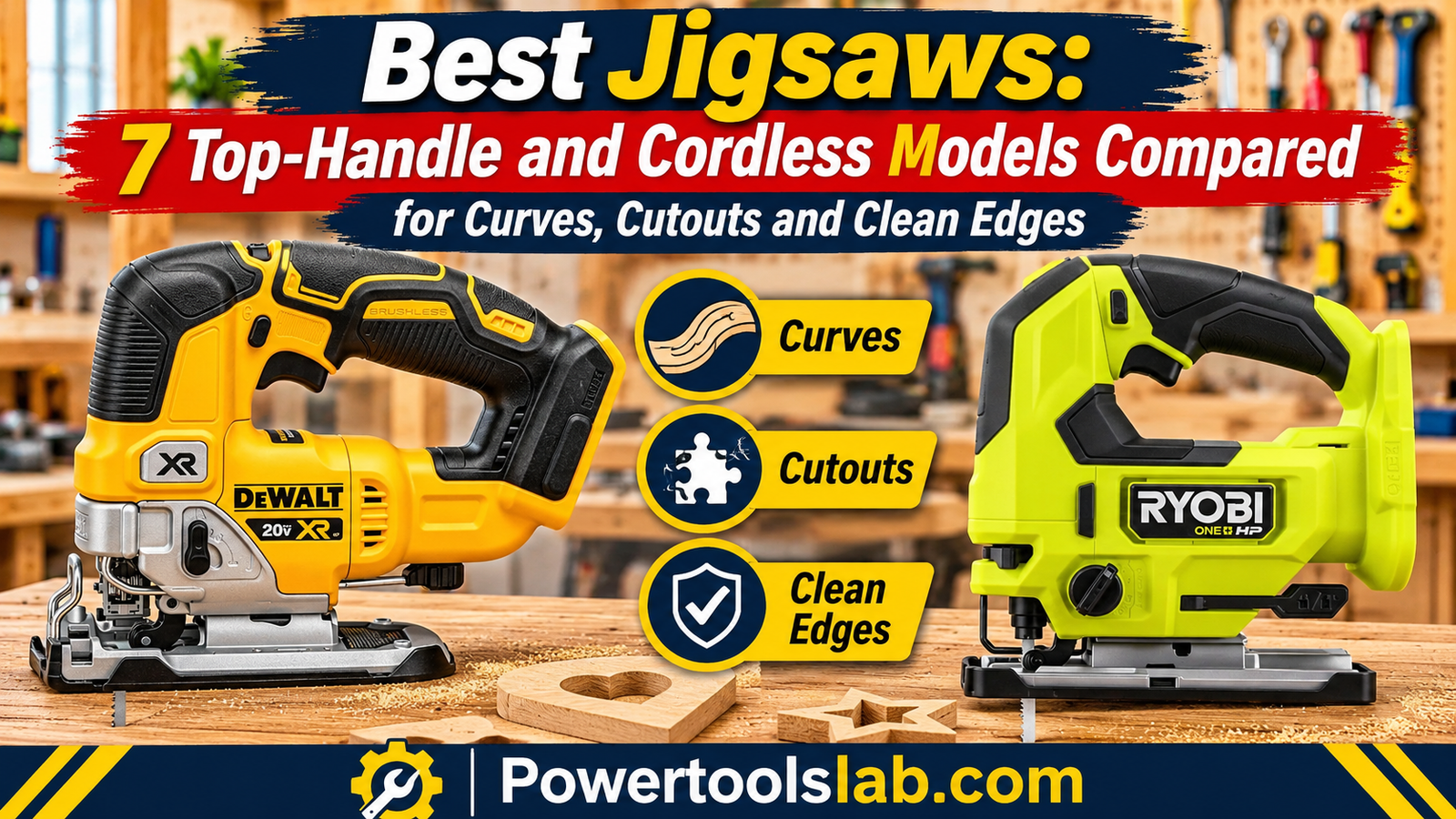
Best Jigsaws: 7 Top-Handle and Cordless Models Compared for Curves, Cutouts and Clean Edges
A jigsaw is the one saw that turns a straight-cutting workshop into a shape-cutting workshop. We compared seven of the most popular models across power, control, blade handling, comfort and value — so you can pick the one that actually matches the work you do.
Few tools earn a permanent spot on the bench the way a jigsaw does. Circular saws rip, miter saws crosscut, reciprocating saws demolish — but the jigsaw is the tool you reach for when the cut is not a straight line. Sink and countertop cutouts, cabinet end panels, scroll-style shelf profiles, curved stair stringers, notches around framing, trim work around pipes: this is where a jigsaw quietly does the work that no other saw wants.
The problem is that “jigsaw” covers an enormous range of tools. On one end there are lightweight, budget-friendly corded models that are perfect for weekend projects and occasional cuts. On the other end there are brushless cordless machines built for all-day jobsite use, sharing batteries with an entire tool family. Between those poles sit serious corded saws with refined blade guidance and the kind of smooth, controlled stroke that cabinetmakers look for.
That spread is exactly why a generic “best jigsaw” list is not very useful. The right saw depends on the material you cut most, how often you cut it, whether you value portability over continuous runtime, and how much you care about the quality of the finished edge versus the speed of getting there. A hobbyist cutting plywood shelves has different needs from a remodeler cutting subfloor patch panels in a crawlspace.

In this guide we put seven widely available jigsaws side by side: the DEWALT DCS334B 20V MAX XR Brushless Cordless Jigsaw, the Bosch JS470E 7.0 Amp Top-Handle Jigsaw, the SKIL JS314901 6 Amp Corded Jigsaw, the BLACK+DECKER BDEJS300C 4.5 Amp Jigsaw, the WEN 33606 6.6 Amp Jigsaw with Laser, the PORTER-CABLE PCC650B 20V MAX Cordless Jigsaw, and the RYOBI ONE+ HP 18V Brushless Cordless Jig Saw (Tool Only) PBLJS01.
We look at each one honestly — what it is built for, where it feels strongest, and who will be happiest owning it. Then we walk through the buying decisions that matter more than any spec sheet: corded versus cordless, orbital action, blade clamps and blade choice, dust management, and the small technique habits that separate a tear-out-riddled cut from one that needs almost no sanding. If you are also shopping for a different type of saw, our broader best power saws roundup is a good place to see how the jigsaw fits into the wider saw family.
Short on time? For most buyers who want a do-everything jigsaw that is comfortable, powerful and portable, the DEWALT DCS334B is the standout. If you want unlimited runtime and the smoothest guided cutting feel, the Bosch JS470E is the corded benchmark. On a tight budget, the SKIL JS314901 and the BLACK+DECKER BDEJS300C deliver far more than their price suggests.
Ready to See Every Jigsaw in One Place?
Compare current availability, colors and kit options on Amazon.
Browse Jigsaws on AmazonQuick Comparison: Our Top Picks
Every jigsaw in this guide appears in the table below. The “Key Specs” column sticks to what is certain — the power rating and platform named in each product title — and the verdict column gives you the one-line answer. Detailed reviews for each model follow further down the page.
| # | Image | Product | Key Specs | Verdict | Check Price |
|---|---|---|---|---|---|
| 1 |  |
Top Pick DEWALT DCS334B 20V MAX XR Brushless Cordless Jigsaw Best Overall |
|
The all-rounder: serious power, no cord, pro-grade feel. | Check Price on Amazon |
| 2 |  |
Bosch JS470E 7.0 Amp Top-Handle Jigsaw Best Corded |
|
Smooth, confident cutting feel for demanding shop work. | Check Price on Amazon |
| 3 |  |
RYOBI ONE+ HP 18V Brushless Cordless Jig Saw PBLJS01 Best Cordless Value |
|
Brushless performance at a friendly price point. | Check Price on Amazon |
| 4 |  |
SKIL JS314901 6 Amp Corded Jigsaw Best Budget Corded |
|
Dependable straight-line and curve work for less. | Check Price on Amazon |
| 5 |  |
WEN 33606 6.6 Amp Jigsaw with Laser Best for Guided Cuts |
|
The laser line helps new users stay on their mark. | Check Price on Amazon |
| 6 | 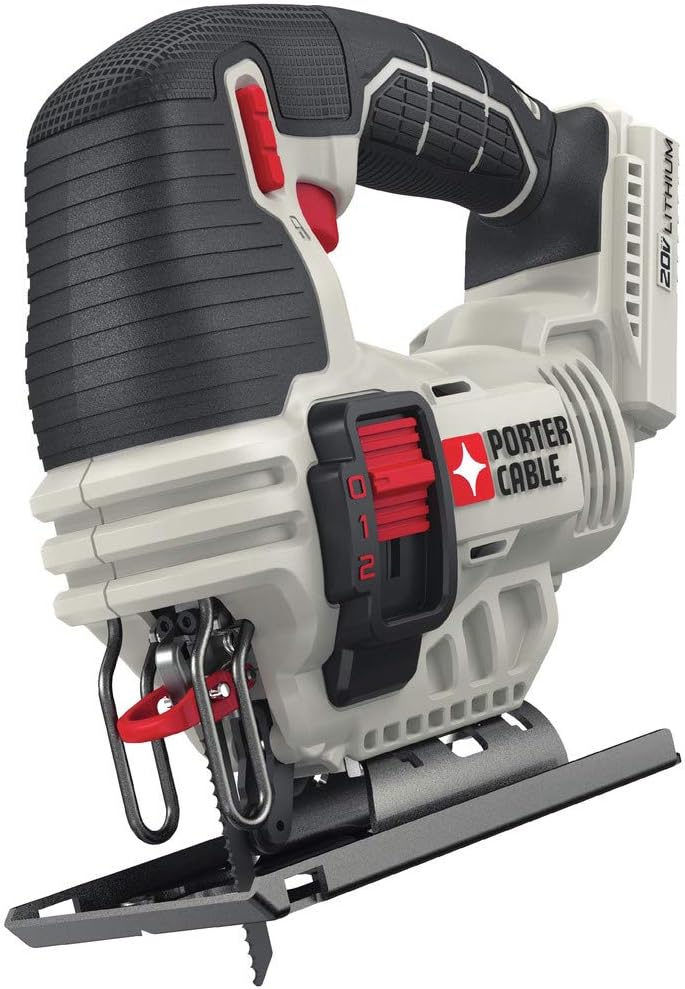 |
PORTER-CABLE PCC650B 20V MAX Cordless Jigsaw Best Budget Cordless |
|
Affordable cordless convenience for punch-list work. | Check Price on Amazon |
| 7 | 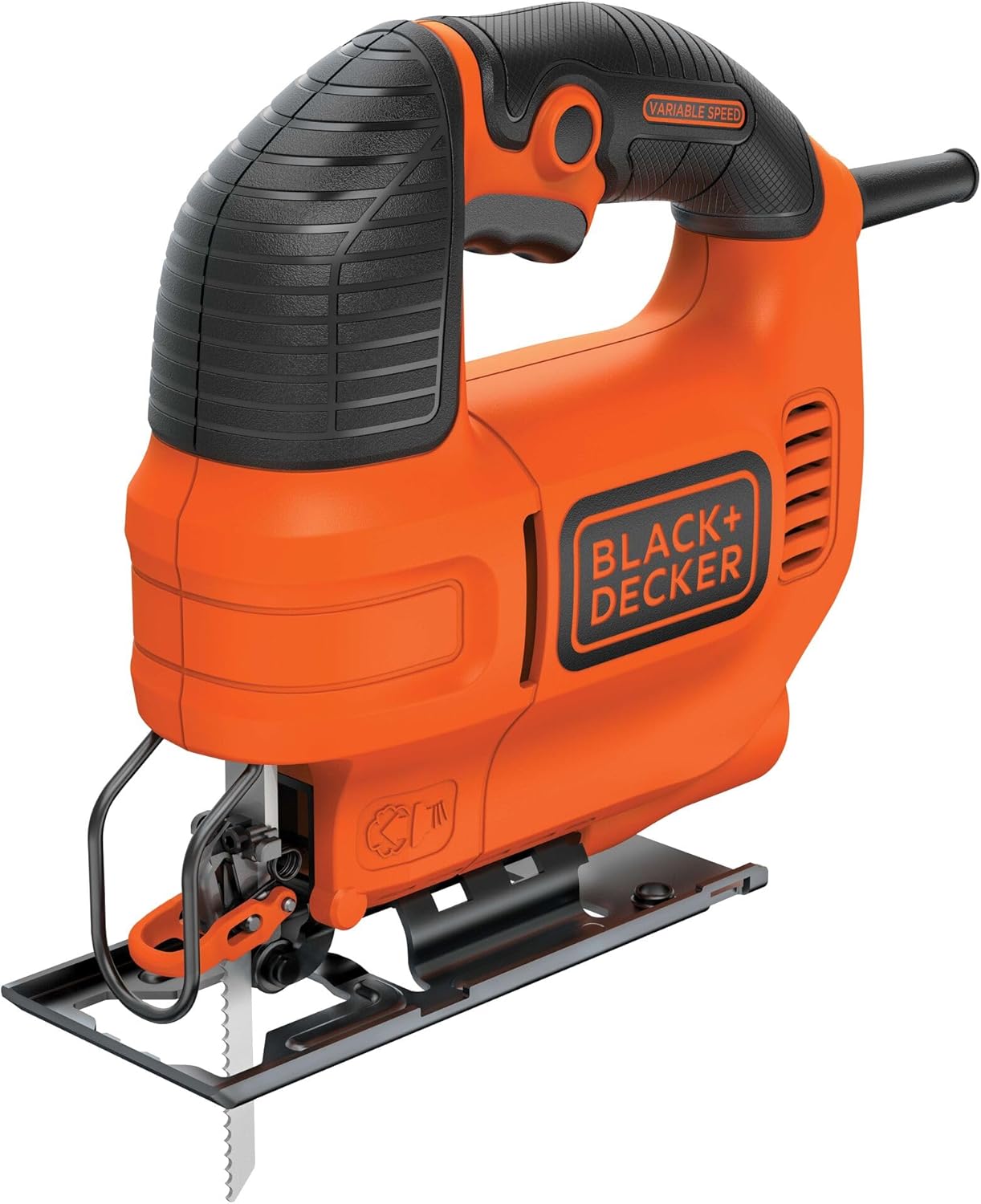 |
BLACK+DECKER BDEJS300C 4.5 Amp Jigsaw Best for Light-Duty DIY |
|
Friendly, forgiving and perfect for occasional cuts. | Check Price on Amazon |
How to read this table. A higher amp number means more electrical power available at the plug, and a brushless motor generally runs more efficiently than a brushed one. Neither number tells you how a saw feels in the hand — that is what the individual reviews are for.
See the Top Pick on Amazon
Check current kit options and battery availability.
Check Price on AmazonSection 01
What Actually Makes a Jigsaw Great
Before we get into individual models, it pays to understand the four things that separate a jigsaw you keep for decades from one that ends up in a garage sale. Almost every complaint people have about jigsaws — wandering blades, ragged edges, sore hands, cuts that lean off square — traces back to one of these four areas.
1. Stroke control, not raw power
Power matters, but control matters more. A jigsaw blade is a long, thin strip of steel held at one end. That geometry means the blade will always want to flex and wander, especially in thick material or when you push too hard. The best jigsaws manage that behavior: they keep the stroke steady, they let you dial the speed down for delicate work and up for fast rough cuts, and they hold the blade in a way that minimizes deflection. When people describe a saw as “feeling planted,” that is what they mean.
2. A blade change that does not fight you
Nothing kills the rhythm of a job like a blade change that needs an Allen key or a hot blade you have to grab with pliers. Modern jigsaws use tool-free clamps that release and lock blades with a lever or a collar, and once you have used one, you will never go back. This matters more than it sounds, because blade choice is the single biggest lever you have over cut quality. If swapping from a clean-finish blade to a fast-cut blade takes ten seconds, you will actually do it. If it takes two minutes, you will use the wrong blade all day.
3. Vibration, noise and grip comfort
A jigsaw is held close to the body and used for long, slow passes. Vibration travels straight into the hand and wrist, and a buzzy saw will tire you out long before the battery dies. Rubber overmold on the grip, a well-balanced body, and a trigger you can feather all make a real difference over a full day of cutting. This is an area where paying a little more genuinely buys comfort, and comfort buys accuracy.
4. The shoe and the support around it
The shoe is the flat metal base that rides on the workpiece. It needs to sit flat, stay square through bevel changes, and glide without scratching finished surfaces. Many users put a strip of masking tape over the shoe when working on delicate laminates or pre-finished panels — a cheap trick that prevents a lot of heartbreak. A shoe that rocks or digs in will produce a beveled cut edge no matter how carefully you follow your line.
Keep those four pillars in mind as you read the reviews. They also explain why a lower-amp saw can outperform a higher-amp one in real use: the numbers on the box describe input power, while the experience of cutting comes down to design decisions around the blade, the shoe, the grip and the speed control. For a wider look at how saws are categorized before you narrow down to a jigsaw, see our guide to the types of power saws, and if you are torn between two very different tools, our jigsaw vs reciprocating saw comparison makes the dividing line very clear.
Shopping for Your First Jigsaw?
Browse corded and cordless models side by side.
Check Price on AmazonSection 02 · Review
DEWALT DCS334B 20V MAX XR Brushless Cordless Jigsaw
DEWALT DCS334B 20V MAX XR Brushless Cordless Jigsaw
The DCS334B is the saw we hand to people who say they want one jigsaw that can do everything. It carries the XR badge, which marks DEWALT’s higher-output cordless line, and it runs on the widely shared 20V MAX battery platform. If you already own DEWALT cordless tools, this becomes a very easy decision — the batteries you already have are the batteries this saw wants.
What sets it apart is how composed it feels. Cordless jigsaws used to be the compromise you made for portability; this one does not feel like a compromise. The brushless motor keeps the stroke consistent as you load the blade into a curve, the body sits well balanced over the shoe, and the grip is shaped so that your guiding hand stays close to the cut line without feeling cramped. It is the kind of saw that encourages you to slow down and follow the line rather than muscle through it.
Key Features
- Brushless motor design that prioritizes efficiency and sustained output over the life of the tool.
- Part of the 20V MAX XR cordless family, so battery sharing across your other tools is straightforward.
- Tool-free blade changes mean you can switch between aggressive and fine-finish blades mid-job.
- Variable speed control for dialing back on delicate material and opening up on rough cuts.
- Compact top-handle geometry that keeps your wrist in a natural position through long passes.
- Designed for a clean sightline to the blade so you can track a marked curve accurately.
- Sold as a tool-only option, which is ideal if you are already invested in the platform.
Using It Day to Day
The DCS334B shines brightest in awkward situations. Cutting a sink opening in a countertop blank, notching a stair tread around a newel post, trimming a cabinet end scribe in place — these are cuts where you cannot bring the work to the bench, where you are reaching, and where the saw has to stay accurate despite an awkward body position. Being untethered from a cord in those moments is not a convenience; it is the difference between doing the job properly and doing something you will regret.
Battery life depends heavily on material and how hard you lean on the tool, but the brushless design and the XR platform are clearly aimed at professional duty cycles rather than short weekend bursts. If you are buying this as your first tool on the platform, remember that it is a tool-only offering, so plan for a compatible battery and charger. If you already own a DEWALT drill or driver, you are already halfway there.
Pros
- Genuinely professional cutting feel without a cord in the way
- Brushless motor for efficient, consistent performance
- Excellent balance and grip comfort during long curved cuts
- Battery ecosystem makes it a natural addition to an existing kit
- Tool-free blade changes keep the workflow moving
Cons
- Sold tool-only, so first-time buyers need a battery and charger
- Premium positioning versus basic corded models
- Overkill if you only cut a handful of times per year
Who It Is Best For
Remodelers, cabinet installers, serious DIYers and anyone already running DEWALT cordless tools. If your jigsaw lives in a truck or gets carried up ladders and into tight spaces, this is the one to buy. It is also the safest recommendation for a buyer who simply wants to purchase once and stop thinking about it.
Brand loyalists comparing ecosystems will find our DEWALT vs Milwaukee and Makita vs DEWALT comparisons useful for context. If you want to expand the same battery platform, our best DEWALT drill roundup and the full DEWALT circular saw review are natural next reads. And if you have heard the term but are not sure what it buys you, brushless vs brushed motor explains the engineering in plain language.
Check the DEWALT DCS334B on Amazon
See current kit and battery bundle options.
Check Price on AmazonSection 03 · Review
Bosch JS470E 7.0 Amp Top-Handle Jigsaw
Bosch JS470E 7.0 Amp Top-Handle Jigsaw
The JS470E is the saw that converts cordless skeptives. It is a corded machine with a serious 7.0 amp motor, and it feels like a precision instrument rather than a brute. Where many jigsaws reward aggression, this one rewards patience and a light touch, and it repays that patience with cut edges that need noticeably less cleanup.
Bosch has a long history with jigsaws, and the refinement shows in the details. The stroke feels controlled from the moment the blade touches the material. The shoe stays planted through long straight cuts and through tight radius curves alike. And because it is corded, it never gets slower as the afternoon wears on — it delivers the same performance in the first minute and the four-hundredth. For shop work where you are making dozens of identical cutouts, that consistency is worth more than portability.
Key Features
- 7.0 amp corded motor delivering sustained power for demanding cuts in thicker material.
- Top-handle body with a well-shaped grip that reduces hand fatigue on long sessions.
- Smooth, low-vibration operation that helps you track fine curves accurately.
- Tool-free blade handling for fast swaps between cut styles.
- Strong shoe stability for clean, square edges through bevel work.
- Continuous duty: no batteries to charge, no runtime planning.
- Quiet confidence in hardwood, plywood, laminate and composite panel work.
Where It Wins
Accuracy under load. Push a lesser jigsaw hard in thick hardwood and the blade starts to wander, the edge goes off square, and the finish turns ragged. The JS470E holds together better than most, which makes it the saw of choice for anyone whose projects end up visible — shelf edges, face frames, stair parts, furniture components. It also excels at repeat work. When you are cutting the same curve a dozen times, the last cut should look like the first, and that is exactly the strength of a well-engineered corded saw.
The trade-off is obvious: you are tethered to an outlet, and you have to manage a cord while guiding the tool. In a shop, that is barely an inconvenience. On a jobsite with no power, it is a real limitation. This is why the jigsaw-versus-jigsaw decision really starts with the corded-versus-cordless question, which we take up in detail later in this guide.
Pros
- Excellent cut quality and edge finish in demanding material
- Consistent performance with no runtime or battery concerns
- Low vibration and comfortable grip for long work sessions
- Stable, square shoe behavior through curves and bevels
- A refined tool that feels built to last
Cons
- Cord management on remote or off-grid work areas
- Less convenient for overhead or ladder work
- Priced above basic homeowner models
Who It Is Best For
Woodworkers, cabinetmakers, flooring and trim pros, and anyone with a dedicated workspace and reliable power. If most of your cutting happens at a bench and your priority is the quality of the finished edge, this is the saw to beat. It is also a smart buy for a serious DIYer who wants a lifetime tool rather than a disposable one.
Bosch owners often build out a matched set, and our best Bosch drill guide is a good companion read. If you are still weighing which manufacturer fits your work style overall, the power tool brands breakdown covers the personality and strengths of each major name.
Check the Bosch JS470E on Amazon
See what is included in the box before you buy.
Check Price on AmazonSection 04 · Review
SKIL JS314901 6 Amp Corded Jigsaw
SKIL JS314901 6 Amp Corded Jigsaw
The SKIL JS314901 is the answer to a very common question: what is the least I can spend and still get a jigsaw I enjoy using? SKIL has been building homeowner-grade saws for a long time, and this one reflects that experience. It is compact, straightforward, and refreshingly free of gimmicks.
With a 6 amp corded motor, it has plenty of appetite for the work most people actually do — shelving, plywood panels, craft projects, garden structures, basic cabinetry, subfloor patches and trim modifications. It is not the saw you would choose to cut thick hardwood all day every day, but it is far more capable than its price suggests, and for the average household it is a tool that will still be working fine years after purchase.
Key Features
- 6 amp corded motor providing steady, dependable cutting power without battery management.
- Compact top-handle layout that is easy to control even for smaller hands.
- Light enough to maneuver comfortably through intricate curves and tight corners.
- Tool-free blade changes for quick, fuss-free swaps.
- Variable speed control for matching the stroke to the material at hand.
- Simple, honest design with nothing to fuss over between jobs.
- Excellent entry point into the world of jigsaw cutting technique.
Living With It
What surprised us most about the SKIL is how little it asks of the user. There is no learning curve, no battery platform to buy into, no settings to fiddle with before making your first cut. You mark your line, pick a blade, plug in and go. That accessibility is a genuine virtue, particularly for someone buying their first jigsaw who wants to build confidence rather than fight the tool.
The compact size is a double-edged sword. On the plus side, it is nimble and easy to position, which is great for detail work and for working in cramped spots like inside a cabinet box. On the other hand, it does not have the mass and muscle of a heavier professional saw, so in thick or hard material you will want to let the blade do the work and avoid forcing the cut. Used with reasonable expectations, it performs admirably. Our best power tools for beginners guide includes more tools with this same friendly, forgiving character.
Pros
- Outstanding value for the capability on offer
- Light and easy to guide for all skill levels
- Unlimited runtime from a standard outlet
- Quick blade changes with no extra tools required
- Small storage footprint in a crowded garage
Cons
- Not intended for constant heavy-duty production work
- Corded only, so no off-grid use
- Less mass can mean more user effort in very thick stock
Who It Is Best For
Homeowners, renters, hobbyists, crafters and first-time tool buyers. If your jigsaw might be used ten or twenty times a year rather than ten times a week, this is the sweet spot. It is also a smart “second saw” for a professional who wants a light-duty tool to leave in the truck.
If you are building out a first tool collection around it, our guide to the best cordless drill is the natural next purchase to consider.
Check the SKIL JS314901 on Amazon
A capable corded jigsaw at a beginner-friendly price.
Check Price on AmazonSection 05 · Review
BLACK+DECKER BDEJS300C 4.5 Amp Jigsaw
BLACK+DECKER BDEJS300C 4.5 Amp Jigsaw
This is the jigsaw for the person who needs to cut a hole for a new outlet cover, trim a shelf to fit an odd alcove, or make a curved bracket for a weekend project — and who does not want to spend serious money to do it. The BDEJS300C is lightweight, simple and extremely approachable.
Its 4.5 amp motor places it clearly in the light-duty category, and that is not a criticism. For thin stock, plywood, paneling, craft board and general household cutting, it has more than enough appetite. Being lighter than the heavyweights also has a real advantage: you can hold it steadily at chest height, guide it around a template, or make quick one-handed adjustments without arm fatigue. For users who find bigger saws intimidating, that lightness is genuinely confidence-building.
Key Features
- 4.5 amp corded motor sized for household and craft-scale cutting.
- Lightweight body that is comfortable to hold for extended periods.
- Compact top-handle grip suitable for a wide range of hand sizes.
- Tool-free blade changes for quick swaps between materials.
- Variable speed trigger for starting cuts gently and controlling the stroke.
- Forgiving behavior in softwood, plywood and thin sheet goods.
- Easy to store, easy to carry, easy to hand to a helper.
Honest Expectations
The right way to think about this saw is as a specialist in light work. Ask it to rip through thick hardwood all day and it will struggle, heat up and produce a cut you are unhappy with. Ask it to cut shelving, paneling, craft projects and the occasional repair, and it will do so cheerfully and without complaint. The mistake buyers make is over-buying or under-buying; matching the tool to the actual work is what makes for a happy purchase.
Learning the fundamentals matters more here than with a premium saw. Our walkthrough on how to use a drill covers the same mindset of controlled, patient technique that translates well to any handheld power tool, and if you are deciding between power sources for your broader kit, the corded vs cordless drill comparison lays out the same trade-offs you face with jigsaws.
Pros
- Very lightweight and comfortable for extended use
- Low cost of entry into curved and cutout work
- Simple controls with almost no learning curve
- Compact size is easy to store and transport
- Plenty of capability for typical household cutting
Cons
- Not designed for heavy or continuous production cutting
- Less suited to thick hardwood and demanding material
- Corded only, limiting use away from power
Who It Is Best For
Apartment dwellers, first-time homeowners, crafters, hobbyists and anyone who wants a capable jigsaw without a big investment. If you can honestly say “I need this a few times a year,” this is a proportionate and satisfying purchase.
Check the BLACK+DECKER BDEJS300C on Amazon
Light, simple and ideal for household projects.
Check Price on AmazonSection 06 · Review
WEN 33606 6.6 Amp Jigsaw with Laser
WEN 33606 6.6 Amp Jigsaw with Laser
WEN has built a reputation for packing useful features into tools that cost noticeably less than the professional tier. The 33606 follows that pattern exactly. Its headline feature is the integrated laser guide, which projects a line ahead of the blade and gives you a visual reference for staying on your marked cut.
Is a laser a substitute for good technique? No. But is it a helpful training aid and a genuine confidence booster while you develop that technique? Absolutely. Beginners in particular benefit from having a second reference line beyond pencil marks on the surface, and experienced users appreciate it for quick, rough cuts where a perfect edge is not required. Combined with a 6.6 amp corded motor, this is a saw with real cutting appetite and an assist that helps you use it well.
Key Features
- 6.6 amp corded motor with steady power for mid-weight cutting tasks.
- Integrated laser guide projecting a visible line ahead of the blade.
- Variable speed control so you can slow down for curves and open up on straights.
- Tool-free blade change system for fast, easy swaps.
- Comfortable top-handle grip for controlled guidance through long cuts.
- Well suited to woodworking, panel goods and general workshop projects.
- Feature-rich for the price bracket it occupies.
Real-World Impressions
The laser earns its keep in two specific scenarios. First, when you are cutting a long straight line and the pencil mark keeps disappearing under dust — the laser stays visible and keeps you honest. Second, when you are cutting curves and need to anticipate the blade’s path a few inches ahead rather than reacting at the shoe. It will not compensate for a dull blade or a heavy hand, but it is a legitimately useful feature rather than decoration.
Power-wise, the 6.6 amp rating puts it comfortably above the light-duty models and just below the heavy corded machines. In practice that means it handles plywood, softwood, paneling and composite materials with ease and manages thicker stock at a sensible pace. It is a sensible middle-ground saw: more capability than the budget models, more accessible than the premium ones. If you want to understand what amp ratings actually mean across the tool world, our piece on how many amps a typical power tool uses puts the numbers in context, and for the wider grinding and metalwork side of the shop, see our best angle grinder guide.
Pros
- Laser guide adds real confidence for new and experienced users
- Strong motor output for a mid-range saw
- Excellent feature set relative to the price
- Tool-free blade changes keep projects moving
- Unlimited runtime for long workshop sessions
Cons
- Laser is a guide, not a substitute for good blade technique
- Corded, so not suited to remote work without power
- Heavier than the ultra-light household models
Who It Is Best For
Intermediate DIYers, workshop hobbyists and anyone who appreciates having a visual guide while cutting. It is a particularly good choice for a buyer who has outgrown a basic saw and wants more capability and more assistance without stepping all the way into professional pricing.
Check the WEN 33606 on Amazon
See the laser-equipped jigsaw with steady corded power.
Check Price on AmazonSection 07 · Review
PORTER-CABLE PCC650B 20V MAX Cordless Jigsaw
PORTER-CABLE PCC650B 20V MAX Cordless Jigsaw
Going cordless does not have to mean spending at the top of the market. The PCC650B is proof of that. It runs on the PORTER-CABLE 20V MAX platform and gives you the single biggest benefit of a cordless jigsaw — freedom of movement — without the premium price tag attached to the professional-tier machines.
This is a tool built for practical, everyday cutting. Punch lists, repair work, fitting shelves in place, trimming decking boards around posts, cutting openings for hardware, making quick templates — the kind of work where dragging an extension cord through a house or around a garden costs more time than the cut itself. The body is compact and the grip is well rubberized, so it stays comfortable in the hand during repeated cuts.
Key Features
- 20V MAX cordless platform with interchangeable batteries across the tool family.
- Tool-only offering that keeps costs down for existing platform owners.
- Compact cordless body that is easy to carry between work areas.
- Variable speed trigger for matching cutting speed to the material.
- Tool-free blade changes for fast transitions between jobs.
- Comfortable grip covering that helps damp vibration and improve control.
- Straightforward operation with no complicated setup.
Living With It
The value proposition here is portability per dollar. You are not buying the most refined cutting experience available; you are buying the ability to walk anywhere with a jigsaw and cut something. For a huge number of users, that is the actual requirement. Home renovation in particular is full of cuts that happen in places with no convenient outlet, and a cordless saw turns a two-person job with a cord runner into a one-person job.
As with most cordless tools, buying tool-only is a decision worth thinking about. If you already own PORTER-CABLE 20V MAX tools, the batteries you have are ready to go and this becomes a very efficient addition. If you are starting from zero, price in a battery and charger. And if you are comparing platform philosophies across the industry, our look at what type of tool a porta power is is a reminder that specialized tools earn their place differently than general-purpose ones. For tile-specific cutting needs, the PORTER-CABLE tile saw review covers another tool from the same family.
Pros
- Cordless freedom at an accessible price
- Battery platform shared with other tools in the family
- Light, compact and easy to position in tight spaces
- Simple controls that work the first time, every time
- Great for punch-list and renovation work
Cons
- Tool-only purchase requires an existing battery setup
- Runtime depends on battery size and material hardness
- Less cutting refinement than premium corded models
Who It Is Best For
Renovators, landlords, handymen and DIYers who want cordless convenience without professional-tier pricing. Also an excellent choice for anyone who already owns PORTER-CABLE 20V MAX tools and wants to round out the kit.
Check the PORTER-CABLE PCC650B on Amazon
An affordable route into cordless jigsaw freedom.
Check Price on AmazonSection 08 · Review
RYOBI ONE+ HP 18V Brushless Cordless Jig Saw (Tool Only) PBLJS01
RYOBI ONE+ HP PBLJS01 18V Brushless Cordless Jig Saw
The ONE+ HP line represents RYOBI’s step up toward higher performance, and the PBLJS01 is one of the clearest examples of why that matters. Pairing a brushless motor with the enormous ONE+ battery ecosystem gives you a saw that performs at a level well above its price, with a battery platform that is arguably the most widely owned in the homeowner world.
Brushless motors do two things worth caring about: they run more efficiently, and they tend to hold their output better as demand increases. In a jigsaw, that shows up as a blade that keeps moving steadily through a cut instead of slowing down and stuttering when you hit a knot or a denser patch of material. Combined with the HP line’s general focus on improved ergonomics, this is a cordless saw that feels modern in the hand.
Key Features
- Brushless motor for efficient power delivery and sustained cutting performance.
- Part of the 18V ONE+ HP system with a huge range of compatible batteries.
- Tool-only purchase option for buyers already invested in the platform.
- Variable speed control for precise cutting across different materials.
- Tool-free blade changes for quick, convenient swaps.
- Modern ergonomics with a grip designed for control and comfort.
- Cordless convenience for work anywhere in the home, yard or jobsite.
Why Brushless Matters Here
There is a temptation to treat “brushless” as marketing language. In a jigsaw specifically, it has practical meaning. The blade stroke is a demanding, constantly varying load — it accelerates and decelerates dozens of times per second, and the resistance changes constantly as the blade teeth engage the material. A brushless motor handles that variation efficiently, which typically means better performance for the battery capacity available and less heat build-up over long sessions. For a tool that lives or dies on consistent stroke quality, that is a meaningful advantage.
For RYOBI owners this is an obvious buy. For everyone else, it is a compelling argument for the platform: brushless performance, cordless convenience and a battery system that powers an enormous range of other tools. If you want to see how the brand compares head to head elsewhere, our RYOBI vs Milwaukee comparison is a useful reality check. RYOBI also offers capable saws in other categories — see the RYOBI circular saw review, the RYOBI tile saw review, and our roundup of the best RYOBI drill options for completing the set.
Pros
- Brushless performance at a very approachable price
- Huge battery platform already in millions of garages
- Strong cutting consistency for a cordless saw
- Modern ergonomics and comfortable handling
- Tool-only format keeps the entry cost low
Cons
- Tool-only, so you need compatible ONE+ batteries
- Not positioned as a full professional production tool
- Runtime varies considerably with material and battery size
Who It Is Best For
Homeowners and serious DIYers already on the ONE+ platform, and anyone who wants brushless cordless performance without professional pricing. It is a particularly strong choice if you anticipate buying more cordless tools over time and want one battery system to cover them all.
Check the RYOBI PBLJS01 on Amazon
Brushless cordless cutting in the ONE+ HP system.
Check Price on AmazonSection 09 · Buying Guide
Corded vs Cordless Jigsaws: Which Style Actually Fits Your Work?
This is the single most important decision in the entire category, and it has almost nothing to do with the saw itself. Two saws of identical design can be right or wrong for you purely because of how and where you cut.
The case for corded
A corded jigsaw delivers consistent power for as long as you keep it plugged in. There is no runtime math, no battery to charge mid-project, no gradual slowdown as cells deplete. If your cutting happens at a bench, in a shop, or anywhere near an outlet, that consistency is hard to beat. Corded saws also tend to be more affordable for the level of cutting performance they deliver, because you are not paying for battery technology.
The trade-offs are mobility and cord management. In a finished home, an extension cord trailing across floors is a nuisance and a trip hazard. Overhead work, ladder work and cutting in awkward positions all get harder when a cord is pulling on the tool. And on remote jobsites or during renovations where power has not been established yet, a corded saw is simply unusable.
The case for cordless
A cordless jigsaw removes the single biggest constraint on where you can work. That freedom compounds: you stop planning cuts around outlet locations, you stop asking someone to manage a cord, and you start making cuts in place rather than disassembling things to bring them to the bench. For renovation work, that is transformative.
The trade-offs are cost and runtime. Cordless saws are generally more expensive at comparable performance, and they are sold tool-only often enough that you must account for batteries. Runtime depends on material, blade choice, speed setting and battery size. And while modern brushless cordless saws are genuinely capable, a heavy day of cutting thick material will use more than one battery.
Quick comparison: how our picks split by power source
| Model | Power Source | Best Suited To | Why It Fits That Use |
|---|---|---|---|
| DEWALT DCS334B | Cordless | Renovation, install work, all-day use | Brushless output and platform sharing for serious, mobile work. |
| Bosch JS470E | Corded | Shop work, cabinetry, fine cuts | Consistent power and refined control at the bench. |
| RYOBI PBLJS01 | Cordless | Homeowners, mixed projects | Brushless performance inside a widely shared battery system. |
| WEN 33606 | Corded | Workshop learning and guided cuts | Laser guidance plus steady power for developing technique. |
| PORTER-CABLE PCC650B | Cordless | Punch lists, quick repairs | Affordable portability for cuts in place. |
A simple way to decide
Ask yourself one question honestly: when I need to make a cut, how far away from an outlet is it usually? If the answer is “within reach of an extension cord,” buy corded and enjoy the performance-per-dollar. If the answer is “upstairs, outside, in the yard, on a roof, inside a cabinet, or wherever the project happens to be,” buy cordless and never think about it again. For most renovation-oriented buyers, cordless wins. For most shop-oriented buyers, corded wins.
The same debate runs through every tool category, and seeing it in another context often clarifies your own priorities. Our corded vs cordless drill comparison follows the identical logic, and the same is true for circular saws in our best cordless circular saw guide. If you are building a full cordless kit, the best cordless drill, the best Milwaukee drill and our broader Makita vs DEWALT platform comparison will help you choose a battery ecosystem before you commit to multiple tools.
Compare Cordless Jigsaws on Amazon
See tool-only and battery-included options side by side.
Check Price on AmazonSection 10 · Buying Guide
Jigsaw Features, Decoded: Orbital Action, Speed, Bevel and Blade Guidance
Product pages are full of features that sound important and may or may not change your results. Here is what each one actually does to a cut, so you can decide which ones are worth paying for.
Orbital action
A standard jigsaw stroke moves the blade straight up and down. Orbital action adds a small forward-and-back component to that motion, so the blade pushes into the material on the cutting stroke and pulls away on the return. The practical effect is faster cutting and better clearing of sawdust from the kerf, at the cost of a slightly rougher edge. Most saws offer several orbital settings plus a straight-cut setting.
Use the aggressive orbital settings for fast rough cuts in softwood and construction lumber. Use the straight setting for clean finishes, for curves in sheet goods, and for materials like laminate or plywood where tear-out on the surface matters. Moving between these settings as the job changes is one of the cheapest ways to improve your results.
Variable speed
Speed control lets you match the stroke rate to the material. Faster strokes cut quickly in softwood; slower strokes give you more control in curves, in hard or brittle materials, and when you need to follow a line precisely. The best implementation is a trigger that responds to finger pressure, because it lets you modulate speed mid-cut without breaking concentration. If you are new to jigsaws, deliberately practice at low speed — accuracy first, speed later.
Bevel capacity and shoe adjustment
Most jigsaws allow the shoe to tilt for angled cuts. The mechanism matters more than the maximum angle number: it should lock positively, return to square reliably, and stay square through use. A shoe that slips during a cut will ruin an edge and can bind the blade. If you plan to do bevel work, look for a clear angle scale and a solid detent at square.
Blade guidance and blade clamps
Because a jigsaw blade is long and thin, anything that supports it close to the workpiece improves accuracy. Some saws include roller guides or other support systems near the blade entry point. Separately, the blade clamp determines how quickly and safely you can change blades. Tool-free clamps are strongly preferred; some release blades only when they are cool enough to handle, which is a genuine safety and comfort advantage.
Blade type and shank compatibility
Jigsaw blades come in two shank styles, and the saw’s clamp determines which you can use. Before buying blades, confirm which shank your saw accepts. Beyond that, blade choice is a bigger factor in cut quality than almost anything else on the saw — which is the subject of the next section.
Dust management
Jigsaws create fine dust exactly where you want to see your line. Most saws include some form of dust blower to clear the cut line or a port to connect a vacuum. Either helps. A saw that keeps the line visible is a saw that produces accurate cuts, so treat dust clearing as a performance feature rather than a nicety.
Feature relevance at a glance
| Feature | What It Does for the Cut | Who Should Prioritize It |
|---|---|---|
| Orbital action | Adds a forward stroke for faster cutting and better dust clearing. | Anyone doing rough construction cuts or thick softwood. |
| Variable speed | Matches stroke rate to material and curve radius for control. | Everyone; especially curve and detail work. |
| Tool-free blade clamp | Fast, safe blade swaps keep you using the right blade. | Anyone switching materials during a project. |
| Blade guidance | Supports the blade near the cut to reduce wander and deflection. | Cabinetmakers and anyone chasing square edges. |
| Bevel adjustment | Enables angled cuts and clean edge beveling. | Trim carpenters and furniture builders. |
| Dust blower or port | Keeps the marked line visible while cutting. | Anyone working indoors or in finished spaces. |
Feature lists are useful, but they only matter in the context of the whole tool family you are building. A jigsaw, a circular saw and a miter saw overlap in some jobs and are irreplaceable in others; our comparisons of circular saw vs miter saw, table saw vs circular saw and even power saw vs chainsaw show where each one earns its keep. If a miter saw is next on your list, start with our best miter saw roundup.
Shop Feature-Rich Jigsaws on Amazon
Filter by orbital action, bevel capacity and blade type.
Check Price on AmazonSection 11 · Technique
Blades and Technique: How to Get Cleaner Cuts From Any Jigsaw
Here is the industry’s worst-kept secret: most disappointing jigsaw cuts are blade problems, not saw problems. The saw supplies the stroke — the blade decides what the edge looks like.
Match the blade to the material
Blades are designed around material and tooth geometry. Fine-tooth blades with many small teeth per inch produce smooth edges in plywood, veneers, laminates and sheet goods, but cut slowly. Coarse-tooth blades with fewer, larger teeth cut fast in softwood and construction lumber but leave a rougher edge. Specialized blades exist for metal, for plastics and for scrolling work with tighter curves. The right blade turns a two-hour chore into a twenty-minute job.
The teeth should also be sized for the material thickness. A general rule of thumb is to keep several teeth engaged in the material at all times — too few teeth per inch in thin stock leads to grabbing and tear-out, while too many in thick stock slows you down and overheats the blade.
Watch the direction of the teeth
Most jigsaw blades cut on the upstroke, meaning teeth point upward toward the saw body. That produces a clean edge on the underside of the workpiece and a rougher edge on the top. Since the top is usually the visible face, this is why so many woodworkers cut with the finished side down. Down-cut blades exist for the opposite situation — when the top face must be clean and the underside will be hidden or sanded.
Let the saw cut; do not push it
Excess feed pressure is the enemy of a clean jigsaw cut. Forcing the saw bends the blade, which produces a cut edge that is beveled rather than square, and it makes the blade wander off your line. Use steady, light forward pressure and let the teeth do the work. If progress feels slow, that is usually a sign to change the blade or adjust the orbital setting, not to lean harder.
Support the workpiece properly
The blade moves through the material, and if the material is not supported near the cut, it will sag or vibrate as the cut completes. This is especially important with sheet goods. Support both sides of the cut line, and be ready for the offcut as it separates. When cutting a closed hole in the middle of a panel, drill a starter hole large enough to accept the blade, then turn the blade into the cut line from there.
Control tear-out on visible surfaces
Three simple habits reduce tear-out dramatically. First, cut with the finished face down. Second, use a fine-tooth blade designed for clean finishes. Third, score the cut line with a sharp blade or a utility knife before cutting — that severs the surface fibers so they cannot lift. Painter’s tape over the cut line also helps and is a favorite trick in cabinet shops. If tear-out still appears, sand the edge afterward rather than trying to force a cleaner cut with pressure.
Cutting curves without binding
Curves are what jigsaws are for, but tight curves create a problem: the body of the saw and the length of the blade make it hard to follow a small radius. Relief cuts solve this. Make a series of straight cuts from the waste side down to the curved line, so that the waste breaks away in small pieces as you cut the curve. This gives the blade room to turn and keeps the cut line clean. For very tight scroll work, use a narrow scrolling blade designed for the job.
Blade selection cheat sheet
| Blade Style | Best Material | Edge Quality | Cutting Speed |
|---|---|---|---|
| Fine-tooth clean finish | Plywood, veneer, laminate, sheet goods | Very smooth | Slower |
| Fast-cut coarse tooth | Softwood, framing lumber, rough work | Rough, needs sanding | Fast |
| Down-cut | Pre-finished panels, visible top faces | Clean on top | Moderate |
| Scroll / narrow blade | Tight curves, decorative shapes | Good on curves | Moderate |
| Metal cutting | Sheet metal, conduit, thin profiles | Burr-free with patience | Slow |
Good technique transfers between tools. The patience, marking discipline and support habits that make jigsaw cuts clean are the same ones that produce good results with other saws — see our guides to the best power circular saws, the best reciprocating saws and the best tile saws for how those tools handle their own specialties. If demolition or rough cutting is more your speed, the DEWALT reciprocating saw review is worth a read.
Section 12 · Safety & Care
Jigsaw Safety, Maintenance and Storage: Protect Yourself and the Tool
A jigsaw is one of the more approachable power saws, which is exactly why it deserves respect. The blade is exposed, the workpiece is often held by hand, and the tool is used in positions where balance is not always perfect. A few consistent habits keep you safe and keep the saw cutting well for years.
Personal protective equipment, every time
Eye protection is non-negotiable. Jigsaws throw fine chips and dust upward and forward, directly toward your face. Hearing protection is wise for extended sessions. A dust mask or respirator matters more than most people realize, particularly when cutting manufactured boards, laminates or treated materials, and especially indoors where dust lingers. Gloves are a judgment call — they improve grip and protect against splinters, but they must never be loose enough to catch in moving parts.
Secure the workpiece
Never hold a small workpiece in your hand while cutting it. Clamp it. A jigsaw blade can catch and kick the material, and a loose workpiece is where most injuries start. Support sheet goods near the cut so they do not sag and bind the blade as the cut finishes, and always know where the offcut will fall.
Watch the blade and the cord
The blade stays sharp after the tool is switched off. Wait for it to stop completely before setting the saw down or reaching near it. If you are using a corded saw, route the cord behind you and away from the cut line so it cannot be severed or pull the saw off course. For cordless tools, remove the battery before changing blades or performing any maintenance.
Let the tool cool before blade changes
Blades get extremely hot during cutting, especially in hard materials or when feed pressure is too high. A tool-free clamp is fast, but the blade may still burn you. Give it a moment, or use a scrap of wood or pliers to remove it. This is also a sign worth reading: a very hot blade usually means you are pushing too hard, cutting too fast, or using the wrong blade for the material.
Basic maintenance that pays off
- Keep the shoe clean and free of built-up resin or adhesive residue, so it slides smoothly and stays square.
- Check the blade clamp regularly for debris that could prevent positive locking.
- Inspect the cord on corded models for damage before every session, and never use a damaged cord.
- Store blades in a case or holder rather than loose in a drawer, where edges dull and fingers get cut.
- Blow dust out of the ventilation openings occasionally so the motor can cool as designed.
- Store the saw in a dry place; moisture and fine dust together are hard on any tool.
Storage and workshop organization
Tools that are easy to find get used properly. A dedicated shelf, a wall hook or a fitted case keeps your jigsaw protected and keeps blades within reach. Good organization also improves safety, because a cluttered bench is where trips, falls and misplaced sharp objects happen. Our guide to how to organize power tools in the garage is full of practical ideas, and the list of things that should never be engaged when using power tools is a worthwhile refresher for anyone who works with helpers or family members.
Safety habits are consistent across categories, and comparing how other tools handle the same risks is genuinely instructive. Our air compressor safety guide covers a very different machine but the same underlying discipline, and if you are building out a shop with air for blowing out dust and driving fasteners, the best portable air compressor roundup is a practical starting point.
Watch out for the warning signs
Burning smells, unusual noise, excessive vibration and blades that break frequently are all symptoms, not accidents. They usually mean a dull or wrong-type blade, excessive feed pressure, a binding cut, or material that is not properly supported. Address the cause rather than pushing through it. The same principle applies across power tools — see our troubleshooting piece on why is my drill smoking for how the same logic works elsewhere.
Gear Up for Safer Cutting
Eye protection, dust masks and hearing protection on Amazon.
Check Price on AmazonFrequently Asked Questions About Jigsaws
These are the questions that come up most often from buyers choosing between the models in this guide.
1. What is the best jigsaw for general home use?
For most households, a mid-range corded jigsaw covers the vast majority of tasks — shelving, panel cutting, craft projects and repairs. If you expect to work away from outlets or already own a cordless platform, a cordless model is the better long-term choice. The DEWALT DCS334B is the strongest all-rounder here, while the SKIL JS314901 and the BLACK+DECKER BDEJS300C are excellent budget corded options.
2. Are cordless jigsaws powerful enough for real work?
Yes. Modern brushless cordless jigsaws are genuinely capable tools, not novelties. The difference is mainly in runtime planning and cost. If you will cut all day in thick material, bring spare batteries or choose corded. If you make cuts in place around a renovation, cordless is often the more productive choice.
3. What is the difference between a top-handle and a barrel-grip jigsaw?
Top-handle models hold like a drill and are the most common style, offering familiar handling and easy trigger control. Barrel-grip models place the hand closer to the workpiece, which many users find gives finer control for detail work. Both cut well; it comes down to which grip feels natural to you.
4. Why does my jigsaw cut a beveled edge instead of a square one?
Usually one of three causes: the shoe is not square, the blade is bent or dull, or you are applying too much forward pressure, which flexes the blade. Check the bevel setting returns to square, fit a fresh blade, and let the saw cut at its own pace.
5. How do I reduce tear-out on plywood and laminate?
Cut with the finished face down, use a fine-tooth clean-finish blade, reduce the orbital setting to straight, and consider scoring the line or applying painter’s tape over it. Slowing the feed rate also helps. Tear-out is almost always a blade-and-technique issue rather than a saw issue.
6. Can a jigsaw cut curves in thick material?
Yes, with the right blade and patience. In thick stock, use a blade designed for the material, slow the speed, and make relief cuts from the waste side so the blade can turn without binding. Extremely tight scroll work calls for a narrow scrolling blade.
7. Do I need a laser guide on my jigsaw?
You do not need one, but many users find it genuinely helpful, especially while building technique. The WEN 33606 includes one, and it is a real confidence aid for long straight cuts and for anticipating the blade path through curves. It supplements careful marking rather than replacing it.
8. What does orbital action mean, and should I use it?
Orbital action adds a slight forward component to the blade stroke, cutting faster and clearing dust more effectively. Use aggressive orbital settings for rough cuts in softwood, and the straight setting for clean finishes and delicate sheet goods. Adjusting it per task is one of the fastest ways to improve your results.
9. Should I buy a tool-only jigsaw or a kit?
If you already own batteries in the same platform, tool-only is the economical route and avoids duplicate chargers and cells. If this is your first tool on that platform, a kit usually makes more sense than buying a bare tool plus separate batteries. For comparing platform choices, our impact driver vs drill and hammer drill vs regular drill guides show how quickly a battery family expands.
10. How is a jigsaw different from a reciprocating saw?
A jigsaw is a precision cutting tool for controlled curves, cutouts and finished edges on wood and sheet goods. A reciprocating saw is a demolition and rough-cutting tool built for speed and aggression. Many workshops own both because their jobs barely overlap. Our jigsaw vs reciprocating saw comparison covers this in detail.
11. How long do jigsaw blades last?
It depends entirely on material, pressure and blade quality. Cutting abrasive sheet goods or dense hardwood dulls blades quickly; clean softwood is far gentler. Replace blades as soon as cutting slows noticeably or edges worsen — blades are inexpensive and a dull blade is a safety and quality problem. For a broader tool comparison, see best impact driver and the wider best drills for DIY and pro use guide.
12. What other saws should I consider alongside a jigsaw?
A circular saw handles long straight rips, a miter saw handles accurate crosscuts and trim, and a reciprocating saw handles demolition. Adding a jigsaw completes a versatile cutting kit. Start with our best power saws overview, then compare models by type — including Milwaukee and Makita circular saws — to build the right set for your work.
Still Deciding? Compare on Amazon
Browse jigsaws by power type, motor and price range.
Check Price on AmazonFinal Verdict: Which Jigsaw Should You Buy?
After working through all seven models, the choices sort themselves out clearly once you know how and where you cut.
If you want one saw that handles everything from cabinet cutouts to subfloor patches and travels with you wherever the work is, the DEWALT DCS334B 20V MAX XR Brushless Cordless Jigsaw is the one to buy. It has the power, the balance and the platform support to serve you for years, and it never asks you to plan around an outlet.
If your work happens at a bench and you value the quality of the finished edge above all else, the Bosch JS470E 7.0 Amp Top-Handle Jigsaw remains the corded benchmark. Consistent power, refined control and stable shoe behavior make it a genuine pleasure to use on precise work.
On a tighter budget, the shortlist is just as clear. The SKIL JS314901 is the best value corded option for general home use. The WEN 33606 adds a laser guide that genuinely helps while you build technique. The BLACK+DECKER BDEJS300C is the friendly, lightweight choice for occasional light-duty cutting. For cordless without premium pricing, the PORTER-CABLE PCC650B covers punch-list work admirably, while the RYOBI ONE+ HP PBLJS01 brings brushless performance to one of the largest battery ecosystems available.
Whichever you choose, remember that blade selection and feed technique will shape your results more than the last few dollars of the purchase. Buy a small assortment of blades, practice on scrap, and cut with the finished face down. Do that, and almost any saw on this list will produce work you are proud to show.
Our pick for most buyers: the DEWALT DCS334B. Power, portability and platform support make it the safest long-term purchase, and it rewards both beginners and experienced users alike.
Ready to Upgrade Your Cuts?
Check today’s availability on our top overall pick.
Check Price on AmazonYou May Also Like
More tool guides, comparisons and how-tos from the workshop.
Best Air Compressors
Match tank size, output and portability to the work you actually do.
Buying GuideHow to Choose an Air Compressor
A step-by-step way to narrow the field before you spend.
ExplainerHow Air Compressors Work
The mechanics behind pressure, flow and tank recovery explained.
Sizing GuideWhat Size Air Compressor Do I Need?
How to match compressor capacity to your tools and workflow.
How-ToHow to Use an Air Compressor
Setup, operation and shutdown done the right way.
RoundupBest Makita Drill
Which Makita drill fits your projects and battery platform.
Brand GuideMakita Drill Options Compared
From compact drivers to heavy-duty hammer models.
RoundupBest Portable Air Compressor
Compact compressors that move easily between jobs.
RoundupBest Impact Driver
Fast, compact fastening power for deck, cabinet and framing work.
ReviewMakita Circular Saw Review
How Makita’s circular saws handle accuracy, balance and daily use.
ReviewMilwaukee Circular Saw Review
A close look at cutting performance and jobsite durability.
GuidePower Tool Brands Compared
The strengths, ecosystems and reputations behind the logos.