Beginner Tool Guide
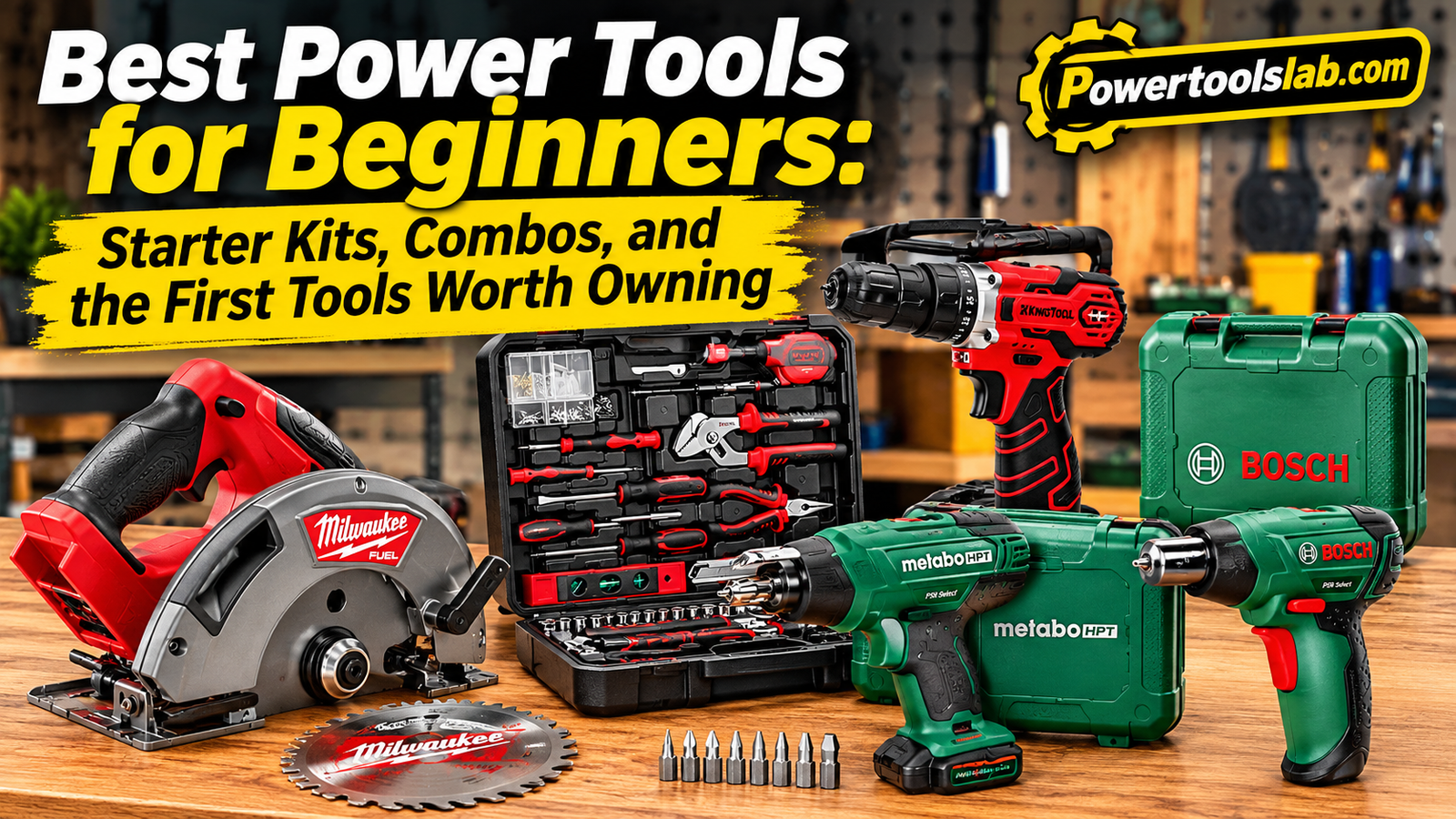
Best Power Tools for Beginners: Starter Kits, Combos, and the First Tools Worth Owning
Buying your first power tool should feel exciting, not like homework. We break down the beginner-friendly drill kits, multi-tool combos, and household tool sets that make the most sense, plus the two add-on tools that will quietly transform what you can build.
The complete beginner’s buying guide
Standing in the Tool Aisle: Where Every Beginner Starts
There is a very specific moment every new DIYer experiences. You are standing in front of a wall of orange, yellow, green and blue boxes, each one promising to solve every problem you will ever have, and you realize you have no idea which box to put in your cart.
That moment is harder than it needs to be because the power tool industry mostly markets to people who already know what they want. The packaging shouts about torque figures and motor types and battery platforms, and none of it helps if you have simply moved into your first place and want to hang shelves without borrowing a drill from a neighbour for the third time.
This guide is written for that starting line. The goal is not to hand you the most powerful tools on the market. It is to help you buy tools you will actually use, that feel good in your hands, and that will not leave you stuck on a dead-end platform when your ambitions grow from picture frames to raised garden beds to a full deck rebuild.
We have organized everything around two groups. First, starter kits and combos — the bundled sets that get a beginner working on day one with a drill, batteries, a charger and, in many cases, a useful spread of hand tools and accessories. Second, single tools worth adding later, the purchases that make sense once the basics are covered and you start running into jobs a drill alone cannot handle.

A good beginner combo set removes the guesswork: one battery system, one charger, and tools that cover the jobs you actually meet.
How to use this guide
Start with the quick comparison table below if you already know you want a kit and just need to narrow it down. If you are genuinely new to all of this, read the first two sections before you look at products — they will save you from buying the wrong category of tool entirely. The middle of the guide is a deep dive on each recommended kit and combo, with honest notes about where each one shines and where it will frustrate you. The closing sections cover the two add-on tools we most often recommend and the safety and maintenance habits that keep beginners out of trouble.
Throughout the guide you will find links to our longer guides on specific tool types, brand comparisons and technique basics. Use them as rabbit holes. The more you understand about why a drill behaves the way it does, the less intimidating the entire workshop becomes.
A quick note on how we talk about specs
Tool marketing numbers are notoriously difficult to compare between brands, so this guide focuses on what a beginner can actually feel and verify: balance in the hand, ease of bit changes, clarity of the controls, the quality of the case, and how much of a real project the kit can complete before you need something else. Where we describe a feature, we keep the language practical rather than leaning on figures that look precise but rarely translate across manufacturers.
Just want a solid first drill kit?
Start with a complete drill/driver kit and grow from there.
Check Beginner Drill Kits on AmazonAt a glance
Quick Comparison: Our Top Picks
Every product in this guide is listed here so you can see the whole field at once. Kits are ranked by how well they fit a beginner’s real life — how quickly they get you working, how much of a typical homeowner’s job list they cover, and how gracefully they grow with you.
| # | Image | Product | Key Specs | Verdict | Check Price |
|---|---|---|---|---|---|
| 1 Top Pick |
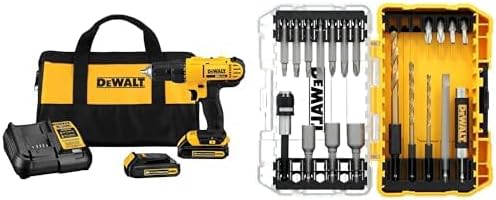 |
DEWALT 20V MAX DCD771C2 Drill/Driver Kit Best Overall First Tool |
|
The one tool that teaches you everything. | Check Price on Amazon |
| 2 |  |
PORTER-CABLE 20V MAX 4-Tool Combo Kit Best Multi-Tool Starter Combo |
|
One purchase, four tools, real versatility. | Check Price on Amazon |
| 3 | |
Makita 7-Piece Cordless Combo Set Best for Serious Beginners |
|
Buy once, stop wondering what’s next. | Check Price on Amazon |
| 4 |  |
BLACK+DECKER Drill and Home Tool Kit Best for Apartments & Light Repairs |
|
The friendly kit for everyday fixes. | Check Price on Amazon |
| 5 |  |
DEKOPRO 126-Piece Tool Set (8V drill) Best First-Apartment Tool Box |
|
Everything a new home needs in one case. | Check Price on Amazon |
| 6 |  |
Bielmeier 20V 236-Piece Cordless Drill Set Best Value Big Kit |
|
Massive coverage without the guesswork. | Check Price on Amazon |
| 7 |  |
KingTool 276-Piece Tool Set with 12V Drill Best Complete Home Tool Box |
|
The gift that ends borrowed-tool emergencies. | Check Price on Amazon |
| 8 |  |
Metabo HPT C3607DA Cordless Circular Saw Best First Cutting Tool |
|
Unlocks real building, not just assembly. | Check Price on Amazon |
| 9 |  |
Bosch PSR Select 3.6V Cordless Screwdriver Best Gentle First Power Tool |
|
Confidence-building tool for absolute beginners. | Check Price on Amazon |
Each of these gets its own full breakdown further down the guide, including what it does well, where it falls short, and exactly who should buy it. If you are shopping for someone else, the shorter answer is simple: the DEWALT kit is the safest recommendation for a beginner who wants to learn properly, while the larger tool sets from DEKOPRO, Bielmeier and KingTool are the better fit for someone who wants one box that handles the entire house.
Compare current pricing on all nine picks
Prices and availability move around, so check before you decide.
Check Prices on AmazonSection 01
What Beginners Actually Need From Their First Power Tools
The first tool you own changes how you see your home. Suddenly a loose cabinet door is a five-minute task instead of a nagging problem, and a shelf is a project instead of a fantasy. But the wrong first tool can have the opposite effect: too powerful, too confusing, or too specialized, and it ends up in a closet.
After watching a lot of people go through that first purchase, we keep coming back to the same conclusion. Beginners do not need the strongest tools. They need predictable ones. A tool that behaves the same way every time you pull the trigger teaches you a skill. A tool that lurches, over-drives screws, or needs an hour of setup teaches you to avoid the workshop.
Start by being honest about your projects
Before comparing any products, write down the last five things you wanted to fix or build. For most people the list looks like this: assembling flat-pack furniture, hanging pictures and curtains, tightening hinges and handles, mounting a TV bracket, and putting together outdoor furniture or a raised bed. Notice what is missing from that list: framing a house, cutting thick hardwood, or drilling into reinforced concrete.
That list is the real specification for your first tool. It points toward a drill/driver or a compact screwdriver with good control and a sensible accessory set. It does not point toward a demolition saw or a large rotary hammer, however tempting the sale price might be. If your ambitions run bigger — you know you want to build a deck or renovate a room — then a combo kit that includes cutting tools makes more sense than a bare drill, and we cover those in detail below.
Cordless has won for beginners, and for good reason
A corded tool is often cheaper and never runs out of power, but for the kind of quick, small jobs beginners do most, dragging an extension lead across a room is the difference between fixing something today and putting it off. Cordless tools are grab-and-go, and that frictionless quality is what builds the habit of actually using them.
The trade-off is battery management. If you are choosing between categories, our comparison of corded vs cordless drills walks through the practical differences in more detail. For most beginners buying today, cordless is the right default, and every kit in this guide is built around that assumption.
Control matters more than power
The single most useful feature on a beginner tool is a responsive variable-speed trigger. It lets you start a screw slowly, keep it straight, and only speed up once you are confident. This is why a good drill/driver remains the best first power tool for almost everyone: it teaches trigger control, bit selection, and the feel of torque in a way that transfers to every other tool you will ever own.
Pair that with a comfortable grip and a reasonable weight, and you have something you can use above your head on a curtain rail without your arm shaking. Balance is underrated. A slightly less powerful tool that you can hold steady will produce better results than a monster that you are fighting the entire time. If you are unsure where to begin, our roundup of the best cordless drills is a useful survey of what good looks like across the market.
Understand the difference between a drill and an impact driver
Plenty of beginners assume these are the same tool with different names. They are not. A drill spins smoothly and is ideal for boring holes and driving smaller screws with finesse. An impact driver uses a pulsing rotational action that drives long screws and stubborn fasteners with far less effort, but with much less delicacy.
If your projects involve a lot of long fasteners — decking, framing, flat-pack with coarse screws — an impact driver is a wonderful second tool. If your projects are mostly furniture, shelving and hardware, a drill/driver covers nearly everything. Our explainer on impact driver vs drill shows exactly where the dividing line falls, and it is worth a read before you commit to a combo.
Motor type: brushless versus brushed
You will see the word “brushless” on a lot of packaging. In simple terms, brushless motors are more efficient and tend to run longer on a charge with less maintenance over the tool’s life. That is genuinely valuable, but it is not a reason to put off buying your first tool. A well-made brushed tool that you use weekly will teach you far more than a brushless tool that stays in its case.
If you want the technical background, our guide to brushless vs brushed motors explains the mechanics without the marketing. The short version for beginners: treat motor type as a tiebreaker, not a filter.
Learn the tool before you need the tool
The cheapest insurance in DIY is ten minutes of practice on scrap material. Every kit in this guide rewards that approach. Drive a few screws into a spare piece of wood, drill a couple of holes, swap the bit a handful of times, and get used to the weight and the trigger before you put a hole in your wall. If you have never used a drill at all, our walkthrough on how to use a drill covers grip, pressure, bit selection and the small habits that prevent stripped screws and skittering drill bits.
Ready to start with a single, capable drill?
See beginner-friendly drill kits that come ready to use.
Browse Drill Kits on AmazonSection 02
How We Evaluate Beginner Tools (and How to Read a Spec Sheet Without Getting Lost)
Marketing numbers on power tool boxes are not lies, exactly. They are just not comparable. One brand’s headline figure measures something different from another’s, and neither tells you how a tool will feel when you are standing on a step ladder trying to hang a shelf straight.
So when we assess tools for beginners, we deliberately shift the weight away from raw figures and toward the things that determine whether a new user succeeds on their first project. Here is how we think about it, and how you can apply the same lens when you are shopping.
Out-of-the-box usability
Can you get from opening the case to driving your first screw in under fifteen minutes? This is the single most important test for a beginner product. It covers the clarity of the manual, whether the battery arrives ready to charge, whether the bits are obviously labeled, and whether anything requires a second tool to assemble. Kits that fail this test tend to get used once and abandoned, no matter how good the hardware is.
Balance, grip and weight
We hold tools in different positions — overhead, at chest height, and against a wall — because that is where beginners actually use them. A tool that feels front-heavy will wander when you are reaching up. Grip texture and trigger shape matter more than they sound, because they decide how much of your attention goes to the tool and how much stays on the work.
Bit changes and adjustments
Nothing kills enthusiasm faster than fighting with a stiff chuck or a fiddly accessory change. We look for smooth, tool-free bit changes and clearly marked adjustments. Every minute spent wrestling with the tool is a minute a beginner could spend learning the craft.
Case quality and organization
Beginners do not lose tools because they are careless. They lose tools because the storage is a jumble of loose plastic bags. A case with molded spots for every bit and accessory is quietly one of the best features on any kit, because it means the tool is complete and findable the next time you need it.
Coverage versus clutter
A bigger piece count is not automatically a better kit. The question is whether the extra pieces are the ones you will reach for. We rate a set higher when its contents map to real household jobs, and we note where a kit is padded out with items that will rarely leave the case.
Room to grow
Your first kit should not be a dead end. Buying into a platform that offers more tools, more batteries and better support means your second and third purchases are cheaper and easier. That is a large part of why established tool brands stay popular, and it is worth weighing heavily if you expect to keep building your collection. Our overview of power tool brands is a good orientation if the names on the boxes mean nothing to you yet.
Decoding the numbers you will actually see
While we avoid leaning on figures in our recommendations, you will still encounter them on packaging and product pages. Here is what each category of number is really trying to tell you.
| Spec on the Box | What It Actually Means | Why It Matters to a Beginner |
|---|---|---|
| Voltage class | A rough indicator of the tool’s power tier within a brand’s battery family. | Useful for matching batteries to tools on the same platform, not for cross-brand comparisons. |
| Torque figures | Rotational force, measured and reported differently by every manufacturer. | Treat as a general tier signal only. Real-world feel matters more. |
| Speed settings | How many gear ranges the tool offers for drilling versus driving. | Genuinely useful — more ranges means more control over different materials. |
| Piece count | Total items in the box, counting every drill bit and hex key separately. | Look at which jobs the pieces cover, not just how many there are. |
| Charging time claims | Usually measured under ideal conditions with a specific charger. | A second battery in the kit solves this problem more than a fast charger does. |
| Amperage draw | How much current a corded tool pulls from the wall. | Relevant for circuit planning; our guide to typical power tool amp draw covers the practical limits. |
Our recommendation logic in plain language
When two kits are close, we pick the one that a beginner will still be happy with after six months. That usually means the tool feels solid in the hand, the accessories are organized, the platform has depth, and the kit covers a realistic spread of jobs. It rarely means the kit with the highest number on the side of the box.
If you want to go deeper into how professionals think about drill selection — and then work backwards to what you actually need — our guide to the best drills for DIY and pro use is a useful reference point.
Looking for a well-rounded kit?
See combo kits that balance coverage with real usability.
Check Combo Kits on AmazonSection 03
Starter Kits and Combos: Why a Bundle Beats Buying One Tool at a Time
There are two ways to build a tool collection. You can buy one tool at a time, researching each purchase until it is perfect, or you can start with a kit that covers the basics and learn what you actually need by using it. For beginners, the second approach wins almost every time.
It is not really about saving money, although bundles usually do. It is about removing decisions. When you buy a kit, someone has already decided which accessories you need, how the tools share batteries, and where everything lives when you are finished. That leaves your attention free for the part that matters: learning to use the tools well.
The hidden cost of piecemeal buying
Consider a typical one-tool-at-a-time path. You buy a drill. Then you discover you need a second battery because the first one dies mid-project. Then you need a set of bits, a set of driver bits, and a case to put them in. Then you want a saw for a project and discover you are now charging two different battery systems on two different chargers.
None of those purchases were wrong, but the total spend ends up close to a full combo kit while producing a drawer of mismatched gear. A kit sidesteps this entirely because the contents were designed as a set.
What a good beginner kit actually contains
- A drill/driver as the centrepiece — the tool that covers the majority of household jobs and teaches core skills.
- A battery and charger, ideally with a spare battery — so a dead pack never stops a project halfway through.
- A sensible accessory spread — the drill bits, driver bits and hex keys you would otherwise buy separately.
- Hand tools for the everyday jobs — tape measure, level, pliers, screwdrivers and an adjustable wrench cover an enormous amount of life.
- A case that keeps it all together — organization is a feature, not a nicety.
Kit sizes and what they are really for
Not all kits are aimed at the same person. Roughly speaking, they fall into four groups, and the right one depends on how you live.
| Kit Type | What It’s Best For | Where It Falls Short | Right For |
|---|---|---|---|
| Single drill/driver kit | Learning properly on one excellent tool with a growable battery platform. | No cutting tools and few hand tools included. | The committed beginner |
| Multi-tool cordless combo | Covering drilling, driving and cutting in one purchase. | Bigger footprint, and some tools see less use than others. | Homeowners with real projects |
| Drill plus hand tool set | Everyday household repairs and furniture assembly. | Not built for renovation-scale work. | Apartments and first homes |
| Large assorted tool box | Owning one complete answer to “do we have a tool for this?” | The drill is usually light-duty and some pieces are occasional-use. | Gifts and new households |
Choosing a kit that leaves room to grow
The smartest long-term decision you can make as a beginner is to pick a platform, not just a tool. Batteries are the expensive part of cordless ownership, and once you own two or three of them, buying bare tools becomes remarkably cost-effective. That is why established brands with wide cordless ranges are so appealing even at the start: your fourth tool is cheaper than your first.
When you start shopping for that second and third tool, our guides to the best impact drivers, the best jigsaws and the best miter saws will show you where each fits in a growing workshop. And if you are curious about which brands offer the deepest ecosystems for the money, our comparison of power tool brands and the best Milwaukee drills are useful next stops.
The beginner’s kit shopping checklist
- Does the kit contain a drill or drill/driver as its core tool?
- Are battery and charger included, and is there a spare battery?
- Will the accessories cover the jobs on your actual list?
- Does the case keep everything organized and transportable?
- Is there a bigger range of tools on the same battery platform?
- Can you picture yourself using every tool in the box within a year?
If you can answer yes to five of those six, you are looking at a kit that will serve you well. Now let us look at the individual kits and combos we would happily hand to a beginner.
Find the right kit size for your home
From single drill kits to complete household tool sets.
Shop Home Tool Kits on AmazonSection 04 · Starter kits and combos
DEWALT 20V MAX DCD771C2 Drill/Driver Kit: The Best First Tool for Learning Properly
DEWALT 20V MAX DCD771C2 Drill/Driver Kit
One serious tool, on a platform you can grow into for years.
If you buy one tool in this entire guide, make it a proper drill/driver kit — and this is the one we point beginners toward most often. The DCD771C2 is a complete kit rather than a bare tool, which means you can open the box, charge up, and be productive the same afternoon without buying anything else.
What makes it such a good teacher is its manners. It is compact enough to hold comfortably at awkward angles, and it behaves predictably when you ease into the trigger, which is exactly the skill every beginner needs to develop first. Because it belongs to a well-established cordless family, the batteries you buy now keep working when you add more tools later.
Key features
- Complete kit format — arrives with the drill, battery and charger so you are working straight away.
- Part of a deep battery platform — the same pack powers a huge range of tools you can add over time.
- Compact, well-balanced body — comfortable for overhead work, tight corners and extended use.
- Keyless chuck — quick, tool-free bit swaps keep the workflow moving.
- Multiple speed ranges — lets you switch between drilling holes and driving fasteners with control.
- Variable-speed trigger — start slow, stay straight, build confidence.
- Work light near the chuck — helps in the dark corners where household jobs tend to happen.
What we like
- Genuinely capable of real work, not just light tasks
- Excellent platform depth for future tool purchases
- Controls that are intuitive for first-time users
- Comfortable in awkward positions and overhead
- Kit means no separate shopping for essentials
Keep in mind
- Drill/driver only — no saw or impact driver in the box
- Hand tools and bits will need buying separately
- Not the tool for frequent masonry drilling
Who is it best for
Best for: the beginner who wants to learn on a serious tool rather than outgrow a toy within months. If you expect to keep buying tools over the next few years, this is the foundation that makes every later purchase cheaper and simpler. It is equally at home in a first apartment and in a house full of weekend projects.
A note on drilling into masonry
One common beginner question is whether a standard drill will handle brick and concrete. For occasional small holes in soft masonry, a capable drill can cope with patience and the right bit. For anything regular, a dedicated hammer drill is the correct tool — our comparison of hammer drills vs regular drills explains exactly where the line sits and why the mechanism matters.
If you want to see how this kit sits against the wider market, our roundup of the best DEWALT drills covers the family, and the head-to-head in DEWALT vs Milwaukee is genuinely useful if you are torn between two platforms before committing.
Start your workshop with a proven drill kit
The DEWALT DCD771C2 is the pick we hand to most beginners.
Check Price on AmazonSection 05 · Starter kits and combos
PORTER-CABLE 20V MAX 4-Tool Combo Kit: The Best Way to Cover More Jobs in One Purchase
PORTER-CABLE 20V MAX 4-Tool Combo Kit
Four tools, one battery platform, and far fewer trips back to the store.
There is a moment in every beginner’s DIY life where a drill stops being enough. You want to cut something. You want to drive a long screw into a joist. You want a tool for the job that is not “drill a hole”. That is the moment a combo kit earns its keep, and this is the combo we point toward first.
The appeal here is coverage. Instead of drilling and driving only, the set spans the most common categories of household work, and every tool shares the same battery platform. That single detail transforms ownership: one charger, interchangeable packs, and a set of tools that were designed to live together in one case.
Key features
- Four-tool cordless lineup — covers drilling, driving and cutting work in a single purchase.
- Shared battery platform — swap packs between tools and charge once.
- Designed as a set — consistent controls and handling across the tools.
- Case storage included — keeps the whole kit together between projects.
- Homeowner-scale power — sized for real domestic work rather than industrial abuse.
- Clear upgrade path — add bare tools to the platform later without re-buying batteries.
What we like
- One purchase covers most beginner project categories
- Excellent cost-per-tool value compared with buying separately
- Shared batteries simplify charging and storage
- Great middle ground between a single drill and a big set
Keep in mind
- Takes up noticeably more storage than a single drill kit
- Some tools in a combo see less use than others
- Not the pick if you only ever assemble furniture
Who is it best for
Best for: the homeowner or renter who has moved past basic repairs and wants to build things. If your list includes shelving, decking, garden planters, storage benches or a room refresh, a multi-tool combo is far better value than buying those tools one at a time later.
When a combo makes sense versus when it does not
Be honest about your trajectory. If your projects are strictly inside the house and small — pictures, curtains, flat-pack, door handles — a single drill kit plus hand tools is more efficient. If you can see outdoor projects, furniture building or light renovation in your future, the combo will pay for itself quickly, because cutting is where tool costs start to add up.
That cutting side is worth understanding before you buy. Our guide to the best tile saws and the specific look at the PORTER-CABLE tile saw are good companions if bathroom or kitchen work is on your horizon and you want to know how the wider ecosystem supports specialist jobs.
Get more jobs covered in a single purchase
The PORTER-CABLE 4-tool combo is the versatile pick.
Check Price on AmazonSection 06 · Starter kits and combos
Makita 7-Piece Cordless Combo Set: The Buy-Once Option for Serious Beginners
Makita 7-Piece Cordless Combo Set
The most complete answer to “what should I buy next?” is “nothing”.
Most beginners plan to start small and add tools gradually. That is sensible. But some people know from the start that they are in this for the long haul — they have a house to renovate, a workshop to build, or simply a personality that likes to be properly equipped. For that person, a seven-piece cordless set is not overkill. It is the efficient choice.
Makita’s reputation among tradespeople rests on tool feel and durability, and that character carries through into a set like this. Everything shares one battery platform, so you are not managing three chargers and two battery types. The tools are designed as a family, which means consistent controls and a case that actually holds the whole thing.
Key features
- Seven-piece cordless coverage — drilling, driving, cutting and general workshop tasks in one set.
- One battery platform across every tool — charge once, work all day with different tools.
- Jobsite-grade build quality — tools that feel solid and hold up to frequent use.
- Consistent handling — the same trigger feel and grip logic across the range.
- Scales from furniture to framing — enough capability for genuine construction projects.
- Strong platform for future additions — expand into specialist tools as your skills grow.
What we like
- Eliminates the “what do I buy next” problem entirely
- Build quality that rewards growing skill levels
- One battery system across a full workshop
- Genuinely capable of building real structures
Keep in mind
- More tool than a casual DIYer will need
- Requires dedicated storage space
- Some tools may sit unused for months at a time
Who is it best for
Best for: the beginner who already knows they are going to build. Renovators, new homeowners with a long project list, and anyone setting up a workshop for the first time will get full value out of a seven-piece set. If your ambitions are smaller, a two- or four-tool combo is the more sensible purchase.
Is a big set wasted on a beginner?
Only if the tools stay in the case. In practice, people who buy a comprehensive set tend to grow into it quickly, because the barrier to starting a project drops to zero. There is always a tool for the job, so there is never a reason to postpone. The real risk is storage and maintenance, not wasted capability — and we cover both further down this guide.
Brand loyalty matters more with a set this size, so it is worth comparing ecosystems first. Our comparison of Makita vs DEWALT is the most relevant head-to-head, and our deeper look at the best Makita drills shows what the platform offers as you expand. If cutting is your main interest, the Makita circular saw review is a strong companion read.
Kit out your whole workshop at once
The Makita 7-piece set is the complete long-term pick.
Check Price on AmazonSection 07 · Starter kits and combos
BLACK+DECKER Drill and Home Tool Kit: The Friendly Kit for Everyday Life
BLACK+DECKER Drill and Home Tool Kit
Approachable, organized, and genuinely useful every single week.
Not every beginner wants to build a deck. A lot of people simply want to stop borrowing tools — to hang a gallery wall properly, tighten the handle on a kitchen cupboard, assemble a bookcase without stripping every screw, and mount a curtain pole that stays where it is. For that life, this kind of kit is exactly right.
What sets it apart is the pairing of a capable drill with the hand tools that handle the rest of domestic existence. Most first-time buyers underestimate how often the correct tool is a screwdriver, a pair of pliers or an adjustable wrench. Having those in the same case as the drill means the kit stays useful long after the drill’s work is done for the day.
Key features
- Drill plus everyday hand tools — covers the full range of small household repairs.
- Compact, storage-friendly case — fits in a cupboard, under a bed or on a shelf.
- Lightweight and approachable — designed for people who have never held a power tool.
- Shared organization — every piece has a place, so nothing goes missing.
- Ideal for furniture and hardware — the tasks that make up most of home life.
- Low-pressure entry point — affordable enough that you can learn without anxiety.
What we like
- Perfect scope for apartments and light household work
- Hand tools included, so no separate shopping trips
- Compact enough to store anywhere
- Friendly, unintimidating design for first-timers
Keep in mind
- Not intended for heavy renovation or framing work
- Hand tools are homeowner-grade, not tradesman-grade
- You will outgrow it if you take up building seriously
Who is it best for
Best for: apartment dwellers, first-time renters, students in their first place, and anyone who wants a single answer to household fixes. It also makes an excellent gift for someone moving out on their own, because it covers the jobs that actually come up in the first year of living somewhere new.
Why “enough” is often the right answer
There is a temptation in every hobby to buy the most capable equipment immediately. In tool terms, that means a heavy, powerful kit you rarely need and that intimidates you on day one. A lighter, friendlier kit gets used constantly, and the confidence you build transfers directly to whatever you buy next. Starting with the right-sized tool is not a compromise — it is the fastest route to competence.
When you are ready to step up, brand ecosystems are the natural next question. Our look at the best Ryobi drills and the Ryobi vs Milwaukee comparison are handy if you want to understand where the budget-friendly and heavy-duty ends of the market differ.
Stop borrowing tools and start fixing things
A friendly, complete kit for everyday household jobs.
Check Price on AmazonSection 08 · Starter kits and combos
DEKOPRO 126-Piece Tool Set with 8V Drill: The First-Apartment Tool Box That Covers Everything
DEKOPRO 126-Piece Tool Set (8V drill)
One case, one purchase, and no more “does anyone have a screwdriver?”
The first year in a new place produces an astonishing number of tiny jobs. A shelf needs leveling. A door hinge needs tightening. The washing machine needs a bracket. Flat-pack furniture arrives. Every one of these jobs is trivial with the right tool and maddening without it.
This is the kind of set built for exactly that reality: a broad spread of hand tools and accessories organized in one case, with a light-duty 8V drill at the centre for the tasks where a screwdriver would take forever. The drill is not a heavy contractor tool, and that is deliberate — it is sized for assembly, hardware, light mounting and the everyday work of keeping a home in order.
Key features
- 126 pieces in one organized case — from measuring and marking to fastening and gripping.
- Light-duty 8V drill included — handles furniture, hardware and light mounting with ease.
- Space-efficient storage — the case fits in small homes without taking over a closet.
- Full hand tool coverage — the everyday tools most households never think to buy.
- Everything findable — a place for every piece means nothing wanders off.
- Beginner-friendly weight and size — comfortable for anyone to use.
What we like
- Covers the huge majority of real household tasks
- Light drill is unintimidating and easy to control
- Excellent organization in a compact footprint
- Outstanding value as a first-home or housewarming purchase
Keep in mind
- The 8V drill is for light work, not heavy construction
- Some pieces are occasional-use rather than everyday
- Not a substitute for dedicated project tools
Who is it best for
Best for: first apartments, rental properties, students, and anyone setting up a home from scratch. If you do not currently own a screwdriver and a tape measure, this category of set solves more problems per dollar than any other purchase on this list.
The underrated value of organization
Ask anyone who has owned a loose bag of tools for years and they will tell you the same thing: the problem is never the tools, it is finding them. A case with molded positions for each piece turns tool ownership from clutter into a system. You notice immediately when something is missing, you can grab the whole set and take it to the job, and you can put everything away in seconds.
If your storage situation is tight, that habit matters even more. Our guide to organizing power tools in the garage covers the wider principles, and most of them apply just as well to a hall closet or a balcony cupboard.
Set up your first home properly
Everything a new household needs, organized in one case.
Check Price on AmazonSection 09 · Starter kits and combos
Bielmeier 20V 236-Piece Cordless Drill Set: The Best Coverage Per Dollar
Bielmeier 20V 236-Piece Cordless Drill Set
A full workshop’s worth of accessories around a genuinely useful cordless drill.
There is a category of kit that solves the “I need a tool for this” problem once and for all. You open the case, and there are bits for every material, drivers for every fastener, measuring tools, gripping tools, and a cordless drill to power through the work. This is that kind of set, and it pairs the breadth with a 20V drill that is capable of more than light assembly.
For a beginner, the value here is not just the piece count. It is that you stop being blocked. You never postpone a job because you lack a specific bit or a particular driver, and that continuity is how people actually build skill. Every project teaches you something, and every project becomes possible.
Key features
- 236-piece accessory and tool spread — covers drilling, driving, measuring, gripping and general assembly.
- 20V cordless drill at the centre — a step up in capability from light-duty household drills.
- Wide material compatibility — the right bit for wood, metal, plastic and wall plugs.
- Everything in one place — organized case storage keeps the set complete.
- Ready for real projects — shelving, storage, garden builds and general repair work.
- Great value per item — a very efficient way to cover a huge amount of ground.
What we like
- Removes the accessory gap that stalls beginners
- Drill is capable enough for genuine building work
- Exceptional breadth for the price
- One purchase covers nearly every household scenario
Keep in mind
- Breadth means some items will be used rarely
- A set this size deserves proper storage space
- Specialist tools are still worth adding later
Who is it best for
Best for: the beginner who wants maximum coverage without spending time researching each category separately. It is particularly good for new homeowners facing a long list of jobs, and for anyone who prefers to buy once and then spend their energy learning rather than shopping.
When you outgrow the drill in a big kit
It is worth thinking ahead. Large all-round sets give you everything for general work, but there comes a point where a project demands a dedicated tool — a proper saw for cutting sheet goods, an impact driver for long fasteners, or a jigsaw for curves. That is the natural moment to add tools individually, and our guide to the best power saws is the right place to start once cutting becomes a regular part of your work.
For most beginners, though, the accessory breadth here is exactly what you need to reach that point in the first place.
Get every accessory you’ll need in one set
The Bielmeier set covers the widest range of beginner jobs.
Check Price on AmazonSection 10 · Starter kits and combos
KingTool 276-Piece Tool Set with 12V Drill: The Complete Home Tool Box
KingTool 276-Piece Tool Set with 12V Drill
The most complete single answer to a household’s tool needs.
Some purchases are best judged by a simple test: how many future problems does this prevent? By that measure, a 276-piece household tool set scores extremely high. Between the drill, the hand tools, the driver bits and the accessories, this is a set that ends the era of improvised fixes and borrowed gear.
The 12V drill in this set is chosen for household suitability. It is light, easy to control and more than capable for furniture assembly, hardware, light mounting, and the small drilling jobs that come up constantly. Combined with the surrounding hand tools, it covers the practical reality of maintaining a home rather than the fantasy of a construction site.
Key features
- 276 pieces — the broadest coverage in this guide by a comfortable margin.
- 12V cordless drill — sized for household control and comfort rather than brute force.
- Comprehensive hand tool selection — gripping, turning, measuring and driving tools included.
- Organized case design — the full set stays together and findable.
- Complete accessory coverage — bits and fittings for the most common materials and fasteners.
- Excellent as a gift — the classic “new home” present that keeps giving.
What we like
- One purchase covers virtually every routine household task
- Drill is comfortable and confidence-building for beginners
- Case keeps a huge piece count manageable
- Removes the endless small tool purchases over the first year
Keep in mind
- The 12V drill suits light to medium household tasks
- Some items will rarely be used
- Needs a proper home for the case
Who is it best for
Best for: families setting up a home, anyone who has never owned a tool collection, and gift buyers who want one present that covers years of small jobs. If you are the person friends borrow tools from, this is a sensible way to be properly equipped.
The two tools people add first
Even with a comprehensive set, two tools tend to get added relatively early. The first is an impact driver, which makes driving long screws effortless and transforms jobs like decking or building outdoor furniture. The second is a circular saw, which opens up projects that involve cutting lumber and sheet material.
Those two purchases are covered in our roundup of the best impact drivers and our guide to the best cordless circular saws, and both are discussed in the next section of this guide.
End the era of borrowed tools
The KingTool set is the most complete home tool box here.
Check Price on AmazonSection 11
Single Tools Worth Adding: A Circular Saw and a Precision Screwdriver
Once your drill and hand tools are sorted, two purchases change what you can build more than any others. One is a saw, which turns projects from assembly into construction. The other is a small precision screwdriver, which quietly takes over all the delicate work you have been doing by hand.
Why a saw is the unlock tool
Almost every project that goes beyond furniture assembly eventually needs a cut. A shelf needs to fit an alcove. A planter needs boards trimmed to length. A storage bench needs a lid. Without a saw, you are ordering material cut to size and hoping it is right. With a saw, you are in control of the fit.
Saws are a deep category, and it is worth understanding the differences before buying. Our overview of the types of power saws explains the whole family, while our guide to the best power circular saws focuses on the saw most beginners should own first. The circular saw is the generalist of the cutting world: straight cuts in lumber and sheet goods, portable, and relatively easy to control with good technique.
Why a small screwdriver is more useful than it looks
The other end of the spectrum matters too. Cabinets, hinges, drawer runners, electronics, glasses, toys, wall plates — an enormous number of household jobs involve small screws in places where a full-size drill is clumsy and a manual screwdriver is slow. A compact cordless screwdriver gives you control and speed without the risk of over-driving.
It is also the ideal tool for building confidence. There is no kickback to manage and no heavy weight to hold, which makes it the gentlest possible introduction to power tools for anyone who is nervous about starting.
Category comparison: the two add-on tools
| # | Image | Product | Key Specs | Verdict | Check Price |
|---|---|---|---|---|---|
| 1 | |
Metabo HPT C3607DA Cordless Circular Saw Best for Building Projects |
|
The tool that makes real building possible. | Check Price on Amazon |
| 2 | |
Bosch PSR Select 3.6V Cordless Screwdriver Best for Delicate Everyday Work |
|
The first power tool that never intimidates. | Check Price on Amazon |
Review: Metabo HPT C3607DA Cordless Circular Saw
Metabo HPT C3607DA Cordless Circular Saw
A first saw that feels precise instead of frightening.
Choosing a first saw is a bigger decision than choosing a first drill, because the consequences of poor technique are more visible. A good beginner saw is one that tracks predictably, adjusts easily, and lets you concentrate on the line rather than on fighting the tool. The C3607DA fits that description well, and going cordless means you can work wherever the project is rather than wherever the outlet is.
For a beginner, the practical advantages are simple: set your depth so the blade only protrudes slightly below the material, set the bevel for the cut you need, and make the cut with the workpiece properly supported. The saw handles the rest.
Key features
- Cordless convenience — work in the garden, the garage or the middle of a room without leads.
- Adjustable cutting depth — safer, cleaner cuts and better control over the material.
- Bevel adjustment — for angled cuts when your projects get more ambitious.
- Blade guard and firm grip — designed for controlled, confident handling.
- Handles common building materials — dimensional lumber and sheet goods are its natural territory.
- Pairs well with a straightedge — for accurate long cuts once your technique improves.
What we like
- Unlocks genuine construction projects
- Cordless freedom suits beginners working in small spaces
- Adjustments are straightforward and intuitive
- Portable enough to take to a friend’s project
Keep in mind
- Requires proper support and clamping of workpieces
- Safety gear and practice are essential before use
- Not the tool for intricate curved cuts
Best for: the beginner who has a list of building projects — shelves, planters, benches, storage, decking — and wants a first saw that is capable and controllable. If you are only doing assembly work, hold off and add it when the need becomes real.
If you are comparing saw types before buying, our comparison of circular saw vs miter saw is essential reading, and the DEWALT circular saw review gives a sense of what the more premium end of the category feels like.
Ready to make your first real cuts?
See how the Metabo HPT circular saw fits your projects.
Check Price on AmazonReview: Bosch PSR Select 3.6V Cordless Screwdriver
Bosch PSR Select 3.6V Cordless Screwdriver
Small, calm, and used more often than almost any other tool in the house.
It is easy to underestimate a cordless screwdriver until you own one. Then it quietly becomes the tool you reach for when a cupboard handle loosens, when a battery cover needs changing, when you are assembling flat-pack for the third time this year, or when you need to drive a screw in a position where a heavy drill would be ridiculous.
The PSR Select is the gentlest introduction to power tools there is. It is light enough for anyone to hold steady, compact enough to live in a kitchen drawer, and its onboard bit storage means you are never hunting for the right driver before you can start.
Key features
- Light and compact body — comfortable for everyone, including first-time users.
- Onboard bit storage — the right bit is always at hand.
- Fine control at low speed — perfect for delicate materials and small fasteners.
- Low-effort operation — no fatigue during longer assembly sessions.
- Ideal for tight spaces — handles, hinges, runners and electronics.
- Charges and stores easily — lives in a drawer rather than a workshop.
What we like
- The most confidence-building power tool available
- Perfect for furniture, hardware and delicate work
- Bit storage solves the most common frustration
- Small enough to keep within reach at all times
Keep in mind
- Not intended for heavy drilling or large fasteners
- Complements rather than replaces a drill/driver
Best for: absolute beginners, apartment living, families, and anyone who does a lot of small assembly work. It is also the ideal gift for someone who is not yet ready for a full drill, and a genuinely useful companion tool even for people who own a full workshop.
When you eventually want to step up to a full-size drill, our guide to the best Bosch drills shows what the wider platform offers at the next level.
Start with the gentlest power tool there is
The Bosch PSR Select is perfect for delicate everyday work.
Check Price on AmazonLooking for your next cutting tool?
Browse cordless circular saws suited to first-time users.
Check Cordless Saws on AmazonSection 12
Safety, Care, Storage and Building Skills: How to Keep Your Tools for Decades
Buying the right tools is only half the equation. The habits you build in your first year determine whether those tools still work beautifully in ten, and whether you enjoy using them enough to keep taking on projects.
Safety is mostly preparation
Power tool safety has an intimidating reputation, but the reality is that almost all incidents come from rushing, poor setup, or missing protective gear. The fix is boring and effective: two minutes of preparation before every job.
- Eye protection, always — dust and debris move faster than you can react.
- Hearing protection for cutting and grinding — damage accumulates quietly over time.
- Dust control and a mask when needed — especially when cutting or sanding indoors.
- Secure the workpiece — clamps and a stable surface prevent most slips.
- Keep the cord and battery out of the cut line — a small habit that prevents serious accidents.
- Unplug or remove the battery before changing anything — bits, blades, accessories.
There are also specific things that should never be done with a power tool in your hand — bypassing guards, using a damaged bit, freehanding a cut that should be guided, or reaching into a running tool. Our list of what should never be engaged when using power tools is worth reading before your first serious project.
Battery care: the habit that pays for itself
Cordless tools live and die by their batteries. The rules are simple. Do not leave packs on a hot windowsill or in a freezing garage for weeks. Do not store them fully drained if you can avoid it. Keep contacts clean and dry, and charge them on the charger designed for them. Follow those rules and most batteries give long, unremarkable service.
The other common beginner question is battery compatibility. Batteries are not interchangeable between brands, and attempting to force a fit is both a warranty problem and a safety problem. Stay within one platform and the whole system works as intended.
Maintenance that takes five minutes
Tool maintenance is less about tinkering and more about inspection. After a project, wipe the tool down, check the bit or blade for wear, look at the cord or battery contacts, and return everything to its case. Once every few months, open the case and take inventory — that is how you discover a missing driver bit before you need it mid-job.
Watch for warning signs too. A tool that smells hot, struggles where it used to be effortless, or produces unusual noise is telling you something. Our guide to why a drill might be smoking covers the common causes and what to do about them, and it is exactly the kind of knowledge that turns a scary moment into a small fix.
Storage: keeping a kit organized and ready
The most common reason tools go unused is friction. If getting the drill out means moving three boxes, you will improvise with the wrong tool instead. Give your kit a dedicated, accessible home, keep the case closed and complete, and store batteries in a spot that is dry and temperature-stable.
For garages and workshops, the principles are the same at larger scale: group by function, keep frequently used tools at eye level, and make it obvious when something is missing. Our full guide to organizing power tools in the garage is a practical place to start.
Building skills deliberately
Tools become enjoyable when you use them with intent. The progression that works for most beginners looks like this: master the drill on scrap material, then build something simple with fasteners, then learn to cut accurately, then combine the two into a real project. Each step is small, and each one makes the next feel obvious.
Cutting is the stage where many beginners hesitate, and it is also where the largest gains live. Spending an afternoon practicing straight cuts in cheap offcuts will improve every project you build afterwards. If you want structured guidance, our guides to the best reciprocating saws and general saw safety provide useful context for how professionals approach cutting work.
When to expand into more specialist tools
The right time to add a new tool is when a project demands it twice. That is when you know the need is real rather than aspirational. For most households, the expansion path looks like: drill, then saw, then impact driver, then a specialist tool for a specific trade — a tile saw for bathroom work, an air compressor for finishing and inflating, or a grinder for metal and masonry.
Those later purchases are the moment to do proper research, and our guide to air compressor safety is a good example of the kind of preparation that specialist tools deserve before you bring one home.
Keep your workshop safe and organized
Find protective gear and storage accessories for your tools.
Shop Tool Accessories on AmazonYour questions answered
Frequently Asked Questions About Beginner Power Tools
These are the questions that come up most often from people buying their first tool or first kit. If you are on the fence about something here, the answer is almost always the same: start smaller than you think, and start now.
What is the best first power tool to buy?
For almost everyone, it is a cordless drill/driver. It covers the widest range of everyday jobs, teaches the core skills of trigger control and bit selection, and forms the foundation of every tool collection. If you only do small indoor tasks and want something even gentler to start with, a compact cordless screwdriver is a perfectly valid first purchase.
Should a beginner buy a combo kit or individual tools?
Buy a kit unless you already own most of what a kit contains. Combos remove the accessory shopping, keep batteries and chargers consistent, and usually work out better value than buying equivalent tools separately. Choose an individual tool only when you have a very specific need and already own the basics around it.
How much should a beginner spend on a first tool kit?
Spend enough to get a tool you will still respect in a year, and no more than that. The middle of the market is where beginners get the best results: capable tools, sensible accessories, and a platform you can grow into. Very cheap no-name tools often cost more in stripped screws and frustration, while top-tier tradesman tools are wasted on occasional use.
Are large assorted tool sets worth it for a beginner?
Yes, if the alternative is owning nothing. A well-organized large set solves the “do we have a tool for this?” problem permanently and covers the huge majority of household tasks. Just be aware that the drill in these sets is usually sized for light to medium work, and that some accessories will be used rarely. For heavy building projects you will eventually want dedicated tools.
Do I need a brushless motor as a beginner?
No. Brushless motors are more efficient and generally require less maintenance over the tool’s life, which is genuinely nice. But a well-made tool with a brushed motor will teach you everything a beginner needs to learn. Treat motor type as a tiebreaker between two tools you already like, not as a requirement.
What size or class of drill is right for home use?
For furniture assembly, hardware, light mounting and small holes, a light-duty drill is ideal because it is easy to control. For shelving, outdoor projects, larger fasteners and frequent use, a full-size cordless drill/driver is the better choice. Match the tool to the heaviest job you realistically do, not the heaviest job you can imagine.
Can I use one brand’s battery with another brand’s tool?
No. Batteries are designed for their own platform and are not interchangeable between manufacturers. Trying to force compatibility is unsafe and usually damages the tool or the pack. The practical answer is to pick one platform early and stay with it, which is also how you get the best value from bare tools later.
What safety gear does a beginner actually need?
Start with eye protection and hearing protection, then add a dust mask for any cutting or sanding. Gloves are useful for handling material but should never be worn near rotating parts. Beyond gear, the bigger safety factors are clamping your workpiece, working on a stable surface, and never rushing a cut.
How should I store my tools and batteries?
Keep tools in their case with every accessory in its place, in a dry location away from temperature extremes. Store batteries with some charge rather than fully drained, and never leave them somewhere freezing or scorching for long periods. If you own several tools, grouping them by function saves enormous amounts of time later.
When should a beginner upgrade to a better tool?
When you can name two specific jobs your current tool cannot do well. That is a real need. Upgrading because a newer version exists is almost never worthwhile for a beginner, whereas upgrading because your projects have genuinely outgrown your equipment always is.
Is a corded tool a better buy for a beginner on a budget?
Corded tools are often cheaper and never need charging, so they have real appeal. But for the short, frequent jobs beginners do most, the convenience of cordless tends to win because the tool actually gets used. If you go corded for a stationary tool like a saw that lives in one spot, you will still want cordless for your drill.
How many tools do I really need to get started?
Fewer than you think. A drill or drill driver, a set of bits, a tape measure, a level, and a couple of good hand tools will handle the majority of household life. Everything after that should be bought in response to a project, not in anticipation of one.
Still deciding on your first kit?
Compare beginner kits and see what fits your project list.
Compare Beginner Kits on AmazonConclusion
Your First Tool Should Make You Want to Use It
If there is one idea to take away from this entire guide, it is this: the best beginner power tool is not the most powerful one, it is the one you will pick up. Every product in this guide earns its place by removing a barrier — the barrier of not knowing what to buy, of not having the right accessory, of being afraid of the tool, or of not knowing where to start.
For most people, that means starting with a complete drill/driver kit like the DEWALT 20V MAX DCD771C2 and building confidence on small jobs. If your project list is already ambitious, a multi-tool combo like the PORTER-CABLE 4-Tool Combo Kit or the Makita 7-Piece Cordless Combo Set will save you money and time by covering more ground in one purchase. And if you simply want to be ready for whatever a home throws at you, the household sets from BLACK+DECKER, DEKOPRO, Bielmeier and KingTool end the era of borrowed tools forever.
When the basics are covered, the two tools that expand your world the most are a cordless circular saw and a compact precision screwdriver. One lets you build. The other lets you finish.
Whatever you choose, practice on scrap material first, wear your protection, keep your tools organized, and take on a project slightly bigger than you think you can handle. That is how beginners become capable.
Keep reading
You May Also Like
Once you have your first tools sorted, these guides will help you choose what to add next, compare brands, and get more out of every project.
Best Reciprocating Saws
Demolition-ready saws for the first time your projects need to come apart.
Read the guide → ComparisonPower Saw vs Chainsaw
Which cutting tool belongs in a home workshop, and which belongs outdoors.
Read the guide → ReviewMilwaukee Circular Saw Review
What a premium cordless saw feels like when your skills are ready for it.
Read the guide → ReviewRyobi Circular Saw Review
A budget-friendly cutting option for weekend builders and new homeowners.
Read the guide → ReviewRyobi Tile Saw Review
What to expect from an entry-level tile saw on your first tiling project.
Read the guide → ReviewDEWALT Reciprocating Saw Review
A closer look at one of the most useful demolition tools you can own.
Read the guide → Buying GuideHow to Choose an Air Compressor
The step-by-step way to match a compressor to the tools you plan to run.
Read the guide → ExplainerHow Air Compressors Work
The mechanics behind tank pressure, airflow and why it matters to you.
Read the guide → Buying GuideWhat Size Air Compressor Do I Need?
How to size a compressor so your tools run properly instead of constantly cycling.
Read the guide → How-ToHow to Use an Air Compressor
Setup, connections and operating habits that keep everything running smoothly.
Read the guide → Buying GuideBest Air Compressors
Our picks across the sizes and use cases that matter to home workshops.
Read the guide → ExplainerWhat Type of Tool Is a Porta Power?
The hydraulic tool you may not know you need — and where it fits.
Read the guide → Buying GuideBest Angle Grinders
Cutting, grinding and finishing tools for metal, masonry and more.
Read the guide → Buying GuideBest Portable Air Compressors
Compact compressors you can carry to the job instead of hauling the job to it.
Read the guide → ComparisonJigsaw vs Reciprocating Saw
Two very different cutting tools — here is which one your project needs.
Read the guide → ComparisonCircular Saw vs Miter Saw
Portability against precision: how to choose your first serious saw.
Read the guide → ComparisonTable Saw vs Circular Saw
Where the stationary workshop tool beats the handheld one, and vice versa.
Read the guide →